



Pivovar Dalešice Brewery
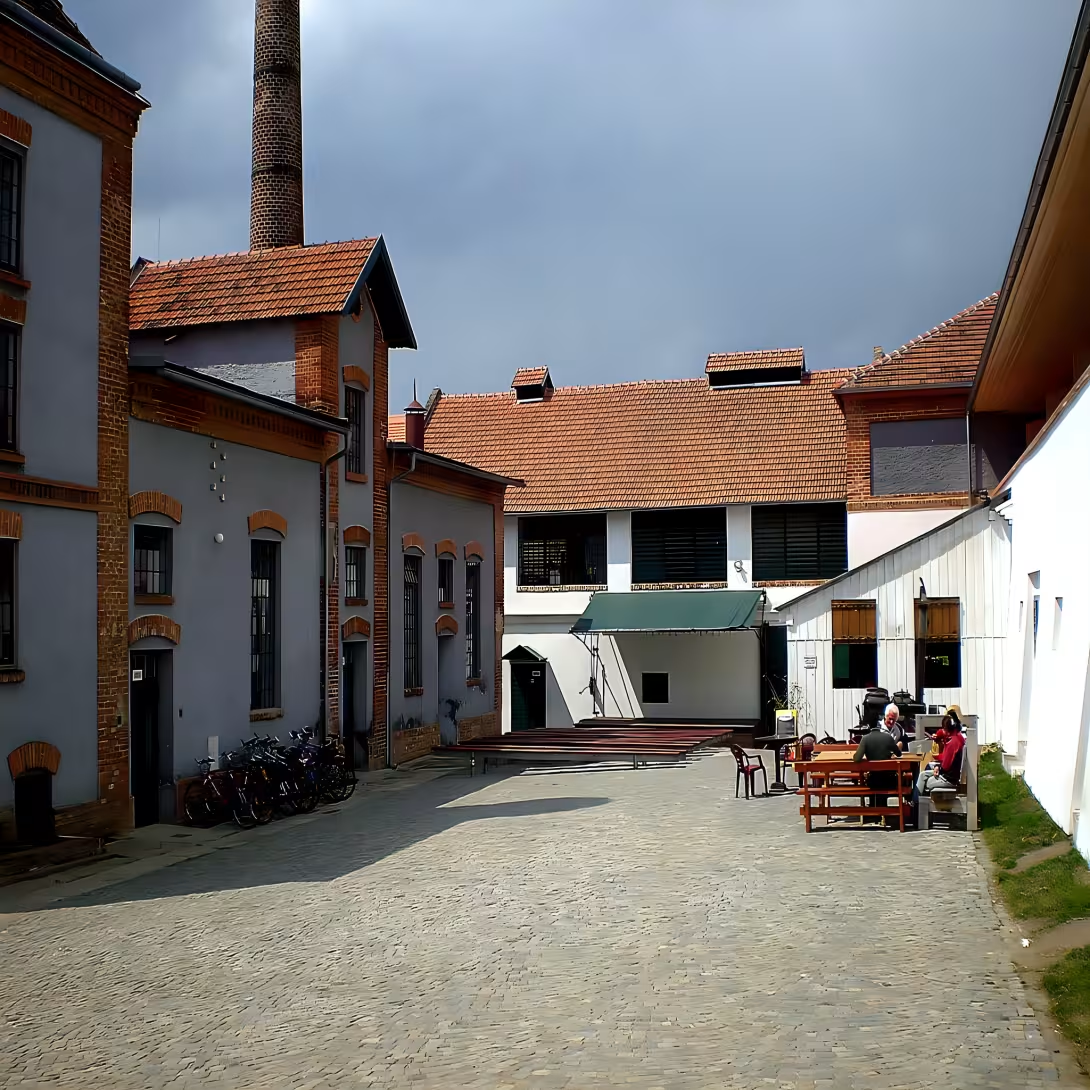
Pivovar Dalešice is located in the village Dalešice, district Třebič, region Vysočina. It is a historic area with beginnings dating back to the turn of the 16th and 17th centuries. After a complete reconstruction at the beginning of the 21st century, it again fulfils its original purpose and is a popular destination for tourists.
The first mention of the brewery dates back to 1609 from the Moravian Land Plates, in the time of Rudolf II's reign and before the state uprising, when the power of absolute rulers and industry developed in Central Europe.
The oldest buildings come from the 17th century from the early Baroque era. In the 19th century, the brewery underwent modernization as a major entrepreneur of Anton Dreher and worked until 1977 when it was closed.
In modern times, the decrepit area was completely restored. The brewery had several owners; In 1882 Anton Dreher bought it. In 1921 it was purchased by Moravian agrarian and industrial bank for parking for 18 million crowns. During this period it was acquired by the Czechoslovak Agricultural Unity, which used it as a cooperative brewery and soda factory. During socialism it was nationalized and incorporated into the company Brewery and Malting House Prague. After 1989, he was dilapidated, he was pawned to a bank in 1991 and could be demolished, but in 1999 he was rescued by the current owner.
Key events include the first mention from 1609, the arrival of Anton Dreher in 1882, the closure of operations in 1977 and the purchase of the premises in 1999. The brewery became famous thanks to the film by the director Jiří Menzel from 1980, where the famous scene of climbing the chimney was filmed on the maces with the participation of stuntmen. The chimney is now 21 meters high.
Today there is a hotel, restaurant and museum of Austrian-Hungarian brewery. It is produced here by Dalešická 11 ° in bright unfiltered and filtered variant, May Lager 13 ° and Fledermaus 13 °, which are sold in local pubs. The surrounding landscape of Vysočina offers a quiet rural environment with tourist routes and nearby Hrotovice with historical estate.
Rescue of Dalešice brewery shows how industrial history can be combined with tourism and tradition of brewing. Visiting this place offers a unique opportunity to get to know Czech film classics and taste local products.
Then and now
Drag the slider to compare how the landmark may have looked when it was built with the view today.
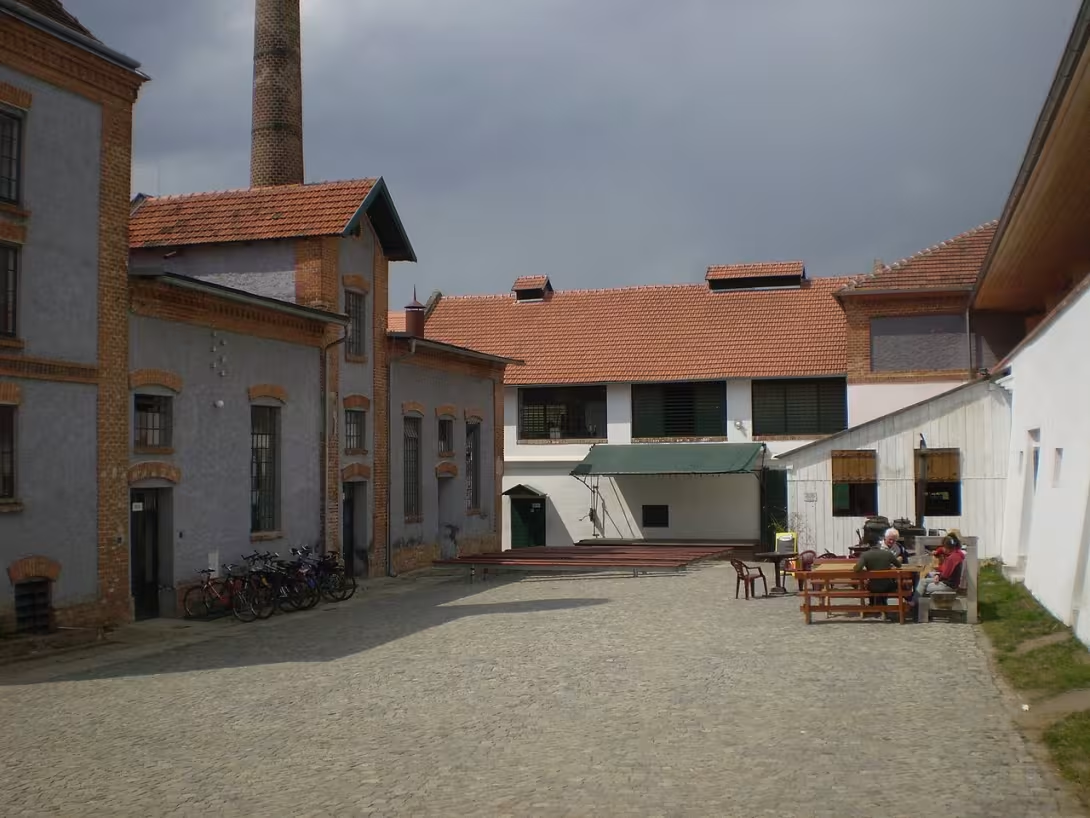

The historical appearance on the left is an AI-generated visualisation and serves as inspiration only.
Architectural development
The oldest brewery buildings come from the 17th century from the early Baroque era. Later there was extensive modernization of the entire operation under Anton Dreher. In modern times the decayed area was completely renovated and restored.
Historical events
1609 The first preserved mention in Moravian Earth records. 1882 The purchase of the estate and brewery by Anton Dreher. 1977 Stopping brewing beer and curling the last batch. 1999 Redemption by current owners and rescue of the entire complex.
Owners
Moravian agrarian and industrial bank, Agricultural unity Czechoslovak, company Breweries and Maldives Prague, current owners
Points of interest
- Pivovar Dalešice starts from the turn of the 16th and 17th centuries. - The first mention of the brewery is from 1609 from the Moravian Earth Plates, in the time of Rudolf II. The oldest buildings come from the 17th century from the early Baroque era. - In 1882, the brewery was bought by Anton Dreher, a large businessman. - The brewery became famous thanks to the film by Director George Menzel from 1980.
Guide
Show guide text
This text was created by artificial intelligence and has not been editorially reviewed. It may contain inaccuracies.
Welcome to the Daleks. You're standing right in front of a place that carries deep breath for centuries. Before you go any further, stop for a moment and feel the atmosphere of this place. Can you feel the weight of history floating around these walls? You are in the heart of the Vysočina Region, in the village Dalešice, where time seems a little different, slower and full of memories. Before your eyes, there is an area that has not only been an ordinary bun, but a living organism that breathed, worked and formed the history of this region for many generations.
Let's go back to the deep past together to understand what these buildings have experienced. If we want to find full beginnings, we have to move on to the turn of the 16th and 17th centuries. That was a time when the world around you formed quite differently. The first real testimony that beer has already been made here is that we find six hundred and nine in the year. The first mention of this brewery appeared in the then Moravian Earth records. Imagine that time, the reign of Emperor Rudolf the second, the period of expansion and tension, when beer was brewing for the local people in this very area today.
Now pay attention to the very form of the buildings that surround you. Feel their shapes and their overall appearance. The oldest parts of this complex come from the seventeenth century and are built in an early Baroque spirit. Although time was constantly changing, this early baroque style preserved some decency and dignity. Looking at the facade and how the buildings are interconnected, you can feel the effort of the then builders to create a place that will not only be functional but also permanent. The Baroque style manifests itself in some curvature and overall harmony that you can perceive here, although many things have changed over the years.
Let us now move on to the period when this brewery experienced its greatest boom. We have to move to the nineteenth century. It's the year of eight hundred and eighty-two and a new era is coming to Dalešice. The property and the brewery itself are owned by a man whose name is among the biggest names in the business. He's a big businessman, Anton Dreher. Under his leadership, beer production has reached unprecedented heights. The brewery reached its peak, becoming a modern and strong pillar of the region. Imagine the intrusion, the constant movement of people, the smell of malt and the sound of machines that were constantly ringing in this area at that time. Dreher's arrival meant a transition from traditional craft to great industrial success.
But history isn't just about the rise, it's about the decline. After the glory period, it was hard times. After long years of operation, the brewery had to close. It was in the year one thousand nine hundred seventy-seven. On precisely the 19th of August, the last batch of beer was curled, and from that moment on, silence was found on the premises. Buildings began to lose, time and neglect began their work. A place that once lived became an abandoned and crumbling place. It may seem that Dalešice has lost their souls and that this historic gem will forever be lost in the dust of oblivion.
And here comes one of the most amazing stories that is connected to this place. If it wasn't for art, this place probably wouldn't exist today. This whole decrepit space saved the movie. Yes, you heard right, he was saved by the camera lens. Director Jiří Menzel and writer Bohumil Hrabal have decided for this place. Thanks to their production and the character of the film Stitch Dalešice became part of a cultural heritage that could no longer be allowed to die. The film printed a new identity for this place and reminded the world how valuable this place is. It's a fascinating idea that a work of art can save stone walls from collapse.
Now you may be asking how Dalešice came back to life. After years of sad endurance, there was hope. In the year one thousand nine hundred ninety-nine, the current owners decided to buy this decrepit area. They decided to take a big step - to restore not only the buildings, but also the tradition of brewery production itself. Thanks to their efforts today you can move in a place that relives, recooks and reaccepts visitors like you.
In your next passage, try to perceive all those layers of time. You can see the Baroque foundations here, you can feel the power of the nineteenth century and you can see the shadows of those difficult years when the brewery was abandoned. Every stone and every wall here has a story that hasn't returned since King Rudolph's second.
Don't forget to focus on details that allow you to better imagine life in the past. Although many things had to be repaired in order for the site to work again, its basic character remains. It's a place where industrial power meets artistic sensitivity.
I hope that this short journey has attracted you over time and that it has helped you better understand what has happened here, before your very eyes. But I will no longer hold you back. Continue your search, explore every corner of this area and let the Dalešic atmosphere drift. I wish you a pleasant rest of your visit and a wonderful experience from this trip to history. Goodbye.
Tips for visitors
The best time to visit the historic brewery is in the morning, when the area is quieter and you can walk in the footsteps of the famous movie Poster. Take with you comfortable shoes for walking on rural paving and older floors, money for on-site service and a small souvenir backpack. For photography we recommend to capture the early baroque facade of buildings in the morning or late afternoon sun, which gives the images the right historical atmosphere. Within 30 minutes' walk there is a quiet surrounding landscape of Vysočina in the district of Třebíč, which offers a number of hiking trails for nature lovers and hiking. Families with children will appreciate a spacious outdoor area and easy walks in a picturesque and peaceful rural environment.
Frequently asked questions
Can the monument be visited?
Some buildings of this kind are open for guided tours, others serve another purpose or are privately owned. We have not verified whether and when this monument is open – please ask the operator.
What are the opening hours and admission?
We have not verified the opening hours or admission. Current information is published by the operator. Official website: https://www.pivovar-dalesice.cz
Where is the monument?
Location: Dalešice, Kraj Vysočina. The map on this page shows the exact spot.
Why is the monument protected?
It is listed in the Central List of Cultural Monuments of the Czech Republic as a cultural monument (register no. 1749338799).
Businesses nearby
Do you run a restaurant, accommodation, shop, museum, rental, wellness or other visitor service near this monument? Show yourself directly to the people heading to it — this is how they will see you in the app and on the web:
Natáčelo se zde
- Postřižiny (1980) film
Zdroj: Wikidata (vlastnost „místo natáčení“) · Všechna filmová místa
Events nearby
Zdroj akcí: otevřená data měst a obcí ČR (Národní katalog otevřených dat) a kalendář akcí Národního památkového ústavu.
Nearby
Okolní krajina kraje Vysočina v okrese Třebíč nabízí klidné prostředí venkova s množstvím turistických tras. Blízko se nachází Hrotovice s historickým panstvím.
Accommodation nearby
Themed route
I propose a thematic cruise route in the village Dalešice and its nearby surroundings, which connects the famous brewery and surrounding rural environment of Vysočina region in the district of Třebíč.
1.Pivovar Dalešice - Type: Main destination - Why is it worth a visit: This historic brewery attracts visitors to explore traditional urine production and to sit in a pleasant environment associated with film history. It offers a unique experience for lovers of good drinking and rural architecture.
2. The surrounding landscape of Vysočina region in Třebich district - Type: natural environment - Why is it worth a visit: The surrounding area offers a very quiet rural environment with plenty of hiking trails that are ideal for relaxing walks. Here you can discover picturesque nature and clean country air.
3. - Type: historical estate - Why is it worth a visit: The nearby residence will be occupied by its history and atmosphere of the ancient estate. It is a great place to discover the past and local traditions in the region.
Seasonal recommendations
Spring in Dalešice Brewery brings the awakening nature of Highlands, when surrounding green sides and blooming trees contradict the historic brick rise of buildings. The sun's rays begin to warm up and the low angles of daylight highlight the details of the old industrial architecture, creating a calm and relaxed atmosphere without any previous rush. In this period you will meet few visitors, so you can enjoy the tour in complete peace. Suitable clothes include a light jacket or sweater, as the outdoor seating at historic stone walls can be colder. The ideal time for arrival is around noon, when the sun warms the most.
Summer in the brewery grounds comes to life fully in the main visiting season under the clear sky and in the embrace of lush surrounding green, which provides a pleasant shade. The atmosphere is very lively, full of laughing and tinkling glasses of chilled local urine, while the late afternoon sun paints warm colours on plaster of buildings famous for famous Czech film. As this is the most frequent period of the year, you have to count on larger crowds of candidates, especially on weekends. Wear breathtaking summer clothes, but don't forget to wear solid shoes for historical tiles.
Autumn Dalešice offers an unrepeatable spectacle where the leaves of the surrounding forests and sides turn into warm shades of yellow, orange and red. Low sun creates long shadows and melancholy, but a very cozy atmosphere breathes from every corner of the old brewery yard. The number of tourists falls significantly, which will be appreciated by lovers of peaceful discovery of monuments. For this period it is necessary to choose warmer layered clothes, windbreaker and long pants, because the dry autumn wind in Vysočina can be unpleasant. The best time to visit is around three o'clock afternoon, when autumn sun creates the most beautiful light for photography.
The winter in Dalešice Brewery has a fabulous character, especially when the historic roofs and surrounding countryside are covered by a layer of pure white snow. The lighting in the area lights up early in the afternoon and the warm light coming from the windows of the inner spaces attracts you to sit in the warm. The atmosphere is quiet, intimate and breathes history far from the modern world. In winter months, it is necessary to count on shorter opening times and the need for very warm clothes, including winter jackets, hats, gloves and fixed non-slip shoes, as the outdoor areas can freeze. The best time to arrive is in the morning, so you can take advantage of the short daylight before resorting to warm food inside.
Visualizations and artistic views


The visualisations are generated by artificial intelligence and serve as inspiration.
Photos from the area
Real photos taken near the monument

Zdroj a licence jsou uvedeny u každého snímku.
Tips from visitors
No tips yet. Be the first!
Log in and add your tip.
Sources and literature
Photos: Michal Klajban / CC BY-SA 4.0, rozlišení zvýšeno umělou inteligencí — Wikimedia Commons. The author and licence also appear when you hover over the image.
Faktickým podkladem tohoto textu byl článek na Wikipedii, jehož autory jsou přispěvatelé Wikipedie. Článek je dostupný pod licencí CC BY-SA 4.0.
Location on the map

Příběhy a pověsti
Legendy, pověsti a příběhy spjaté s touto památkou
Fotografie návštěvníků
Zatím žádné fotografie. Buďte první, kdo přidá fotografii z návštěvy!
Log in a přidejte svou fotografii nebo hodnoťte.
Za ověřenou návštěvu v aplikaci získáte víc bodů — poznáme podle GPS, že jste na místě.
Reviews and comments