






Pohřební kaple svatého Kříže Chapel
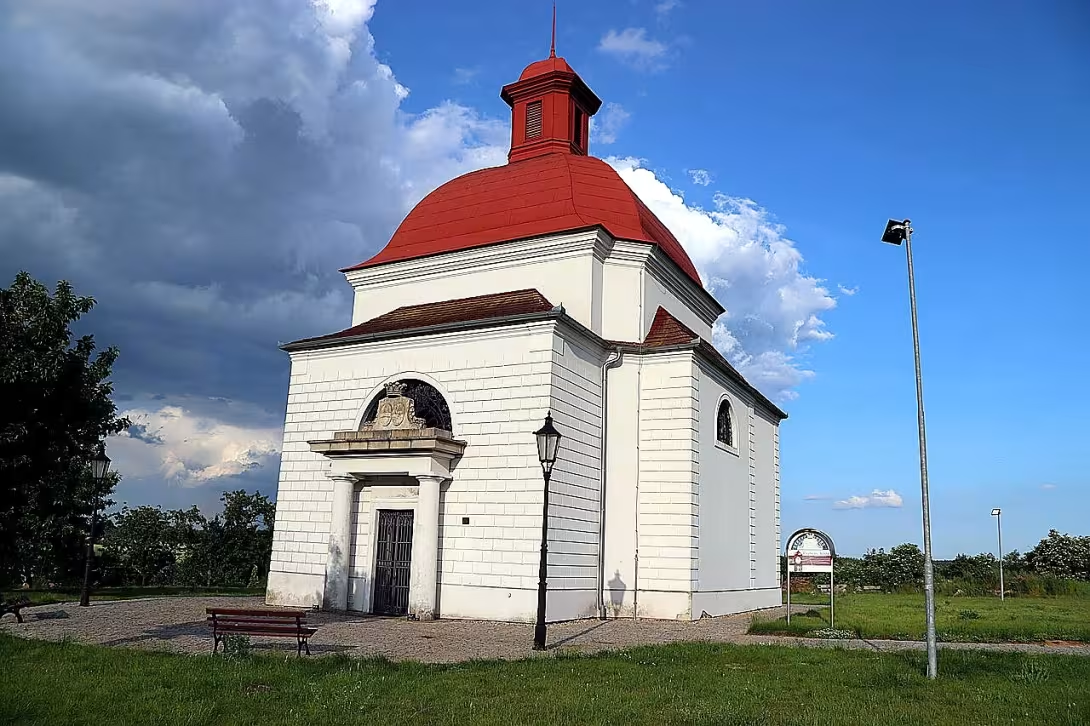
The Chapel of Saint Cross in Dalešice is a notable cultural monument situated on a hillside near the village, within the Vysočina Region. Originally built as a baroque chapel by Leopold Odkolek in 1708, it was later transformed into an Empire-style mausoleum for the Diller-Hess family between 1788 and 1803. This site is distinguished not only by its architectural evolution but also by its historical significance within the Czech Republic.
The origins of the Chapel date back to the early 18th century, a period marked by cultural flourishing under baroque influences across Europe, particularly in Bohemia as part of the Habsburg Monarchy. Leopold Odkolek commissioned the chapel's construction in 1708, reflecting the grandeur and elaborate designs characteristic of that era. Later, between 1788 and 1803, it underwent significant renovations to serve as a mausoleum for the Diller-Hess family, transitioning into an Empire-style structure.
Architecturally, the Chapel began its life in baroque style before being transformed into an Empire-style mausoleum. It features a central rotunda with narrow annexes on all sides and lunette windows along its lateral edges. Its distinctive roof is covered with shingles, adding to its architectural appeal. A prismatic closure with a rizalit and two rectangular windows marks the end of the structure. Notably, the façade includes a right-angled entrance topped by an inscription dating 1803, flanked by columns and a window above.
Ownership and administration of the chapel have seen significant changes over time. Initially built for private use, it was later transformed into a family mausoleum. In 1980, ownership transitioned from the church to the municipality of Dalešice, marking a pivotal shift in its stewardship. Throughout its history, the chapel has undergone several restorations and renovations, reflecting its enduring importance.
Key events in the chapel's history include its restoration under parish priest Eduard Sommer in 1935 and a comprehensive reconstruction between 1996 and 2002. The latter involved structural reinforcement, dehumidification, and re-shingling of the roof, ensuring its preservation for future generations. Post-World War II, the chapel served as a venue for regular services due to damage sustained by the local parish church.
Today, the Chapel of Saint Cross stands as a prominent feature in the landscape near Dalešice, adjacent to a cemetery and offering scenic views. Its historical significance and architectural beauty make it an important cultural site within the Vysočina Region. Visitors can appreciate its rich history and architectural evolution while exploring this remarkable monument.
The Chapel of Saint Cross is not only a testament to the artistic and architectural endeavors of past centuries but also a symbol of resilience through its various transformations and restorations. Its historical context, coupled with its unique design elements, makes it an essential visit for anyone interested in cultural heritage and architecture. The chapel invites visitors to explore its storied past and appreciate its enduring legacy within the Czech Republic's rich tapestry of history.
Then and now
Drag the slider to compare how the landmark may have looked when it was built with the view today.
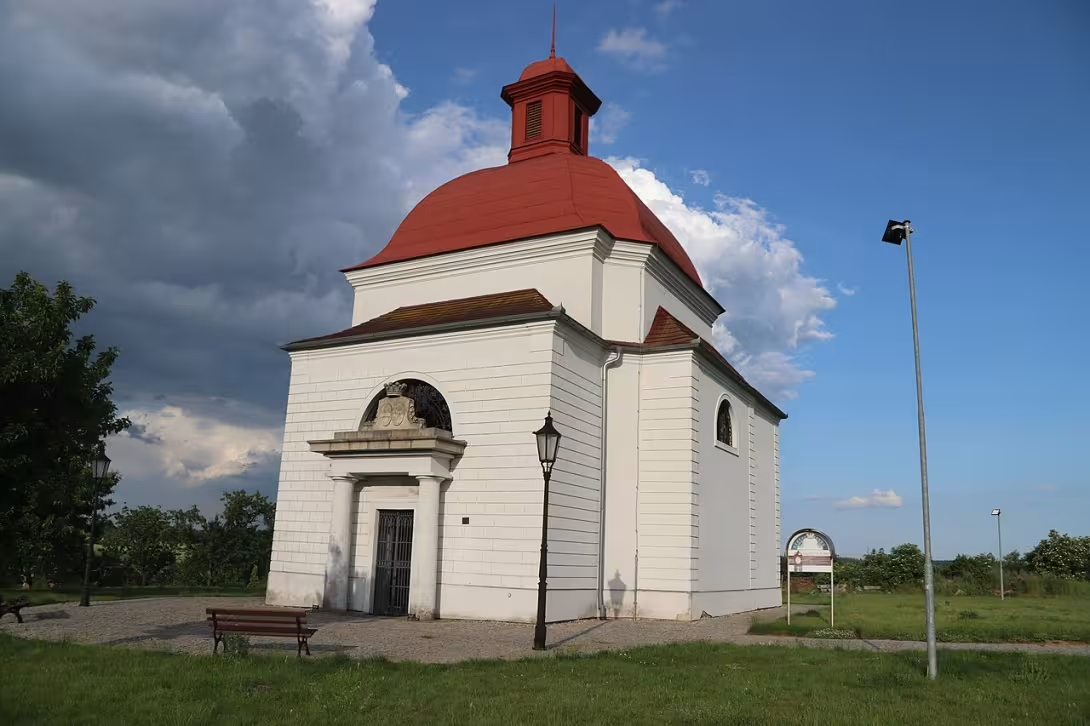

The historical appearance on the left is an AI-generated visualisation and serves as inspiration only.
Historical milestones
- 1708
- Construction of the chapel in baroque style.
- 1788
- Empire-style renovation to serve as a mausoleum for the Diller-Hess family.
- 1935
- Restoration initiated by parish priest Eduard Sommer.
- 1996
- Comprehensive reconstruction began.
- 2002
- Reconstruction completed with the installation of a new bell dedicated to Saint Joseph.
Architectural development
The Chapel of Saint Cross began as a baroque structure in 1708 and was later transformed into an Empire-style mausoleum between 1788-1803. It underwent significant restoration in 1935, followed by comprehensive reconstruction from 1996 to 2002, which included structural reinforcement and re-shingling the roof.
Historical events
In 1708, Leopold Odkolek constructed the chapel in baroque style.
Between 1788 and 1803, the chapel underwent an Empire-style renovation to serve as a mausoleum for the Diller-Hess family.
In 1935, the chapel was restored under the initiative of parish priest Eduard Sommer.
A comprehensive reconstruction took place from 1996 to 2002.
Owners
Originally built for private use by Leopold Odkolek in 1708, the chapel was later transformed into a mausoleum for the Diller-Hess family between 1788-1803. In 1980, it was transferred from church ownership to the municipality of Dalešice.
Points of interest
- The Chapel of Saint Cross was originally commissioned by Leopold Odkolek in 1708, a time when baroque architecture was flourishing under the Habsburg Monarchy's influence, reflecting the cultural richness of Bohemia.
- Between 1788 and 1803, the chapel underwent significant renovations to become an Empire-style mausoleum for the Diller-Hess family, showcasing a unique blend of architectural styles within one structure.
- In 1980, ownership of the Chapel shifted from the church to the municipality of Dalešice, marking a pivotal change in its administration and reflecting broader trends in cultural heritage management in post-war Czechoslovakia.
- The chapel's façade features an inscription dating back to 1803, indicating the completion year of its transformation into a mausoleum, which adds historical depth to its architectural narrative.
- After sustaining damage during World War II, the Chapel served as a venue for regular services due to the local parish church being damaged, highlighting its role in community life beyond its original purpose.
Guide
This guide is narrated by a synthetic voice generated by artificial intelligence.
Show guide text
This text was created by artificial intelligence and has not been editorially reviewed. It may contain inaccuracies.
Welcome to the Chapel of Saint Cross, a hidden gem nestled on a hillside near the quaint village of Dalešice in Kraj Vysočina. As you stand before this serene structure, imagine yourself stepping back into history, where baroque elegance meets the rolling landscapes of Bohemia.
The story of this chapel begins in 1708 when it was commissioned by Leopold Odkolek during a time when baroque architecture flourished under the influence of the Habsburg Monarchy. This era brought with it a cultural richness that is beautifully encapsulated in the chapel's design. Originally built to serve as a family mausoleum, its purpose evolved over the centuries.
As you gaze upon the chapel, notice its distinctive baroque rotunda structure, adorned with narrow annexes and lunette windows. The roof, covered with shingles, adds a unique charm that sets it apart from other historical buildings in the Czech Republic. This architectural style not only reflects the period's artistic sensibilities but also signifies the chapel’s cultural importance.
The chapel has witnessed significant transformations over time. Between 1788 and 1803, it underwent an empire-style renovation to better serve as a mausoleum for the Diller-Hess family. These changes were part of its ongoing story, which saw further restoration in 1935 by parish priest Eduard Sommer. The most comprehensive reconstruction began in 1996 and was completed in 2002 with the installation of a new bell dedicated to Saint Joseph.
The chapel's connection to the Diller-Hess family adds a layer of intrigue to your visit. This prominent family played a pivotal role in its history, ensuring that it remained a significant cultural monument through generations.
One fascinating aspect of this site is how it reflects broader historical and architectural trends while maintaining its unique identity as a family mausoleum. It stands as a testament to the craftsmanship and vision of Leopold Odkolek and those who contributed to its evolution over time.
As you continue your exploration, take a moment to absorb the atmosphere around you—the way the light plays through the windows and how history seems to whisper in every corner. This chapel is not just a building; it's a narrative woven into the fabric of time.
We invite you to delve deeper into this remarkable site, perhaps wandering nearby to discover more about its surroundings and history. Thank you for joining us on this journey through time at the Chapel of Saint Cross. May your visit inspire curiosity and appreciation for the stories etched in stone.
Tips for visitors
Best Time to Visit: The best time to visit the Pohřební kaple svatého Kříže is during the spring and autumn seasons, when the weather is mild and sunny. This allows for a comfortable exploration of the chapel and its surroundings without the harshness of winter or summer heat. Alternatively, you can take a leisurely walk from the town center to the chapel. What to Bring: Wear comfortable shoes for walking around the cemetery and bring a camera to capture the stunning views of the surrounding landscape. Don't forget to bring sunscreen and a hat for protection against the sun. Photography: The best spots for photography are from the hill overlooking the town, where you can capture panoramic views of Dalešice. For optimal lighting, visit during the golden hour (just before sunset) or early morning when the light is soft and warm. What to See Nearby: Within a 30-minute walk or drive, explore the charming town of Dalešice, which offers a glimpse into traditional Czech culture and architecture. Visit the local shops, cafes, and restaurants for a taste of authentic Czech cuisine.
Frequently asked questions
Can the monument be visited?
Religious buildings are usually open mainly during services; at other times a visit is normally arranged with the parish or the operator. We have not verified specific times.
Where is the monument?
Location: Dalešice, Kraj Vysočina. The map on this page shows the exact spot.
Why is the monument protected?
It is listed in the Central List of Cultural Monuments of the Czech Republic as a cultural monument (register no. 30344/7-2605).
Businesses nearby
Do you run a restaurant, accommodation, shop, museum, rental, wellness or other visitor service near this monument? Show yourself directly to the people heading to it — this is how they will see you in the app and on the web:
Events nearby
Zdroj akcí: otevřená data měst a obcí ČR (Národní katalog otevřených dat) a kalendář akcí Národního památkového ústavu.
Nearby
Located on a hillside near Dalešice, the chapel is adjacent to a cemetery and stands as a prominent feature in the surrounding landscape. The area offers scenic views and historical context within the Vysočina Region.
Accommodation nearby
Themed route
Tematická výletní trasa: Pohřební kaple svatého Kříže a okolí
1. Pohřební Kaple Svatého Kříže - Typ: Historická památka - Proč stojí za návštěvu: Tato působivá kaple se nachází na svahu poblíž Dalešic a je přilehlá k hřbitovu. Je to významný historický a architektonický prvek, který nabízí návštěvníkům pohledy do minulosti regionu Vysočina. Kaple je známá svou umístěním a zahrnuje do sebe historii místní komunity.
2. Hřbitov Dalešice - Typ: Historický hřbitov - Proč stojí za návštěvu: Přilehlý k pohřební kapli, tento hřbitov je klíčovou součástí kulturního a historického kontextu oblasti. Nabízí možnost prozkoumat starodávné náhrobní desky a pamětníky, které vyprávějí příběhy minulých generací Dalešic.
3. Okolní krajinářský pohled - Typ: Přírodní výhled - Proč stojí za návštěvu: Kaple a hřbitov jsou umístěny na svahu, což nabízí impozantní panoramatické pohledy na okolní krajinu. Tato místa poskytují klidné prostory k odpočinku a reflektaci při pochopení historických i přírodních aspektů regionu Vysočina.
Tato trasa nabízí kombinaci historie, architektury a přírody, což umožňuje návštěvníkům prozkoumat bohaté kulturní dědictví obce Dalešice.
Seasonal recommendations
Jaro: In the spring, the burial chapel of Saint Cross in Dalešice takes on a gentle and lively atmosphere as nature around blooms. Sunlight bathes the interior of the chapel with soft light that highlights its historical architecture and artistic elements. During this period, the openness of nature is an excellent accompaniment for visiting the landmark. Visitors should be prepared for mild temperatures and possible rain, so appropriate clothing should include layered outfits. The best time to visit is in the early afternoon when crowds are usually smaller and the atmosphere calmer.
Summer: Summer brings long, sunny days that illuminate the interior of Saint Cross Chapel in full beauty. This is an ideal time for visiting the landmark when warm air and vibrant green surroundings contribute to comfortable weather. However, due to its high attractiveness, the chapel can be crowded with visitors, especially during peak summer season. It's recommended to arrive early in the morning or later in the evening to explore the site without excessive crowds and in a more tranquil atmosphere. Humid summers require light clothing and plenty of water on hand.
Autumn: Autumn offers unique views of Saint Cross Chapel as leafy vegetation turns into various shades of yellow and orange. This seasonal change adds a nostalgic atmosphere and beautiful backdrop for photographs. Temperatures are usually mild, but visitors should be prepared for cooler evenings with warmer clothing.
Winter: A winter visit to Saint Cross Chapel offers a quiet and serene atmosphere as the surroundings are covered in snow or tinted with cold colors. Sunny days can illuminate the interior of the chapel in magnificent light, bringing a gentle and tranquil feeling. Warm clothing is essential, especially since the chilly air can be intense outside. A winter visit offers a unique opportunity for quiet and private exploration of this historical landmark.
Visualizations and artistic views


The visualisations are generated by artificial intelligence and serve as inspiration.
Photos from the area
Real photos taken near the monument


Zdroj a licence jsou uvedeny u každého snímku.
Tips from visitors
No tips yet. Be the first!
Log in and add your tip.
Sources and literature
Photos: Jiří Sedláček / CC BY-SA 4.0 — Wikimedia Commons. The author and licence also appear when you hover over the image.
Faktickým podkladem tohoto textu byl článek na Wikipedii, jehož autory jsou přispěvatelé Wikipedie. Článek je dostupný pod licencí CC BY-SA 4.0.
Location on the map


Fotografie návštěvníků
Zatím žádné fotografie. Buďte první, kdo přidá fotografii z návštěvy!
Log in a přidejte svou fotografii nebo hodnoťte.
Za ověřenou návštěvu v aplikaci získáte víc bodů — poznáme podle GPS, že jste na místě.
Reviews and comments