



Pomezná Ruin
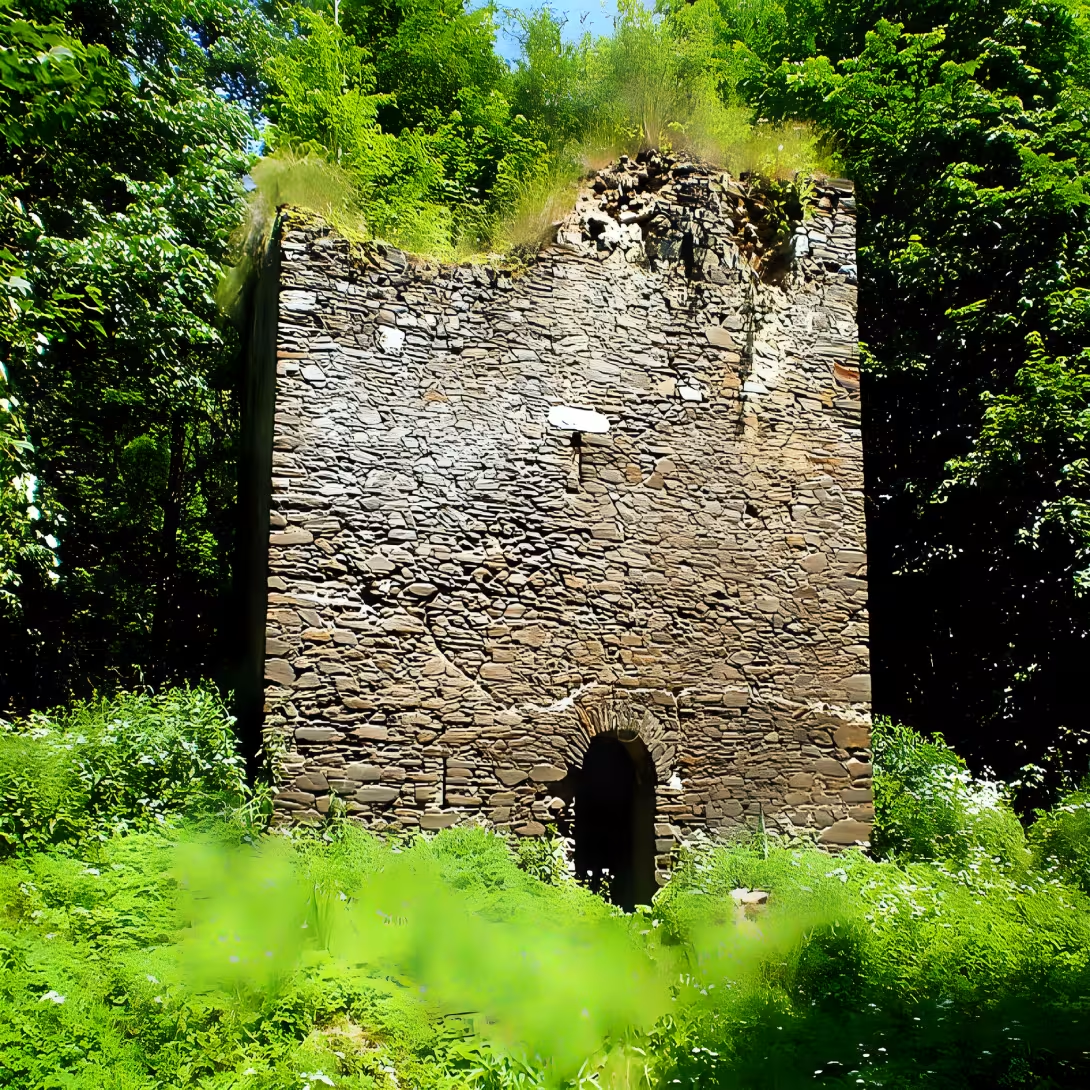
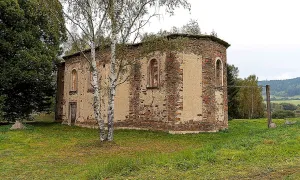
Pomezná is a historical monument near Cheb in the Karlovarský kraj region of the Czech Republic. Originally built as a castle in the 14th century, it was transformed into a fortress by the mid-16th century and now stands as a ruin on the Skalka reservoir's shores. Recognized as a cultural monument since 1963, Pomezná is notable for its remnants of a four-story structure made from quarry stone. Its historical significance and ongoing restoration efforts make it an intriguing destination for those interested in medieval architecture and history.
The origins of Pomezná trace back to the early 14th century when it was first mentioned as a castle in 1309. During this period, Bohemia was part of the Holy Roman Empire under King Wenceslaus II, marked by significant political and territorial changes across Europe. The fortress underwent several ownership changes; initially acquired by the Sparneck family in 1348, it later came into the possession of the Paulsdorffs. In 1417, Pomezná faced destruction when attacked by Nuremberg forces, marking a dramatic chapter in its history.
Architecturally, Pomezná was built using quarry stone and featured a three-story basement. Initially serving as a castle, it was transformed into a fortress in the mid-16th century. Over time, the structure lost its residential function by the 17th century, transitioning from a fortified residence to a more utilitarian role. The original four-story tower remains the only surviving element of the once larger complex.
Ownership and administration of Pomezná have seen notable changes over the centuries. After being acquired by the Sparneck family in 1348, it was later sold to the Paulsdorffs. Today, the site is owned by the Jaška family, who purchased it along with a cottage from previous owners. The current owner, Petr Jaška, has initiated efforts to reconstruct the tower to its original appearance, beginning restoration work in 2015.
Key events at Pomezná include its initial mention as a castle in 1309 and its destruction by Nuremberg forces in 1417. These historical moments highlight the site's strategic importance during medieval times. Presently, plans are underway to reconstruct the tower and establish a museum on-site, offering visitors insights into the history of Pomezná and the vanished village that once surrounded it.
Today, Pomezná stands as a testament to its rich past, with only the original four-story tower remaining from the fortress. Efforts led by Petr Jaška aim to restore the tower's historical appearance, including plans for a museum in collaboration with the Národní památkový ústav and Muzeum Cheb. Accessible via a red tourist trail or cycling route 2063 from Cheb, Pomezná offers visitors a unique glimpse into medieval architecture and history.
Pomezná's historical significance and ongoing restoration efforts make it a compelling site for those interested in exploring the layers of Czech history. Its transformation from a castle to a fortress and its resilience through centuries of change reflect the dynamic past of the region. Visitors are invited to explore this remarkable monument, where echoes of medieval times continue to resonate amidst the tranquil surroundings of the Skalka reservoir.
Then and now
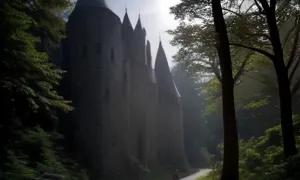
Drag the slider to compare how the landmark may have looked when it was built with the view today.
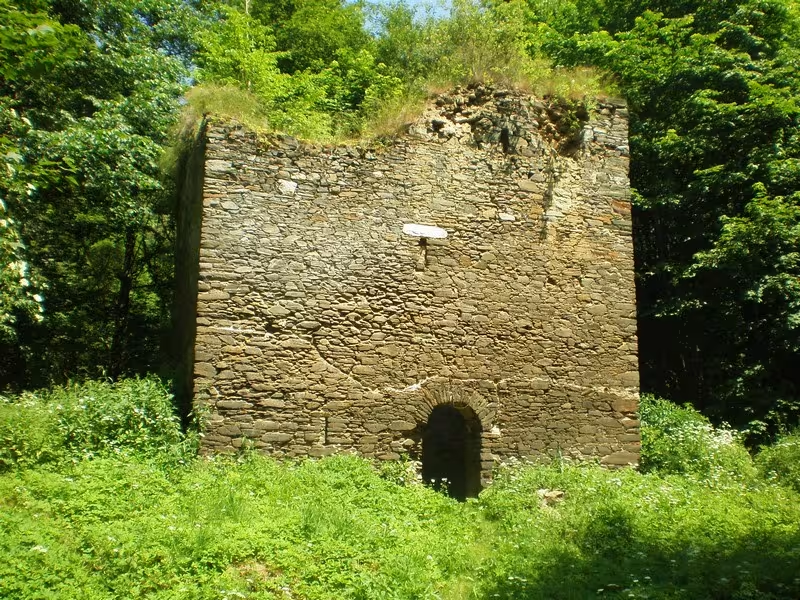

The historical appearance on the left is an AI-generated visualisation and serves as inspiration only.
Historical milestones
- 1963
- Pomezná was registered as a cultural monument of the Czech Republic.
Architectural development
Initially built as a castle in the 14th century, Pomezná was transformed into a fortress in the mid-16th century. The structure is made of quarry stone and features a three-story basement. Over time, it lost its residential function by the 17th century.
Historical events
In 1309, Pomezná was first mentioned as a castle.
The fortress was attacked and destroyed by Nuremberg forces in 1417.
Owners
The Sparneck family acquired Pomezná in 1348 and later sold it to the Paulsdorffs. The Jaška family currently owns the site, having purchased it along with a cottage from previous owners.
Points of interest
- Although primarily known for its transformation from a castle to a fortress, Pomezná was originally mentioned as early as 1309, predating many other medieval castles in the region. - The fortress's dramatic history includes an attack by Nuremberg forces in 1417, highlighting its strategic importance during turbulent times in European history. - Ownership of Pomezná has shifted through notable families over centuries; after the Sparneck family and Paulsdorffs, it is now under the care of the Jaška family, who have taken significant steps toward its restoration. - The site's ongoing restoration includes plans to reconstruct the original four-story tower and establish a museum, aiming to provide insights into both Pomezná’s history and that of the vanished village around it. - Accessible via a red tourist trail or cycling route 2063 from Cheb, Pomezná offers visitors not just historical insight but also picturesque views over the Skalka reservoir, adding an element of natural beauty to its medieval allure.
Guide
This guide is narrated by a synthetic voice generated by artificial intelligence.
Show guide text
This text was created by artificial intelligence and has not been editorially reviewed. It may contain inaccuracies.
Pomezná, in German Markhausen, is the ruins of a fortress that originated on the site of an older castle. It lies nine kilometers northwest of Cheb, on the shore of the Skalka reservoir. Its remains have been registered as a cultural monument since 1963.
The village of Pomezná appears in sources as early as 1225, but the castle itself not until 1309. In 1348 it was acquired by the Sparneck family. In 1417 the castle was attacked and destroyed by Nuremberg troops. Later it passed to the Paulsdorf family and it was during their ownership that it was destroyed. Only a rectangular tower remained.
This tower became the foundation for a new fortress in the mid-sixteenth century. The entire complex was larger then than it is today, but by the seventeenth century at the latest it ceased to serve as a residence. The fortress was then rebuilt as a mill. After 1950 Pomezná found itself in a forbidden zone and the village disappeared. Only the original rectangular tower survived from the entire site. It is a three-story structure with a basement, built of quarry stone.
A new chapter began thanks to the family of the current owner. Peter Jašek's grandparents bought the remains of the fortress along with a cottage, and he himself decided to restore the tower to its original form. The first conservation work began in 2015. By 2018 he had repaired the stonework to its original height and built a provisional low roof, under which the structure would dry for two years. In the meantime he wanted to begin mortar work. He is planning a replica of the original high roof with several floors, covered with baked tiles.
The plans also concern the area around the tower. An archaeological survey uncovered the foundations of a neighboring building, and on its footprint the owner wants to build a museum that would commemorate the site itself and the vanished village. He is to collaborate on it with the National Heritage Institute and with the Cheb Museum.
Tips for visitors
The best time to visit Pomezná is during late spring or early autumn, when the weather is mild and pleasant for exploring outdoor ruins. These seasons offer comfortable temperatures and fewer crowds, allowing you to fully appreciate the historical site. Additionally, the surrounding nature is particularly vibrant in these months, enhancing your overall experience.
It's advisable to park along the main roads leading to Hůrka and walk from there. Public transport options include buses that connect Cheb with nearby areas; check current schedules online for convenience. Alternatively, cycling is an excellent way to reach Pomezná, as it lies on the popular cycling route 2063.
A camera is also recommended for capturing the stunning views of the ruins against the backdrop of nature. Since there are no facilities on-site, it's wise to bring snacks and perhaps a picnic blanket if you wish to relax in the area.
For photography enthusiasts, early morning or late afternoon light provides the best conditions at Pomezná, casting dramatic shadows across the stone remnants. The four-story structure offers unique angles for capturing the essence of the site. Exploring from different vantage points around the ruins can yield diverse perspectives and compositions.
For families with children, consider visiting the nearby village remnants to explore local history in an engaging way. The area's natural beauty also makes it ideal for short hikes suitable for all ages.
Frequently asked questions
Can the monument be visited?
This is a ruin. Such sites are often freely accessible, but some can only be visited with a guide or are closed for safety reasons. We have not verified the current situation – take care and respect any restrictions.
Where is the monument?
Location: Hůrka, Karlovarský kraj. The map on this page shows the exact spot.
Why is the monument protected?
It is listed in the Central List of Cultural Monuments of the Czech Republic as a cultural monument (register no. 44706/4-106).
Businesses nearby
Do you run a restaurant, accommodation, shop, museum, rental, wellness or other visitor service near this monument? Show yourself directly to the people heading to it — this is how they will see you in the app and on the web:
Nearby
Pomezná is located near Cheb, accessible via a red tourist trail or cycling route 2063. The area features the Skalka reservoir and remnants of the village that once existed.
Accommodation nearby
Themed route
Thematic Tour Route: Exploring the Ruins of Pomezná and its Surroundings
1. Pomezná (Zřícenina) - Type: Historical Ruin - Why Visit: Begin your journey at the captivating ruins of Pomezná, a testament to medieval history nestled in the serene landscape near Cheb. This site offers a glimpse into the past with its well-preserved remnants of what was once a bustling village.
2. Skalka Reservoir - Type: Water Body - Why Visit: A short walk from Pomezná, Skalka reservoir provides a tranquil setting for reflection and relaxation. Its calm waters reflect the surrounding nature, making it an ideal spot to enjoy a peaceful moment after exploring the historical ruins.
3. Red Tourist Trail - Type: Hiking/Cycling Route - Why Visit: Follow the red tourist trail or cycling route 2063 that winds through the picturesque countryside around Pomezná and Skalka reservoir. This path offers stunning views of the Karlovarský kraj landscape, perfect for nature enthusiasts looking to explore on foot or by bike.
4. Cheb (Nearby Town) - Type: Urban Area - Why Visit: Conclude your tour with a visit to the nearby town of Cheb, accessible via the red tourist trail. While not within the immediate vicinity of Pomezná, it provides an opportunity to experience local culture and history after exploring the natural and historical sites in Hůrka.
This route offers a balanced exploration of both historical and natural attractions, providing insight into the region's rich heritage and scenic beauty.
Seasonal recommendations
Spring: Visiting the Pomezná ruin during spring offers a unique experience as nature begins to awaken around this historical site. The landscape is adorned with vibrant wildflowers and fresh greenery, creating a picturesque setting that enhances the ancient allure of the ruins. Early mornings are particularly enchanting when the dew sparkles on grasses and petals, providing soft natural lighting ideal for photography. As spring progresses, visitors can enjoy mild temperatures perfect for exploring without the need for heavy clothing. However, it's advisable to be prepared with layers as weather can be unpredictable. Weekends tend to attract more visitors, so planning a weekday visit might offer a quieter experience.
Summer: The summer months bring an energetic atmosphere to the Pomezná ruin, with longer daylight hours allowing ample time to explore its historical intricacies. The lush greenery and blooming flowers create a vibrant backdrop that complements the ancient stones. This is also the peak tourist season, so it's wise to arrive early in the morning or later in the afternoon to avoid larger crowds. Comfortable walking shoes and light clothing are recommended due to warm temperatures, along with sun protection such as hats and sunscreen. The site can become quite busy during holidays and school vacations, making weekdays a preferable time for those seeking solitude.
Autumn: Autumn transforms the Pomezná ruin into a serene haven of golden hues and crisp air. The changing leaves provide a stunning contrast against the weathered stones, creating an almost mystical atmosphere that is perfect for contemplation or photography. Cooler temperatures make it ideal for comfortable exploration without the summer heat. As the days grow shorter, early visits are recommended to fully appreciate the site under natural light. This season often sees fewer visitors than summer, offering a more peaceful experience. Layered clothing is advisable as temperatures can vary significantly throughout the day.
Winter: The winter months envelop the Pomezná ruin in a quiet and ethereal atmosphere, with snow-covered landscapes adding a magical touch to its ancient presence. The stark beauty of bare branches against the white backdrop creates a unique setting that feels both timeless and intimate. Visitors should be prepared for colder temperatures by dressing warmly and wearing sturdy boots suitable for potentially icy conditions. Shorter daylight hours mean it's best to plan visits during midday when light is most abundant. Winter often brings fewer tourists, allowing for a more solitary experience amidst the tranquil surroundings.
Visualizations and artistic views


The visualisations are generated by artificial intelligence and serve as inspiration.
Photos from the area
Real photos taken near the monument


Zdroj a licence jsou uvedeny u každého snímku.
Tips from visitors
No tips yet. Be the first!
Log in and add your tip.
Sources and literature
Photos: Zipacna1 / CC BY 3.0, rozlišení zvýšeno umělou inteligencí — Wikimedia Commons. The author and licence also appear when you hover over the image.
Faktickým podkladem tohoto textu byl článek na Wikipedii, jehož autory jsou přispěvatelé Wikipedie. Článek je dostupný pod licencí CC BY-SA 4.0.
Location on the map
Příběhy a pověsti
Legendy, pověsti a příběhy spjaté s touto památkou
Fotografie návštěvníků
Zatím žádné fotografie. Buďte první, kdo přidá fotografii z návštěvy!
Log in a přidejte svou fotografii nebo hodnoťte.
Za ověřenou návštěvu v aplikaci získáte víc bodů — poznáme podle GPS, že jste na místě.
Reviews and comments