



Pomník Karla Fürstenberka Monument
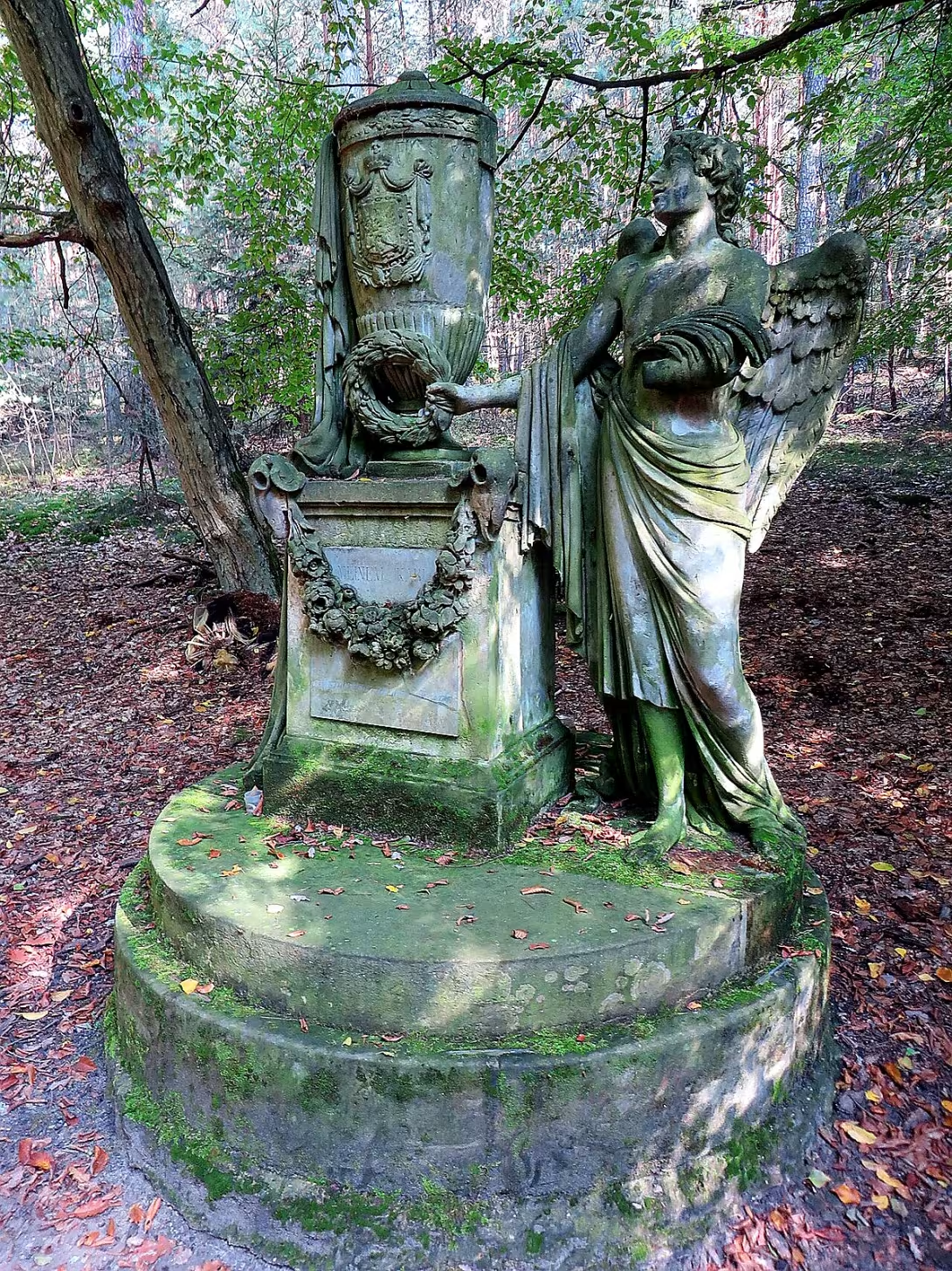
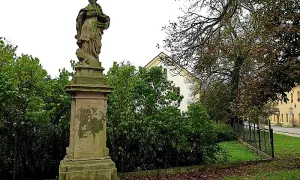
Pomník Karla Fürstenberka, a sandstone statue from the turn of the 18th and 19th centuries, is located in a quiet part of the landscape park near the city of Loučeň in the district of Nymburk. This cenotaf was built in honor of Charles Alois, Prince Fürstenberg, who died during the war of the second coalition in the Battle of Stockach. The monument is protected as a cultural monument and connected to the site of the spring of God's water.
The memorial was built shortly after the death of Karl Alois Fürstenberg by his widowed spouse Maria Elizabeth the priestess Fürstenberg. The second coalition (1799), part of the Napoleon Wars, was formed in the context of the war, reflecting the personal and historical importance of this time. The memorial is the work of Francis Xaver Lederer, which contributes to his artistic value.
Architecturally, the monument is characteristic of the Empire style, which is reflected in fine details and symmetry. On the second pedestal is depicted a winged angel with a palm branch and a laurel wreath, dedicated to an urn with a Fürstenberg family coat of arms. The secular character is highlighted by a stone candle jar and the reliefs of military trophies that resemble the princes' military career.
The memory went through several phases of maintenance. In 1969 there was an appeal to repair the damaged monument, which was followed by reconstruction in 1985 and 2009. The last reconstruction under Martin Pokorný included cleaning from microvegetation and gypsum crust, desalination and repair of mechanical damage.
The monument is now open to the public and is worth visiting not only for its historical value, but also as part of the local learning path. There is another sculpture monument connected with the personality of Karel Aloisa, the monument of Helma.
The memory of Karl Fürstenberg is a reminder not only of military heroism, but also of personal tragedy. It is an important historical witness and work of art that carries within itself the wealth of past times. Visiting this monument offers an opportunity to explore not only its historical context, but also the beauty and tranquility of the local environment.
Historical milestones
- 1799
- Karel Alois kníže Fürstenberg fell during the Battle of Stockach.
- 1965
- The memorial was registered as a protected cultural monument.
Architectural development
The memorial was built shortly after the death of Karl Alois Fürstenberg by his widowed spouse Maria Elizabeth. In 1969 there was an appeal for repair, followed by reconstruction in 1985 and 2009.
Historical events
- 1799
- Karel Alois kníže Fürstenberg fell during the Battle of Stockach.
- 1965
- The memorial was registered as a protected cultural monument.
Points of interest
- The sandstone statue from the turn of the 18th and 19th centuries was built by Maria Elizabeth, the priestess Fürstenberg. - The memorial is a cenotaph reminiscent of Charles Alois, Prince Fürstenberg, who died in the Battle of Stockach. - The work of František Xaver Lederer is performed in Empire style and decorated by an angel with palm branch and laurel wreath. - The monument is connected to the place of the spring of God's water. - The statue is part of the educational path and nearby is the monument Helma.
Guide
Show guide text
This text was created by artificial intelligence and has not been editorially reviewed. It may contain inaccuracies.
Welcome to Loučni, a small town full of history and beauty. You are standing in front of the monument of Karel Fürstenberg, a sandstone statue located in a quiet part of the castle branch. This monument is a real testament to rich history and personal courage.
The memorial was built in honor of Charles Alois Prince Fürstenberg, who died in 1799 during the Battle of Stockach. This tragic event occurred during the second coalition, when powers met in an attempt to reformalise Europe's borders. Karel Alois was an important figure of his time, and his death left a deep mark on the Fürstenberg family.
The architecture of the monument is the work of Frantisek Xaver Lederer, known for his artistic abilities. The monument is performed in empirical style, which is reflected in its clean lines and harmonious proportions. Note the angel with palm branch on the statue - symbol of triumph over death and permanent memory.
When exploring this place, we learn more about the key personalities associated with this place. Maria Alžběta kněžna Fürstenbergová, the widow of Karl Alois, was the initiator of this monument. Her decision to create a cenotaf for her husband reflects a profound personal loss and a desire to honor his memory.
The interesting thing is that this monument is not only a monument to a hero, but also a part of the landscape park associated with the site of the spring of God's water. This combination of history and nature makes the Loučňan memorial a special place that offers peace and reflection.
Let's move closer and look up at the statue. Note the details in the angel's image - his exhilarating gaze and dignity that transmits a sense of peaceful worship.
Now pay attention to the nearby park. Note the green meadows and bushes that form the harmonious landscape around the monument. The atmosphere of this place is calm and reminds us of the importance of remembering history.
By inviting you to further explore the Loučňan surroundings you can discover more about the rich history of the area. The town offers diverse cultural and natural attractions that await your visit.
Thank you for seeing this historic place. We hope it has been interesting to you and your interest in the heritage of the Loučňan region. When we meet again in other magical places!
Tips for visitors
The best time to visit is the spring or autumn season, when the surrounding sector is pleasant light and weather suitable for walks.
For photography it is ideal to use soft light early in the morning or before sunset, which will highlight beautifully the texture of sandstone material sculpture.
You can reach the place by car or public transport. The current connection and traffic options are best checked in the internet search engine.
Take drinking water and comfortable shoes for walking in the park. For families with children a walk in this historic location represents a pleasant opportunity for outdoor activity.
Within the vicinity, located in a short distance, you can visit another sculpture monument connected with the personality of Karel Alois, the monument Helma.
Frequently asked questions
Can the monument be visited?
This is a structure in a public space that can usually be seen from outside free of charge. We have not verified that this particular one is freely accessible.
Where is the monument?
Location: Loučeň, Středočeský kraj. The map on this page shows the exact spot.
Why is the monument protected?
It is listed in the Central List of Cultural Monuments of the Czech Republic as a cultural monument (register no. 1000150140).
Businesses nearby
Do you run a restaurant, accommodation, shop, museum, rental, wellness or other visitor service near this monument? Show yourself directly to the people heading to it — this is how they will see you in the app and on the web:
Nearby
Nedaleko se nachází další sochařská památka spojená s osobností Karla Aloise, a to pomník Helma.
Accommodation nearby
Themed route
Thematic cruise route: Loučeň and monuments associated with Karl Fürstenberg
1.Pomník Karla Fürstenberka - Type: Monuments, sculptures - Why is it worth a visit: This monument celebrates the life and work of Karel Fürstenberg, an important Czech politician and public official. It is a local cultural point that resembles a historical personality whose legacy is central to the region.
2. Monument of Helm - Type: Monuments, sculptures This monument is dedicated to Karl Alois Fürstenberk and his wife Helenka. It is another monument that resembles the family and personal relationships of this historical figure, providing insight into her life and beyond the public sphere.
3. Municipality of Loučeň - Type: Urban location - Why it is worth a visit: Loučeň is a picturesque place with a rich history that can be explored in terms of architecture and cultural heritage. It is an ideal place to stop and see local sights and surrounding nature.
This route offers visitors the opportunity to immerse themselves in the history and culture of the Loučeň region, focusing on two key monuments associated with Karel Fürstenberg.
Seasonal recommendations
Spring: In the spring period, Karl Fürstenberk's Loučenská memorial appears in the most beautiful light, when the sun lights up the walls and the statue in the afternoon with long rays. Various flowers bloom around the monument, which gives the place a lively color and natural beauty. At this time people like to meet for walks, therefore it is advisable to visit the monument in the early afternoon to avoid the initial crowds. It is recommended to wear clothes according to temperature, but to have a spoon or umbrella at your hand for sudden changes in the weather.
Summer: The summer of the Loučenská memorial offers an ideal environment for afternoon relaxation. Sunshine days create an attractive atmosphere where the warm sun can feel on your face and the sounds of nature are in full range. In the main summer season it is recommended to visit the monument early in the morning or later in the afternoon to avoid the hottest hours and crowds of tourists. Do not forget the protective sunglasses and sufficient amount of drinking water.
Autumn: In autumn, the Loučenská monument is transformed into a place full of melancholy beauty, where leaves of falling trees form a colorful and moving carpet. The sunny days are more often freezing, which creates a unique atmospheric effect around the monument. Visit her at noon when the light is best for photography and walks. It is recommended to wear warmer clothes and carry an umbrella because autumn weather can suddenly be wet.
Winter: The Loučenská memorial in winter offers a calm and quiet atmosphere, surrounded by snow or ice. Light was reflected on white soil, which gives the place a magical look. This season the monument is often visited by fewer people, so you can relax here and see the monument without interruption. Visiting her is best at noon, when the sun illuminates the statue best. Remember warm clothes, shoes and protection against cold because winter day can be short and cold.
Visualizations and artistic views


The visualisations are generated by artificial intelligence and serve as inspiration.
Photos from the area
Real photos taken near the monument

Zdroj a licence jsou uvedeny u každého snímku.
Tips from visitors
No tips yet. Be the first!
Log in and add your tip.
Sources and literature
Photos: Michal Louč / CC BY-SA 4.0 — Wikimedia Commons. The author and licence also appear when you hover over the image.
Faktickým podkladem tohoto textu byl článek na Wikipedii, jehož autory jsou přispěvatelé Wikipedie. Článek je dostupný pod licencí CC BY-SA 4.0.
Location on the map


Příběhy a pověsti
Legendy, pověsti a příběhy spjaté s touto památkou
Fotografie návštěvníků
Zatím žádné fotografie. Buďte první, kdo přidá fotografii z návštěvy!
Log in a přidejte svou fotografii nebo hodnoťte.
Za ověřenou návštěvu v aplikaci získáte víc bodů — poznáme podle GPS, že jste na místě.
Reviews and comments