






Kostel Nanebevzetí Panny Marie (Loučeň) Church
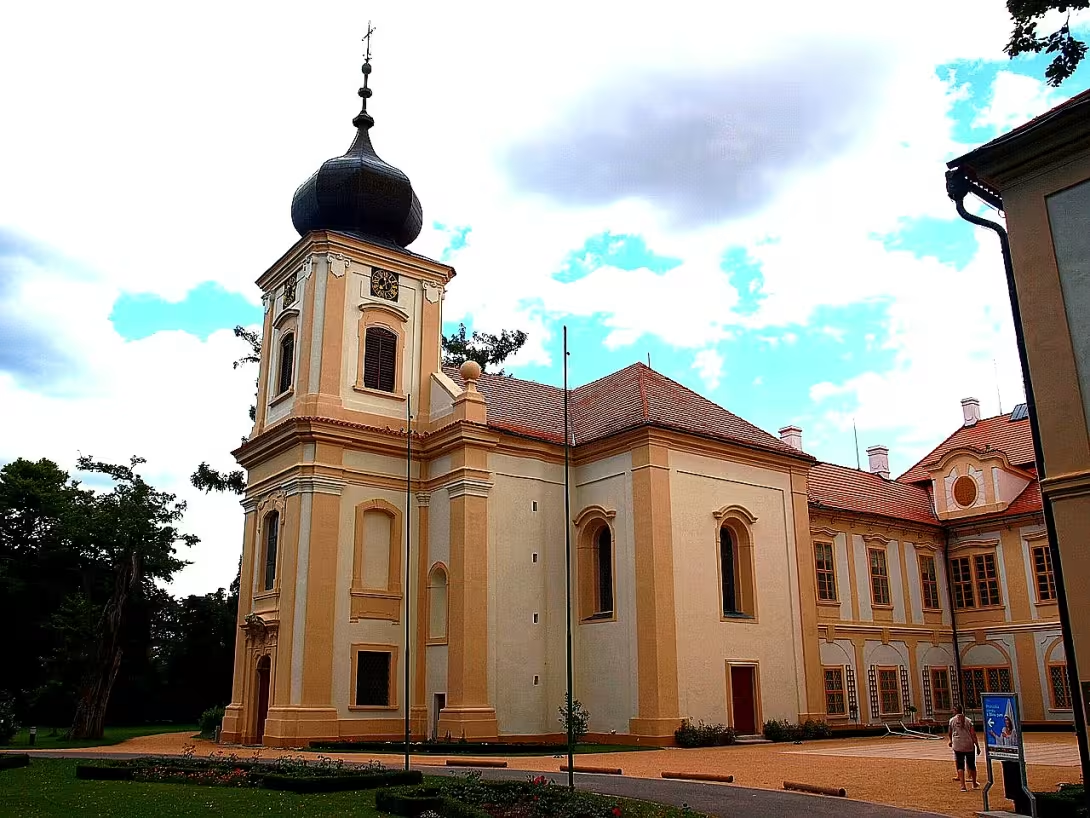
The Church of the Assumption of the Virgin Mary in Loučení is one of the most important Baroque sacral buildings illuminated by architecture. It is located in close proximity to the lock, which forms part of which - specifically in its eastern wing. Since 1965, the church and the chateau have been protected together as a cultural monument, and it is a testament to the deep connection of the estate administrator with the divine tear.
The architect of the church was František Maximilián Kaňka, who realized it in 1710-1713. This period was one of the most productive baroque periods in Czech countries and Káňka was among the leading creators of the time.
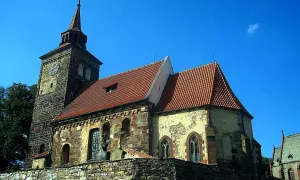
The construction is characterized by a completely original central plan on the cross-diagram, which creates a balanced and harmonious impression. On the north side of the main portal, the prism tower with Yonian Pilasters is raised on rounded corners, which provides construction of dynamics. The tower was later modified in 1848 when it underwent modernization. The central part of the church is closed with a dome area that closes the interior space and allows light to enter. The wings of the building have cross vaults. The walls break down the lizen and rectangular windows with the shamrans, which complement the bent ledge. The church was painted in the 19th century, thus gaining another layer of wealth.
The inside of the church keeps facilities from the time of its construction. The main altar has a large architecture and bears a picture of the Assumption of the Virgin Mary, which is supposed to come from the circle of the prominent baroque painter Peter Brandle. On the altar are statues of St. Wenceslas, St. Vitus and the angels, which may have been created by Czech sculptor Jan Oldřich Mayer. The three side altars are decorated with paintings of Charles Boromei from 1746 and the Death of St. Joseph. The third picture is supposed to come from workshop A. Braun. All these elements create an atmosphere of deep faith in the interior.
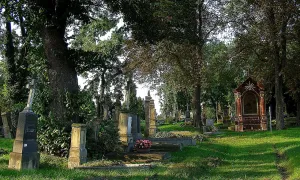
The church and chateau surroundings deserve the same attention. From the first half of the 19th century comes an English park with two ponds, in which are reflected Baroque statues with ancient motifs - Aenea taking father from Troy and probably the scene of the Proserpina Kidnapping. These statues come from the Baroque, around 1700. In and around the park is a rich collection of smaller sights. In the village there are statues of St. John Nepomuk with legendary reliefs and St. Prokop. The Chapel of the Holy Family standing at the forest edge quietly hides the painting of the Holy Family pilgrimage to Jerusalem by Emanuel Neumann from 1913 and the statue of the Archangel Gabriel from the 18th century.
In the forest northeast of Loučena, near the famous well called the water of God, there is a significant collection of Empire monuments. These include the crucifix, the stone monument of Prince K. A. Fürstenberg († 1799) and the memory column of Charles of Fürstenberg from 1796. The monuments come mainly from the beginning of the 19th century and represent works of artists of the Josef Malinský or Václav Prachner circuit.
Today, regular services are held in the church on Saturday and Friday at 4 p.m. The visitor will thus be given the opportunity to see this jewel in its original function.
Then and now
Drag the slider to compare how the landmark may have looked when it was built with the view today.
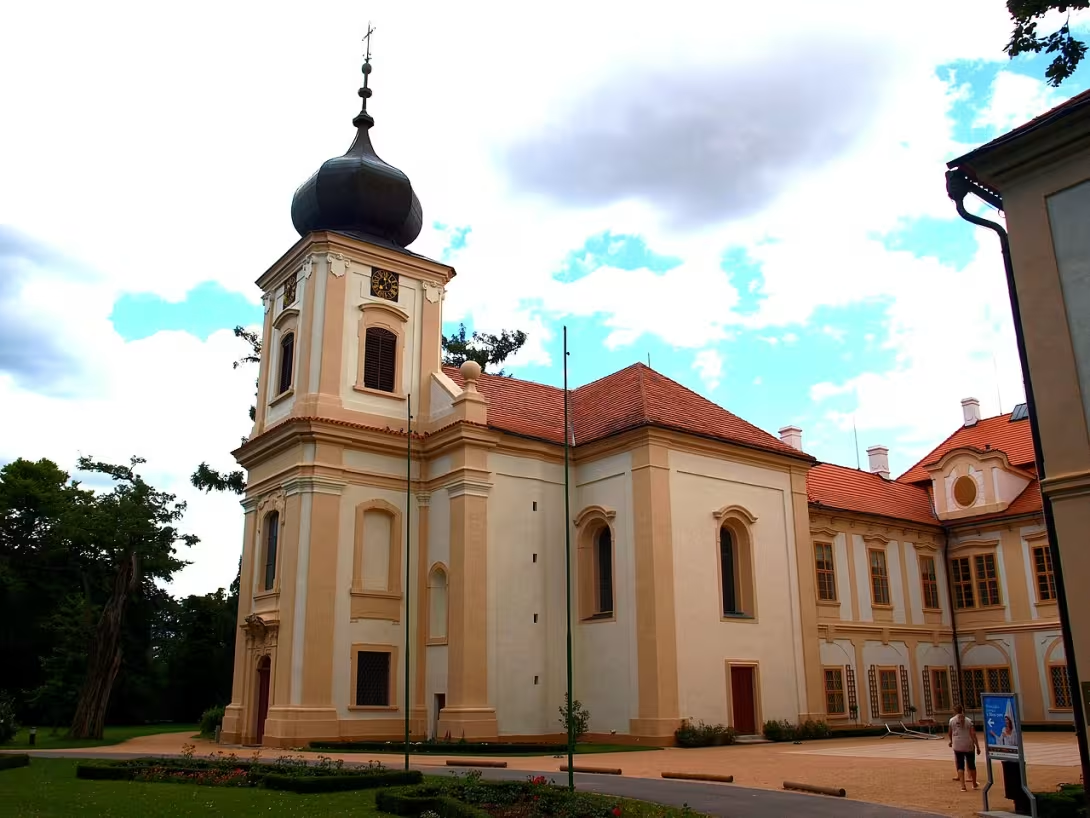

The historical appearance on the left is an AI-generated visualisation and serves as inspiration only.
Historical milestones
- 1710
- Church of the Assumption of the Virgin Mary in Loučeni was built
- 1713
- The church was completed
- 1746
- The paintings of St. Charles Boromei were created
- 1796
- The pillar of the memory of Karl of Fürstenberg was built
- 1799
- Prince K. A. Fürstenberk died
Architectural development
The church has a central structure on a cross plan, supplemented by a prism tower at the north side of the main portal.
Historical events
- 1710
- Church creation
Points of interest
- The Church of the Assumption of the Virgin Mary in Loučení is one of the most important Baroque sacral structures illuminated by architecture. - The architect of the church was František Maximilián Kaňka, who carried it out in 1710-1713. - The construction is characterized by a completely original central plan on the cross diagram. - The tower was later modified in 1848 when it underwent modernization. - The interior of the church keeps facilities from the time of its construction.
Guide
This guide is narrated by a synthetic voice generated by artificial intelligence.
Show guide text
This text was created by artificial intelligence and has not been editorially reviewed. It may contain inaccuracies.
Welcome to the goodbye. You're standing right in front of a place that carries the incredible power of history and artistic expression. In front of your eyes is the Church of the Assumption of the Virgin Mary, a baroque gem that can act at first sight as part of a larger whole, and in fact it is. Feel this unique situation where the sacral architecture is not in the open area, but is masterfully knitted directly into the east wing of the chateau. This integration creates a sense of intimacy and nobility, as if the church were the heart of the entire estate, a hidden treasure waiting to be discovered. Take a moment and perceive the atmosphere of this place, where the power of the noble manor is combined with the spiritual mission of the temple.
But to understand why this place is so special, we must return together to the beginning of the eighteenth century. Imagine a time when the Baroque was in full bloom and when architecture sought grandiousness, movement and emotion. It was in 1710 that a chapter began to be written here, which still fascinates art lovers. The construction of this church started during the period when the new face of the Central Bohemia region was formed. The whole process lasted several years and only in 1713 the work was completed. At that time, it was not just about building walls, but about creating an area that was supposed to inspire astonishment and create religious consideration. This whole project was called a master whose work is among the most important in our countries. The architect was František Maximilian Kaňka, a character whose name is synonymous with the ultimate baroque thinking. His vision found his fulfillment here when he was able to combine the demanding demands of the sacral structure with the existing structure of the chateau.
Now pay attention to the architecture itself that surrounds you. If you look at the overall composition, you will notice something that distinguishes this church from many other sacral structures of its type. The canyon did not follow the usual templates. Instead of a traditional elongated dwarf space, he used a completely original central plan based on a cross pattern. What does that mean to you as a visitor? It means that space is not only meant to lead you forward to the altar, but to surround you from all sides. The central solution creates a sense of unity and harmony where the visitor's eye naturally moves throughout the space without being trapped in a single line. This geometric precision is typical of the best works of the Baroque, where mathematics meets the spiritual. Feel how this cross plan affects spatial dynamics and how the architect tried to create space that acts monumentally even though it is part of the lock complex.
However, if we move on in time, we will find that the church was not only a static monument, but a living place that was constantly supplemented by new layers of importance. In 1746, another artistic wealth was born in this space when the paintings of St. Charles Boromei were created. These paintings added another dimension to the interior and deepened its spiritual scent. The church was not only a building of stone and mortar, but a space where art met faith.
Everything in this place is deeply connected to the Fürstenberk family, which left its indelible mark. The history of this church and chateau cannot be separated from the fate of these important personalities. Notice how the stories of powerful generations and their efforts to perpetual memory intersect around the church. In 1796, a pillar of the memory of Charles of Fürstenberg was built, which is proof of how deep the relationship between the family memory and this sacred space existed. This monument recalls that the church served not only as a place of divine praise, but also as a place of worship for family values and history. The year 1799 then brought a sad chapter when Prince K. A. Fürstenberk died, which closed one era and, at the same time, reminded the passing of human life in contrast to the unwavering of sacral architecture.
You might find one interesting thing that makes this place truly unique. The Church of the Assumption of the Virgin Mary is not only one of the important Baroque sacral objects, but it is one of the most important examples where architecture becomes part of the noble mansion so organically that it is difficult to imagine the chateau without its presence. It is this symbiosis, this hidden character that makes it a treasure that is not visible at first sight to every bystander, but that reveals its overall beauty to those who stop and start looking more closely. It's an architecture that doesn't seek attention by screaming, but by its depth and ingenuity.
But now I will no longer hold you back in your discovery. I suggest you enter and be consumed by the unique central space we talked about. Take a look at the details left by the baroque masters, and try to imagine life in Loučena centuries ago. Get carried away by the atmosphere that still hangs in every corner. Thank you for spending this moment with us, and we wish you a beautiful and inspiring tour of this baroque treasure. Enjoy every second spent in this special place.
Tips for visitors
The best time to visit the Church of the Assumption of the Virgin Mary is from spring to autumn, when the surroundings of the flower and the sun shine on the facade of the building. Since the church is located in the chateau area, parking is available directly at the entrance. We recommend bringing solar glasses or a hat to protect themselves from sunlight. Remember to take the camera with you and do not be disturbed by statues with ancient motifs that are located around the church. The best places for photography are in front of the church and on its side where the sun shines. If you want to visit the surrounding area, we recommend going to the English park from the 1st half of the 19th century with two ponds or looking at statues with ancient motifs: Aenea taking the father from Troy and possibly Kidnapping Proserpina. For families with children, the church is ideal for a trip because it has a quiet environment and children can play here.
Frequently asked questions
Is Kostel Nanebevzetí Panny Marie (Loučeň) open to the public?
Yes, the church is open to the public. The tour is possible daily from 9: 00 to 5: 00.
How do I get to the place by car / public transport?
You can get by car or public transport from Prague to Loučni. Bus line 360 stops near the church.
How much is the entrance fee and is it paid on the spot?
Payment is made directly inside the church.
Is the tour suitable for children and seniors?
Yes, a church tour is also suitable for families with children and seniors. The church has a ramp for people with disabilities.
How long does the tour take?
The church tour takes about 30 minutes.
What are the opening times and booking is required?
The church is open daily from 9: 00 to 17: 00. Reservation is not required, but we recommend prior verification of opening hours in case of interest.
For kids
Imagine coming back 316 years, until the Church of the Assumption of the Virgin Mary was still young and full of life in Loučni. At the time, the Parachen community was small, but very active. People have lived here since the Middle Ages, which is why the church is their oldest monument.
The church stood in the middle of the village as if it were her heart. People gathered at his walls to pray and celebrate their anniversary. The church was their home, where they came to comfort and joy. And that's why the church is so important to the locals.
Businesses nearby
Do you run a restaurant, accommodation, shop, museum, rental, wellness or other visitor service near this monument? Show yourself directly to the people heading to it — this is how they will see you in the app and on the web:
Nearby
English park from the first half of the 19th century with two ponds.
Statues with ancient motifs: Aenea's taking father from Troy and possibly Kidnapping Proserpina.
Accommodation nearby
Themed route
1. Church of the Assumption of the Virgin Mary (Church) - The main destination of the visit and spiritual center of the village. 2. English park (park) - The space from the first half of the 19th century with two ponds, which offers a peaceful walk in nature. 3. Statues with ancient motifs (sculptures) - Artistic works in the park area which depict Aene's taking father from Troy and Kidnapping Proserpina.
Seasonal recommendations
In spring, the church surrounds the awakening nature and fresh green, which gives a new life to the memory. The atmosphere is full of hope and the light is fine, which is ideal for observing the facade details. We recommend to dress more layers of clothing because the morning temperatures can still be low, and visit the place in the morning when the air is the cleanest.
The summer season brings a sharp sun and rich colors of the surrounding landscape, highlighting the architectural beauty of the building. There are more visitors in the main season, so it is best to come first thing in the morning to avoid the biggest crowds and heat. Don't forget the light, breathable clothes and the sun hat.
Autumn in Louzen is characterized by golden leaves and frequent fog, which give the church a mysterious and melancholy touch. Soft evening light creates a dreamy mood that is suitable for peaceful contextation. The practical recommendation is to wear moisture resistant shoes and visit in the afternoon when the colors of nature are the most intense.
In winter, the monument is very peaceful, and a possible layer of snow can turn the whole area into a white fairy tale. The atmosphere is quiet and in advent time there is a special room. It is necessary to wear warm and waterproof clothes and to verify in advance the opening times which are shortened in this season.
Visualizations and artistic views


The visualisations are generated by artificial intelligence and serve as inspiration.
Photos from the area
Real photos taken near the monument

Zdroj a licence jsou uvedeny u každého snímku.
Atmosphere of the place
This atmospheric visualisation of the place and period was generated by artificial intelligence. It is not real footage of the location.
Tips from visitors
No tips yet. Be the first!
Log in and add your tip.
Sources and literature
Fotografie: VitVit / CC BY-SA 3.0 — Wikimedia Commons. The author and licence also appear when you hover over the image.
Faktickým podkladem tohoto textu byl článek na Wikipedii, jehož autory jsou přispěvatelé Wikipedie. Článek je dostupný pod licencí CC BY-SA 4.0.
Location on the map
Příběhy a pověsti
Legendy, pověsti a příběhy spjaté s touto památkou
Fotografie návštěvníků
Zatím žádné fotografie. Buďte první, kdo přidá fotografii z návštěvy!
Přihlaste se a přidejte svou fotografii nebo hodnoťte.
Za ověřenou návštěvu v aplikaci získáte víc bodů — poznáme podle GPS, že jste na místě.
Reviews and comments