



Šibice Settlement
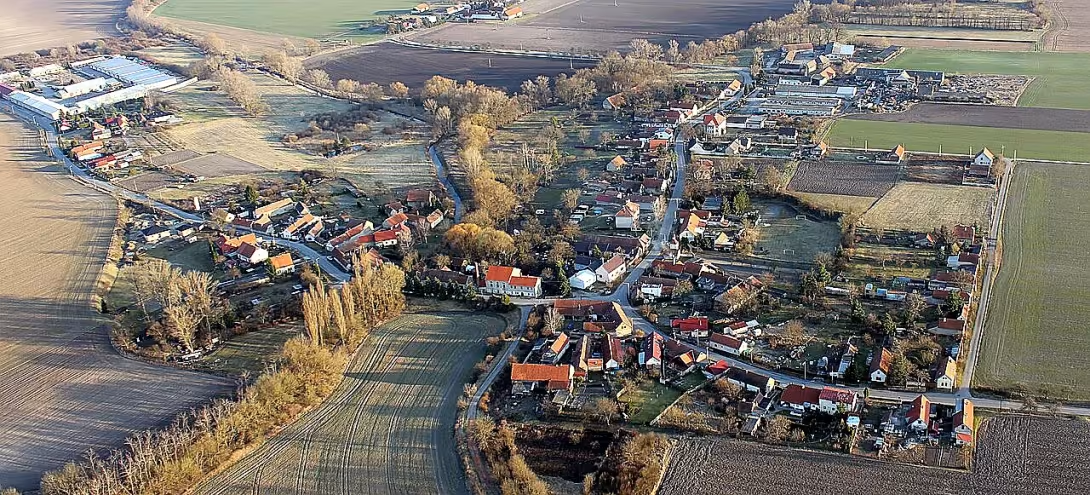
Šibice is part of the village Hronettice in the village Kostomlaty nad Labem in the district Nymburk in the Central Bohemian region. This site with roots in the late Middle Ages is remarkable by its development. Originally, it was a small settlement with a tavern which was destroyed during the 30-year war and later replaced by a large-scale court.
Historically Šibice belonged to the castle estate of Mydlovar. The first written proof of their existence dates back to 1492 from the will of Hynek of Podebrad, son of King George. Hynke won Myslovary and the adjacent Šibice already in 1472. In the will of 1492, the castle, Šibice and other surrounding villages - including Hronetic, Lány, Kostomlát and Drahelic - bedrich and his mother Kateřina Vojtková from Strážnice and Štítar left to his left-handed son.
Later, after the suppression of the uprising of the Czech states against King Ferdinand I of Habsburg, Šibice fell under the administration of the imperial estate Lysá nad Labem. Eight farms and one tavern worked here during this period. This structure was disrupted by a 30-year war, during which both Šibice and neighbouring Hronetics were damaged and largely abandoned.
The change of character of the place occurred when the new owner, Count Jan Špork, had built a large court. This large estate was also accompanied by abandoned land. Šibice has never become a separate village during its history and was later definitively connected to the Hippos.
From the point of view of architecture, large estates are now dominated by the consequences of several reconstructions. The buildings of this complex are located in the eastern part of Hronětice at the exit on the III. Class road No. 3318 towards Nymburk and are used for operation by several companies.
The history of Šibic offers a view of changes in rural settlements from medieval farmhouse to war destruction to the creation of a great estate. In the architecture of the court, the economic restoration of the landscape after a 30-year war can be seen. Visiting this place is recommended to all who are interested in the development of Central Bohemian mansions and their transformation over centuries.
Then and now
Drag the slider to compare how the landmark may have looked when it was built with the view today.
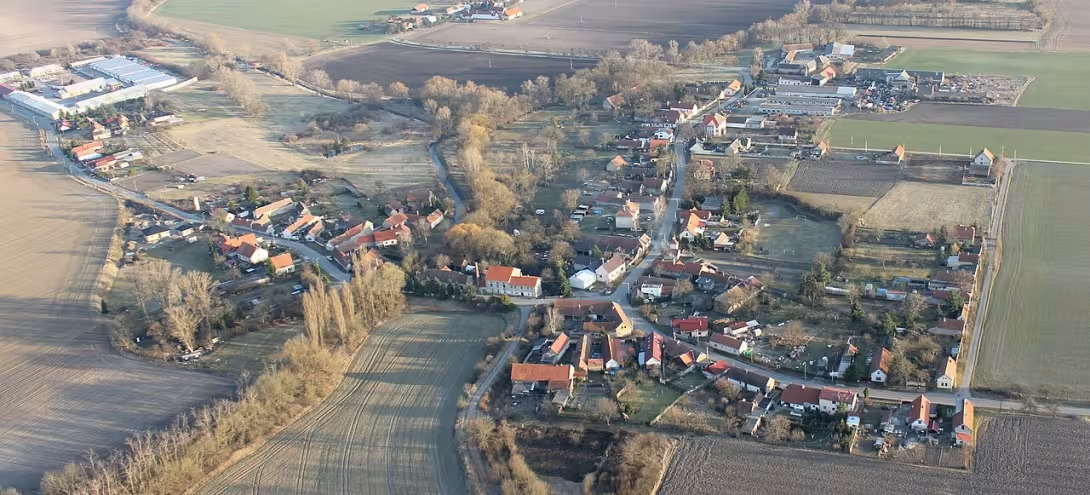
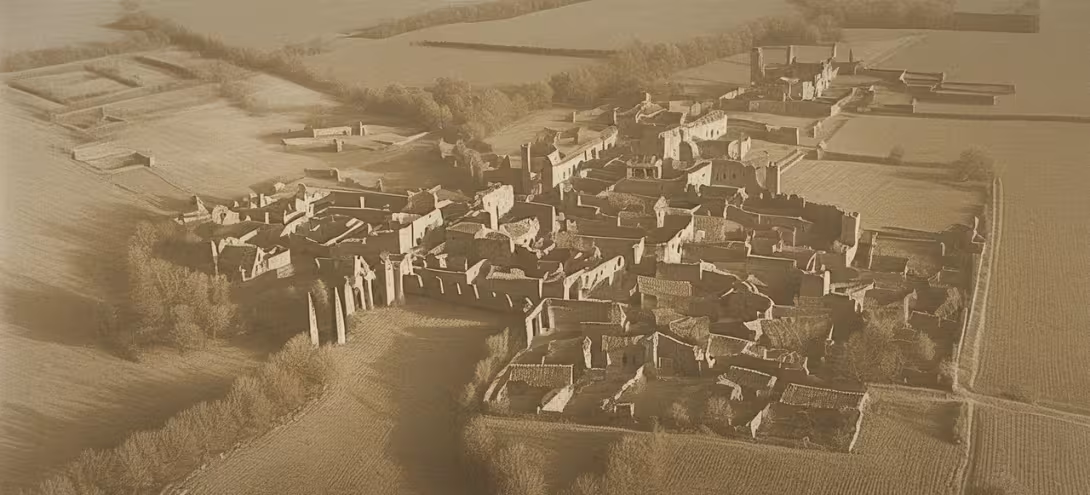
The historical appearance on the left is an AI-generated visualisation and serves as inspiration only.
Historical milestones
- 1472
- Hynke z Poděbrad won Mydlovar Castle and adjacent Šibice Castle.
- 1492
- First written proof of the existence of Shibice in the will of Hynka of Poděbrad.
- 1618
- The transition under the administration of the imperial estate Lysá nad Labem after the uprising of states.
- 1618
- Devastation and abandonment of the settlement during the Thirty Years War.
- 1650
- The construction of the great court by Count Jan Špork.
Architectural development
Originally there were eight farms and a tavern. After the destruction during the 30-year war, a large court was built on the ground. The buildings of the great estate went through several reconstructions in later times.
Historical events
1492: mention in the will Hynka of Poděbrad; Thirty-year war: destruction and abandonment of the settlement; a later period: the construction of the court by Jan Špork.
Owners
Hynke z Poděbrad (until 1492), Bedřich from Podebrad and Kateřina Vojtková from Strážnice and from Štítar, imperial estate Lysá nad Labem, Count Jan Špork
Points of interest
- The first written proof of the existence of Šibic dates back to 1492 from Hynka's will in Podebrad. - Originally, it was a small settlement with a tavern that was destroyed during the 30-year war. - Later, Count Jan Špork had a large court built here. - Šibice has never become a separate village during its history. - The buildings of the large estate are used today to operate several companies.
Guide
This guide is narrated by a synthetic voice generated by artificial intelligence.
Show guide text
This text was created by artificial intelligence and has not been editorially reviewed. It may contain inaccuracies.
Welcome to the Costa Lates over the Elbe. You're standing in front of the buildings that form the Šibic area. If you look at them now, you will see a set of structures that today serve as a mansion for several different companies. You may be interested in their practical character at first glance, but behind these walls lies a long history that goes deep into the history of Central Bohemia. Feel the atmosphere of this place, which is located in the part of the village of Hronetice and which has been closely connected for centuries with the surrounding countryside and powerful family kingdoms.
Let's go back in time together to understand how this place came to be. Šibice is not just an ordinary assembly of buildings but a witness to the changes that have affected our countries. The first written references to this place introduce us until the end of the fifth century before our current period, namely the year of a thousand four hundred ninety-two. At that time, Šibice appears in the will of a nobleman named Hynke z Poděbrad. It was in the year of the thousand four hundred seventy-two castle Mydlovar and the surrounding Šibice, which made this place a part of an important estate. In the early days, it was a very small settlement, probably the centre of which was the local tavern, where people from the neighborhood met.
Now that you see the space around you, focus your attention on the scope of this area. What you see in front of you is not the original small settlement, but the remains of the great court. To understand why buildings are so large, we need to look at a dramatic break in history. In the year six hundred and eighteen, after the uprising of the states, Šibice went under the administration of the imperial estate in Lysá nad Labem. But almost at the same time, there was a 30-year war that left deep wounds in our countries. Šibice was no exception. The settlement was completely destroyed during this conflict and subsequently abandoned. Imagine this wasteland, where there was nothing but debris and silence.
But it was from these ruins that what you see today was born. Around the year a thousand and six hundred fifty began to work here Count Jan Špork. He was a man of great vision and considerable means who decided to revive the destroyed settlement. Instead of a small village with a tavern, a large manor court was built here. This large estate was designed to serve as a centre of economic management and production. Note the overall structure of the buildings, which reflects the character of the court, where everything was organized for the efficient functioning of the large economy. Over the next centuries, this court has been rebuilt several times to meet the needs of that time, which explains why we see a combination of various building interventions today.
When we think about the personalities involved in this place, Jan Špork is the most prominent character. His ambition turned Šibice from a small forgotten corner into a prosperous economic hub. Without his intervention, there would probably not be the buildings you're standing by today. It is fascinating to realize that this space has in the past been a place of hard work, land management and crop collection, while today in Germany the life of modern businesses.
Here is one interesting thing that will help you better perceive the uniqueness of this place. Although Šibice today is so significant thanks to the court and is already mentioned in the documents from the end of the fifth century, it has never been a separate community throughout its history. They always remained in a certain relation to the surroundings, first to the castle of Myslovar and later to the village of Hronetice. It is a hidden jewel which, although not having the status of a separate city or village, has outnumbered many other places with its historical value and dimensions of the court. It's a reminder of how they could have a powerful influence on one man's ambition, like Count Spork.
Look around you again. Feel the contrast between the quiet surroundings of Kostomlát nad Labem and the robustness of these buildings. Even though farmers do not work in the buildings today, but employees of modern companies, history remains tangible. Every stone and every wall tells the story of the rise, a deep fall during the war and subsequent rebirth.
We now invite you to look around in peace and try to imagine what this place looked like at the time of its greatest glory, when the court and economic tourism ruled. Take a look around the area and feel the connection with the Polabi landscape. We hope this short trip to the past has helped you better understand the meaning of the Shibice. Thank you for your attention and we wish you a pleasant continuation in discovering the beauty of the Central Bohemian Region. Goodbye.
Tips for visitors
The best time to visit are spring and autumn months when the landscape around Hronetic offers beautiful colors and temperate temperatures, making it easier to walk around the sights. The place can be reached by car or public transport; We recommend checking the specific connection in the current timetables.
For your journey, wear comfortable shoes suitable for the field and plenty of water, because it is an object in a public area which is viewed from the outside. We also recommend taking a map of the surrounding area for better orientation in the landscape.
For the best photos we recommend to come in the morning or late afternoon light, which highlights the details of historical remains. The best angles for pictures offer the surrounding public space, from where the monument is seen in the entire context of the village.
During the visit you can explore the surroundings, namely the village Hronetice and the village Kostomlaty nad Labem. For families with children it is ideal to combine a tour with a short walk of nature to help children keep their attention and to know the history of the Mydlovar estate in the field.
Frequently asked questions
Can the monument be visited?
This is a structure in a public space that can usually be seen from outside free of charge. We have not verified that this particular one is freely accessible.
Where is the monument?
Location: Kostomlaty nad Labem, Středočeský kraj. The map on this page shows the exact spot.
For kids
Imagine going back to a time when our country was a beautiful and dangerous place full of forests, rivers and reefs. It was like a game where every day was a new adventure.
The castle Šibice lived here at the time. He was powerful and strong, like a big mountain, but also beautiful as a flowering garden. The castle was home to the lords and their families who cared for the land and the people. They were real heroes with a sword in their hand and a heart full of courage.
Businesses nearby
Do you run a restaurant, accommodation, shop, museum, rental, wellness or other visitor service near this monument? Show yourself directly to the people heading to it — this is how they will see you in the app and on the web:
Nearby
V blízkosti se nachází vesnice Hronětice a obec Kostomlaty nad Labem.
Accommodation nearby
Themed route
Here is the design of the thematic route:
1. Kostomlaty nad Labem (municipality) - The starting point of the journey where you can be born and explore the local environment. 2. Šibice (monument) - The main destination of the visit, which offers a unique historical experience. 3. Hippopotamus (village) - A short walk to the neighbouring village to explore the rural atmosphere nearby.
Seasonal recommendations
In spring, the surroundings of the monument awaken in green and the first flowers bloom, creating a fresh atmosphere. The best is to visit the place in the morning when the light is fine. We recommend shoes suitable for wet grass and a light jacket against cold.
In the summer months the landscape is dominated by green and bright sun, which highlights the details of the construction. Because of the heat, it is advisable to come early in the morning or at dusk to avoid the hot heat. Don't forget the cap and plenty of water to go.
Autumn brings golden leaves to the Central Bohemia region and a misty wound that gives the place a mysterious touch. The outside walk is pleasant in the morning with mild lighting. Ideal is layered clothing and solid footwear for leaves.
In winter there is a monument in silence and calm, possibly in white snow, which creates a minimalist image. We recommend a visit at noon when there is the most daylight. Hot shoes, gloves and a fat sweater are essential.
Visualizations and artistic views


The visualisations are generated by artificial intelligence and serve as inspiration.
Tips from visitors
No tips yet. Be the first!
Log in and add your tip.
Sources and literature
Photos: Zdeněk Fiedler / CC BY-SA 3.0 — Wikimedia Commons. The author and licence also appear when you hover over the image.
Faktickým podkladem tohoto textu byl článek na Wikipedii, jehož autory jsou přispěvatelé Wikipedie. Článek je dostupný pod licencí CC BY-SA 4.0.
Location on the map
More monuments – Kostomlaty nad Labem
Show all in the municipality




Příběhy a pověsti
Legendy, pověsti a příběhy spjaté s touto památkou

Fotografie návštěvníků
Zatím žádné fotografie. Buďte první, kdo přidá fotografii z návštěvy!
Log in a přidejte svou fotografii nebo hodnoťte.
Za ověřenou návštěvu v aplikaci získáte víc bodů — poznáme podle GPS, že jste na místě.
Reviews and comments