



Pomník rudoarmějce v Pardubicích v Tyršových sadech Memorial
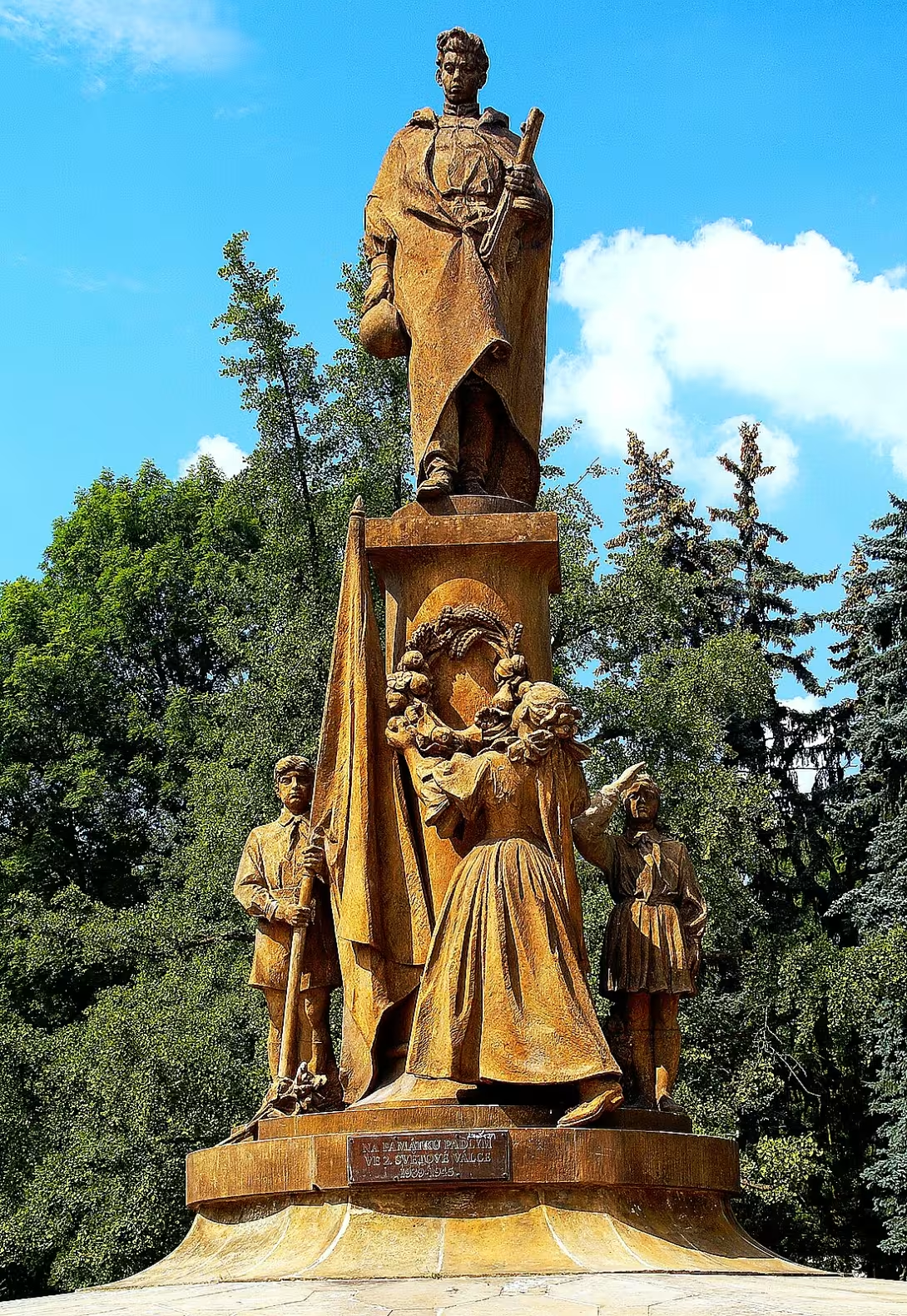
The Red Burmese memorial in Pardubice, located in Tyrše orchards, is a unique monument from the era of the Communist regime, which triggered extensive discussions. This monument, the height of which is 660 cm and is carved out of sandstone, represents a red armyist standing on a pedestal with three other characters: a woman with a wreath and two pioneers holding a guard. It was created as part of cultural and political propaganda after World War II, with the aim of expressing gratitude to the Czechoslovak people to the Red Army soldiers. The monument is an important historical monument not only because of its location, but also because of controversial discussions about its movement and symbolism.
The foundation of the monument was linked to the peak of the cult of Josif Stalin in Czechoslovakia. In the early 1950s, Stalin was celebrated as an ideal leader, reflecting the rise of statues throughout the Socialist bloc. In Pardubice on 21 December 1952, the foundation stone was laid for the monument of Stalin at the entrance to the Tyrše orchard by the Square of the Republic. However, after the change in the political line of the KSČ and the discovery of Stalin's character as a dictator at the XXth high KSSS, the original plan was replaced by the creation of a red-arm monument. On 5 November 1957, this monument was revealed and marked as a memorial of liberation, designed by sculptor Josefov Malejovský in cooperation with architect Richard Underground.
The architecture of the monument is characteristic of the time of its creation. Carved from sandstone, the monument contains a figure of Red Arm 310 cm high on a pedestal with three other characters: a woman with a wreath and two pioneers holding a guard. Critics point to the historical stupidity of pioneer figures because the Pioneer Organization was created after 1948. However, the author of the statue wanted to materialize the "painting in the picture," where the pioneers keep a guard at the statue of the Red Arm, not directly at the soldier, which was an expression of gratitude to the people of Czechoslovakia.
The debate on the transfer of the monument has been held for decades. The first attempts to remove it appeared in 1968, but the discussion was influenced by the narativus that the Czechs are memorial wreckers. The arguments of the supporters of the current state emphasise that the memorial expresses gratitude to the Red Army soldiers and the transfer would rewrite history. On the other hand, movement advocates point out that the statue served as a symbol of the power of the Communist regime and is not linked to the final resting place of fallen soldiers. They propose that she be moved to a burial ground where she might be more appropriately worshipped.
Today, the Red Arm memorial in Pardubice is still a subject of controversy. Its location prevents the view of the fixed castle and does not agree with the aesthetics of the city that claim historical monuments such as Pardubice Castle and Automatic Mill. The discussion about its relocation continues, which shows the complexity of preserving historical monuments in a modern context.
The Red Arm monument in Pardubice is more than just an artistic object; It is a symbol of the political and cultural past that gives thought to history and its interpretations. For visitors, not only the statue itself, but also the history and discussions around it can be interesting, which helps to better understand the complex nature of monuments from the communist regime.
Then and now
Drag the slider to compare how the landmark may have looked when it was built with the view today.
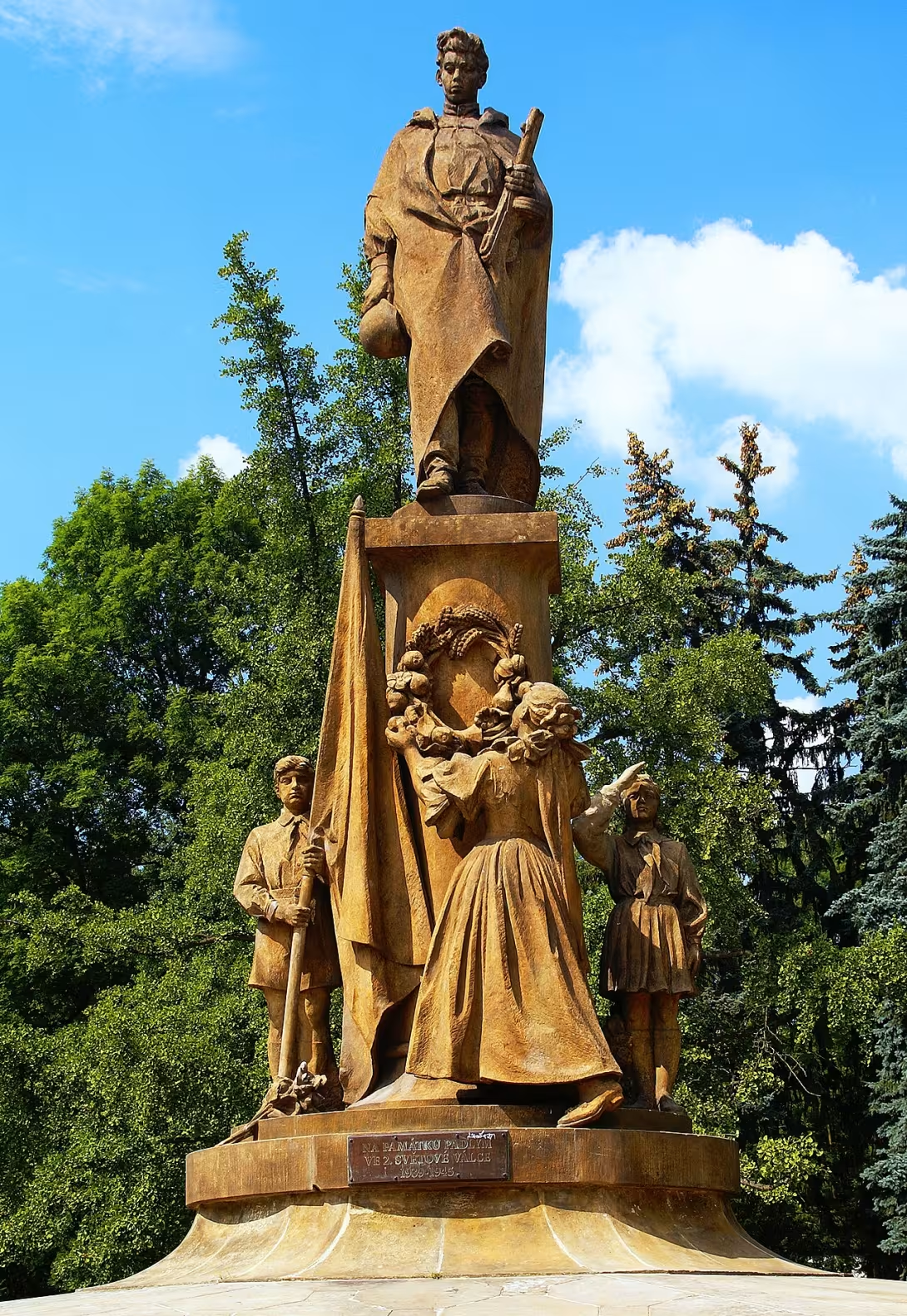
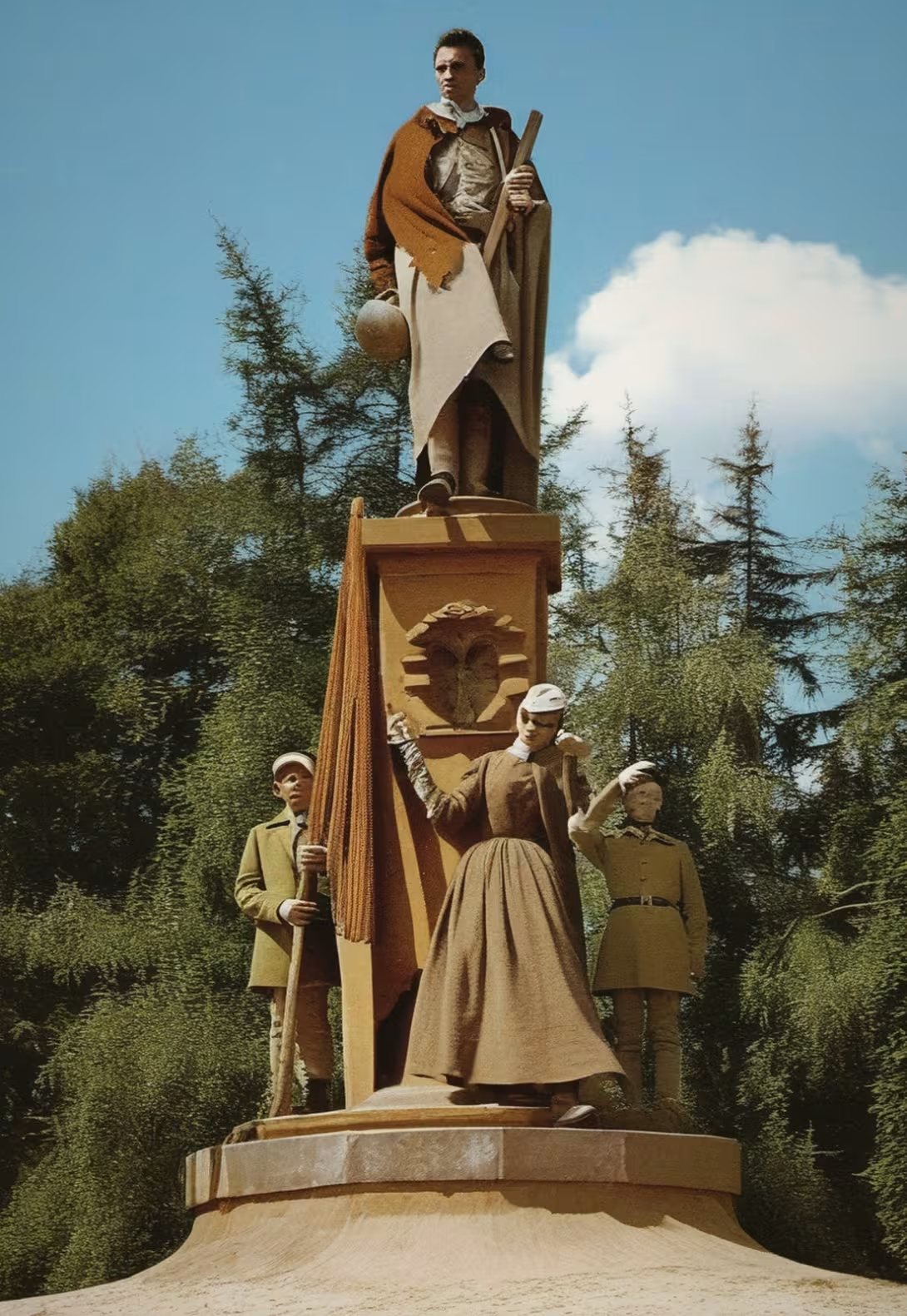
The historical appearance on the left is an AI-generated visualisation and serves as inspiration only.
Historical milestones
- around 1952
- The laying of the foundation stone for Stalin's monument in Tyrše orchards.
- after 1948
- The creation of the Pioneer Organization, which is the historical context of the figures on the monument.
- 1957
- The discovery of the Red Arm Memorial in Pardubice on 5 November.
- 1968
- First attempts to remove the monument, influenced by political change.
Architectural development
Initially, Stalin's memorial was intended, but it was replaced by a red-arm monument following a change in political climate. The memorial is carved out of sandstone and designed in cooperation with architect Richard Underground.
Historical events
- 1952
- The laying of the foundation stone for the statue of Stalin.
- 1957
- An unveiling of the Red Arm Memorial.
Points of interest
- The Red Arm Memorial in Pardubice is a unique monument from the era of the Communist regime, which triggered extensive discussions. - The foundation of the monument was related to the peak of the cult of Josif Stalin in Czechoslovakia and was originally intended as a statue of Stalin. - The architecture of the memorial contains a figure of a red armoury 310 cm high on a pedestal with three other characters: a woman with a wreath and two pioneers holding a guard. - The debate about the handover of the monument has been held for decades, the advocates of the current state emphasize their gratitude to the Red Army soldiers. - Today the memorial is the subject of controversy because of its location, which prevents the view of the fixed castle and does not agree with the aesthetics of the city.
Guide
Show guide text
This text was created by artificial intelligence and has not been editorially reviewed. It may contain inaccuracies.
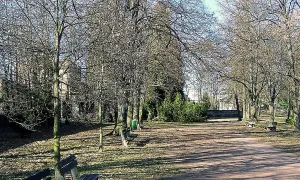
Welcome to Pardubice, in the quiet environment of the Tyre orchard. Legally, you are now facing one of the most prominent and at the same time the most discussed places in the city. Stop for a moment, take a breath and look straight ahead. The dominant of this space is the mighty Red Arm Memorial. The first thing you're probably interested in is its impressive size. The whole monument reaches a height of six hundred and sixty centimeters, making it a true dominant feature of the surrounding park. Do you feel that feeling when you have to raise your head to see the top of the statue? It was this contrast between the size of man and the size of the monument that was intended from the beginning to make the visitor feel respect and respect.
Let us now look at how this monument was created and at what time it was born. To understand its importance, we must return to the times of the communist regime, when public art has often been used to express political changes and ideologies. The author of the statue, architect Richard Podzemný, wanted to materialize the gratitude of the people of Czechoslovakia to the soldiers of the Red Army. However, the whole process of creation was not easy and lasted several years. If we look at history, we'll find that by the year one thousand nine hundred fifty-two, the foundation stone was laid in these orchards. But at the time, the plans looked completely different. It was originally supposed to be a monument to Joseph Stalin. That tells us how strong the cult of the leader's personality was at the time. However, political perception was changing over time, and the result was the project you see today. The discovery of the Red Arm Monument in Pardubice took place on the fifth day of November of the year a thousand nine hundred fifty-seven.
Now pay attention to the architecture itself and the details that are right before your eyes. Look up at the main character. He's a redorm whose statue itself measures three hundred and ten centimeters. It is depicted as a strong, decisive character that stands at the center of the entire composition. But the memorial isn't just about one soldier. Notice the other characters that accompany him. Next to him, you see a woman holding a wreath. This detail symbolizes the gratitude and honor of the fallen. And then there are two other characters that might seem less significant at first glance, but they're key to understanding the period context. It's two pioneers holding guard here. In order to understand why there are children here, we must realise that after a year of a thousand nine hundred forty-eight, a pioneer organization was established in Czechoslovakia. The involvement of children in the memorial was intended to symbolize continuity, the transfer of values from one generation to another, and the future future of the state under the new regime. All of these characters together form one comprehensive picture, which was to tell the story of liberation, gratitude and a new era at the time of its creation.
When we think about the personalities associated with this place, we have to mention Richard Underground who designed this space. His task was not only to create a statue, but to create a symbol that would be authoritative and understandable to every citizen in Tyrše orchards. Although we may see this style today as obsolete or controversial, it was a precise performance of the ideological assignment at the time of its creation.
Now I want to take you to something that you can't see at first sight, but that creates an invisible layer of this place. There are stories of tension and change. This monument is not only a silent witness to history, but it itself is its victim and participant. The most interesting part of his fate is about a thousand nine hundred sixty-eight years ago. At that time, there were major political changes throughout the country, which brought about the first attempts to remove this monument. People have begun to rethink what these statues mean. What was perceived as a symbol of gratitude in the year one thousand nine hundred fifty-seven, in the year one thousand nine hundred sixty-eight became a symbol of the forced regime for many. This contradiction is accompanied by a monument to this day. That is why this monument raises such extensive discussions. It is a unique monument from the era of the communist regime that makes us think about how our views on history change and how we want to remember the past in urban space.
An interesting mystery and paradox remains the change from the original intention to build the statue of Stalin to the resulting depiction of the Red Arm. It is a fascinating example of how quickly political priorities could change and how architects had to adapt to new winds in power. So you stand before a work that carries layers of different periods, from the top of one man's cult to the celebration of military victory, to modern debates about whether such monuments in our orchards still have their place.
Feel the atmosphere of this place now. Look again at the small figures of the pioneers, the woman with the wreath and the dominant soldier. Try to imagine what the grand unveiling of November of the year was like, a thousand nine hundred fifty-seven, when there were probably pledges and official speeches. And then imagine the contrast to the year one thousand nine hundred sixty-eight, where maybe there were people meeting with completely different feelings.
This concludes the short tour of the Red Arm Memorial. I hope that this interpretation has helped you to see more than just statues in this concrete and stone work, but a real record of the history of our city and country. Now I invite you to explore the Tyrso orchards again. Walk slowly between the trees, feel the calm of the park, and perhaps in your mind think about what monuments you would build today to tell the story of our time to future generations. Thank you for your attention and I wish you a pleasant continued journey Pardubicemi. I'll say goodbye and wish you a beautiful day of new discoveries.
Tips for visitors
The best time to visit the Red Arm Memorial in Pardubice is an early spring or late autumn day when the weather is quiet and the temperature is pleasant. These periods offer ideal lighting conditions for shooting a monument without direct sun rays.
For those travelling by public transport, buses and trams are available to bring to the centre of Pardubice. It is recommended to verify the current connection at the time of planning the visit.
When visiting the monument, it is advisable to bring protective clothing, especially if you visit during colder months. Photographers should also bring a camera or mobile phone to capture the monument from different angles, especially in the time of sunlight.
Photography of the monument offers the best possibilities from morning to noon when the light is brighter and less direct. The best places for photos are from the area of Tyršová orchards, where a monument can be captured in the context of the surrounding environment.
In the vicinity of the monument there are several attractions that can be visited in 30 minutes. These include the Pardubice Castle or the Museum of Car and Motorcycle in Pardubice. These places offer interesting information about the history and culture of the region.
Frequently asked questions
Can the monument be visited?
This is a structure in a public space that can usually be seen from outside free of charge. We have not verified that this particular one is freely accessible.
Where is the monument?
Location: Pardubice, Pardubický kraj. The map on this page shows the exact spot.
Why is the monument protected?
It is listed in the Central List of Cultural Monuments of the Czech Republic as a cultural monument (register no. 1000123837).
Businesses nearby
Do you run a restaurant, accommodation, shop, museum, rental, wellness or other visitor service near this monument? Show yourself directly to the people heading to it — this is how they will see you in the app and on the web:
Events nearby
Zdroj akcí: otevřená data měst a obcí ČR (Národní katalog otevřených dat) a kalendář akcí Národního památkového ústavu.
Nearby
🏰 Historic sites (275)
- Památník osvobození 0.0 km
- Pomník obětem 1. světové války 0.1 km
- Lily Ptačovská 0.2 km
- Petr Ptačovský 0.2 km
- Růžena Weinerová 0.2 km
- Helena Weinerová 0.2 km
- Rudolf Weiner 0.2 km
- Silver A - Radnice 0.2 km
- Silver A - Radnice 0.2 km
- Silver A - Gestapo 0.2 km
- Pavel Österreicher 0.2 km
- Markéta Österreicherová 0.2 km
- Leokadie Österreicherová 0.2 km
- Berta Österreicherová 0.2 km
- Augusta Bauerová 0.2 km
- Pavel Bauer 0.2 km
- Benno Österreicher 0.2 km
- Markéta Zenkerová 0.2 km
- Božena Viková -Kunětická 0.2 km
- Ing. Rudolf Gottlieb 0.2 km
🍽️ Restaurants and dining (452)
- café bar U MAXE 0.1 km
- Ristorante da Pepa 0.1 km
- Bartolomějská cukrárna 0.1 km
- Kavárna Nota 0.1 km Sukova třída 1260 +420 737 760 613 web
- Daki 0.1 km náměstí Republiky 1400
- Galera 0.1 km Bartolomějská 116
- Struhadlo 0.1 km náměstí Republiky 1400
- Pizzeria Santa Maria 0.1 km Pernštýnské náměstí 117
- Patapuf 0.1 km Pernštýnské náměstí 117
- Costa 0.1 km náměstí Republiky 1400
- Ichi Smash Burger 0.1 km náměstí Republiky 1400
- Popeyes 0.2 km náměstí Republiky 1400
- U Bílého Koníčka Sushi Poke 0.2 km náměstí Republiky 1400
- Indická a nepálská restaurace Tandoor 0.2 km Wernerovo nábřeží 115 +420 775 287 231 web
- Bejkry 0.2 km Na Hrádku 2943 +420 603 890 263
- Xien 0.2 km náměstí Republiky 1400
- Café Bajer 0.2 km web
- Trouba 0.2 km
- Dobrý Kafe 0.2 km náměstí Republiky 1 +420 732 811 192 web
- Bageterie Boulevard 0.2 km
🏨 Accommodation (57)
- Hotel 100 0.1 km web
- Kostelní 102 0.1 km
- Hotel Zámecká 17 0.2 km
- U zlatého anděla 0.2 km
- Hotel MRÁZEK 0.3 km web
- Penzion Hacienda Ranchero 0.3 km web
- Pension Austria 0.5 km Smilova 312 +420 721 500 150 web
- Zlatá štika 0.6 km web
- Penzion 2727 0.6 km
- Hotel Atrium 0.6 km Smilova +420 466 615 146
- Pension Podkova 0.7 km Smilova 335 +420 466 611 206 web
- Penzion City 0.7 km Hronovická 708 +420 777 002 272 web
- Penzion Cafe City 0.7 km Hronovická 708 +420 777 002 272 web
- Arnošt 0.8 km web
- Hotel Euro 0.8 km Jiráskova 2781 +420 466 414 255 web
- Birdie 0.8 km Hlaváčova 392
- Autokemp Cihelna Pardubice 0.9 km Husova 1089 +420 466 415 833
- Hotel Kristl 1.0 km +420 739 287 636 web
- Ubytování v Pardubicích 1.2 km
- Hotelový Dům Pardubice 1.3 km Bělehradská 458 web
🚲 Rentals and sport (66)
- Pulsmetry.cz 0.1 km náměstí Republiky 1400
- Stockrider 0.2 km Svaté Anežky České 121 +420 603 258 314 web
- Laser Space 0.2 km třída Míru 2671 +420 602 650 075;+420 777 824 846 web
- HB Sport;HC Sport 0.5 km Sladkovského 486 +420 730 915 783
- Sokol 0.5 km +420 466 614 681 web
- CFIG Aréna 0.5 km
- BikeHouse 0.5 km U Mlýnů 1901 +420 725 971 515 web
- CYKLO CONTENT 0.5 km +420466615277 web
- HC Pardubice Fan Shop 0.5 km
- Přístaviště − Loď Arnošt z Pardubic 0.6 km
- Intersport 0.6 km Masarykovo náměstí 2799
- Yetti 0.6 km
- Rock Point 0.6 km Masarykovo náměstí 2799 web
- Sport Vision 0.7 km Masarykovo náměstí 2799
- KEEPER sport 0.7 km Palackého třída 1930
- Plavání u Majáku s.r.o. 0.7 km Štrossova 172 +420 732 211 747 web
- Cyklo POKR 0.8 km 17. listopadu 216 web
- Brouzdaliště 0.8 km
- Lanové centrum 0.9 km
- Global Sport 1.0 km +420775070712 web
🥾 Hiking and nature (104)
- Zelená brána 0.2 km web
- Tyršovy sady 0.3 km
- Loď Otava 0.4 km
- SILVER A - rodina Krupkova 0.4 km
- Elektromotor s čerpadlem 0.4 km
- Bubeníkovy sady 0.6 km
- Náměstí Československých legií 0.9 km
- Vila Václava Ulrycha 0.9 km
- původní loděnice AROSA 1.2 km web
- Park Vinice 1.4 km
- Mostní pilíř technické cvičiště 1.8 km web
- park Jiřího Srbka 1.9 km
- Park Pardubičky 1.9 km
- Bombové krátery z roku 1944 2.0 km web
- Zámeček 2.3 km
- Lesopark Jiřího Potůčka 2.3 km web
- Park Ohrádka 3.0 km
- náměstí 9. května 3.0 km
- tvrz Nemošice 3.0 km web
- pluh 3.5 km
Accommodation nearby
Themed route
Thematic cruise route from Red Arm Memorial to Tyršová orchards
1. Monument of Red Arm (memorial) The main objective of this route is to visit the monument in Tyršová orchards, which worships the heroes of the Rudoarmé border battalion. This statue commemorates the struggle for freedom and equality during revolutionary events in 1918-1920.
2. Tyre sets (park) After visiting the monument we will look at Tyršová orchards, which are a beautiful green sanctuary in the urban environment. These sets offer quiet rooms for relaxation and knowledge of the history of the national revival because they were named after František Ladislav Tyrsa.
3. Nisa Stadium (sports grounds) We continue towards the stadium near Nisa, which is an important sports arena in Pardubice. There are various sporting events and competitions, making it a living location for both local and visitors.
4. Art School (Art School) The next item is Art School, where you can discover various exhibitions and projects of students. This institution supports the cultural development of the city and offers visitors an opportunity to explore contemporary artistic directions.
5. Business Center Pardubice (commercial area) To conclude the route we will visit the Business Centre Pardubice, which is not only a place for shopping, but also a meeting place. Here you will find a variety of shops and restaurants where you can relax after a day trip.
This route offers a combination of historical, cultural and modern Pardubice elements, allowing visitors to gain a comprehensive impression of the city.
Seasonal recommendations
Spring: In the spring season, the red-arm monument in Tyrše orchard is decorated with flowering shrubs and trees that include a sweet fragrant smile. The sun's rays illuminate the statue finer than in the summer, which contributes to a romantic atmosphere. Visitors should choose clothes suitable for mild temperature and the possibility of rain - short coat or plaid is a good choice. The best time to visit is in the morning, when fewer people roam the sights.
Summer: Summer brings long sunny days and warm atmosphere in Tyrše orchards. The monument is illuminated by long rays of sun, which increases its dramatic nature. In the main summer season more visitors may appear, so we recommend to come early in the morning or later in the afternoon to avoid the crowd. Remember the protective sun cream and head curtain to protect against strong UV rays.
Autumn: In the autumn, Tyrše's orchards turn into a colourful flower park when tree leaves take on golden and red shades. Sunrise is less intense than summer, which contributes to a quiet atmosphere. During this period, visitors are advised to wear warmer clothes and perhaps even an umbrella because there may be sudden precipitation. The best time to walk is this afternoon when the crowd calms down.
Winter: The winter atmosphere in Tyršová orchards offers a peaceful and quiet space around the Red Arm monument. Sun rays are less direct, which increases the melancholy beauty of the statue. In this period it is important to equip yourself with warm clothes and perhaps shoes suitable for snow. The opening times of the sights may be shorter, so don't forget to check the current times before visiting. The best thing is to visit the orchards at noon, when the sun illuminates the statue with its fine rays.
Visualizations and artistic views


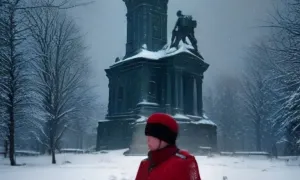
The visualisations are generated by artificial intelligence and serve as inspiration.
Photos from the area
Real photos taken near the monument


Zdroj a licence jsou uvedeny u každého snímku.
Tips from visitors
No tips yet. Be the first!
Log in and add your tip.
Sources and literature
Photos: Stanislav Dusík / CC BY-SA 4.0 — Wikimedia Commons. The author and licence also appear when you hover over the image.
Faktickým podkladem tohoto textu byl článek na Wikipedii, jehož autory jsou přispěvatelé Wikipedie. Článek je dostupný pod licencí CC BY-SA 4.0.
Location on the map

Příběhy a pověsti
Legendy, pověsti a příběhy spjaté s touto památkou
Fotografie návštěvníků
Zatím žádné fotografie. Buďte první, kdo přidá fotografii z návštěvy!
Log in a přidejte svou fotografii nebo hodnoťte.
Za ověřenou návštěvu v aplikaci získáte víc bodů — poznáme podle GPS, že jste na místě.
Reviews and comments