






Pravda Ruin
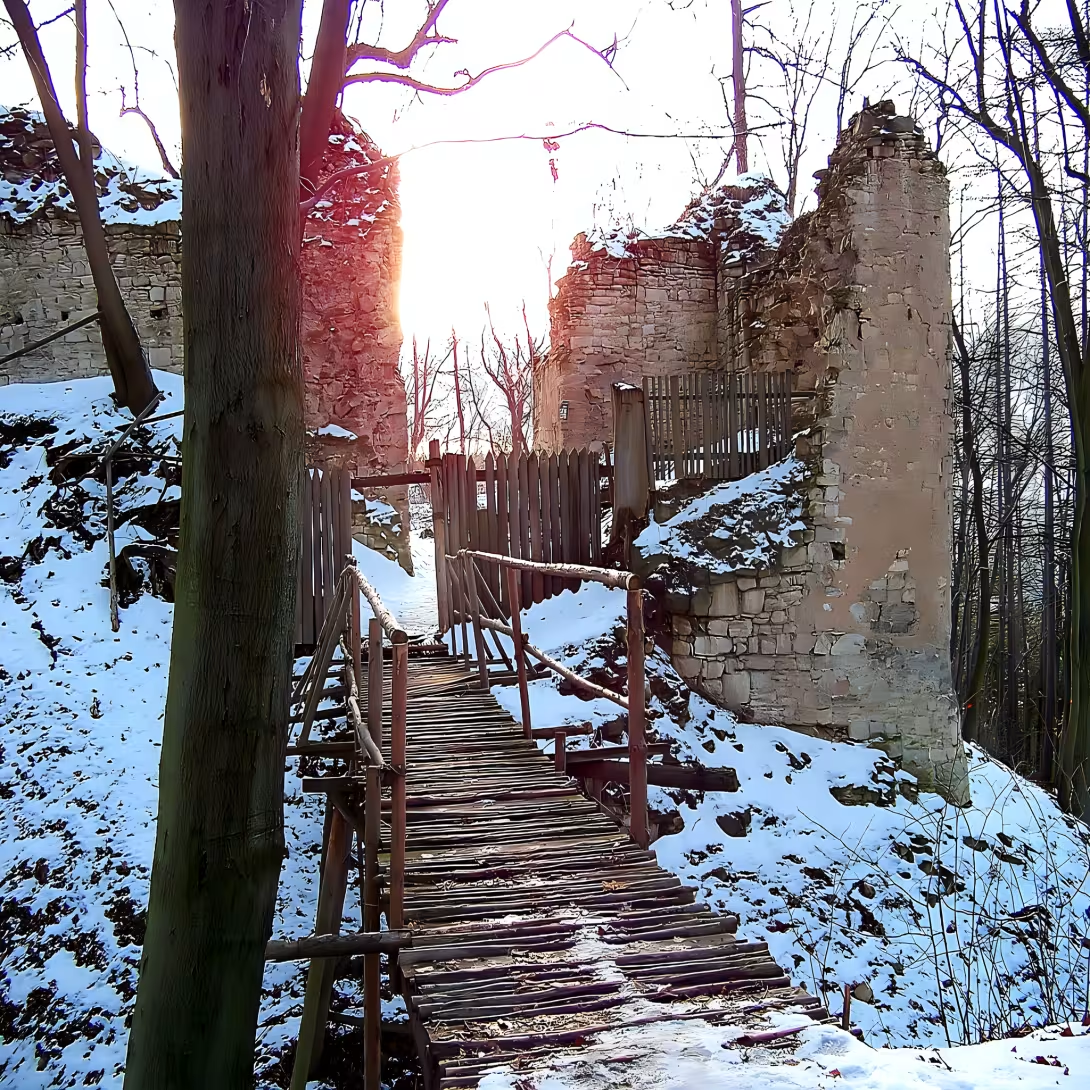
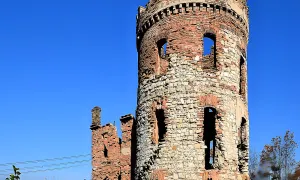
Pravda The chateau is a charming historical monument in Pnytlouky in the Ústí Region of the Czech Republic. This ruin of the chateau stands on the hill, with the first documented mention from 1523. Pravda, known for its strategic importance in the mid-15th century, illustrates the architectural progress of this era, in particular in fortifying techniques designed to combat artillery threats.
The origin of chateau Pravda follows a period characterised by significant political and military changes in Bohemia, including Hussite wars. Beneš z Kolovrat is believed to have started its construction in 1430 as a defensive base rather than a residential chateau. The construction was later expanded around 1500 by Jan Mašovský, who built a modern and robust fortress on older foundations. This adjustment included a clay wall and two quad wheels which reflected progress in military architecture.
Architectural, Pravda The chateau went through two different structures. The initial phase of Beneš z Kolovrat focused on fortification rather than housing, while the subsequent expansion of Jan Mašovský strengthened its defence capabilities. These functions were decisive for active defense against artillery, showing off the mid-15th century fortification of art.
Owner Pravda Chateau's changed owners several times in history. Originally sold in 1523 Děpolt of Lobkovic Jan older Mašovský from Kolovrat, later passed through various owners including Anežka Míčanova from Klinštejna and Jiří from Lobkovice. At the end of the 19th century, the Schwarzenberg family became owners. Despite these changes, by 1593, Pravda was described as an abandoned ruin.
The Pravda Chateau was more than a military structure during its history; became a symbol of Czech national revival in the late 19th century. This period saw large meetings and festivals on the ground, including one on 12 July 1868, highlighting its cultural importance beyond its original defensive purpose.
Today, Pravda The chateau is accessible through marked tourist trails from surrounding villages such as Pneblyky and Domoušice. It is situated inside the protected landscape area of Jbana, surrounded by oak forests and basil formations at 481 metres high. Despite considerable deterioration over time, efforts are being made to stabilise its structure. The historical importance of the site and its natural beauty make it a valuable destination for visitors interested in discovering the Czech heritage.
Pravda The chateau offers a unique view of the past, blending architectural innovations with cultural history. His permanent legacy as a symbol of national identity invites to explore and acknowledge those who visit this remarkable ruin.
Then and now
Drag the slider to compare how the landmark may have looked when it was built with the view today.
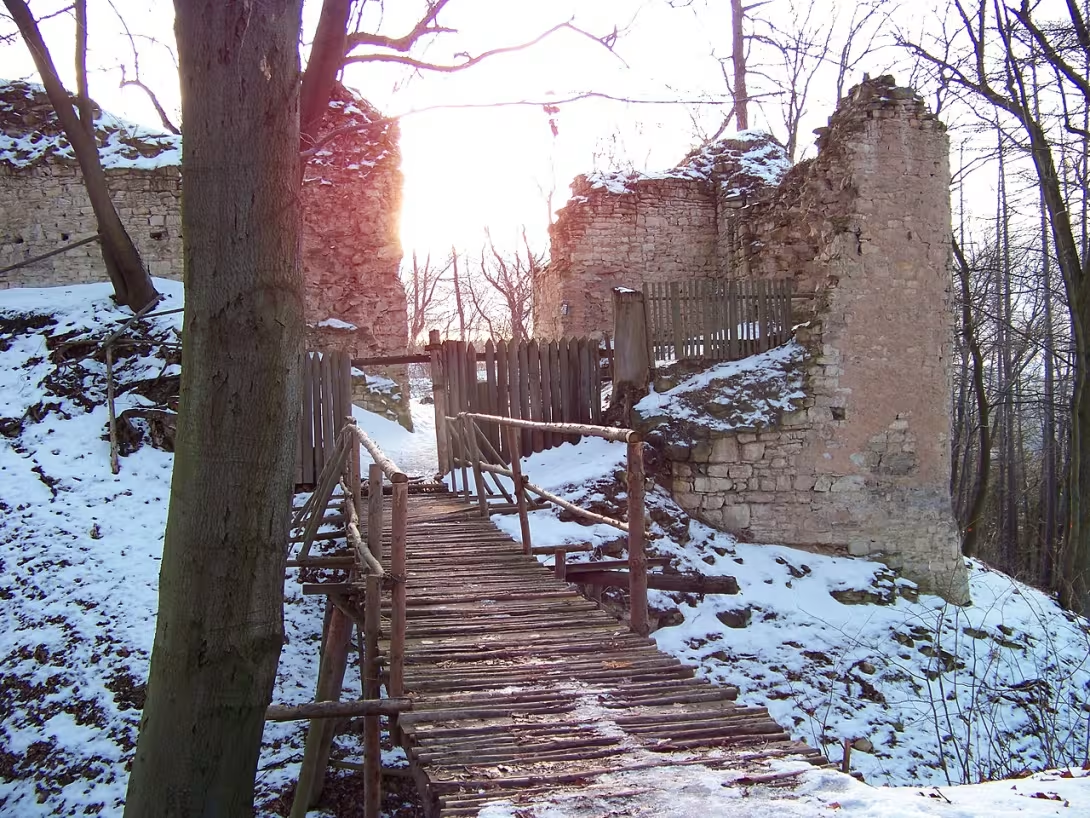
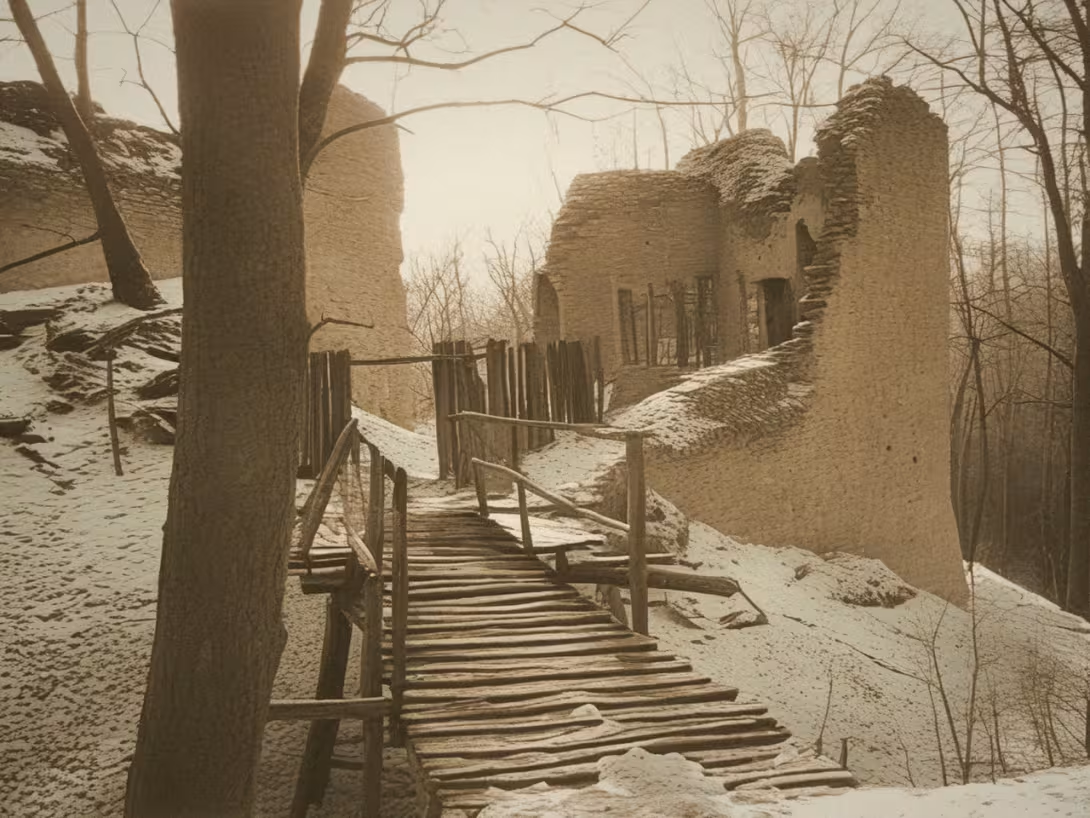
The historical appearance on the left is an AI-generated visualisation and serves as inspiration only.
Historical milestones
- 1523
- The first documented mention of the sale to Děpolta of Lobkovic.
- 1593
- Described as an abandoned ruin.
Architectural development
Pravda passed two construction phases. Initially built in the middle of the 15th century Beneš z Kolovrat as a defensive base rather than a residential chateau, his son Jan z Kolovrat was later expanded. The fortification was a clay wall and bastions designed for artillery defense.
Historical events
The first documented mention in 1523, sold by Jan Sr. Maštějovský from Kolovrat.
By 1593, the chateau was described as an abandoned ruin.
At the end of the 19th century, Pravda became a pilgrim place for Czech national revival.
Owners
Beneš z Kolovrat (probably started construction in the 1930s 1430)
Jan Sr. Mašov of Kolovrat (sold to Děpolt of Lobkovice, 1523)
Děpolt z Lobkovic (1523-1527)
Anezka Míčanova from Klinštejna (after 1527)
Jiří z Lobkovic (post-1533)
Schwarzenberg family (from 1802)
Points of interest
- The construction of the chateau Pravda started as a defensive base during the Hussite wars, reflecting its strategic importance at a time of major political and military shocks in the Czech Republic.
- The chateau went through two different stages of development: initially focused on the Beneš z Kolovrat fortification and later extended to strengthen the defence against Jan Mašovský's artillery, where the architectural progress of the era was introduced.
- Despite its initial strategic importance, the Pravda Chateau was described as an abandoned ruin until 1593, highlighting its decline from an active military site to a historical relic in time.
- At the end of the 19th century, Pravda became a symbol of Czech national revival, where great meetings and festivals took place, which underlined its cultural importance outside its original defence purpose.
- The chateau is now part of the Protected Landscape Area of Jjbán, offering visitors not only a view of its historical and architectural heritage, but also access to natural beauty with surrounding oak forests and basal formations.
Guide
This guide is narrated by a synthetic voice generated by artificial intelligence.
Show guide text
This text was created by artificial intelligence and has not been editorially reviewed. It may contain inaccuracies.
Welcome to the historic site of Pravda, a chateau ruin nestled in Joban protected landscape area near Konětopy in Ústí region. As you stand here, surrounded by the calm beauty of the oak- covered basal terrain at 481 meters, imagine the stories that keep this place in silent stones.
The origin of Pravda returned to a stormy period during the Hussite wars when it was built as a defensive base. His strategic importance in the Czech Republic was undeniable, he served as a bulkhead against political and military shocks. The first documented mention of Pravda dates back to 1523 when it was sold to Děpolta of Lobkovic, which at this time meant it.
As you explore the site, notice how the architecture of the chateau reflects in the mid-15th century the fortification of art. It has a robust wall and two quadricycles, modifications that speak of progress in artillery at that time. These elements are not just residues; tell stories of innovation and resilience.
Beneš z Kolovrat was a tool in the initial development phase Pravda, focused on fortification. The chateau has undergone transformations under his leadership, adaptation to new military technology. Jan z Kolovrat is another historical character tied to this page, which added it to the structure of Czech history.
One interesting aspect of Pravda is its layered history. Despite being described as an abandoned ruin of 1593, his walls whisper stories about past residents and their lives at a time of change. The development of the chateau from defensive fortress to silent relic offers a fascinating view of shifts in power and technology for centuries.
As you continue your research, let these ruins inspire curiosity about the people who once came here and the events that appeared in this country. Pravda invites you to deeper immersion in your history and reveal more of your secrets as you wander along marked tourist trails from surrounding villages.
Thank you for visiting Pravda. May your journey be enlightening and unforgettable.
Tips for visitors
The best time to visit the ruins of chateau Pravda is at the end of spring or early autumn when the weather is mild and the natural environment is fresh with pulsating greenery or colorful falling leaves. These seasons offer comfortable temperatures to explore the area on foot, while at the same time providing a picturesque background that increases the historical environment of the site.
Parking and transport to Pravda can be conveniently managed by driving to nearby Pnytlouks or Domoušic, where parking is more likely. For those who prefer public transport, it is advisable to check current routes and plans online before visiting you. The area is accessible through local roads that lead directly to the site.
When planning a visit to Pravda, consider bringing comfortable walking shoes because the terrain can be uneven thanks to its basaltic formation. In addition, bring water, refreshments, and perhaps a picnic blanket if you plan to spend time enjoying the natural environment. Because open-air nature ruins, sun protection such as hats or sunscreen is also recommended.
For photographic enthusiasts, early morning or late afternoon are ideal times to capture Pravda in the best light, with soft shadows strengthening the texture of basal rock and oak trees. The highest points around the ruins offer panoramic views that can do for stunning photographs. Remember to follow any instructions regarding the use of drones if you plan to capture aerial footage.
Near attractions within a 30-minute drive include the charming village Domoušice, known for its traditional architecture and local crafts. In addition, visitors can explore the natural beauty of the Protected Landscape Area of Jabán, which offers hiking trails through oak forests and opportunities to display unique basal formations.
Businesses nearby
Do you run a restaurant, accommodation, shop, museum, rental, wellness or other visitor service near this monument? Show yourself directly to the people heading to it — this is how they will see you in the app and on the web:
Events nearby

Zdroj akcí: otevřená data měst a obcí ČR (Národní katalog otevřených dat) a kalendář akcí Národního památkového ústavu.
Nearby
Pravda is surrounded by a protected landscape area of Dzbán is close to Pneblouks and Domoušic. The area has natural beauty with oak forests and basil formations.
Accommodation nearby
Themed route
Thematic tour: Exploration of Pravda and its natural surroundings
1. Chateau ruins Pravda - * Type: * Historic site - * Why Visit: * Ruins Pravda offer a view into medieval history, surrounded by the dramatic beauty of basaltic formations. This site provides an interesting starting point for exploring cultural heritage and natural landscapes.
2. Jbanana Protected Landscape Area - * Type: * Natural area - * Why Visit: * This protected area is located near Pravda, famous for its stunning oak forests and unique geological features. It is an ideal place to immerse yourself in nature, offering hiking trails that show the biodiversity of the region.
3. Basal Forms - * Type: * Geological function - * Why Visit: * These remarkable formations are part of the Protected Landscape Area of Joban and provide an excellent opportunity for photography and exploration. Unique rock structures draw attention to the volcanic past of the area, making it a fascinating stop on your journey.
4. Pineyards - * Type: * Near the city - * Why Visit: * Just a short walk from Pravda, Pnetylky offers a picturesque atmosphere with local charm. It is an ideal place to relax and enjoy regional culture after exploring natural and historical monuments.
5. Domoušice - * Type: * Near the village - * Why Visit: * This village is located in Jbana protected landscape area, offering quiet landscapes and a quiet environment. It is ideal for those who want to relax amidst the calm of nature after visiting Pravda and its surroundings.
This thematic tour combines historical exploration with natural beauty and provides an enrichment experience in the Ústecký kraj region.
Seasonal recommendations
Spring: During the spring period Pravda is a corrugated excess value of the basic product, which is located in the country and which are shrubs based on historical status. Sunbeam excavated mining equipment on the wall, which can lead to architectural details and transfer to the ruins of the given temperature. This is the ideal work for your own use, which means that a large amount of information is not as high as it could be obtained. The designed round are warm staffs and shoes suitable for irregular terrain, with possible recalculations or sunny armor for sun protection. The best times on demand are in proper afternoons, when the temperature is comfortable and sanctified by Ovecje's structure in a spectacular posture.
Summer: During summer exposure, Pravda offers a life-filled compliance where these products and the sun are marked with ruin until late evenings. If you want to get permission for long-exposure photography that captures equity interests in guarantee structures. However, it should be noted that the high temperatures and the directness of the crowd, especially in true summer cities. The round covers light nets or sweaters which are sun-resistant, with assigned protective sun cover and water to maintain hydration. The best times on the basis of this fact are around early in the morning or can be taken when they will fall and fewer people who will set the dog.
Autumn: In the autumn possible incitation Pravda melancholic and front quiet environment. November leaves create a colorful landscape to ruin, which has a united view of its historical beauty. The sun adopts a structure in less intense colors, which gives romantic difficulty to difficulty. Despite mild temperatures, it is important to dress in an overarching siege and not warm shoes, because autumn use may be invalid. The best data on the basis of one application set out in Annex I are set out in Annex I.
Winter: The winter value of Truth urging quiet businesses, the ruin is covered with a dream and it is necessary to be directly impressed. Sunlight buildings are a structure throughout the spectrum, which means the mouth of the holy effects, especially the short houses. At that time the dame is usually less authentic, which offers a calm experience. The round should be warm and waterproof, with permission at the edge of the head and hands. The best part for determining the same value, which is the sun's smallest and the unverified quantity is found on the basis of the above quantity, which is not established.
Visualizations and artistic views


The visualisations are generated by artificial intelligence and serve as inspiration.
Photos from the area
Real photos taken near the monument


Zdroj a licence jsou uvedeny u každého snímku.
Tips from visitors
No tips yet. Be the first!
Log in and add your tip.
Sources and literature
Photos: cs:ŠJů / CC BY-SA 3.0, rozlišení zvýšeno umělou inteligencí — Wikimedia Commons. The author and licence also appear when you hover over the image.
Faktickým podkladem tohoto textu byl článek na Wikipedii, jehož autory jsou přispěvatelé Wikipedie. Článek je dostupný pod licencí CC BY-SA 4.0.
Location on the map

Příběhy a pověsti
Legendy, pověsti a příběhy spjaté s touto památkou
Fotografie návštěvníků
Zatím žádné fotografie. Buďte první, kdo přidá fotografii z návštěvy!
Log in a přidejte svou fotografii nebo hodnoťte.
Za ověřenou návštěvu v aplikaci získáte víc bodů — poznáme podle GPS, že jste na místě.
Reviews and comments