



Přistoupim Hillfort
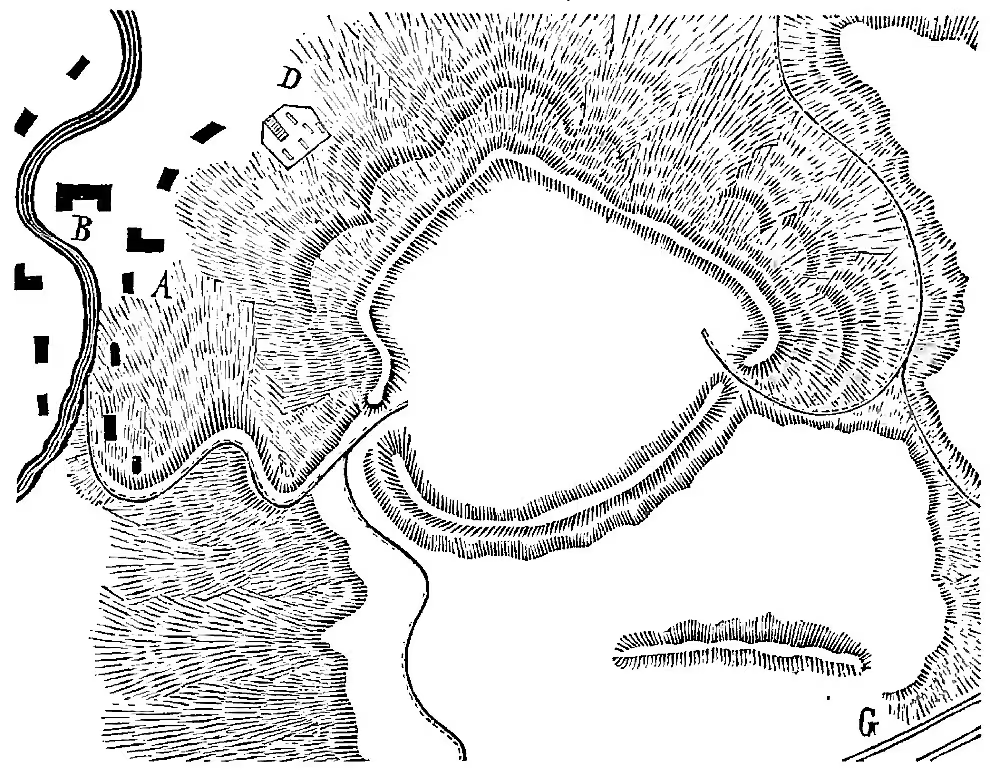
Přistoupim, also known as the Svatoclava Chance, is an early medieval archaeological site near the village of Přistoupim in Kolín district. The location has great historical significance as a fortification from the early medieval structures in the Czech lands. It is located at an altitude of 266 metres on the surface of Mala Šance and has been protected as a cultural monument since 1965.
The castle Přistoupim has been inhabited since the end of the eighth century, but the main phase of its construction falls into the ninth century. This period is crucial for understanding early medieval castle structures in Bohemia. The archaeological research carried out in the 1950s by Jaroslav Kudrnáč enabled precise dating of the site thanks to the finding of ceramics with the impact of the so-called boy horizon.
Přistoupim is a two-piece castle with a total area of about 7,5 hectares. Its inner part is located in the western part of the hill and apart from the southern side, which was supplemented by a perimeter fortification, it was protected by steep slopes. This fortification was preserved only on the east and south-east side, reaching about 2.5 metres. The dam was situated towards the east and separated from the main fort by a ravine which probably represented the remains of the ditch. Geophysical measurements at the end of the twentieth century confirmed the existence of several fortification lines in the area of the vanguard. Also found was a charred beam, which probably belonged to the wall.
The historical context attaches importance to the location of an important castle complex from the early Middle Ages. Although specific owners or administrators are not known, architectural elements and geophysical findings provide valuable insight into its settlement. The declaration of a place for cultural heritage in 1965 highlights its historical value and the need for protection.
Today, the Přistoupim is accessible to visitors with an interest in early medieval castle structures. Even though only the insignificant remains of valleys and ditches are preserved here, their existence is indicative of the rich history of the place. The visit offers a unique opportunity to explore the evidence of early medieval life and defence techniques in Bohemia.
Přistoupim is not only a witness to history, but also an inspiration for a deeper understanding of the past. Its preservation and study enrich our knowledge of early medieval castles in Bohemia. This makes visiting this archaeological site not only interesting, but educational.
Historical milestones
- End of 8th Century
- First settlement of the castle
- 9th Century
- Main phase of the castle construction
- 50th years of the 20th century
- Archaeological research carried out by Jaroslav Curly
- End of the 20th Century
- Geophysical measurement of fortification lines
- 1965
- Declaration of place for cultural monument
Architectural development
The fort was two-piece, with the inner part in the western part and the outpost in the east. The defense was made up of steep slopes, moat and circumferential fortification from the waves. Geophysical measurements confirmed the existence of several fortification lines in the area of the forefront.
Historical events
The settlement of the castle in the late 8th century, the main phase of the settlement in the 9th century, archaeological research in the 1950s and the declaration for cultural monument in 1965.
Points of interest
- It's also known as the Saints. - The main phase of the construction of the fort falls into the ninth century. - Thanks to the finding of ceramics with the impact of the boy's horizon it was possible to date the site exactly. - It is a two-piece fort with a total area of about 7,5 hectares. - Waves on the east and southeast side are about five feet tall.
Guide
Show guide text
This text was created by artificial intelligence and has not been editorially reviewed. It may contain inaccuracies.
Welcome to the archaeological site Přistoupim. You have just entered the space where time has stopped and where nature is gradually trying to take control of traces of ancient human activity. You are standing in a place of enormous importance to our history, and although you may now seem to be looking at only a slight ripple of terrain and green surfaces, in fact you are directly above the remnants of a mighty castle. Let yourself be carried away by the atmosphere of this place for a while and try to imagine what this top, known as Little Chance, looked like over a thousand years ago.
Look around you at this strategically placed top. It was this position that gave him the strength and importance that made people settle here at the end of the eighth century. It is a fascinating idea that here, in the heart of today's Central Bohemia region, the foundations of later society were formed. However, the main era of this place, its greatest bloom, took place in the ninth century. This was a time of great transformation, a time when the fort became an important centre, which had to be not only inhabited, but above all well protected. Přistoupim, which is also called Svatoclava's chance, was not just an ordinary settlement, but a complex fortified space that had to face the sudden dangers of the time.
If you look around now, try to draw the scope of the complex in spirit. What you see is just a small part of something much bigger. The whole castle was situated on a large area of approximately seven and a half hectares. Imagine the vast area that people had to build and maintain in the ninth century. The architecture of this place was very thoughtful. The fort was not one enclosed space, but it was divided into two parts. One part was the main core, and the other part was the so-called frontline. At that time, this two-level defense was the cutting edge of engineering and provided a much higher level of safety for the population.
Now pay attention to the terrain itself. Even if you no longer see tall wooden palisades or massive castle walls, their tracks are still visible in the shape of the earth. Note in particular the east and south-east sides of this table. It is here that the fouls that once formed an impenetrable barrier for enemies are best preserved. These earth structures were a key element of defence, and even after many centuries of erosion and the action of elements, they still remind us how people fought back at the time. When you look at these shapes, you see essentially the geometry of ancient security.
In order to talk about this place today and know what happened here, people with incredible patience and passion for science had to get into work. Working with this history is not easy because most of the most important is hidden deep beneath the surface of the earth. The key figure for understanding Přistoupim was Jaroslav Kudrnáč. In the 1950s, he led extensive archaeological research here, which fundamentally changed our view of this castle. Thanks to his efforts and precise work with every piece of material found, we understood that there was a much more complex system than they originally thought.
Archaeology is like writing giant puzzles where most pieces are lost in time. To determine exactly when people lived in this castle, scientists needed something more than walls themselves. They needed factual evidence. And it's here that one of the greatest attractions of this place comes on stage. In the excavation, ceramic fragments were found, which archaeologists described as ceramics with the impact of the boy's horizon. It may sound like a complicated technical term, but it's actually an incredibly important key. It was thanks to these small, broken pieces of vessels that were found here that it was possible to give the entire castle an accurate date. These shards of glass, as small messengers from the past, tell us that the peak period of this place really falls into the ninth century. Without them, this place would remain an anonymous design without a clear story.
But science didn't stop at shovels and hookers. Modern technologies, such as geophysical measurements, were also used here at the end of the twentieth century. This method allowed us to look underground without the need to dig every meter. With these measurements, fortification lines were discovered, which would otherwise remain hidden beneath the layers of clay and grass. Thanks to this, we now know exactly what direction the wall line was going and how the whole area was organized. This combination of old craft and modern science allowed us to perceive this place throughout its width and depth.
It is fascinating to think that this place was officially declared a cultural monument in 1965. This is not only a formal recognition, but an expression of how valuable these traces of our ancestors are. Přistoupim is not just a pile of dirt, it is a living document of our roots.
Now, please, continue your walk and leave yourself to the field management. Try to find traces of those people who built their homes here over a thousand years ago, protected their families and formed the foundations of a future country. Take a look at the surrounding landscape and try to realize how important this position was to the people at the time.
Thank you for joining us on this short journey through time. We hope that this view of the history of the castle Přistoupim has helped you better understand the importance of this place. We wish you a pleasant continuation in exploring the surroundings and other attractions that this region can offer. Goodbye.
Tips for visitors
For the best visual experience we recommend a visit in the early morning or late afternoon hours. In these times, the sun at a low angle best highlights the shapes of Little Chance's surfaces and creates interesting shadows. For photography there are ideal places with a view of the progress of the Yalova creek, where the light is softest.
The location can be reached by car and public transport.
Since it is an archaeological site in the natural environment, we recommend to bring comfortable shoes suitable for uneven terrain, drinking water and possibly repellent. It is important to respect the integrity of the site and to move around.
For families with children, the visit is an interesting opportunity to explore history in nature. However, caution should be exercised when walking in the vicinity of the Yale creek and keeping children close to water safe.
In your immediate surroundings, you can observe natural features such as the Yalu stream that surrounds this historic place from two sides.
Frequently asked questions
Can the monument be visited?
This is an archaeological site. Often there is little to see on the ground and the land may be private. We have not verified access.
Where is the monument?
Location: Středočeský kraj. The map on this page shows the exact spot.
Why is the monument protected?
It is listed in the Central List of Cultural Monuments of the Czech Republic as a cultural monument (register no. 1000153754).
Businesses nearby
Do you run a restaurant, accommodation, shop, museum, rental, wellness or other visitor service near this monument? Show yourself directly to the people heading to it — this is how they will see you in the app and on the web:
Nearby
The top is covered in two sides with a river of Yale.
Accommodation nearby
Themed route
Thematic cruise route around the archaeological site Přistoupim
1. Přistoupim (archaeological site) Type: Archaeological site Why is it worth a visit: This place offers a unique view of the past thanks to its historical findings and archaeological research. You will visit exposed artifacts here that reveal the life of our ancestors.
2. Yalvá potok (left bank) Type: Natural spring Why is worth a visit: The jale stream, which surrounds the top from the left, is an ideal place for relaxing and observing nature. Its peaceful waters and surrounding vegetation offer a beautiful atmosphere.
3. Yalu stream (right bank) Type: Natural spring Why is it worth a visit: On the other hand, where the Yalova stream surrounds the top from the right, you can explore other angles and views of this historic place. This part is also suitable for short walks along the creek.
4. Top Přistoupim Type: Historical design Why is it worth a visit: The hill, which is surrounded by Yala's stream, offers an excellent panoramic view of the surrounding landscape. It is an ideal place to understand the geographical and historical context of the archaeological site.
5.Přistoupim (park zone) Type: Park area Why is worth a visit: The park zone allows you to relax and enjoy the natural environment. It is also a place where you can stop and reflect on all impressions after visiting the archaeological site.
This route offers a combination of history and nature, allowing an overall view of this interesting place.
Seasonal recommendations
Spring: For a spring visit, look forward to the awakening surrounding vegetation and lush greenery surrounding archaeological remains. Lighting is delicate and pleasant during this period for observing structures in the field. We recommend wearing layered clothes because the morning cold can quickly turn into warmer air during the day. It is an ideal time for quiet walks without large groups of visitors.
Summer: The summer season brings the most intense sunlight and fully developed nature, which gives the monument a distinctive look. Due to the high temperatures and the greatest pressure of the people, it is best to arrive immediately after opening so that you can avoid the heat and the crowd. Remember enough drinking water, headgear and sun protection because the open terrain offers little shade.
Autumn: Autumn moons offer a melancholy atmosphere accompanied by golden shades of leaves and occasional morning fog that supply the place with mystery. Low sun creates long shadows, which is great for capturing details of the site. High-quality waterproof shoes are essential for comfort, because the moisture in the ground can be higher and the roads can be slippery.
Winter: In winter time, there is the most calm and the site itself acts brutally in contrast to the bare landscape. Days are short, so plan to visit in the morning to use the maximum amount of daylight. The necessity is very warm and wind-resistant clothes along with a solid shoe to protect you from freezing or possible snow on the road.
Visualizations and artistic views


The visualisations are generated by artificial intelligence and serve as inspiration.
Photos from the area
Real photos taken near the monument


Zdroj a licence jsou uvedeny u každého snímku.
Tips from visitors
No tips yet. Be the first!
Log in and add your tip.
Sources and literature
Photos: Jan Erazim Vocel / Public domain — Wikimedia Commons. The author and licence also appear when you hover over the image.
Faktickým podkladem tohoto textu byl článek na Wikipedii, jehož autory jsou přispěvatelé Wikipedie. Článek je dostupný pod licencí CC BY-SA 4.0.
Location on the map
More monuments – Středočeský kraj
Show all in the region




Příběhy a pověsti
Legendy, pověsti a příběhy spjaté s touto památkou
Fotografie návštěvníků
Zatím žádné fotografie. Buďte první, kdo přidá fotografii z návštěvy!
Log in a přidejte svou fotografii nebo hodnoťte.
Za ověřenou návštěvu v aplikaci získáte víc bodů — poznáme podle GPS, že jste na místě.
Reviews and comments