






Pustý hrad Ruin
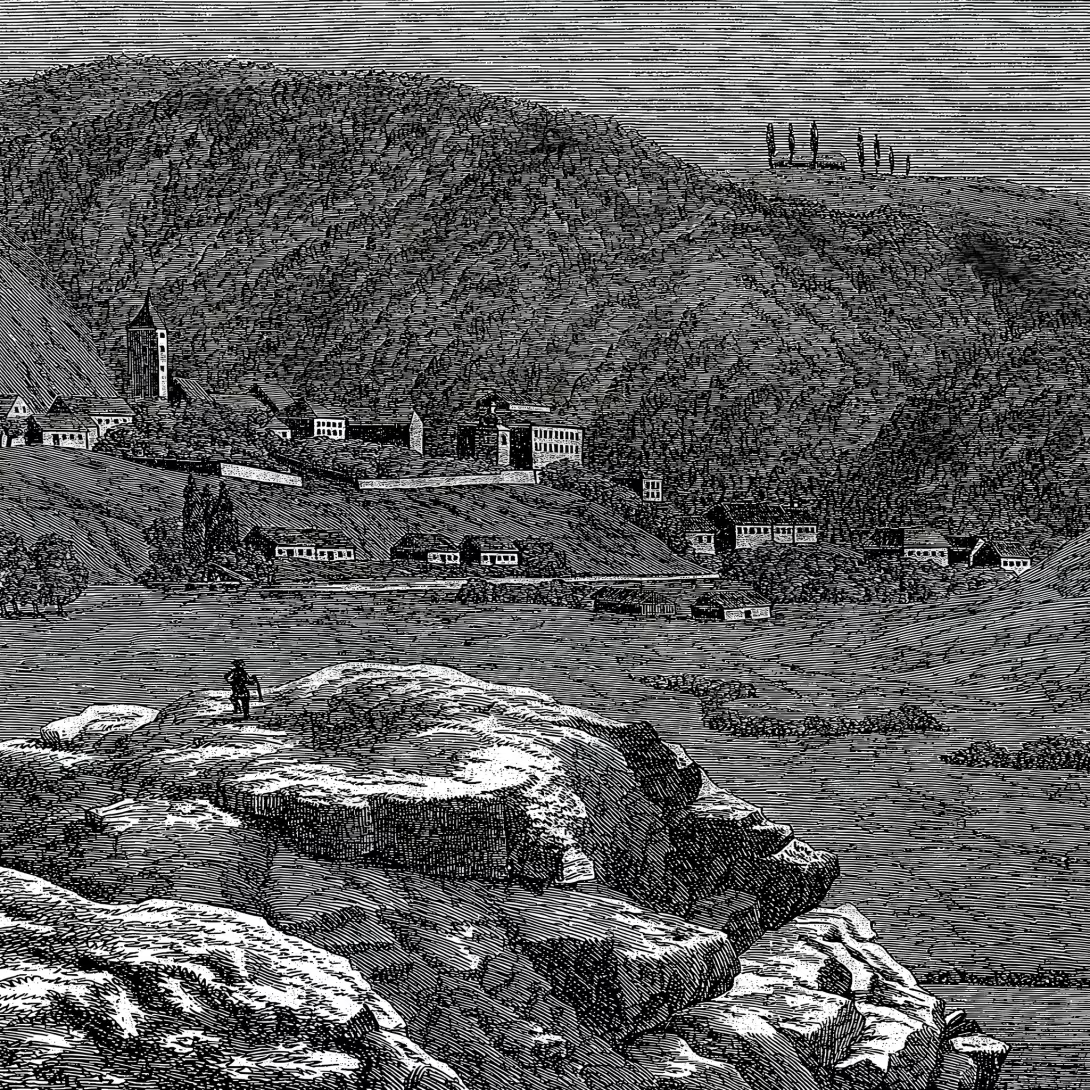
The ruin of the Hollow Chateau (also known as Chateau or Old Chateau) is located in the southwest of the town Kácov in the district of Kutná Hora. It sits on a rock tower, protected from three sides by very steep to perpendicular walls at an altitude of about 350 meters. The chateau was entered into the register of cultural monuments in 1966.
The location has long been considered a fortress, until archaeologist Tomas Durdík established it among chateaux. The exact history of the building remains unclear, as the written sources are difficult to divide between the chateau itself and a nearby town with its fortress. However, the key to understanding has been provided by archaeological findings. In the second half of the 15th century, there was certainly a chateau - among other things, fragments of gothic relief tiles, including a piece with the depiction of a Hussite warrior. In 2005, 14 additional late Gothic tiles were registered in Kácov, confirming a rich material culture belonging to this era.
The construction form of the chateau was preserved only partially. According to the 1878 record, there was a wall attached to the rock, measuring one degree wide and eight degrees long, with small towers on the corners. The chateau core was divided into two parts separated by a moat. The front part had a square plan; the semi-circular tower, which reinforced the front wall, was partially preserved from its installation. In front of her was a park - a small fortified dam. The estate of the well or tank can still be traced in this space. The back of the chateau was situated directly on the top of the rock and had a rectangular shape; From it remained only a corner deep into the rock.
The chateau complex has been restored since May 2020. The reconstruction is arranged for five years, and during its time the visit is not recommended temporarily.
The Rock of the Hollow Chateau has become a popular place for sports climbing. It offers seven named exits - Andrejka, Lajdák Wall, Kácov Beauty, Easter Wall and more. The walls reach an average height of 13 to 15 meters, the highest point exceeding 20 meters. According to the legend, the chateau was bridged by a furry bridge, a bridge carved out of shirts and knitted fabrics that crossed over to the other side.
Then and now
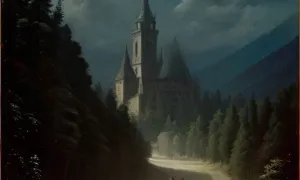
Drag the slider to compare how the landmark may have looked when it was built with the view today.
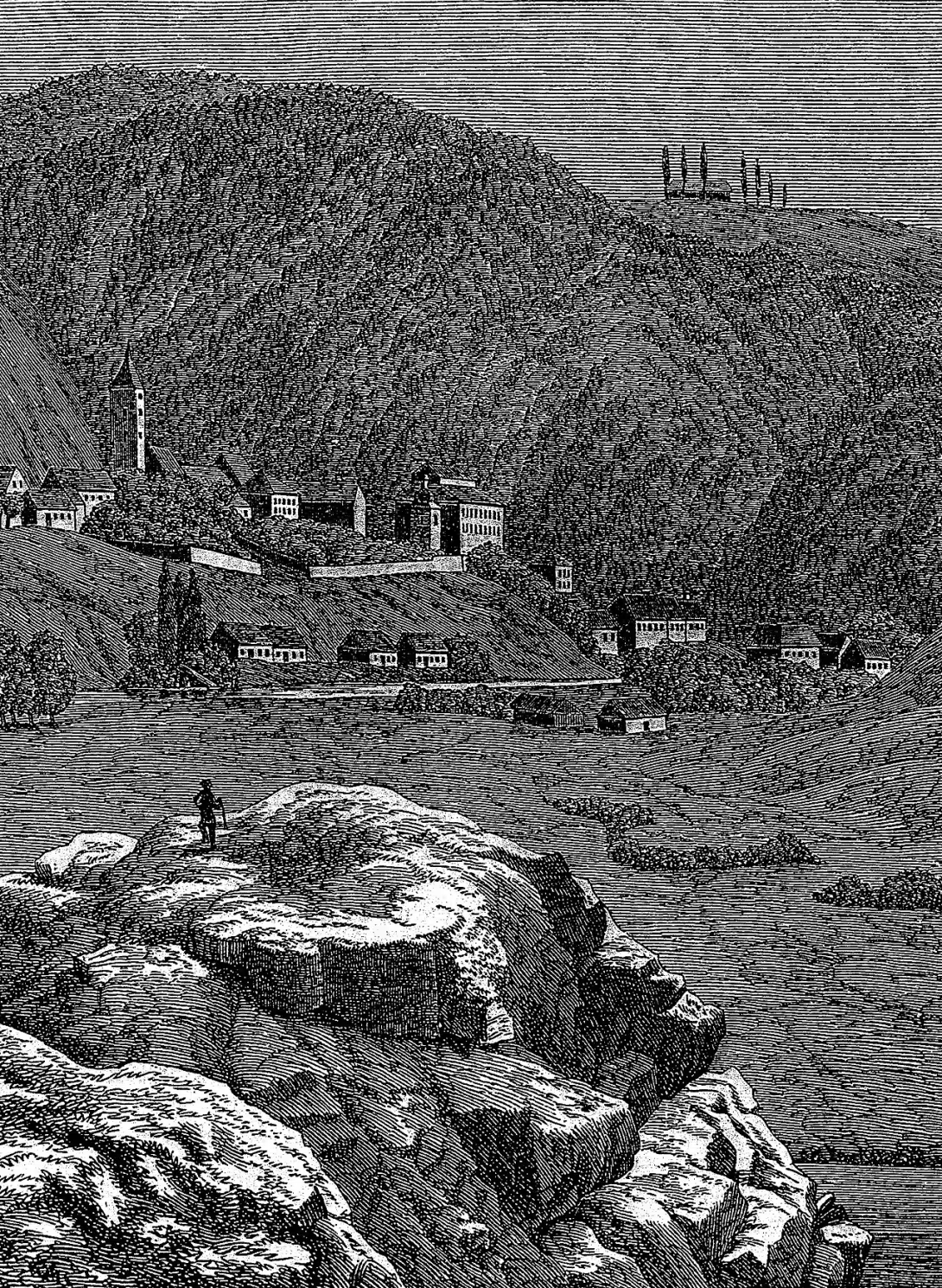
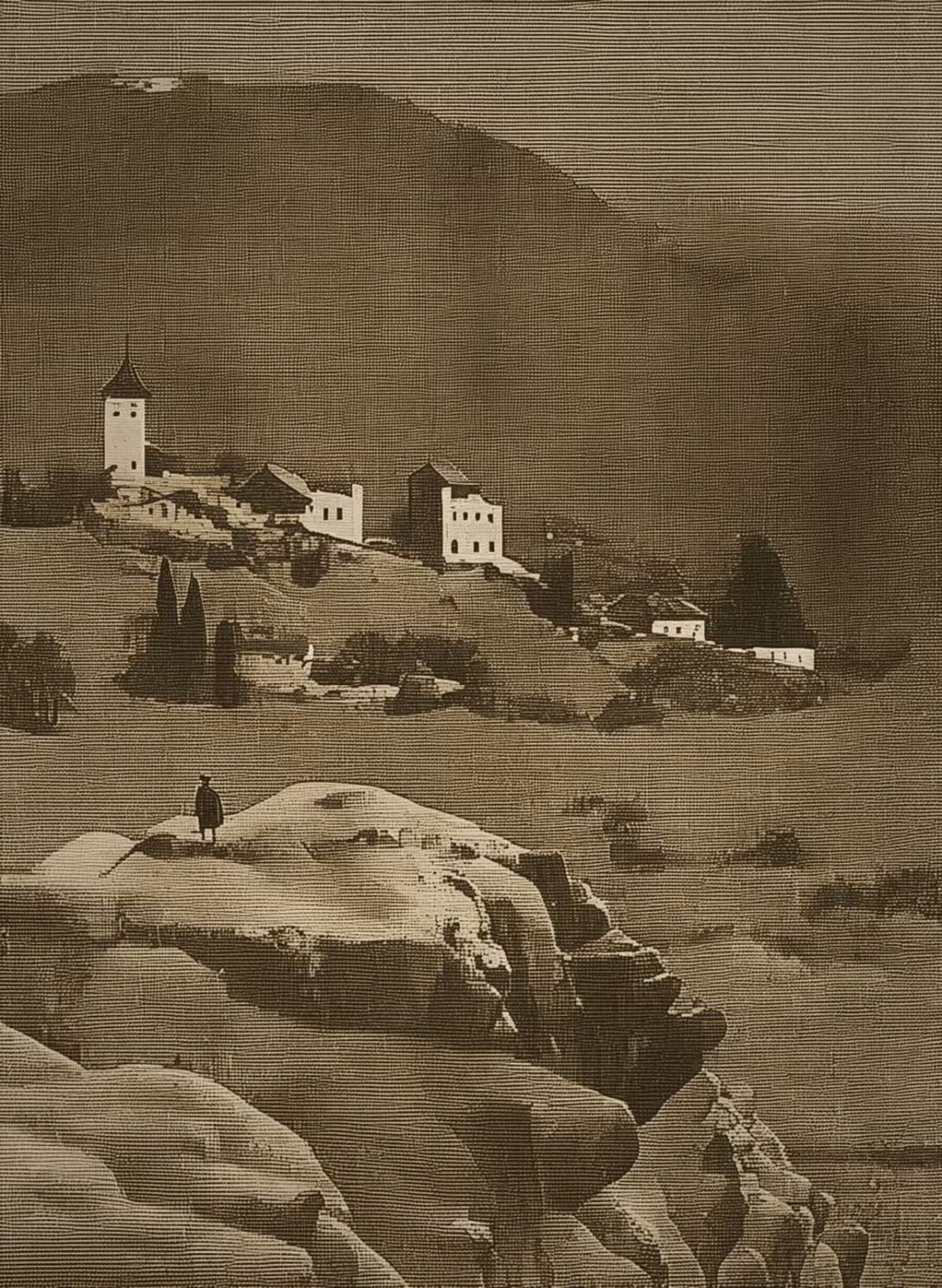
The historical appearance on the left is an AI-generated visualisation and serves as inspiration only.
Historical milestones
- 1966
- Registration as a cultural monument.
- 20
- Start repair of the chateau complex.
Architectural development
Originally, the chateau had a square ground plan of the front and a rectangular back part at the top of the rock. The semi-circular tower, which strengthened the front wall, and some sections of the perimeter wall, survived.
Historical events
- 15th Century
- The existence of the chateau in the second half of the 15th century, associated with the Hussite era.
- 20
- Opening of the repair of the chateau complex on 30 May.
Points of interest
- The ruin of the Desert Chateau has been entered into the register of cultural monuments since 1966.
- Archaeologist Tomas Durdík discovered that it was a chateau and not just a fortress, which was confirmed by archaeological findings from the second half of the 15th century, including gothic relief tiles.
- In 2005, 14 additional late Gothic tiles were registered in Kácov, confirming the rich material culture of this epoch.
- The building form of the chateau included two parts separated by a moat with a semi-circular tower and a park that could be a well or a tank.
- Since May 2020, the chateau complex has been restored to five years, during which the visit is not recommended.
Guide
This guide is narrated by a synthetic voice generated by artificial intelligence.
Show guide text
This text was created by artificial intelligence and has not been editorially reviewed. It may contain inaccuracies.
Welcome to Kácov, where you are currently located at one of the most remarkable places in Central Bohemia. You stand before the ruins of the Hollow Chateau, which awaits you with its secrets and beauty. The chateau boasts its location on the rock tower above the river Sázavou, which gives it not only admirable dexterity but also a unique view of the surroundings. The steep and perpendicular walls of the chateau are today a popular place for climbers and lovers of architecture.
Pustý hrad Kácov comes from a time when it was necessary to protect the territory from hostile intrusions. Although the specific history of its foundation remains a secret for us - unknown architects and personalities got involved, the chateau has contributed its existence to the defence capabilities of the region. In 1966, the ruin was recognised as a cultural monument, providing it with protection and dignity among historical sites.
Look up at this rock tower. Although the ruin has lost its structural form, it is still possible to understand its architectural skeletons and the efforts of past generations. Notice how steep and perpendicular the walls protected the chateau from its enemies - it was its largest silo. These elements now also affect the attractiveness of climbers who can enjoy a unique high-rise walk.
The key moment in the history of the chateau was the discovery by archaeologist Tomáš Durdik. Before, it was believed that this place was only a fortress, but the findings of the second half of the 15th century - including Gothic relief tiles - showed that it was a chateau. This discovery brought a new view of history and increased the value of this place.
The fact that the building of the chateau complex was registered in 2005 is also an interesting thing to note. Although we are not aware of the specific details of this record, we clearly see how important it is to keep the memory in good condition and prepare it for future generations.
Now look around and take the time to see this place from different angles. Every stone has a history to discover. Pustý hrad awaits you with other stories and secrets that you can deepen during your visit.
Let me thank you for your attention and wish to learn more about this fascinating place. I hope you enjoy every moment here and that this place will be full of new discoveries for you. Let your next journey bring even more insight and insight!
Tips for visitors
The best time to visit the Desert Castle Kácov is in the spring or autumn season when the weather is favourable and fewer people. This time also offers beautiful lighting conditions for shooting ruins in breathtaking surroundings.
You can verify the current connection in the search engine or on the website of service providers.
When visiting, bring firm shoes because the terrain around the chateau is steep and stony. Also remember to bring protective clothing, especially in colder months, as well as jumping shoes for climbers.
For shooting ruins offers the best possibilities of morning and evening light. The most fascinating views can be captured from the side of Sazava, where the view of the chateau and surrounding landscape is particularly impressive.
There is a picturesque location Mšen in the vicinity of the desert castle Kácov with a historic room and stations that can be visited. For families with children, an amusement park in the nearby area is a suitable destination.
Frequently asked questions
Can the monument be visited?
This is a ruin. Such sites are often freely accessible, but some can only be visited with a guide or are closed for safety reasons. We have not verified the current situation – take care and respect any restrictions.
Where is the monument?
Location: Kácov, Středočeský kraj. The map on this page shows the exact spot.
Why is the monument protected?
It is listed in the Central List of Cultural Monuments of the Czech Republic as a cultural monument (register no. 20293/2-1269).
For kids
Imagine going back to the past, when the country was full of sparkling forests and secrets. Now let's go back to the oldest chateau in Bohemia - the desert chateau.
It was like a game where the heroes ruled over the countryside. The chateau stood on top of the hill as if it were crowned king. Who lived here? A family of men from Rožmberk who were powerful and rich. They liked having their chateau where they could stay and protect their territory.
Businesses nearby
Do you run a restaurant, accommodation, shop, museum, rental, wellness or other visitor service near this monument? Show yourself directly to the people heading to it — this is how they will see you in the app and on the web:
Nearby
It is located on a rock tower on three sides protected by very steep to perpendicular walls at an altitude of about 350 metres.
Accommodation nearby
Trips and activities nearby
Guided tours, tickets and activities nearby from GetYourGuide
Affiliate link: if you buy from the partner, we may receive a commission. The price for you does not change.
Search tours and activities →Themed route
Thematic cruise route around the ruins Pustý hrad
1. Ruins Pustý hrad * Type: Historical landmark * This interesting historical ruin is one of the most important and best preserved walls in the area. Visiting it is worth it for its impressive atmosphere, which bears traces of the past and offers an amazing panoramic view of the surrounding landscape.
Kácov * Type: Village * After exploring the ruins, visit Kácova itself, where you can see a small historical centre with its distinctive houses and beautiful architecture. It is an ideal place to relax and a short walk where you can enjoy a quiet environment.
3. Kácov pond * Type: Pond * Near Kácova is a picturesque Kácov pond, which is a great place to relax and look at natural beauty. It is an ideal place for a picnic or for those who want to stop and enjoy quiet moments in nature.
4. Kácov Forest * Type: Forest area * For another look at nature, we will look into Kácov Forest, where you can explore beautiful trees and possibly some animals. It is an excellent place for a moment of rest or for a short walk in the fresher air.
This route offers a combination of historical and natural experiences that fertilize you with moving memories of Kácov and its surroundings.
Seasonal recommendations
Spring The spring visit to the Hollow Chateau in KácovA offers a unique view of the rebuilding nature when green grass and flowering bushes are increasingly dominated by ruins. Sun rays create live lighting that emphasizes the historical line of the chateau and gives it a romantic atmosphere. This time of year is ideal for travelers who desire a peaceful experience without excessive crowds. It is advisable to dress in comfortable clothes that may be a little warm in the morning and evening, but the middle day is usually pleasant. The best time to visit is an early afternoon when the sun lights the chateau in its best light.
Summer In summer Pustý hrad in Kácov offers travelers full of sunlight, which highlights the dramatic architecture of the ruins. The summer atmosphere is filled with the life of flowering shrubs and trees, which creates a colorful background for photography or relaxation in nearby meadows. Long gloves, sunglasses and plenty of drinking water are necessary to protect against strong sun. Warm clothes are recommended, but with the possibility to dress easier when the temperature rises.
Autumn In autumn months, Pustý hrad offers a melancholy and peaceful atmosphere in Kácov. The Central Bohemian autumn sun illuminates ruins in specific, colder colours, giving the chateau a romantic and mysterious look. Due to decreasing temperatures, it is advisable to come up with warm clothes, which also includes a quality jacket or plaid, especially in medium and late autumn months. This time of year is ideal for those who are looking for a peaceful experience without excessive crowds because the traffic usually decreases. The best time for a tour is early afternoon, when the sun rays still illuminate the chateau.
Winter In winter Pustý hrad offers a completely different atmosphere in Kácov, where snow cover highlights historical lines and ruins. Sun rays reflecting on snow create a dramatic effect, which is particularly intriguing in the dark hours. In winter months, especially during the Advent or before Christmas holidays, the chateau's attendance is significantly reduced, offering a peaceful and intimate tour. It is important to dress well with warm clothes that include insulated shoes, jacket and hat, and be prepared for shorter opening times due to reduced daylight. The best time to visit is an early afternoon when the sun lights up the chateau in its most beautiful way.
Visualizations and artistic views


The visualisations are generated by artificial intelligence and serve as inspiration.
Photos from the area
Real photos taken near the monument

Zdroj a licence jsou uvedeny u každého snímku.
Atmosphere of the place
This atmospheric visualisation of the place and period was generated by artificial intelligence. It is not real footage of the location.
Tips from visitors
No tips yet. Be the first!
Log in and add your tip.
Sources and literature
Photos: Eduard Herold též Edvard Herold (16. září 1820 Praha – 5. srpna 1895 Praha) byl český malíř, ilustrátor a spisovatel. / Public domain, rozlišení zvýšeno umělou inteligencí — Wikimedia Commons. The author and licence also appear when you hover over the image.
Faktickým podkladem tohoto textu byl článek na Wikipedii, jehož autory jsou přispěvatelé Wikipedie. Článek je dostupný pod licencí CC BY-SA 4.0.
Location on the map
Příběhy a pověsti
Legendy, pověsti a příběhy spjaté s touto památkou
Fotografie návštěvníků
Zatím žádné fotografie. Buďte první, kdo přidá fotografii z návštěvy!
Log in a přidejte svou fotografii nebo hodnoťte.
Za ověřenou návštěvu v aplikaci získáte víc bodů — poznáme podle GPS, že jste na místě.
Reviews and comments