






Pustyňa Chapel
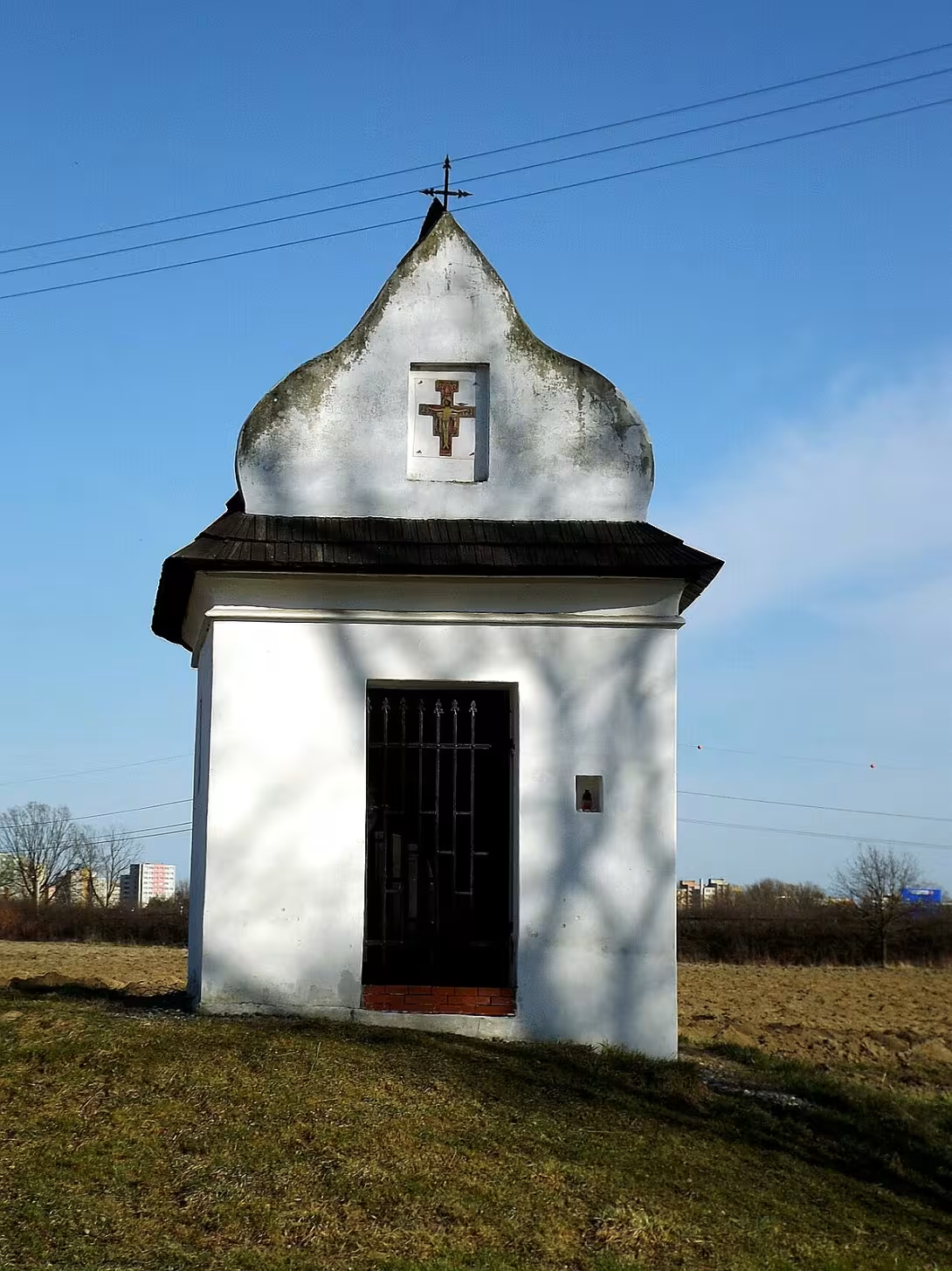
Pustyňa, also known as Kaple svatého Kříže or Pustynia in Polish, is a historical chapel near the Czech-Polish border in Starý Bohumín. It holds significance due to its association with Antonín Josef Czimmerer and Felix Antonín Broský, who established it as Franciscan lay brothers in 1756. Despite suffering significant damage during World War II, leaving only the surrounding walls intact, Pustyňa remains culturally important for its historical connections with local religious practices and annual processions.
The origins of Pustyňa trace back to the mid-18th century when Antonín Josef Czimmerer and Felix Antonín Broský joined the Third Order of Saint Francis. In May 1756, they sought permission to establish a hermitage near Bohumín, which was granted on July 29, 1756. The hermitage was linked with an existing chapel dedicated to Saint Cross, believed to have been built around 1733. This period saw significant religious and social changes across Europe, influenced by Enlightenment ideas that challenged traditional structures, including religious orders like the Franciscans.
Architecturally, Pustyňa began as a modest hermitage linked with the Chapel of Saint Cross. After World War II, it underwent substantial damage, leaving only its walls standing. Despite this ruinous state, in 1958, the chapel was recognized for its historical and architectural significance by being registered in the central list of cultural monuments.
The fortunes of Pustyňa were closely tied to the Third Order of Saint Francis. In 1782, an imperial decree dissolved the order, leading to the closure of the hermitage. However, the nearby Chapel of Saint Cross continued to be maintained by locals out of respect for the former hermits, contributing to its association with Pustyňa.
Key events at Pustyňa include its establishment in 1756 and the dissolution of the Third Order of Saint Francis in 1782. The site remains a focal point for local cultural activities, notably hosting annual processions that reflect its enduring religious significance.
Today, visitors can explore Pustyňa by following a path from an old cemetery lined with linden and cherry trees. Despite its ruinous state, the chapel's historical importance makes it worth visiting. The area also offers access to nearby attractions such as the Bohumín – Chałupki border crossing and the Naučná stezka Hraniční meandry Odry tourist trail.
Pustyňa stands as a testament to the religious devotion of its founders and the historical shifts that shaped its existence. Its preservation as a cultural monument invites visitors to reflect on its past while enjoying the serene surroundings, making it an enriching destination for those interested in history and spirituality.
Then and now
Drag the slider to compare how the landmark may have looked when it was built with the view today.
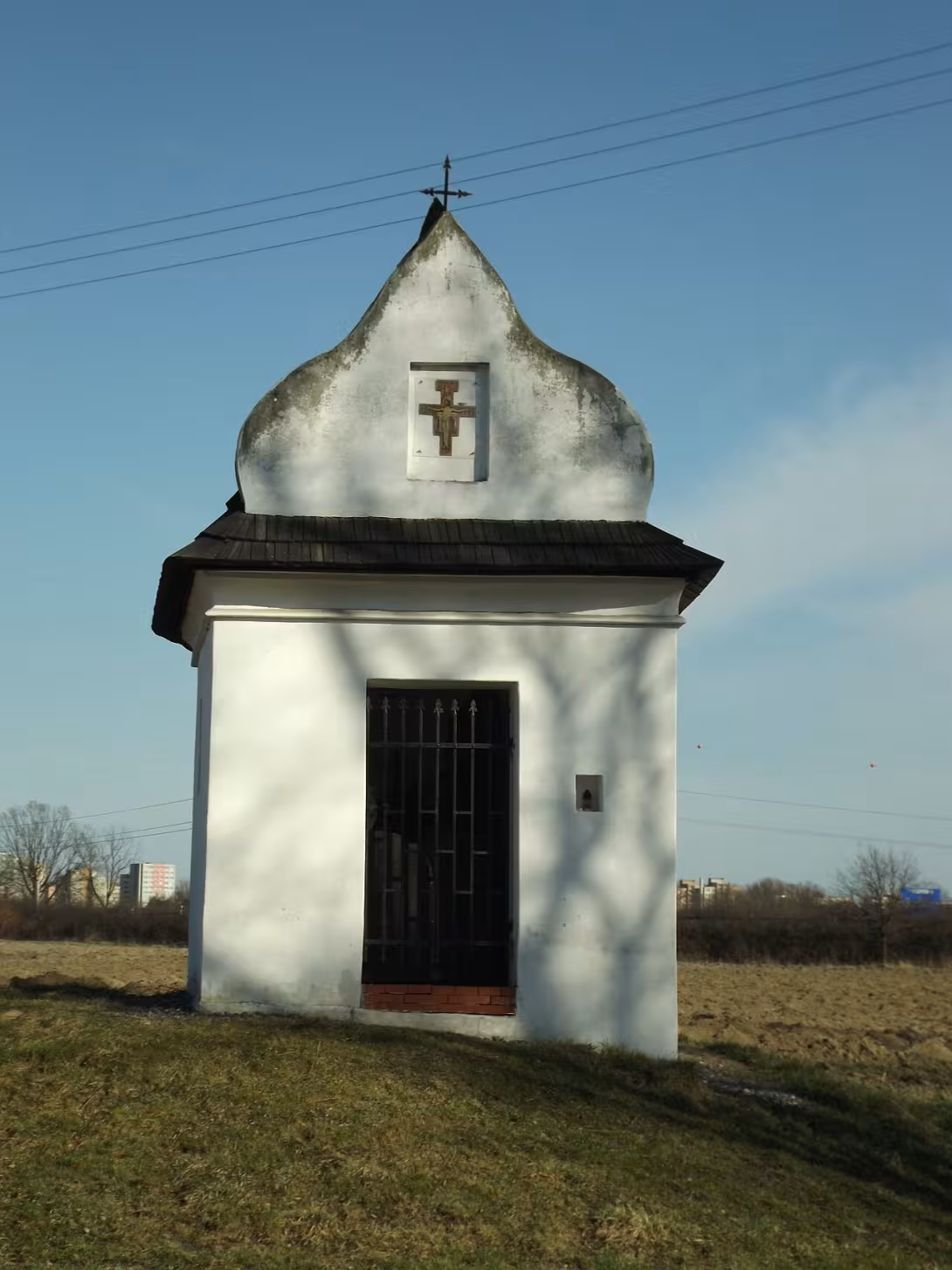

The historical appearance on the left is an AI-generated visualisation and serves as inspiration only.
Historical milestones
- 1756
- Establishment of the hermitage by Antonín Josef Czimmerer and Felix Antonín Broský.
- 1782
- Dissolution of the Third Order of Saint Francis, leading to closure of the hermitage.
- 1958
- Pustyňa registered as a cultural monument.
Architectural development
Pustyňa was originally built as a small hermitage associated with an existing chapel dedicated to Saint Cross. The structure underwent significant changes over time, particularly after being damaged during World War II when only its walls remained. In 1958, the chapel was registered in the central list of cultural monuments, highlighting its historical and architectural significance despite its ruinous state.
Historical events
- 1756
- Antonín Josef Czimmerer and Felix Antonín Broský were accepted into the Third Order of Saint Francis, leading to the establishment of a hermitage near Bohumín.
- 1782
- The imperial decree dissolved the Third Order of Saint Francis, resulting in the closure of the hermitage.
Points of interest
- The chapel known as Pustyňa was established by Antonín Josef Czimmerer and Felix Antonín Broský as Franciscan lay brothers in 1756, reflecting a period when religious orders were adapting to Enlightenment ideas that questioned traditional structures.
- Despite its destruction during World War II, which left only the surrounding walls intact, Pustyňa was recognized for its historical significance and registered as a cultural monument in 1958, highlighting its enduring importance despite physical ruin.
- The Third Order of Saint Francis, to which Pustyňa was originally linked, was dissolved by an imperial decree in 1782. This event marked the end of the hermitage's active religious role but did not diminish local respect for the site, as evidenced by continued maintenance of the nearby Chapel of Saint Cross.
- The annual processions held at Pustyňa today are a testament to its lasting cultural and spiritual significance in the region, connecting modern visitors with historical religious practices that have persisted over centuries despite political and social upheavals.
- Visitors can access Pustyňa by following a path from an old cemetery, which is lined with linden and cherry trees. This scenic route adds to the serene experience of exploring the chapel's ruins while reflecting on its rich history and spiritual legacy.
Guide
This guide is narrated by a synthetic voice generated by artificial intelligence.
Show guide text
This text was created by artificial intelligence and has not been editorially reviewed. It may contain inaccuracies.
Welcome to the historical site of Pustyňa, or Kaple svatého Kříže, nestled near the Czech-Polish border in Starý Bohumín. As you stand here, surrounded by the whispers of history and nature's embrace, take a moment to appreciate this serene chapel, a testament to devotion and resilience through centuries.
The story of Pustyňa begins in 1756 when Antonín Josef Czimmerer and Felix Antonín Broský established a hermitage. Inspired by their commitment as Franciscan lay brothers, they sought a life devoted to simplicity and faith amidst the changing tides of Enlightenment ideas that questioned traditional religious structures. This was not just a building; it was a sanctuary for contemplation and spiritual growth.
As you look around, notice the remnants of its past glory. The architecture may be worn by time, but each stone tells a story of endurance. Observe how nature has woven itself into the fabric of this place, with vines caressing what remains of walls that once stood proud. Feel the atmosphere of history and spirituality that lingers here.
Central to Pustyňa's narrative are its founders, Antonín Josef Czimmerer and Felix Antonín Broský. Their vision brought this chapel to life as part of their Franciscan journey, a beacon for those seeking solace away from worldly distractions. These figures stand out not only for their spiritual dedication but also for their courage in embracing new ideas during a time when the world was shifting beneath them.
One intriguing aspect of Pustyňa is its resilience. Despite suffering significant damage over the years, including destruction during World War II, it stands as a cultural monument registered since 1958. This resilience speaks volumes about the enduring spirit of those who cherished this place and worked to preserve its legacy for future generations.
As we conclude our visit here at Pustyňa, I invite you to reflect on the stories embedded in its stones and the spiritual journey it represents. Let your imagination wander through the corridors of time as you explore further into Starý Bohumín's rich history. Thank you for joining me on this journey, and may the spirit of Pustyňa inspire you wherever you go.
Tips for visitors
The best time to visit Pustyňa is during late spring or early autumn when the weather is mild, and the surrounding nature is particularly vibrant. During these seasons, the linden and cherry trees around the old cemetery are in full bloom, creating a picturesque setting for your visit. Additionally, visiting outside of peak summer months can help avoid larger crowds, allowing you to enjoy the tranquility of this historical site.
The area is accessible by both car and public transport; however, for the most current routes and schedules, checking a local transit search engine before your visit is recommended. This will ensure you have the latest information on how to reach Pustyňa conveniently.
When visiting Pustyňa, it's wise to bring comfortable walking shoes as there are paths leading from the old cemetery that can be uneven. Also, consider bringing a hat and sunscreen if you plan to explore during sunny days, and perhaps a light jacket for cooler mornings or evenings. Since the site is outdoors, weather conditions can change quickly, so being prepared with appropriate clothing will enhance your experience.
For photography enthusiasts, Pustyňa offers several compelling spots, especially during the golden hours of early morning or late afternoon when the light is soft and warm. The chapel ruins themselves provide a dramatic backdrop against the lush greenery and flowering trees in the background. Capturing images from different angles along the walking paths can also highlight the contrast between the historical structure and its natural surroundings.
In addition to Pustyňa, nearby attractions within 30 minutes include the Bohumín – Chałupki border crossing, which offers a glimpse into cross-border history, and the Naučná stezka Hraniční meandry Odry tourist trail. This trail is perfect for nature lovers looking to explore scenic landscapes along the Odra River. These nearby sites provide additional context and enrich your visit with cultural and natural insights.
Frequently asked questions
Can the monument be visited?
Religious buildings are usually open mainly during services; at other times a visit is normally arranged with the parish or the operator. We have not verified specific times.
Where is the monument?
Location: Starý Bohumín, Moravskoslezský kraj. The map on this page shows the exact spot.
Businesses nearby
Do you run a restaurant, accommodation, shop, museum, rental, wellness or other visitor service near this monument? Show yourself directly to the people heading to it — this is how they will see you in the app and on the web:
Events nearby

Zdroj akcí: otevřená data měst a obcí ČR (Národní katalog otevřených dat) a kalendář akcí Národního památkového ústavu.
Nearby
The area around Pustyňa features walking paths from an old cemetery lined with linden and cherry trees. Nearby attractions include the Bohumín – Chałupki border crossing and the Naučná stezka Hraniční meandry Odry tourist trail.
Accommodation nearby
Themed route
Thematic Walking Tour: The Enigmatic Charm of Pustyňa and Its Surroundings
1. Pustyňa (Chapel)
Type: Historical Landmark
Begin your journey at the heart of this tour, the enigmatic Pustyňa Chapel, located in Starý Bohumín. This chapel is steeped in local legends and history, making it a must-visit for those intrigued by tales of mystery and spirituality. Its serene atmosphere invites contemplation amidst its historic walls.
2. Old Cemetery with Linden and Cherry Trees
Type: Scenic Walking Path
From the chapel, follow the walking paths leading to an old cemetery adorned with linden and cherry trees. This picturesque setting offers a tranquil escape into nature, where the gentle rustle of leaves and the sweet scent of blossoms create a peaceful ambiance. The path provides a reflective journey through time, connecting visitors with the past.
3. Bohumín – Chałupki Border Crossing
Type: Cultural Landmark
Continue your exploration to the nearby Bohumín – Chałupki border crossing, an area rich in cultural significance and history. This site offers insights into the region's historical ties with neighboring countries, highlighting stories of migration and exchange that have shaped local identities over centuries.
4. Naučná stezka Hraniční meandry Odry Tourist Trail
Type: Educational Nature Trail
Conclude your tour at the Naučná stezka Hraniční meandry Odry, a captivating educational trail that showcases the natural beauty and geological wonders of the Oder River's meanders. This trail is perfect for nature enthusiasts eager to learn about the area’s unique landscape, offering informative stops along the way.
This thematic walking tour offers a blend of history, culture, and nature, providing an enriching experience in the Starý Bohumín region.
Seasonal recommendations
Spring: Visiting the ruins of Pustyňa during spring offers a serene and rejuvenating experience as nature awakens around this historical site. The soft light filtering through budding trees creates a gentle, ethereal atmosphere that enhances the mystique of the ancient chapel's remains. Springtime brings with it an influx of early wildflowers and birdsong, adding to the tranquil ambiance. Visitors should dress in layers to accommodate fluctuating temperatures and be prepared for occasional rain showers. The site is less crowded during this season, making it a perfect time for those seeking a peaceful exploration.
Summer: The summer months at Pustyňa are characterized by warm sunshine that bathes the ruins in a golden glow, highlighting their historical grandeur against a backdrop of lush greenery. The longer daylight hours provide ample time for exploration, but it's advisable to wear comfortable walking shoes and bring sun protection. Hydration is key, as well as taking breaks in shaded areas or nearby cafes if available.
Autumn: A visit to Pustyňa during autumn offers a breathtaking display of fall foliage, with vibrant reds, oranges, and yellows surrounding the ruins and creating a picturesque setting. The cooler temperatures make for comfortable exploration without the need for heavy layers. This season also tends to be quieter than summer, providing a more intimate experience as one wanders through the historical site. It's wise to bring an umbrella or raincoat, as autumn can bring unpredictable weather.
Winter: The winter landscape at Pustyňa transforms the ruins into a hauntingly beautiful scene under a blanket of snow and ice, with crisp air adding to the mystical atmosphere. The shorter days mean that visitors should plan their visit during daylight hours and dress warmly in layers to combat the cold. While the site may be less crowded, it's important to note that access could be limited due to weather conditions or reduced opening times. Winter also offers unique photo opportunities with the ruins set against stark winter skies.
Visualizations and artistic views


The visualisations are generated by artificial intelligence and serve as inspiration.
Photos from the area
Real photos taken near the monument


Zdroj a licence jsou uvedeny u každého snímku.
Tips from visitors
No tips yet. Be the first!
Log in and add your tip.
Sources and literature
Photos: Tadeáš Bednarz / CC BY-SA 4.0 — Wikimedia Commons. The author and licence also appear when you hover over the image.
Faktickým podkladem tohoto textu byl článek na Wikipedii, jehož autory jsou přispěvatelé Wikipedie. Článek je dostupný pod licencí CC BY-SA 4.0.
Location on the map
Příběhy a pověsti
Legendy, pověsti a příběhy spjaté s touto památkou
Fotografie návštěvníků
Zatím žádné fotografie. Buďte první, kdo přidá fotografii z návštěvy!
Log in a přidejte svou fotografii nebo hodnoťte.
Za ověřenou návštěvu v aplikaci získáte víc bodů — poznáme podle GPS, že jste na místě.
Reviews and comments