



Rabštejnek Castle ruin
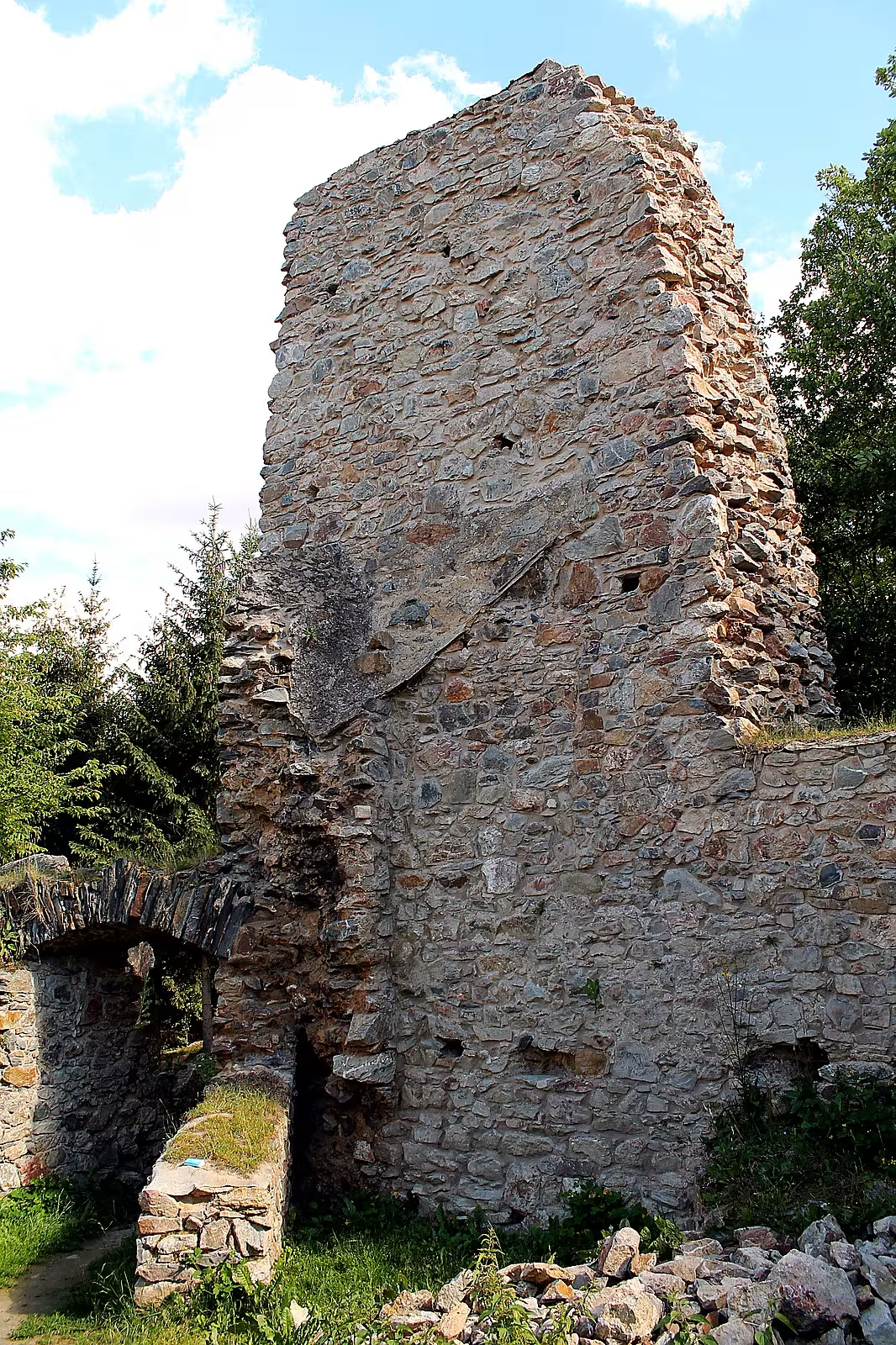
Rabštejnek is a ruin of the medieval castle located in the village of Rabstejnská Lhota in the district of Chrudim. This building was created in the first half of the 14th century and for most of its existence it served as a seat of a small noble estate. The monument is characterized by its historical development from the medieval castle to the romantic adaptation in the 19th century.
The castle is created directly in 1390 through the home of Matthias from Rabštejnka. The castle was founded in the first half of the 14th century and during the Hussite wars Aleš z Orle was based there.
The building unit is two-piece and consists of a rectangular front panel and approximately oval core. The foothold orbits a moat with a wall and a wall that connects to a rock formation in the northwest. In places adjacent to the core, the wall has the character of a park wall. The dominance of the castle core is square-edged donjon, behind which stood a narrow building built significantly of wood. On the north side of the core is a semi-circular open tower or bastion, whose inner side was walled up in one of the younger building phases. In the lower part of the core there is a place where a building was built in the 19th century with new Romanesque windows and a counter roof. The perimeter wall at this building amplifies a pair of restraints.
The history of the castle owners was accompanied by legal disputes and political changes. At the turn of the 14th and 15th centuries, the castle belonged to John of Eagle, after whose death it became death in 1405. The property was acquired by Slavibor Vrš, but after him was donated by Václav IV. Matìj Girls of Nemošice. In the middle of the 15th century there were disputes about ownership between various noble families, including the claim of the Vitecks of Tuneče and the Orla or Pyska of Žestok. Later the castle was owned by Hertvik of Obražna, Váňka of Vlková or the family Šárovice of Šárov. In 1538 and 1540, they sold parts of the estate to the city of Chrudim, but they had to turn them over to the administration of the Royal Chamber because of their participation in the 1547 State Uprising. Then Jan z Pernštejna bought the castle in Helfštejn and shortly afterwards Heřman Lhotský ze Zásmuk. In the 16th century, the castle was managed by various administrators and vladyková, including the families of Fránky from Liběchov or Bohuslav Mazance from Frymburk. Mazanec began to expand the Slato fortress by using a building stone taken apart from the already degraded Rabstejnek. In 1585 the castle was already described as desolate.
One of the most significant events in modern history was the romantic reconstruction of the ruins in the second half of the 19th century for Franz Joseph from Auersperg. A new wall was built on the east side, which created a building intended for the owner's stay during hunting in the nearby sector. This building contained a smaller chamber and a spacious hall.
Rabštejnek has been protected as a cultural monument since 1964. In 2014 the object was purchased by three enthusiasts in order to prevent its further decay. The castle is expected to be opened again in 2024.
This ruin represents an interesting example of the medieval castle, which also underwent a deliberate landscape adjustment in the spirit of romanticism. It is a suitable destination for visitors interested in the history of noble settlements.
Then and now
Drag the slider to compare how the landmark may have looked when it was built with the view today.
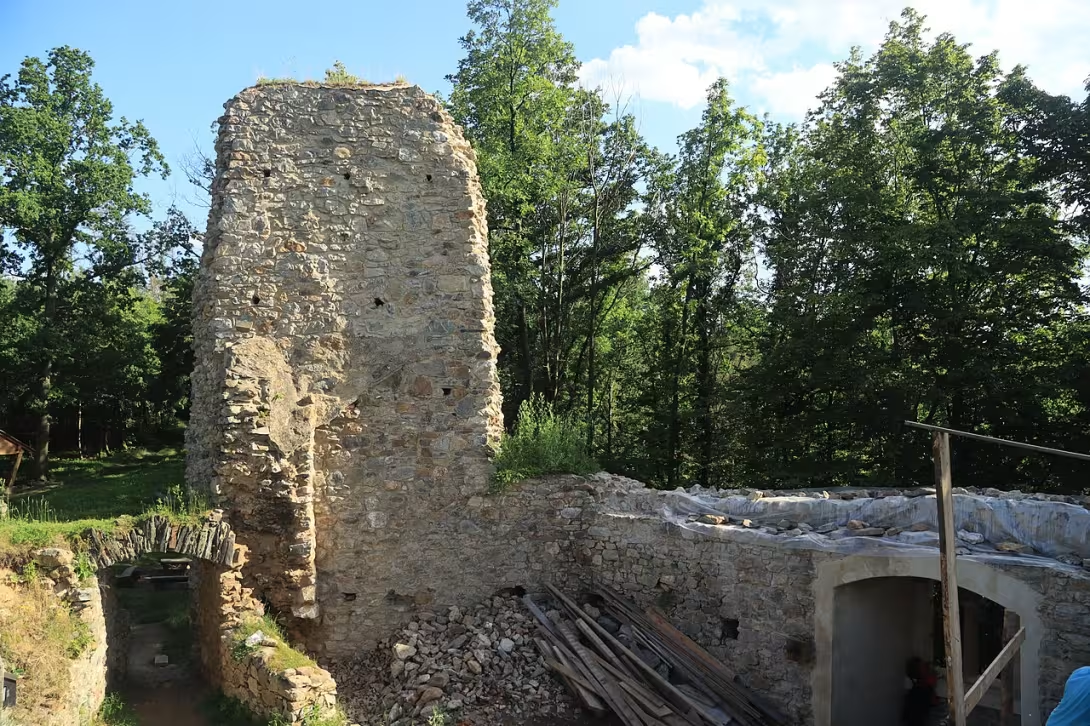
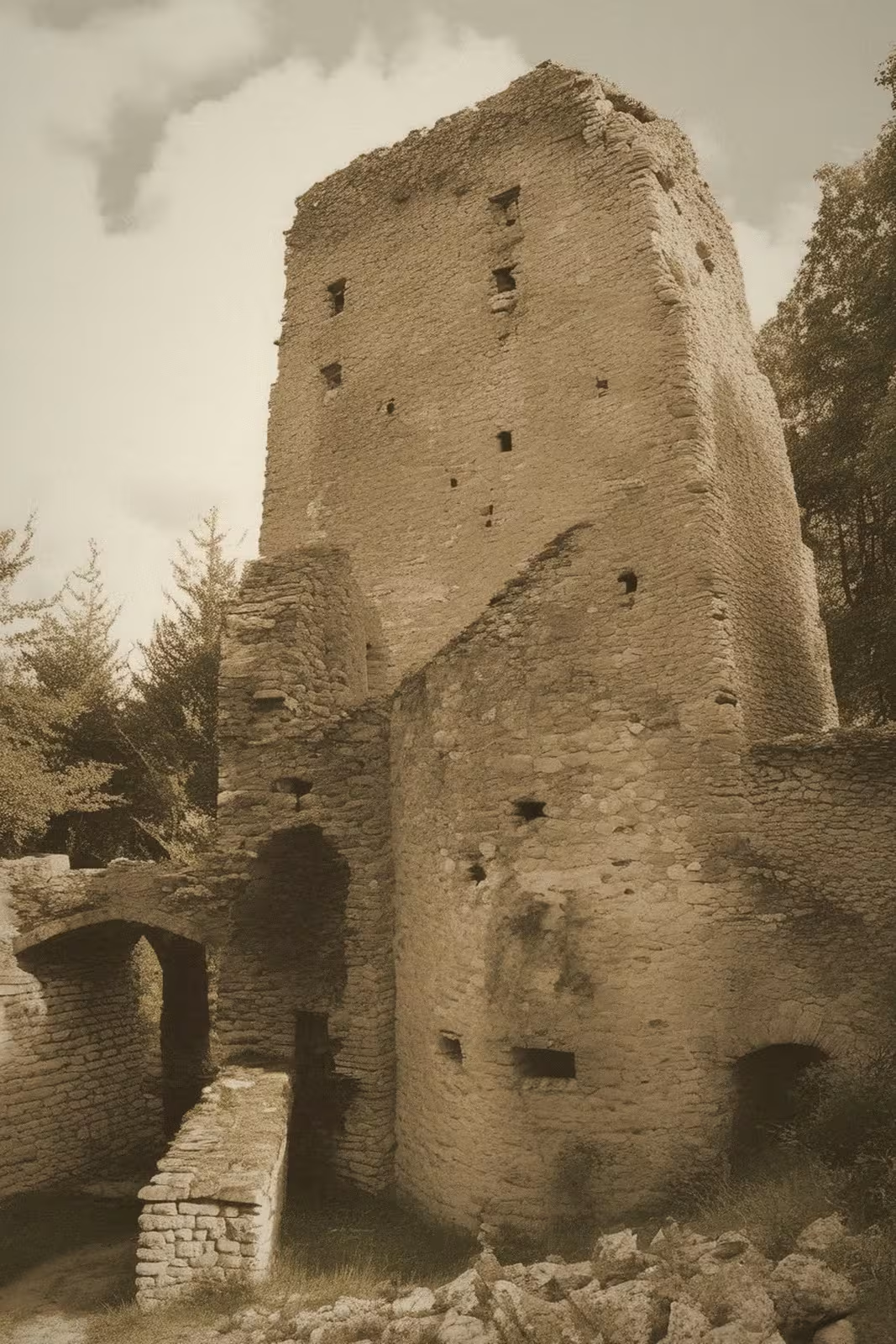
The historical appearance on the left is an AI-generated visualisation and serves as inspiration only.
Historical milestones
- 1390
- Indirect proof of the castle in the home of Matthias from Rabštejnka.
- 1538
- Sell part of the estate to the city of Chrudim.
- 1547
- The castle was submitted to the administration of the Royal Chamber after the state uprising and then sold to John of Pernštejn.
Architectural development
The castle was founded in the first half of the 14th century. In the nineteenth century the object was deliberately modified into a romantic form for the needs of Franz Joseph from Auersperg.
Historical events
1390 - indirect proof of the castle in the home of Matthias from Rabštejnka; 1538 - sale of part of the estate to the city of Chrudim; 1547 - sale of the castle to John of Pernštejn after the state uprising.
Owners
Jan z Orle (turn of the 14th / 15th century), Matej Holec from Nemošic (after 1405), Aleš z Orle (15th century), William from Blackberry (around 1430), Vanka from Vlkova (before 1446), the city of Chrudim (1538), Jan z Pernštejna from Helfštejn (1547), Heřman Lhotský ze Zásmuk (1547).
Points of interest
- Rabštejnek is a ruin of the medieval castle located in the village of Rabstejnská Lhota in the district of Chrudim. - The castle was founded in the first half of the 14th century and during the Hussite wars Aleš z Orle was based here. - The history of the castle owners was accompanied by legal disputes and political changes, for example after the death of John of the Eagle became death and later belonged to various noble families. - One of the most significant events in modern history was the romantic reconstruction of the ruins in the second half of the 19th century for Franz Joseph from Auersperg. - Rabštejnek has since 1964 been protected as a cultural monument and in 2014 the object was purchased by three enthusiasts in order to prevent further decay.
Guide
Show guide text
This text was created by artificial intelligence and has not been editorially reviewed. It may contain inaccuracies.
Welcome to the ruins of Castle Rabštejnek. Stop for a moment, take a breath and feel the atmosphere of this place. You are standing in front of a silent witness of the centuries, which today stands above the countryside of the village of Rabstejnská Lhota in the district of Chrudim. What you see before you is not just ordinary stones and remnants of walls, but the remnants of a formerly proud mansion that carries stories of power, decline and romantic admiration for the past. Take a look at these ruins and try to imagine what this place looked like hundreds of years ago, when there were still voices of castle plbedrooms and there was a normal life of a noble family in the walls.
Let's go back in time together. The castle Rabštejnek was founded in the first half of the 14th century. At that time, the Czech landscape was full of similar castles and castles, which served as administrative and defence centres of small noble manor. Rabštejnek was not a huge royal fortress, but rather a typical seat of lower nobility, which was designed to manage the surrounding lands and ensure the safety of its inhabitants. In the year one thousand three hundred and ninety, the castle is inadvertently mentioned in the home of Matyas of Rabštejnka, which confirms to us that at that time the castle was already fully functional and perceived as an important point in the local hierarchy.
Now pay attention to what's left of the castle. Since you are at the ruins, we will not invite you to the inner spaces that no longer exist, but allow yourself to perceive the overall nature of the object. Notice how the remains of architecture intersect with the surrounding nature. It is fascinating to think that the castle in the sixteenth century left its inhabitants and the object began to slowly change into what you see today. But Rabštejnek has one special feature. In the nineteenth century, when the era of romanticism ruled in Europe, the ruins began to be viewed differently. It was no longer just a collapsed house, but a symbol of melancholy and the beauty of fleeting. It is in this spirit that the monument has undergone a romantic treatment for Franz Joseph from Auersperg. He did not want to rebuild the castle to its original form, but he wanted to preserve its poetic character of ruins so that it could serve as a ornamental element in the landscape and instead of contemplation. It is this layer of history that gives the place a strange, dreamy touch.
If we think more about the people who worked here, we will come across names that were significant in the region at the time. One of the key personalities was Aleš z Orle, who was based here during the stormy period of Hussite wars. Imagine the contrast between the calm that you feel here today and the tension that must have tied up in these walls at that time. Hussite changed the face of the entire Czech kingdom and even such a small estate could not stay away from political and religious conflicts. In addition to Ales of Eagle, the place associated names such as Jan z Orle, Zdeněk Šárovec ze Šárova or Heřman Lhotský ze Zásmuk. Each of them has brought their own ambitions and concerns to the history of Rabstejnek.
An interesting break in the history of the castle was the year of a thousand five hundred thirty-eight, when part of the estate was sold to the city of Chrudim. This shows a gradual shift of power and property from the hands of small nobles to the hands of growing cities. Even more dramatic change came in a thousand five hundred forty-seven. After the state uprising, which shook state stability, the castle was handed over to the administration of the Royal Chamber. That was the moment when the fate of Rabstejnek had finally changed. The castle was then sold to John of Pernštejn. The House of Pernštejnů was at that time one of the most powerful and richest families in the Czech countries, known for its economic skill and profligacy structures. Although Rabštejnek was for such a large family only a small brood in their extensive assets, their ownership gives the place some historical prestige.
Now let's stop at what's left of Rabštejnek's history as the greatest mystery or interest. The history of the owners of this castle was not only about security and administration, but was deeply linked to legal disputes and constant political changes. Imagine the endless disputes over the manor boundaries, the right to hunt, or the tax collected that were held in the archives and in the courts at the time. Rabštejnek was not only a stone building, but the center of a constant legal drag dilute that reflected the complexity of medieval and modern social order. It is fascinating how the castle, which at some point was the subject of sharp disputes and political intrigue, became in the nineteenth century instead of calm and romantic contemplation.
Look around you and see how quiet this space is. Today, Rabštejnek is protected as a cultural monument, which means that its present state is deliberately maintained to remind us of the past. It's a place where medieval practicality, Renaissance decline and romantic sensitivity meet.
Imagine how generations were changing over these walls, how regimes were changing, and how the landscape itself was changing around us. Rabštejnek reminds us that nothing is eternal, but that even in decomposition and ruins you can find new value and beauty.
Now I'm leaving you to explore the ruins at your own pace. Walk around the remaining walls, touch the cold stone and let your imagination work freely. Try to imagine what Aleš z Orle could think about when looking from the walls to the surrounding landscape, or what dreams Franz Joseph from Auersperg had when he brought his guests here to show them the beauty of this romantic ruin.
Thank you for taking me on this short journey through time. I hope this view of Rabštejnek helped you see more in these stones than just old remains of the building. I wish you a pleasant rest of the day and an inspirational walk around Rabstejn Lhoty. Goodbye.
Tips for visitors
The best time to visit the ruins of Rabštejnek is spring and autumn, when the weather is friendly for walking around the terrain and the surrounding landscape is getting beautiful colors. In summer the walls may be hot and the sun directly above the head, while in winter the roads may be slippery and part of the area less accessible. We recommend avoiding top summer weekends if you prefer a quieter atmosphere.
Transportation to the monument is the easiest car that can be parked near the village of Rabstejnská Lhota or Høman's Town. Public transport is a place available, but it is necessary to verify the current connection and departure times in the search engine, as the frequency of connections to smaller municipalities may be lower.
To climb the ruins and move around the terrain, bring with you firm shoes with a good heel, because the roads can be uneven and overgrown. We recommend you take enough drinking regime, especially in the summer months, and a light snack if you plan a longer walk around the area. Sunglasses and hat are also a practical accessory in sunny days.
For photography is ideal morning or late afternoon light, which creates dramatic shadows on stone remains of the castle and emphasizes texture ruins. The best views are opened from different angles around the ruins, where you can capture both the details of the walls and the overall view of the surrounding landscape. Observe that the shadows do not interfere with the key parts of the image, and use the contrast between the dark stone and the bright sky.
The village of Rabštejnská Lhota and Høman's Town are located in the vicinity of the ruins, which are ideal stops for a short walk or visit local monuments. For families with children, the climb to ruin is suitable if children are able to handle slightly more demanding terrain. We recommend that you think about the route in advance and have water and snacks with you so the children don't get sick. There are basic refreshments and toilets in the surrounding municipalities that are useful for families with small children.
Frequently asked questions
Can the monument be visited?
This is a ruin. Such sites are often freely accessible, but some can only be visited with a guide or are closed for safety reasons. We have not verified the current situation – take care and respect any restrictions.
Where is the monument?
Location: Pardubický kraj. The map on this page shows the exact spot.
Why is the monument protected?
It is listed in the Central List of Cultural Monuments of the Czech Republic as a cultural monument (register no. 1000127352).
Businesses nearby
Do you run a restaurant, accommodation, shop, museum, rental, wellness or other visitor service near this monument? Show yourself directly to the people heading to it — this is how they will see you in the app and on the web:
Events nearby

Zdroj akcí: otevřená data měst a obcí ČR (Národní katalog otevřených dat) a kalendář akcí Národního památkového ústavu.
Nearby
The village of Rabštejnská Lhota, Høman's Town.
Accommodation nearby
Themed route
1. Cameroon City Type: City Why: It serves as a starting point for the journey.
2. Rabstejnská Lhota Type: Village Why: This location represents the path to the main monument.
3.Rabštejnek Type: Ruins Why: The main destination of the trip, which offers a tour of historical remains.
Seasonal recommendations
Spring: In the spring period, Rabštejnek is fertilized by flowering shrubs and trees that add colored shine to the faded architecture. The sun's rays create long shadows on decayed walls, which gives the masterful atmosphere of this historic ruin. Visitors are advised to come at the beginning of the day to enjoy a quiet visit and capture the breathtaking light effects spring offers. Fine winds can be cool, so suitable clothing should include a warm scarf or coat.
Summer: For years, Rabštejnek is a popular destination for tourists and nature lovers, where they can enjoy a sunny day between decrepit walls. With full sunlight, the ruins offer a stunning atmosphere, but with it also a larger crowd of visitors. It is recommended to come early in the morning or later in the evening to enjoy a peaceful view of the ruin and avoid the heat of the noon hours. Don't forget the sun protection and enough drinking water.
Autumn: In autumn the Rabštejnek becomes melancholic beauty when tree leaves become golden and red shades. The atmosphere is calm and resembles romantic sunny days that are ideal for photography. Visitors would be advised to come in mountain clothes with warm top linen and protective glasses, because the leaves can be very bad on the sidewalk. Visiting in the intermediate room is quiet and pleasant.
Winter: In winter, Rabštejnek turns into a fascinating view with snow-covered architecture, which gives a romantic and mysterious atmosphere. Sun rays reflecting from snow can cause a breathtaking effect on the ruins. Visitors would be advised to come in warm clothes, including fixed shoes and protective sunglasses.
Visualizations and artistic views


The visualisations are generated by artificial intelligence and serve as inspiration.
Photos from the area
Real photos taken near the monument


Zdroj a licence jsou uvedeny u každého snímku.
Tips from visitors
No tips yet. Be the first!
Log in and add your tip.
Sources and literature
Photos: Jiří Sedláček / CC BY-SA 4.0 — Wikimedia Commons. The author and licence also appear when you hover over the image.
Faktickým podkladem tohoto textu byl článek na Wikipedii, jehož autory jsou přispěvatelé Wikipedie. Článek je dostupný pod licencí CC BY-SA 4.0.
Location on the map
More monuments – Pardubický kraj
Show all in the region

Příběhy a pověsti
Legendy, pověsti a příběhy spjaté s touto památkou
Fotografie návštěvníků
Zatím žádné fotografie. Buďte první, kdo přidá fotografii z návštěvy!
Log in a přidejte svou fotografii nebo hodnoťte.
Za ověřenou návštěvu v aplikaci získáte víc bodů — poznáme podle GPS, že jste na místě.
Reviews and comments