



Radnice (Kašperské Hory) Town hall
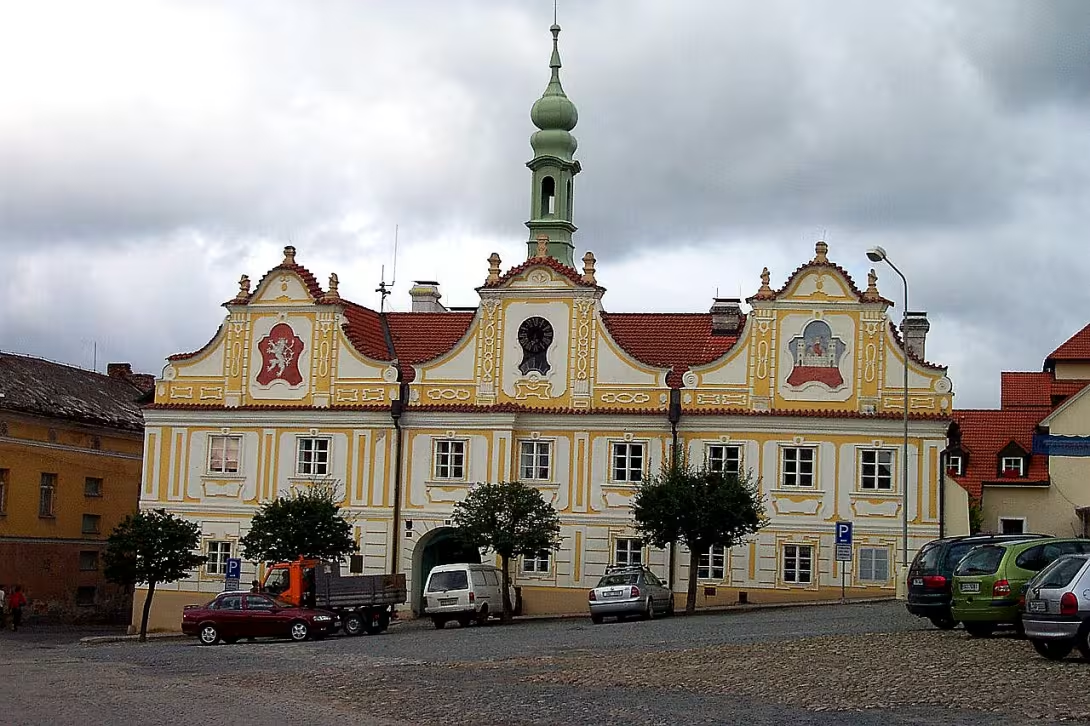
Town Hall in Kašerské Hory is a Renaissance building on the town square, which represents an important historical monument. Its notoriety lies in rich history, architectural features and long-term importance to local people. Originally, it was a free house of the royal castle Kašnika. He obtained it by gift from King Ferdinand I in 1539 Jiří z Lokšan. After his death in 1551, the house was transferred by his widow to the city, thanks to which the building served as the seat of the town hall since 1597.
The history of the building is closely linked to the Czech Renaissance and the reign of Ferdinand I., which fundamentally influenced the administration of royal property. Jiří of Lokshan was given the opportunity to acquire this property as a gift from the king, which was in line with the custom at the time. After his death, the house became a part of the city's property, making a significant change in its purpose and administration.
Architectural town hall is characterized by Renaissance style. In the seventies of the 18th century, it underwent the last significant reconstruction in which stucco decoration of the facade was created. This decoration is attributed to construction master Philip Heger. It gave the façade a distinctive form, which has been preserved to this day.
The ownership and administration of the building have undergone several changes. After the transfer to the city in 1551 it began to function as a town hall in 1597. From 1850 to 1938, there were also judicial proceedings because the building served as the seat of the regional court. These changes reflect the dynamic development of the city of Kašperské Hory and its institutions.
Key events include the acquisition of the house by Jiří of Lokshan in 1539, his transfer to the city in 1551 and the provisions of the town hall since 1597. Another important milestone was the opening of the Regional Court in 1850, which highlighted the multifunctionality of the building.
Today the town hall in Kašerské Hory is open to visitors and forms an important cultural monument. Historical importance, architecture and long tradition make it an attractive destination for tourists and locals. Visiting the town hall offers the opportunity to become acquainted with the history and architecture of the region and commemorates the rich past of the place.
Historical milestones
- 1539
- Jiří z Lokšan won the house with a gift from King Ferdinand I.
- 1551
- The widow of George of Loksan left the house to the city.
- 1597
- The building started to serve as a town hall.
- 1850
- City Hall has become the seat of the regional court.
Architectural development
The building has a Renaissance foundation. In the seventies of the 18th century, it underwent the last significant reconstruction. During this adjustment a characteristic stucco decoration was created on the facade.
Historical events
1539: Jiří z Lokšan obtained the house with a gift from King Ferdinand I.; 1551: the city obtained the house from the widow to George of Lokšan; 1597: the building started as a town hall; 1850: City Hall became the seat of the regional court.
Owners
Jiří z Lokšan (1539), city Kašperské Hory (1551).
Points of interest
- It was originally a free house of the royal castle Kašimika. In 1539, he received the building with a gift from King Ferdinand I. Jiří z Lokšan. - The building has been the seat of the town hall since 1597. - The stucco decor of the 1970s is attributed to Master Philip Heger. Between 1850 and 1938, there was a regional court in the building.
Guide
Show guide text
This text was created by artificial intelligence and has not been editorially reviewed. It may contain inaccuracies.
Welcome, dear visitors, and welcome to the heart of Kašperské Hors, where the majestic town hall has been watching the town square for centuries. When you look at this structure, you immediately feel that this is an extraordinary piece of architecture that rises above the surrounding houses and radiates the calm power of the Renaissance spirit. The first look at her body will take you to a time when important events took place here and where the fate of the city and its inhabitants were decided. Notice how the stone walls meet with fine stucco decoration, and how the overall shape of the building seems balanced and firm, as if he wanted to recall the stability and order provided by the city hall for centuries.
Now let's move on to the beginning of this place. In 1539, when the centre of Europe revolved around dynastic changes, King Ferdinand I. gave his subject George of Lokšan a free house, which was then part of the royal castle Kašimík. This gift was not only a token of royal generosity, but also a sign of trust and recognition for a great nobleman. Jiří z Lokšan, a man with a rich life experience and strong ties to the local community, became the new house manager, which gradually turned into the center of urban life. After his death in 1551, his widow, in the spirit of philanthropy and the care of the city, left the house to the city of Kašil itself. This opened a new chapter - the building became the property of the village and prepared itself for the role we know today.
Since 1597, this Renaissance building has officially become the seat of the town hall. At that time, the city grew and needed a firm place to hold a meeting, decision-making and governance of public affairs. The city hall has thus assumed the role of not only the administrative centre, but also the symbol of urban identity. Over the centuries, important events took place, not only political, but also judicial. Between 1850 and 1938 there was a regional court in the building where many cases were discussed that affected the lives of the inhabitants of the whole region. This dual function - city hall and court - underlines the importance of the building as a place where justice and public administration meet, and where social order forms.
Now let's focus on the architecture itself that surrounds you. The building is a typical representative of Renaissance style, which developed in Czech cities in the 16th century. Its symmetrical proportions, straight lines and harmonious layout of windows and input portals reflect the then aesthetic principles that emphasized order and balance. Special attention deserves stucco decoration of the facade, which dates back to the 1970s. This decoration is attributed to Master Filip Heger, who, with his art, gave the facade fine ornaments and decorating that underscore the historical character of the building. If you look up, you will notice that stucco details decorate the windows and the upper part of the portal, creating a visual connection between the earth and the heavens, between everyday life and the higher ideals that city hall represents. Although these are not fancy sculptures or complex towers, the simplicity and purity of shapes alone is very strong and reminds that beauty can be hidden in mild details.
Key stories and personalities associated with this place are an integral part of his spirit. Jiří z Lokšan, who won the house as a gift from King Ferdinand I, became the first important figure to connect its name to the building. His role in local politics and justice laid the foundations for the future functioning of the City Hall. King Ferdinand I., whose name appears as a donor in chronicles, represents a wider context of European power relations and shows how local history intertwines with national development. Filip Heger, master of stucco crafts, has brought an artistic element into the building, which still fascinates anyone who looks at the facade. His work is proof that even in the period when the city faced political changes, art and craft managed to preserve and bring lasting value.
The interesting thing that may interest visitors is that it was originally a free house of the Royal Castle Kašnika. This means that the building was not part of the fort, but stood alone and served as a residence for an important nobleman. This underlines how the spatial layout of the city evolved and how individual buildings gradually integrated into public life. Another stimulating element is the period when the town hall served as a judicial seat. At that time, it decided on disputes that could have had an impact on the whole territory, and so various layers of society met here - from townspeople to nobility. Think about how many voices, emotions and destinies have passed through these walls and how their decisions have been impacted on future generations.
Finally, I invite you to go further along the town square and discover other hidden treasures of Kašerské Hor. Town Hall is just one of many historical buildings that make up the unique atmosphere of this place. Walk the narrow streets, listen to the whispers of the past and let the stories that have taken place here carry you away. Every step brings you closer to understanding how the city evolved, what values it valued and what traditions it passes on. Thank you for choosing this city hall as the starting point of your journey, and we wish your discovery to be full of inspiration, joy and new knowledge. Say goodbye to this place with respect and look forward to the next stops, where there are other chapters of the rich history of Kašerské Hor.
Tips for visitors
The best time to visit Town Hall in Kašerské Hory is during the summer months when the weather is favourable and the sun illuminates the architecture of the building in a special way. This time of year also offers the richest programme of cultural events in the area.
For those travelling by public transport, Kašperské Hory is well connected to the surrounding areas of buses. It is recommended to verify the current connection before the trip.
When you visit, bring suitable clothes, especially if you plan to walk through the local castle or the surrounding mountains. The photos will also be advantageous when visiting Town Hall thanks to its historical architectural details.
Photography is particularly interesting in local areas where the building is illuminated by sunlight from the side. The best light usually comes in early morning or late afternoon.
In the vicinity of the Town Hall you can visit Kašimík Castle, located nearby and offers views of the local landscape. For families with children it is convenient to walk around the castle area or visit a local museum that has interesting exhibitions.
Frequently asked questions
Can the monument be visited?
The building is in use (offices, a school, shops and the like). The interior is generally accessible only during operating hours and tours are not usually offered; we have not verified the details. You can see the exterior from the street.
Where is the monument?
Location: Kašperské Hory, Plzeňský kraj. The map on this page shows the exact spot.
Why is the monument protected?
It is listed in the Central List of Cultural Monuments of the Czech Republic as a cultural monument (register no. 1000126295).
Businesses nearby
Do you run a restaurant, accommodation, shop, museum, rental, wellness or other visitor service near this monument? Show yourself directly to the people heading to it — this is how they will see you in the app and on the web:
Nearby
Hrad Kašperk
Accommodation nearby
Themed route
Thematic cruise route: Kašperské Hory
1. Radnice (Kašperské Hory) - historical object Town Hall is the centre of the city and one of the most important monuments of the village. It is a beautiful example of goth with a distinctive tower element that dominates the square. Worth exploring her architectural beauty and the history of the city.
2. Castle Kašimík - historical location The castle is one of the most important historical monuments in the area, located at the top of the mountains and offers excellent views. It is an ideal place for those who want to know the history of the region and enjoy natural beauty.
3. The surrounding square - cultural space After visiting the Town Hall, take a look at the surrounding square where you can explore other historic buildings and enjoy a quiet moment in the city centre. This space is ideal for relaxation and knowledge of the Kashper traditions.
4. Walk around the castle - a natural experience After visiting the castle complex, take a look at the surrounding walks that offer beautiful views and a quiet atmosphere. It is a great way to enjoy the natural beauty of the area and comfortably take a walk.
5. Historical houses in the center - architectural spells After walking around the castle, look at the historic houses in the city centre, which resemble the history of the village. These are beautiful examples of architecture and important parts of the cultural heritage of Kašerské Hor.
This route will offer you a view of the most important historical and cultural aspects of Kašerské Hor, focusing only on the main objective and its surroundings.
Seasonal recommendations
In spring, the city wakes up and the surrounding Šumava nature gets a fresh green color. The light is fine, which helps to better understand the details of the town hall facade. I recommend wearing more layers of clothing, because the weather in the mountains is usually unstable in this period. The best thing is to visit the memory in the morning when the streets are quiet.
The summer season brings bright sun and the biggest influx of visitors. The atmosphere is full of energy and the surroundings of the town hall September in full bloom. For the big crowds of the season, come first thing in the morning to avoid the queues. Don't forget light summer clothes and plenty of water to travel.
In autumn, the landscape is dyed in golden tones, and morning fog gives the city hall a mysterious touch. It is the perfect time for quiet walks and watching color games on historical walls. Suitable are waterproof shoes and a warm sweater. I recommend a visit in the afternoon when the natural light is softest.
In winter, the town hall may look quieter under a layer of snow and in Advent time there is a cozy mood. Days are short, so plan to arrive early. Hot shoes, gloves and hats are essential. Before travelling, check the opening times which are shortened during this period.
Visualizations and artistic views


The visualisations are generated by artificial intelligence and serve as inspiration.
Photos from the area
Real photos taken near the monument


Zdroj a licence jsou uvedeny u každého snímku.
Tips from visitors
No tips yet. Be the first!
Log in and add your tip.
Sources and literature
Photos: User:Aktron / CC BY-SA 3.0 — Wikimedia Commons. The author and licence also appear when you hover over the image.
Faktickým podkladem tohoto textu byl článek na Wikipedii, jehož autory jsou přispěvatelé Wikipedie. Článek je dostupný pod licencí CC BY-SA 4.0.
Location on the map




Příběhy a pověsti
Legendy, pověsti a příběhy spjaté s touto památkou
Fotografie návštěvníků
Zatím žádné fotografie. Buďte první, kdo přidá fotografii z návštěvy!
Log in a přidejte svou fotografii nebo hodnoťte.
Za ověřenou návštěvu v aplikaci získáte víc bodů — poznáme podle GPS, že jste na místě.
Reviews and comments