






Kostel svatého Mikuláše (Kašperské Hory) Church
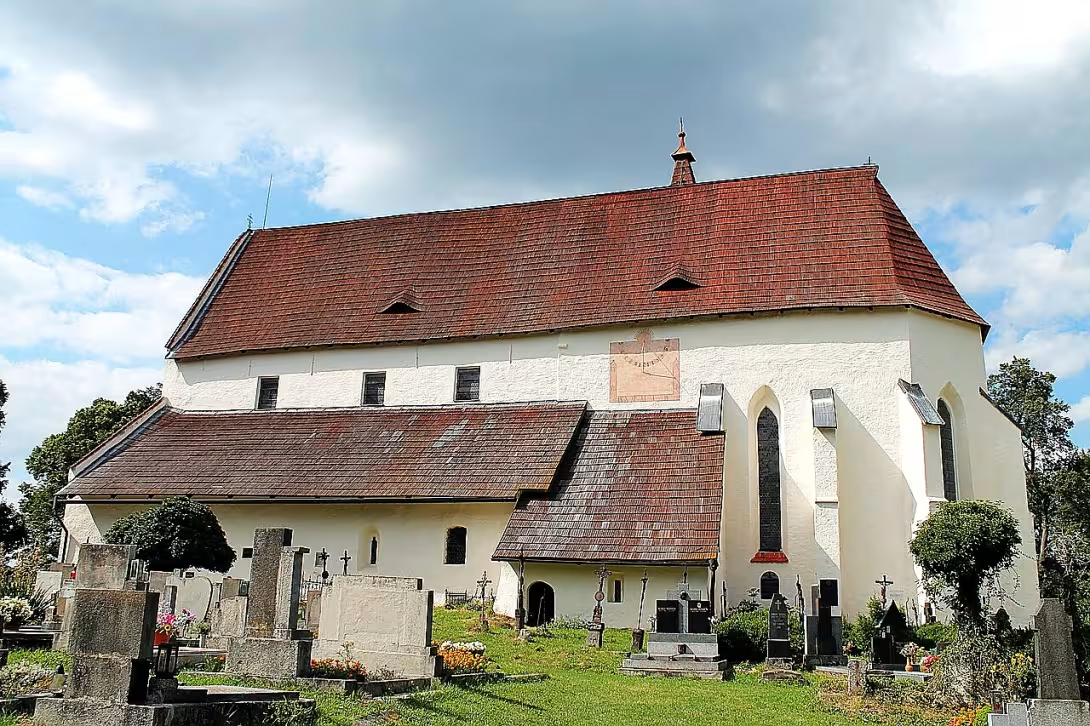
The church of St. Nicholas with the chapel of St. Anne and the cemetery enclosed by the stone wall is one of the most valuable architectural monuments of Kašerisky Hor. It significantly dominates its surroundings - from roads leading through the landscape to see it from far away. But it is not located in the city itself, but it remains separate in a secluded position that historians explain as a remnant of the original, spread out medieval settlement.
The construction of the present church was built around 1315 and was completed around 1330. At the beginning of the 14th century, the foundations of the ship, the presbytery and the sacristy towers were built. Archaeological research from 1928 and 2002 showed that the church was created on the site of an older, less representative sanctuary, which served as a parish community and as a burial ground. The construction was born in connection with intense gold mining around - local miners needed sacral space for prayers and blessings before descending into the mines. The historiography of the 19th century even sees a gilde of miners in the church.
Since its inception, the church had a parochial status which it maintained until the 16th century. In pre-Hussite times, the King had patronage. The settlement at the church was intersected by a long-distance route - in 1345 Juan Luxembourg decided to grant Kašemský Mountains urban privileges.
The oldest written document dates back to 1345, when a certain Hermannus de sancto Nicolao dedicated his field to the church. In the 16th century they were still in possession of dry goods near the church; In the 1584 Urbarium, seven taxpayers are mentioned, probably seven settlements belonging to the city of Kašperské Hory, which Susice kept until this year.
In the 18th century the church underwent modifications in the Baroque style. During the same period, the Baroque fence of the whole complex was created; The entrance gate was rebuilt around the end of the 19th century. According to historians, the chapel of St. Anne, which forms part of the fortified area, was probably built in the 1930s, and it also received modifications in the 17th and 18th centuries.
The reason why the church was built in this very remote place has not yet been clarified precisely, although many researchers have dealt with this problem. Field surveys in the immediate vicinity have not confirmed extensive mining activity; a thorough archaeological survey has not yet been carried out here. There's only one building at the church today.
The church belongs to the Roman Catholic parish Kašerské Hor, which is part of the Czech-Budějovice diocese. The old parish church became a filial church - which reflects the shift of settlement from the spread out medieval landscape to the concentrated form of the present city.
Then and now
Drag the slider to compare how the landmark may have looked when it was built with the view today.
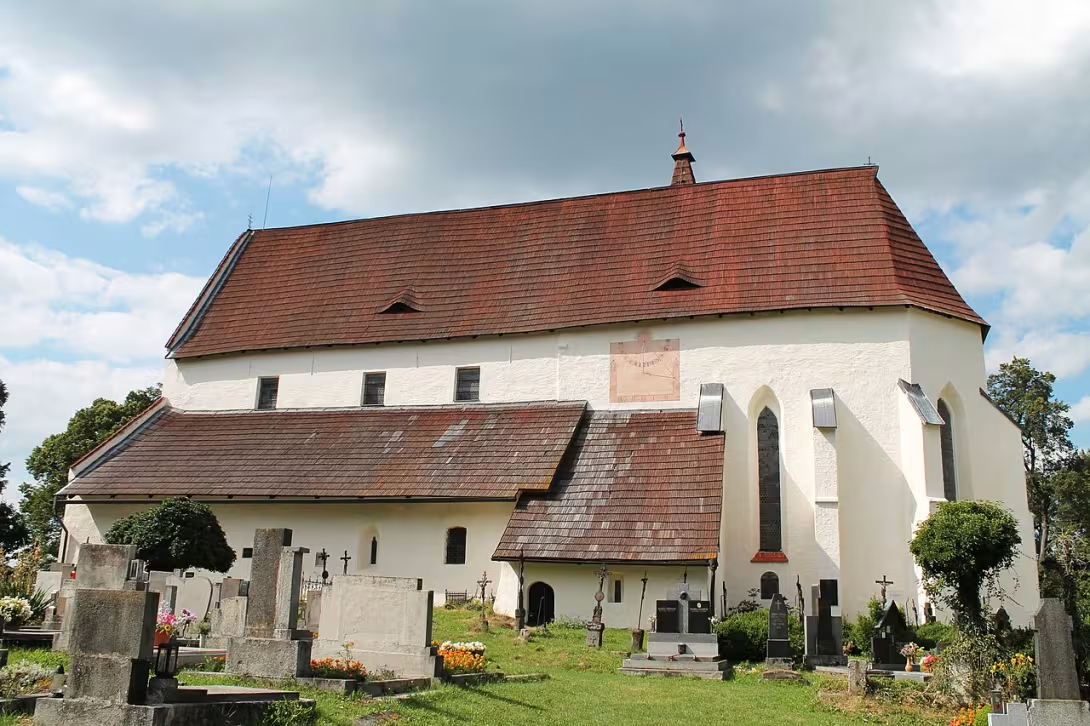
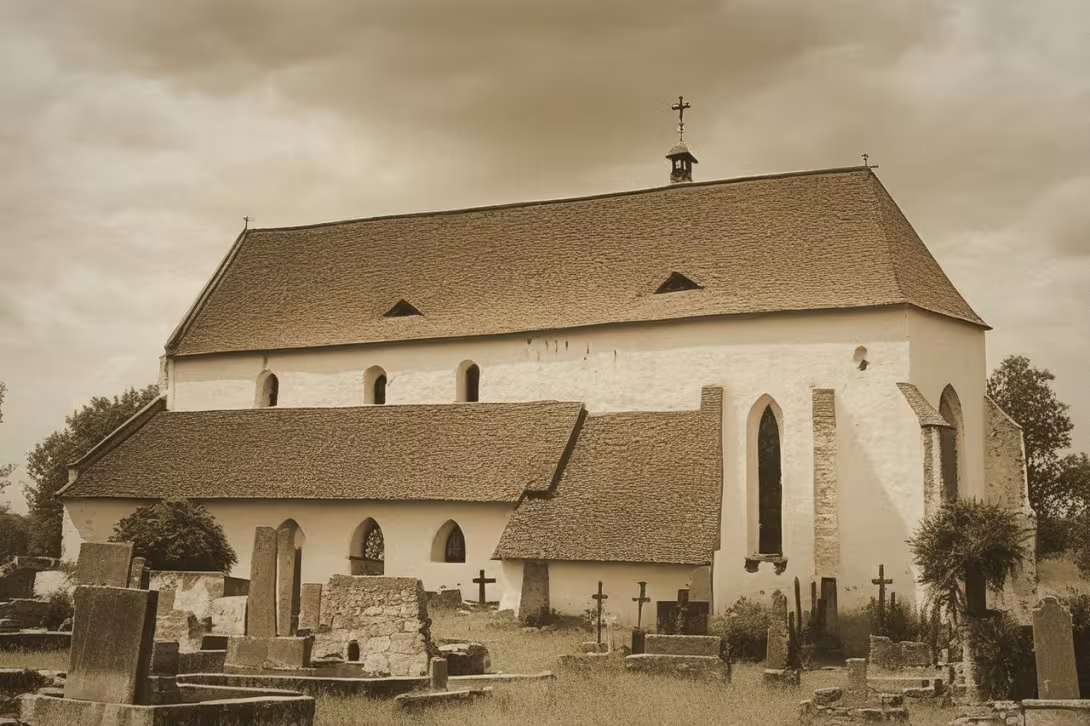
The historical appearance on the left is an AI-generated visualisation and serves as inspiration only.
Historical milestones
- 1315
- Likely the creation of a contemporary church.
- 1330
- First preserved record of the church.
- 1345
- A record of Hermann de sancto Nicolao dedicated to the church field.
- 18th Century
- Baroque style church.
Architectural development
The original Gothic building from the period before 1330 included a boat, presbytery and a tower with sacristy. In the 18th century, the object underwent Baroque modifications. The whole complex is surrounded by a Baroque wall with a gate rebuilt at the end of the 19th century.
Historical events
The current construction was built around 1315; The year 1330 represents the first recorded record; In the 18th century, there were baroque modifications.
Owners
At the time of birth under the patronage of the king; the surrounding settlements were held by the town of Susice.
Points of interest
- The church of St. Nicholas with the chapel of St. Anne and the cemetery is situated in a secluded position separated from the city itself, which historians explain as a remnant of the original, spread out medieval settlement. - The current construction was built around 1315 and was completed around 1330, while archaeological research from 1928 and 2002 showed that it had grown on the site of an older, less representative sanctuary. - The construction was born in connection with intensive gold mining in the surroundings, because local miners needed sacral space for prayers and blessings before descending into the mines, while the historiography of the 19th century also sees it as a place of the guild gathering of the miners' guild. - The oldest written document dates back to 1345, when a certain Hermannus de sancto Nicolao dedicated his field to the church. - In the 18th century the church underwent modifications in the Baroque style and in the same period the Baroque fence of the complex was created, whose entrance gate was rebuilt around the end of the 19th century.
Guide
This guide is narrated by a synthetic voice generated by artificial intelligence.
Show guide text
This text was created by artificial intelligence and has not been editorially reviewed. It may contain inaccuracies.
Welcome to Kašperské Hora and this wonderful place where time has stopped. You are standing in front of the church of St. Nicholas, which proudly stands at the foot of the top of the vineyard, approximately one and a half kilometers from the city itself. If you look around you, you might be the first to be surprised by the extraordinary loneliness. Around you lies a quiet landscape, an old cemetery and St. Anne's cemetery chapel, with nowhere in the immediate vicinity there are any modern houses or the bustle of the city. Feel the quiet atmosphere that breathes upon you from every stone and makes it known that this place remembers centuries of human destiny, work and prayer.
Let's move back in time to a time when this whole neighborhood lived in a stormy gold hoard. The current construction of this gothic gem began to arise around 13 hundred and fifteen and was completed around 13 hundred and thirty. It was the expansion of gold mining in this area that prompted the people at that time to build a shrine to serve all local miners and settlers. The first written record of him dates back to the year 13300. We learn from them that the church was the living center of the life at that time and until the 16th century it served as the main parish centre for the whole wide area.
Now pay attention to the very construction that you are facing. It is a Gothic building that carries traces of centuries of development, including modifications that it has undergone in the 18th century in a baroque spirit. Take a look at the outside of the church and perceive its solid, centuries-old structure, which has resisted the test of time. When you enter, which I highly recommend, don't miss the greatest gem of the interior. It is a completely unique wooden baroque ceiling, decorated with a beautiful flower painting. Raise your head and let your eyes rest on these ancient details, which to this day tell about the craft of our ancestors.
This place is also bound by specific human stories and names from centuries ago. Among the most important figures that have shaped the history of this church are certain Hermannus de sancto Nicolao. We learn of his generosity and deep faith from the record of 13 hundred and forty-five, when he devoted his field to this church. Imagine him walking on the same land you're standing on then, hoping to put the property in the hands of the Church to ensure the spiritual life of a thriving settlement.
The lonely location of the church of St. Nicholas outside today is still the subject of research and attracts the attention of historians. Why is he standing so far from the center of Kašperské Hor? Experts explain this mystery as a fascinating remnant of the original, spread-out medieval settlement. The city has moved elsewhere over the centuries, but the church has remained faithfully standing in its original place, surrounded by the cemetery and chapel of Saint Anne as a witness of the long-lost times when medieval gold seekers have cultivated the surrounding slopes.
I hope this special place has reached you as well as the generations before you. Take a moment of quiet contemplation, walk around the old cemetery, feel the rustling of trees at the foot of the top of the Vineyard and let the genius loci of this forgotten corner of Šumava appeal to you. Thank you for listening to our audio guide, and I wish you a wonderful rest of your stay in Kašerské Hora. Goodbye.
Tips for visitors
The best time to visit St. Nicholas's Church is early in the morning or late in the afternoon, when the sun lights beautifully modulate the Gothic details of the building and surrounding landscape under the top of the Vineyard. For transport you can use your own car or take a pleasant walk directly from the city of Kašperské Hory, and you can best verify the specific transport connections in the local traffic search engine. With you in view of your location in nature, take your fixed shoes on the field roads, clothes into the changing weather and plenty of fluids, because you will not find shops near the monument. Photographers appreciate the pictures of the church from the ceiling against the slope of the Vinika hill, ideally during the golden hour when soft light highlights the historic genius loci associated with the ancient gold mining. In the vicinity within 30 minutes walking or driving you can visit the historic city Kašperské Hory itself, climb the nearby Vineyard hill or explore the surrounding historical mining areas that resemble medieval mining of precious metals. For families with children, this place is an ideal goal of a simple trip associated with discovering the mysterious history of old mines and Gothic architecture in a peaceful natural environment.
Frequently asked questions
Is Kostel svatého Mikuláše (Kašperské Hory) open to the public?
Yes, the church is generally accessible to visitors. We recommend checking the current opening hours on the official website or contacting the local information centre.
How do I get to the place by car / public transport?
The location is easily accessible by car. Parking is close to the center of Kašerské Hor. For public transport it is possible to use buses from nearby municipalities. Check current connections and times before visiting.
How much is the entrance fee and is it paid on the spot?
Admission fees are usually paid on the spot. Current prices can be found on the official site of the sights or in this way before visiting.
Is the tour suitable for children and seniors?
Yes, the tour is suitable for all ages. The church offers an interesting view of history and architecture, which can also be fascinating for children and seniors.
How long does the tour take?
A tour of the church usually takes about an hour, depending on how closely you explore the site.
What are the opening times and booking is required?
Opening hours may vary depending on the season. We recommend checking the current opening hours on the official website or contacting the local information centre. Reservation is not usually necessary.
What's interesting in the immediate vicinity?
In the vicinity of the church you can visit the historical centre of Kašeriský Hor and its idiotic square. It is possible for natural love to travel to nearby forests or mountains that offer beautiful views and opportunities to explore nature.
For kids
About 676 years ago, an adventure took place in the Kašerisky Hor Valley, which could be both funny and mysterious, as in a game with mysterious elves. At this time people decided to build something really special - the church of St. Nicholas. Think of it as a wild road to the dark forest where every step brings a new secret.
Businesses nearby
Do you run a restaurant, accommodation, shop, museum, rental, wellness or other visitor service near this monument? Show yourself directly to the people heading to it — this is how they will see you in the app and on the web:
Nearby
Vineyard Hill, city Kašperské Hory, historical mining area.
Accommodation nearby
Themed route
1. Church of St. Nicholas (Church) This Gothic cemetery church is situated in a picturesque environment beneath the city and hides rare medieval wall paintings. The tour of this main destination offers a unique atmosphere of an ancient spiritual place.
2. Vrch Vinice (natural location) This hill is located in the immediate vicinity of the city and offers a pleasant nature walk. Interesting views of the surrounding landscape of Šumava are opening up from elevated places.
3. City Kašperské Hory (seat) The historic upper town attracts its preserved architecture and peaceful atmosphere. A walk through his alleys brings ancient life to the foothills.
4. Historical mining areas (historical location) These surrounding terrain resembles a rich past associated with gold mining. The remains of old works and shafts point to the strenuous work of former miners in this area.
Seasonal recommendations
Spring in Kašerské Hora brings awakening nature, where the surrounding Šumava walls slowly lose their snow cover and play all shades of green. Sun rays begin to warm and create impressive lighting conditions for the photography of the Gothic architecture of St. Nicholas' church. The atmosphere is very quiet and quiet here in this period, ideal for a thin number of visitors. Practical advice is to expect variable weather, which is why waterproof shoes and laminated clothing are useful, as the roads can be muddy after the siege. The best time for the tour is in the morning, when morning fog slowly retreats and reveals the beauty of the cemetery church.
Summer opens the main tourist season, where the monument is surrounded by lush summer vegetation and deep forests of Šumava. The lighting is the most intense in the late afternoon, when the sun radiates the stone portal and adjacent cemetery. The atmosphere is more lively because of the vacationers exploring the region. Due to the increased traffic, it is recommended to arrive early in the morning or late in the afternoon to avoid larger groups of tours. Suitable clothing is breathable clothing and solid shoes for longer walks along the surrounding paths, don't forget the headgear and plenty of drinking water.
Autumn turns the landscape into a colourful palette of red, yellow and brown tones that form an unforgettable contrast with the white walls of the church. The light is soft and scattered throughout the day thanks to the low sun, which is appreciated by all lovers of aesthetic shots. The atmosphere at the monument is melancholy and encourages deep silence. Due to the frequent cold wind and morning frost, it is necessary to choose a warm windbreaker, a hat and solid shoes. The best time to visit falls at noon hours, when the sun's light at least partially warms the cool mountain air.
Winter covers the Kašperské Hory in a snow blanket and St. Nicholas' church works in a snowy landscape like a fairy tale. Lighting in the late afternoon with reflection from snow creates a unique and almost mystical atmosphere. The reduced traffic guarantees absolute calm, but it is necessary to take into account shorter daylight and limited opening times of the monuments. For this period, it is absolutely necessary to have quality winter clothes, high snow boots and possibly covers, because the access routes may not always be extended. The best time to visit is around noon, when there is a chance of a clear sky and the highest temperature of the day.
Visualizations and artistic views


The visualisations are generated by artificial intelligence and serve as inspiration.
Photos from the area
Real photos taken near the monument


Zdroj a licence jsou uvedeny u každého snímku.
Atmosphere of the place
This atmospheric visualisation of the place and period was generated by artificial intelligence. It is not real footage of the location.
Tips from visitors
No tips yet. Be the first!
Log in and add your tip.
Sources and literature
Fotografie: Harold / CC BY-SA 3.0 — Wikimedia Commons. The author and licence also appear when you hover over the image.
Faktickým podkladem tohoto textu byl článek na Wikipedii, jehož autory jsou přispěvatelé Wikipedie. Článek je dostupný pod licencí CC BY-SA 4.0.
Location on the map
More monuments – Kašperské Hory
Show all in the municipality

Příběhy a pověsti
Legendy, pověsti a příběhy spjaté s touto památkou

Fotografie návštěvníků
Zatím žádné fotografie. Buďte první, kdo přidá fotografii z návštěvy!
Přihlaste se a přidejte svou fotografii nebo hodnoťte.
Za ověřenou návštěvu v aplikaci získáte víc bodů — poznáme podle GPS, že jste na místě.
Reviews and comments