



Radnice (Lázně Bohdaneč) Town hall
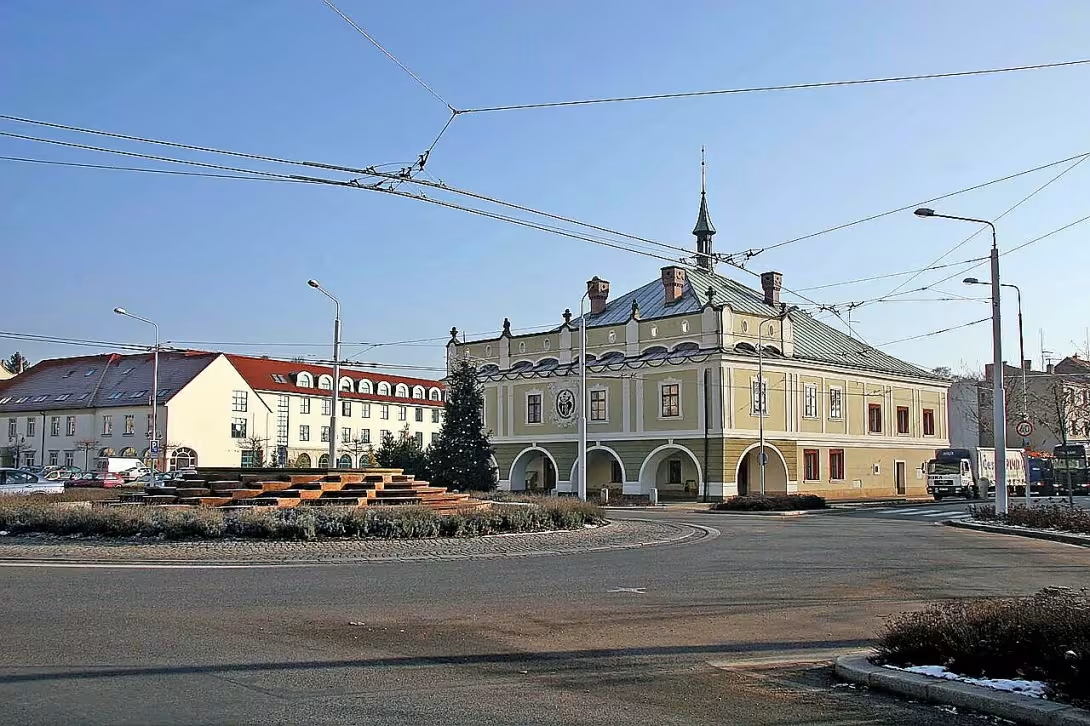
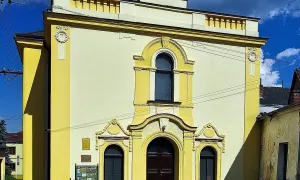
The Renaissance Town Hall in Lázně Bohdanči is located on the southeast side of Masaryk Square and represents the historical center of the city administration. The original Renaissance building was built in the 16th century by combining three older Gothic houses. To this day, it serves its purpose, even though it has undergone a number of building modifications and reconstruction over the centuries.
The history of this town hall began in 1540, when construction on the plots of three Gothic houses allowed Jan z Pernštejna. In the middle of the 16th century the Czech estate experienced the development of the economy, ponds and construction activities under the government of Pernštejn. At the time, the building served the needs of city administration. On the ground floor there was a inn and in the basement a warehouse of salt and hemp. Later, at the end of the 18th century, administrative and Yosefin reforms took place in the Habsburg monarchy in the spirit of enlightenment. This period also includes major building changes of the building.
Originally, the town hall was one-storey with three arcades. A major breakthrough in building development was brought by a devastating city fire in 1772, which destroyed 78 houses, a rectory, a brewery, a church tower and also a town hall. She stayed unguarded for years. The subsequent extensive repairs and baroque repairs were carried out according to the project of the builder Jedlička and were completed in 1783. These modifications brought four arcs of arcades and a new facade supplemented by atics with vases and busts of emperors. In the 20th century several other modifications and reconstruction took place. In 1949, the original oak floors and wooden staircases were replaced. The roof and facade modifications followed. After 1950, static disturbances occurred as a result of a drop in the water level in the regulation of the Paradise Crouches. In recent years, the copper roof of the 1970s has been replaced by a roof of burnt bags, which were here in the early 20th century. The facade was restored in 2014.
The object owner is the city Lázně Bohdaneč. During its existence, the building went through many dramatic moments. From the devastating fire in 1772 to the static difficulties caused by the regulation of the nearby Paradise Crouch in the middle of the 20th century, which required extensive reconstruction completed in 1974. In the late 1980's, there were further structural interventions, including the cutting of the roof in the arch and the demolition of the supporting wall.
The town hall is associated with a number of interesting and historical details. The space in the archway has in the past been rented out to the producers. At the ground floor inn, the tenant had to prove himself by testifying to moral behavior. A water pipeline was introduced into the building in 1912. In 1925 the reconstruction was carried out according to the design of the academic painter Bašeho, which also restored the city emblem on the facade. The city museum was opened in two halls in 1930.
Today the town hall is fully repaired and serves its purpose. In 2016, a renovated restaurant and a new museum exhibition were opened in the building. It presents findings from the rescue archaeological survey, which was carried out by the East Bohemian Museum Pardubice between 2015 and 2016. Visiting Masaryk Square in the Bohdanchi Spa offers an opportunity to discover this monument with a rich building history with its own eyes.
Historical milestones
- 1540
- Jan z Pernštejna authorized city hall construction.
- 1772
- City Hall was destroyed by a deadly city fire.
- 1783
- Large-scale repairs and baroque repairs of the building according to the project of the builder Jedlička.
- 1930
- The city museum was opened in two halls of the town hall.
- 2016
- Renovated restaurant and new museum exhibition with archaeological findings opened.
Architectural development
Originally, the Renaissance building was created by combining three Gothic houses on the basis of a 1540 permit. After the fire in 1772, the Baroque was modified under the guidance of the builder Jedlička, who modified the arcades and added to the facade an atique with vases and busts of emperors. In the twentieth century, several other modifications and reconstruction took place, including changes to floors, staircases and roof coverings. The facade was restored in 2014 and an archaeological survey took place in the following years.
Historical events
In 1772, the City Hall was destroyed by a deadly city fire. In 1783, extensive repairs and baroque repairs of the building were completed. The city museum was opened in two halls in 1930. In 2016, a renovated restaurant and a new museum exhibition were opened.
Owners
City of Lázně Bohdaneč
Points of interest
- Renaissance Town Hall was established in the 16th century by combining three older Gothic houses on the basis of permission from John of Pernštejn from 1540. - There was an inn on the ground floor of the building where the tenant had to prove himself to be a moral witness, and there was a salt and hemp warehouse in the basement. - During the devastating fire of the city in 1772, the town hall was destroyed and remained unguarded for several years, which the subsequent repairs resulted in a barokisation according to the project of the builder Jedlička. - In the ground floor space in the archipelago, the premises were rented out to the parties in the past. - In 1930, a city museum was opened in ten halls and a new museum exhibition with archaeological findings was opened in 2016.
Guide
Show guide text
This text was created by artificial intelligence and has not been editorially reviewed. It may contain inaccuracies.
Welcome to Bohdanchi Spa. Right now, you're standing on the southeast side of Masaryk Square and in front of you is the building of the historic town hall. Give a moment to this first impression and feel the atmosphere of a place where centuries of history mingles with today's city life. Look before you at this important work, which forms an unimaginable dominant square and remembers the events that shaped the face of the entire area.
Let's move back in time to the 16th century to understand how this building came into being. It was the year of fifteen hundred forty, when the noble Great Jan z Pernštejna officially authorized the construction of a new town hall. But its foundations go even deeper into the past. The Renaissance City Hall was not created on empty soil, but by combining the three originally Gothic houses that stood before it. Originally, it was a single storey building that boasted three arcades.
Now pay attention to the architecture of the building within your sight. Look at this valuable facade and see the changes that the building has undergone over the centuries. The fate of this monument has not always been merciful. In seventeen hundred seventy-two, the city was hit by a devastating fire that severely damaged City Hall. But there was a great recovery. The building underwent extensive repairs and gained a new face in the baroque spirit according to the design of the builder whose last name was Jedlička. These works were successfully completed in seventeen hundred eighty-three. Later the builder Baše also participated in the construction modifications.
When we think about what everyday life was like in these places, we have very interesting human stories. The building has served the needs of the city administration faithfully for centuries, but unexpected things have also happened here. There was an inn on the ground floor of the building in earlier times. It may sound funny, but the rules at the time were very strict. The tenant of this inn even had to prove his moral record to the authorities before he could start drinking and serving food to the guests. But it looked quite different underground. In the basement of the town hall used to be a warehouse of salt and cannabis, which were at times extremely valuable and strategic commodities for the whole wide area.
When we look at further developments in modern history, the town hall did not lose its importance for the cultural life of the people. There was a big event in the building in the year one thousand nine hundred thirty. In the two halls of the town hall there was a ceremonial open city museum that brought people closer to local history and traditions. This cultural dimension continues today. We can move on to the recent year, two thousand and sixteen, when City Hall passed through another important chapter. At that time, a renovated restaurant was opened to the public and at the same time a completely new museum exhibition showing visitors fascinating archaeological findings from the region.
So when you're standing in front of this historic house, remember how many generations of people have passed these walls. John of Pernštejn might not recognize his city today, but the town hall, whose construction he generously allowed at the time, stands still with us as a silent witness to the ages. We hope this storytelling prompted you to explore again. Explore the peaceful steps of the entire Masaryk Square, look into the adjacent streets and let yourself breathe in the spa comfort. Thank you for listening to our audio guide, we wish you a wonderful experience from the visit to the Boddanče Spa and see you at the other places of interest.
Tips for visitors
The best time to visit is late spring or summer, when the spa city and surrounding greenery are fully blooming. The Renaissance facade of the town hall best stands out in the afternoon sun, which beautifully illuminates the historical details of the facade and creates a pleasant atmosphere throughout the area. The walk at this time offers a peaceful experience of architecture without sharp shadows.
It is easy to transport your own car to the memory or to use public connections that regularly head to the city. Since the town hall is located in the central part, it is achievable by a short walk from the main routes. Please consult digital maps or traffic search engines just before the journey for specific options for unsetting the car or current connection times.
For photography lovers, the area of Masaryk Square is the best place to capture the entire width of the building with its decorative shield. We recommend focusing the lens on Renaissance windows and details that Jan z Pernštejna has built. Ideal light for pictures without glare is soon before sunset, when the colour of the facade is very warm.
In the nearby area within a half hour walk you can explore the entire Masaryk Square, which surrounds the town hall and offers a view of other historic houses. Then go to the Paradise Mound, which is an artificial water channel with a rich history that flows nearby and offers a refreshing environment to relax in nature.
Families with children will appreciate that the town hall is located in a quiet zone with enough space for safe movement. A walk along the Paradise Crouch is an interesting adventure for smaller visitors, where they can observe running water. The entire route around the square is flat, which makes it easier to move even with baby carriages.
Frequently asked questions
Can the monument be visited?
Some buildings of this kind are open for guided tours, others serve another purpose or are privately owned. We have not verified whether and when this monument is open – please ask the operator.
What are the opening hours and admission?
We have not verified the opening hours or admission. Current information is published by the operator.
Where is the monument?
Location: Lázně Bohdaneč. The map on this page shows the exact spot.
Why is the monument protected?
It is listed in the Central List of Cultural Monuments of the Czech Republic as a cultural monument (register no. 1000149636).
Businesses nearby
Do you run a restaurant, accommodation, shop, museum, rental, wellness or other visitor service near this monument? Show yourself directly to the people heading to it — this is how they will see you in the app and on the web:
Nearby
Masarykovo náměstí v Lázních Bohdanči, Rajská strouha
Accommodation nearby
Themed route
1. Masaryk Square Type: City square Why to visit: This place is the centre of the village and is an ideal start for observing local surroundings.
2. City Hall Type: Public building Why to visit: The main destination of your trip, which represents an important building element in the centre.
3. Tomato Mound Type: Water flow Why to visit: Offers a pleasant environment for a peaceful walk by the water.
Seasonal recommendations
Spring moons bring to the surroundings of the historic town hall the awakening nature and lush greenery in adjacent parks. The light is clean and bright in this period, which makes the state of the facade stand out. We recommend choosing clothes in multiple layers because the spring breeze can be deceptive. The best time for a quiet walk is in the morning, when the square is filled with sun and there is a slight rush in the surrounding area.
During the summer season, the square dominates the sharp sun, which highlights every detail of this perfectly maintained building. The surrounding flower decoration is in full bloom and the city is very lively. It is ideal for shooting late afternoon, when soft light depicts the plastic shapes of architecture and the main onslaught of visitors in the centre of the city gradually fades.
Autumn paints leaves of trees in the spa area into golden tones, creating a harmonious whole with the town hall. The atmosphere is quieter and melancholic, often accompanied by morning fog, which is lazy over the city. The practical advice is to wear a warm coat and tight shoes for walking around. The best time to visit is around noon, when the sun's rays penetrate through the clouds and heat the air and stone elements of the building.
The winter period covers the historical core in silence and in the case of snow in pure white. In Advent time, the place is won by evening lighting of a magical character which encourages slow walks. Due to early dimming, we recommend arriving after lunch to see the building in daylight.
Visualizations and artistic views

The visualisations are generated by artificial intelligence and serve as inspiration.
Photos from the area
Real photos taken near the monument


Zdroj a licence jsou uvedeny u každého snímku.
Tips from visitors
No tips yet. Be the first!
Log in and add your tip.
Sources and literature
Photos: cs:User:Zp (autor:Zp) / CC BY-SA 3.0 — Wikimedia Commons. The author and licence also appear when you hover over the image.
Faktickým podkladem tohoto textu byl článek na Wikipedii, jehož autory jsou přispěvatelé Wikipedie. Článek je dostupný pod licencí CC BY-SA 4.0.
Location on the map


Příběhy a pověsti
Legendy, pověsti a příběhy spjaté s touto památkou
Fotografie návštěvníků
Zatím žádné fotografie. Buďte první, kdo přidá fotografii z návštěvy!
Log in a přidejte svou fotografii nebo hodnoťte.
Za ověřenou návštěvu v aplikaci získáte víc bodů — poznáme podle GPS, že jste na místě.
Reviews and comments