



Riedlova vila Villa
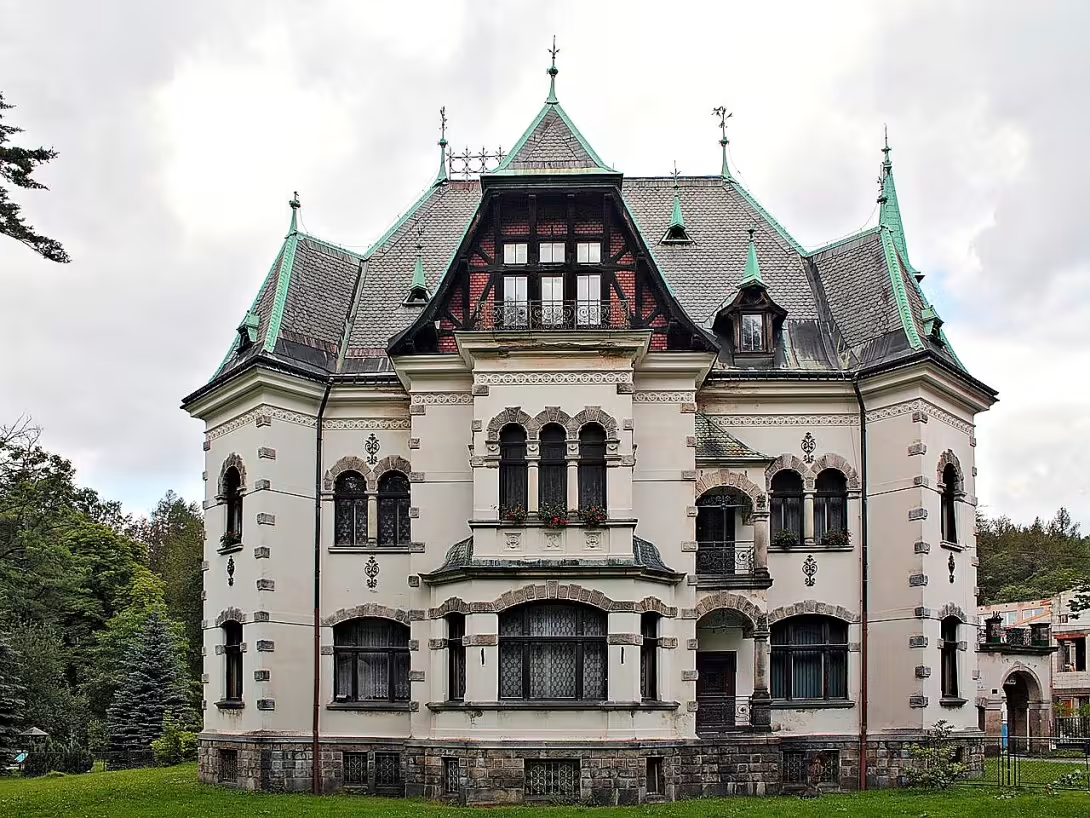
Riedlova vila, located in Desná in Jizera Mountains in the district of Jablonec nad Nisou, is a historic landmark building in Art Nisou style with elements of North Italian architecture. In 1895 it was built on the site of former water treatment spa Dr. Josef Schindler and after confiscation in 1945 it became property of the city Desná. Today it serves as a cultural and information centre with a library, a museum focused on regional history and the glass tradition of the Riedel family.
The building of the villa is connected with the development of glassmaking in the Jizera Mountains at the end of the 19th century. Josef Riedel mladší, son of local glassmaker Josef Riedl older, built this representative family residence. Architect Arwed Thamerus designed a Art Nouveau style construction with elements of North Italian architecture, which was a modern and prestigious solution for the time being.
The architectural villa combines Art Nouveau and North Italian elements. The building includes an extensive park with a garden of growth, which gives the complex elegance and peace. The construction was built on the site of the former water treatment spa of Dr. Josef Schindler, which adds another layer of historical context.
The Riedles family held ownership of the villa until 1945 when it was confiscated. Since then it is the property of the city Desná and serves as a cultural and information centre. Within the villa there is a library and museum that gives visitors insight into the regional history and glass tradition of the family Riedel.
Today, Riedlova vila is not only a monument to architecture, but also to the cultural life of the local community. Its exhibition includes period documents and historical glass produced by the family of Riedel, which gives visitors the opportunity to become acquainted with the heritage of this important glass dynasty. The villa is also accessible to the wider public, which makes it an ideal place to visit.
Riedlova vila is worth visiting not only because of its historical and architectural value, but also because of its rich offer of cultural activities. It is a place where people can learn about the past of the region and appreciate the beautiful natural environment of the Jizera Mountains. Visiting this visual monument is a journey to history that offers an interesting experience for every visitor.
Then and now
Drag the slider to compare how the landmark may have looked when it was built with the view today.
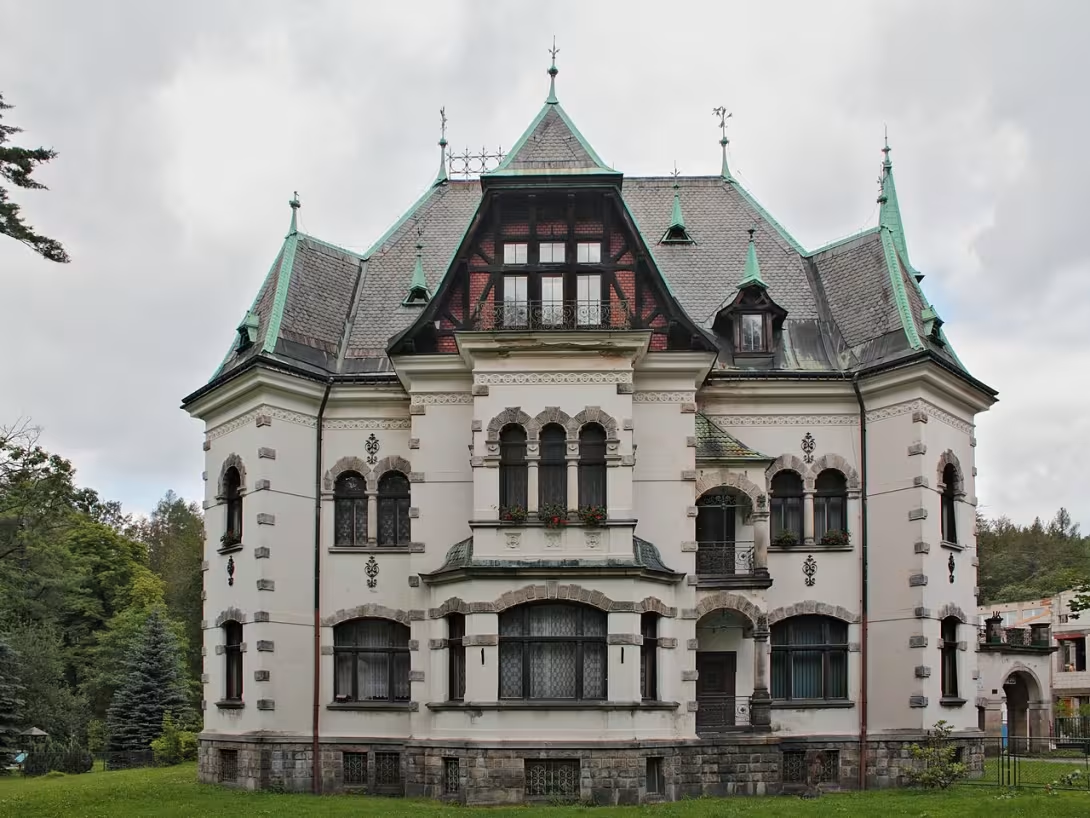
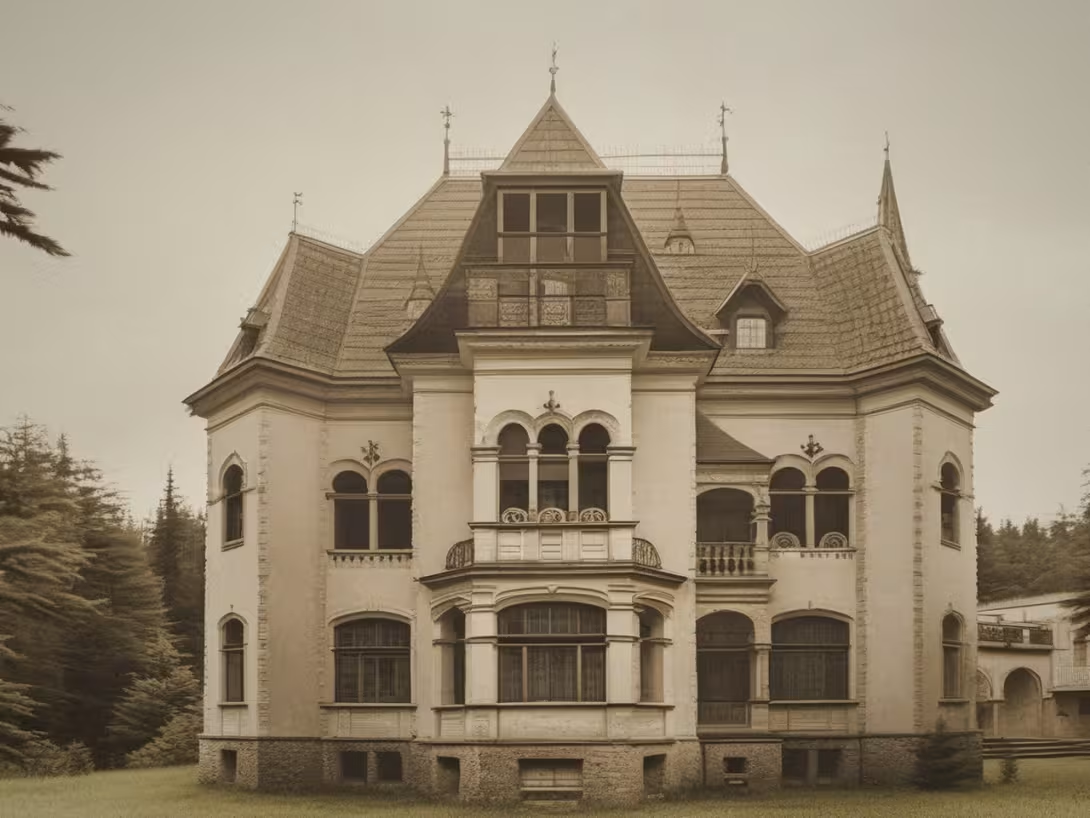
The historical appearance on the left is an AI-generated visualisation and serves as inspiration only.
Historical milestones
- 1895
- He had it built by Josef Riedel mladší according to the design by Arweda Thamerus.
- 1945
- The villa was confiscated from the Riedles family and transferred to the property of the city of Desná.
Architectural development
The villa was built in 1895 according to the design of architect Arweda Thamerus on the grounds of the cancelled spa. The construction shows Art Nouveau sculptures associated with elements of North Italian architecture. The building includes a large park with a garden.
Historical events
1895 - building a villa for Josef Riedl younger; 1945 - confiscation of the building and transfer to the property of the city Desná.
Owners
Family of Riedles (1895- 1945), city Desná (since 1945 to today).
Points of interest
- Riedlova vila is a historical monument building in Art Nouveau style with elements of North Italian architecture. - It originated on the site of the former water treatment spa of Dr. Josef Schindler and was built in 1895. - After confiscation in 1945 it became property of the city Desná and serves as a cultural and information centre. - The villa is connected to the development of glass in the Jizera Mountains in the late 19th century, especially the Riedel family. - It contains a library and a museum focused on regional history and the glass tradition of the Riedel family.
Guide
Show guide text
This text was created by artificial intelligence and has not been editorially reviewed. It may contain inaccuracies.
Welcome to Desná, in the picturesque corner of the Jizera Mountains, where history combines itself with the wild beauty of nature. Right now, you're facing one of the most important structures in this region. In front of you is Riedlova vila, a house that carries stories of ancient times, the wealth of glass masters and transformations brought by the stormy twentieth century. Before we go on a journey together in the past, stop for a moment and just watch. Feel the nobility and serenity radiating from this building. The villa is settled in a vast garden that surrounds it like a green cloak and separates it from the outside world. This space was not chosen by chance. Every stone and every tree here has its place and its meaning.
Let us now move back in time, until the country began to change under the hands of hardworking people. The year is a thousand eight hundred and ninety-five. That's the year this building saw the light of day. But before this magnificent villa grew up here, this place looked completely different. Where you now see the foundations of this house, there used to be a water bath. You were founded by Dr. Josef Schindler, a man who believed in the healing power of pure mountain water. Imagine the atmosphere of the late nineteenth century when people came from far away to draw power in cold springs and calm forests. Dr. Schindler was a pioneer and his spa was announced. But times have changed, and with them the needs of the region.
Instead of the spa, he decided to build his mansion a man whose name was at that time not only in the Jizera Mountains, but in the whole glass world. It was Josef Riedel mladší. The Riedles family was a real dynasty. They often were called glass kings of the Jizera Mountains. Josef Riedel mladší wanted to build a house that corresponded to its position, success and wealth, which his family gained thanks to hard work and skill in glass production. He chose an architect named Arwed Thamerus to realize his intention. Together they created a work that we admire today.
Now pay attention to the construction itself and its appearance. Look carefully at the front of the villa. What do you see? It's a masterful combination of different influences. The whole building is built in an Art Nouveau style that was at the height of its glory at that time. The Art Nouveau brought new shapes, decorating and trying to match nature into architecture. But notice something else. Architect Thamerus added elements that are typical of the northern part of Italy. This combination gives the villa an unrepeatable character. It's like you've brought a piece of the sunny south into the rough but beautiful environment of our mountains. Look at the shape of the windows, the layout of the facade and the overall balance of the construction. Every detail has been carefully thought out so that the villa is proud but naturally fits into the surrounding garden.
The villa was not just a building, it was a symbol of the power and influence of the Riedles family. Josef Riedel mladší lived here with his family and from there he managed his extensive business. His father, Josef Riedel starší, was the one who laid the foundations for this wealth, but it was his son who had this mansion built as a monument to their success. Imagine the nights when the lights were on in the windows, and inside, the elite of the company was meeting. We discussed trade, new technologies in glass, but also politics and culture. The villa was the heart of social life in Desná.
But history can be fickle. One thousand nine hundred forty-five marked a major turning point for the villa and the Riedl family. After the end of World War II, there were great social changes. Based on the events at the time, the Riedles' villa was confiscated. The property they have built for generations has gone into the hands of the state and then into the property of the city of Desná. The family who gave this country work and fame had to leave their mansion. It's a sad chapter in the history of this house that reminds us how quickly the fate of humans and buildings can change under the pressure of history.
Maybe you're wondering what happened next with the villa. Unlike many other historical objects that were lost after the war, Riedlova vila was lucky. The city of Desná realized the value of this monument and tried to find meaningful use for it. The family estate has become a place open to the public. Today there is a cultural and information centre. Today, exhibitions, concerts and meetings of citizens are held where glass magnates once made deals. The villa became the real heart of the village, a place where people meet and culture still flourishes.
An interesting thing you should not overlook is the connection to Dr. Schindler's water-treatment spa. It's fascinating to realize that under the foundation of this Art Nouveau pearl, we still have the legacy of the old baths. The water that once treated the sick may still flow deep into the ground beneath your feet. This change of location from a medical institution to a luxury residence and finally to a cultural stand is proof of the continuous cycle of life. The villa has layers of time in it that we can uncover as pages in the book.
Before you take another tour or walk through a large garden, look at the total silhouette of the villa against the sky. Feel her shape changing by the way the light hits them. It's a building that has a soul. It is a monument to the time when great things were born in the Jizera Mountains, when glass from this region was conquering the world and people had the courage to build houses that would survive them for many decades.
Now let's move on slowly. You can walk along the paths in the garden, which belongs to the villa inseparably. Feel the calm of this place and let the atmosphere of the old times take on you. Riedlova vila stands here as a silent witness to the past, but also as a living part of the presence of the city of Desná. It's a place that deserves our respect and admiration.
Thank you for listening to this story. I hope that this information has helped you to better understand the importance and beauty of the place you are currently at. Don't forget to look into the inner spaces as long as they are currently accessible, and soak up the atmosphere that has been kept inside. I wish you a pleasant rest of your visit to Desná and many other beautiful experiences while exploring the history of our region. Goodbye.
Tips for visitors
Best time to visit The Riedles Villa is the spring and autumn season, when nature is the most beautiful and fewer people around. In these months, peaceful walks around the villa and knowledge of the history of the building are used.
When visiting, bring a suitable suit according to the weather and shoes for walking. Fill it with a camera or mobile phone if you plan to photograph the beautiful green surroundings.
For photography is the best place in front of the villa overlooking the mountain. The best light for photography is in the early morning or late afternoon when the sun is not too bright.
In addition, nearby there is a memorial of Broken Dam, which are interesting places to visit.
Frequently asked questions
Can the monument be visited?
Some buildings of this kind are open for guided tours, others serve another purpose or are privately owned. We have not verified whether and when this monument is open – please ask the operator.
What are the opening hours and admission?
We have not verified the opening hours or admission. Current information is published by the operator. Official website: https://www.mesto-desna.cz/mista/kulturni-a-informacni-stredisko/
Where is the monument?
Location: Desná, Liberecký kraj. The map on this page shows the exact spot.
Why is the monument protected?
It is listed in the Central List of Cultural Monuments of the Czech Republic as a cultural monument (register no. 1000120987).
Businesses nearby
Do you run a restaurant, accommodation, shop, museum, rental, wellness or other visitor service near this monument? Show yourself directly to the people heading to it — this is how they will see you in the app and on the web:
Nearby
Vila se nachází v podhůří Jizerských hor v obci Desná. V blízkosti prochází unikátní ozubnicová železniční trať z Tanvaldu do Harrachova a nedaleko se nachází i památník Protržené přehrady.
Accommodation nearby
Trips and activities nearby
Guided tours, tickets and activities nearby from GetYourGuide
Affiliate link: if you buy from the partner, we may receive a commission. The price for you does not change.
Search tours and activities →Themed route
Riedlova vila Type: villa Why is it worth a visit: This historic building is located in the village Desná in the foothills of the Jizera Mountains and represents the main destination of our trip with beautiful surrounding area.
Railway gear line Type: railway line Why is it worth a visit: Near the villa passes this unique path leading from Tanvald to Harrachov, which attracts lovers of technical monuments.
Monument Broken Dam Type: memorial Why is it worth a visit: Near the village Desná there is this reminder of the historic event in the nature of the Jizera Mountains, which complements the knowledge of the local region.
Seasonal recommendations
Spring in this mansion awakens the surrounding nature from winter sleep, when the melting snow turns into streams and the garden slowly turns green with the first herbs and the budding buds of trees. The light is very clean and sharp in this period, which ideally highlights architectural details of the building without disturbing shadows. The practical advice for a spring visit is to count on the variable weather and occasional foie gras on accessible routes, so solid waterproof shoes are paid off. Visitors are not many, so you will enjoy a quiet atmosphere, the best time for a tour is around noon, when warm sun rays are the most warm outside.
Summer brings lush green vegetation, which picturesque surrounding the whole building and provides a pleasant shade beneath the grown trees in the park. Sunlight penetrates dense leaves and creates interesting games of shadows and lights on historical walls, while the atmosphere is lively and vacationally relaxed. Since this is the main tourist season, we recommend arriving the morning before opening to avoid the biggest crowds of tours. Wear light breathable clothes, but don't forget the headgear and bottle of drinking water, as summer temperatures can be quite high in the foothills and the sun burns.
Autumn turns the surrounding landscape into a colourful palette of shades from yellow to red to brown, which gives the place a melancholy and extraordinarily photogenic character. The low sun creates long shadows and soft, golden lighting, which excels especially in the morning before the usual autumn fog rises. Take a warm windbreaker for your trip, solid shoes for your wet leaves and umbrella in case of a sudden shower. Weekends tend to be a little more busy because of autumn nature lovers, which is why it is the perfect time for a quiet tour of the weekday afternoon.
Winter covers a monument to the snow cover, which dampens the sounds of the outside world and gives the place a fairy tale atmosphere. Lighting is specific because the day is very short, the sun soon sets and it soon gets dark, but white snow beautifully reflects the remaining daylight. High-quality, warm winter clothes, hats, gloves and tight shoes with anti-slip soles are essential for the winter hike, as the roads can slide. Due to the cold weather and shorter opening times during this period, it is worth leaving around noon, when it is the hottest outside, and after the tour warm up with warm drinks.
Visualizations and artistic views


The visualisations are generated by artificial intelligence and serve as inspiration.
Photos from the area
Real photos taken near the monument


Zdroj a licence jsou uvedeny u každého snímku.
Tips from visitors
No tips yet. Be the first!
Log in and add your tip.
Sources and literature
Photos: This image is a work by Miloslav Rejha (User:M.Rejha). When reusing, please credit me as: Miloslav Rejha, Wikimedia Comm / CC BY-SA 3.0 — Wikimedia Commons. The author and licence also appear when you hover over the image.
Faktickým podkladem tohoto textu byl článek na Wikipedii, jehož autory jsou přispěvatelé Wikipedie. Článek je dostupný pod licencí CC BY-SA 4.0.
Location on the map

Příběhy a pověsti
Legendy, pověsti a příběhy spjaté s touto památkou
Fotografie návštěvníků
Zatím žádné fotografie. Buďte první, kdo přidá fotografii z návštěvy!
Log in a přidejte svou fotografii nebo hodnoťte.
Za ověřenou návštěvu v aplikaci získáte víc bodů — poznáme podle GPS, že jste na místě.
Reviews and comments