






Řivnáč Hillfort
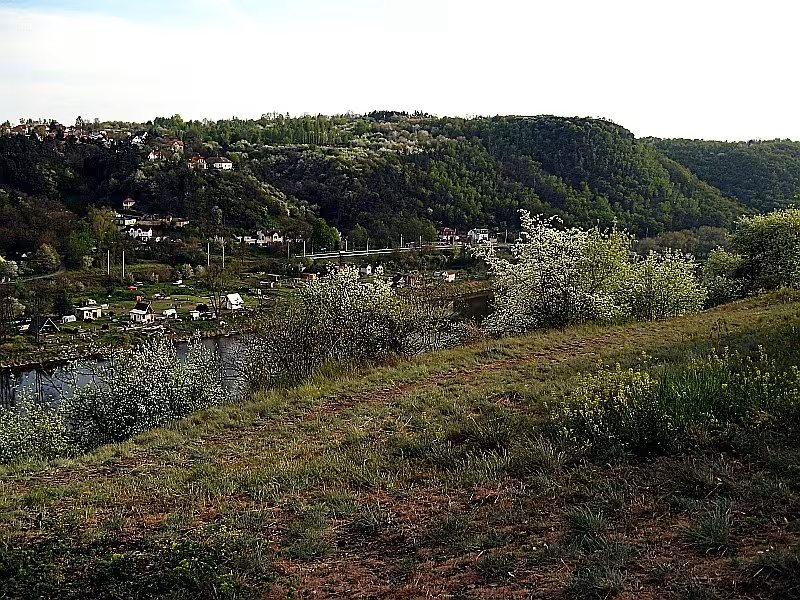
Řivnáč is an archaeological site on the top platform west of the Pásov u Rotok in Praha- west in the Central Bohemian Region. This primordial castle is remarkable already in the eneolithic settlement, thanks to which it has acquired the name of the whole town. Since 1965 it has been protected as a cultural monument.
The settlement was inhabited by members of the Roman culture, which gives him special importance. In the 19th century, it became the first explored, non-olithic high-rise settlement in Bohemia, affecting its name and historical recognition. The first archaeological research was carried out in 1881- 1883 under the leadership of Čeňek Ryzner, who laid the foundations for understanding the eneolite in the region. In 1948 Ivan Borkovský explored the remains of the fortifications and helped to better recognize the structure of the castle.
Architecturally, Řivnáč is characterized by a small plateau of 0.2 hectares. The locality was protected by rocky slopes from the proteozoic bulizer, which exceed the bottom of the Vltava valley by up to 120 metres. On the south side, artificial fortifications were built in the form of a wall and moat, which shows the efforts of the inhabitants to protect themselves from enemies. The living room was covered in floor and wall covered with dirt, which was shown by the discovery of the loops and wicker mesh.
In addition to pottery, archaeologists discovered fragments of vessels from other cultures, such as spherical amfora, poplar cups or bell cups. These findings suggest that the site was used at different periods of prehistoric times. In 1924 a set of more than 100 denarii from around 1012 was found, which proves that Řivnáč served as a settlement even in the early Middle Ages.
Today, Řivnáč is a cultural monument that attracts interested people about history. Protected status allows you to explore the neolithic settlement and understand the life of ancient inhabitants of this area. The monument is accessible and offers a unique opportunity to dive into the deep history of the Czech Republic.
Řivnáč is not only a monument but also a witness to the progress of human civilization. The findings here allow us to better understand the life of the ancestors and their relationship to the environment. Visiting this site is a journey to the past and an inspiration to recognise the value of history and the protection of cultural heritage.
When we visit Řivnáč we realize the importance of preserving the places that reveal our common history. Whether you are a curious tourist or a passionate historian, Řivnáč offers rich opportunities to explore and appreciate the heritage of past generations.
Then and now
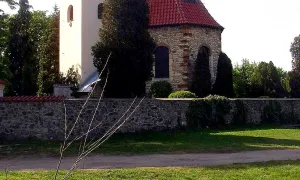
Drag the slider to compare how the landmark may have looked when it was built with the view today.
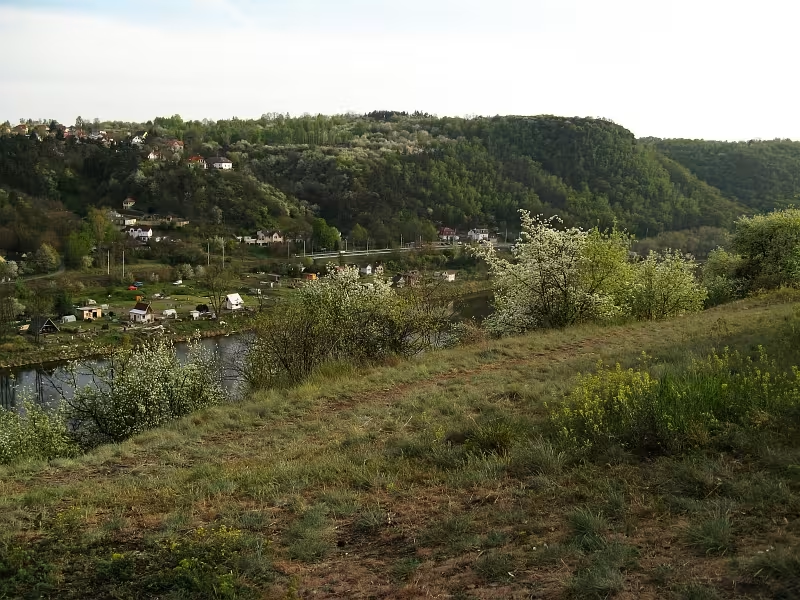
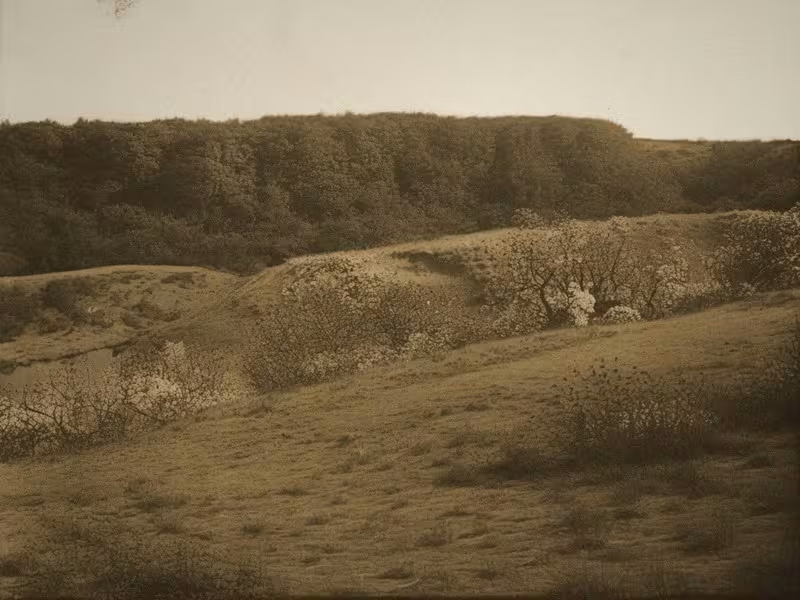
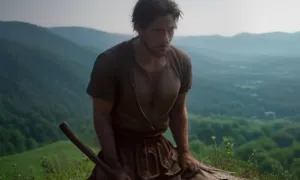
The historical appearance on the left is an AI-generated visualisation and serves as inspiration only.
Historical milestones
- 1881
- The beginning of archaeological research by Čechek Ryzner.
- 1924
- Found a file of over 100 denarii from around 1012.
- 1948
- Exploring the remains of the fortifications of Ivan Borkovsky.
- 1965
- Announcement of the castle cultural monument.
Architectural development
The settlement used natural rocky slopes from the proteozoan bulizer. On the south side, artificial fortifications were built in the form of a wall and a ditch. Residents built dwellings with floor and dirt-covered walls.
Historical events
In 1881- 1883, the first significant archaeological research under the leadership of Čeňek Ryzner took place. In 1924 a set of more than 100 denarii from around 1012 was found on the spot.
Points of interest
- Thanks to the housing in the eneolite, she got the name of the entire Roman culture. - In the 19th century it was the first explored Neolithic high estate in Bohemia. - The locality was protected by rocky slopes that exceed the bottom of the Vltava Valley by up to 120 metres. Her living room was covered in floor and wall covered with dirt. - The finding of more than 100 denarii from around 1012 proves the use of the site even in the early Middle Ages.
Guide
Show guide text
This text was created by artificial intelligence and has not been editorially reviewed. It may contain inaccuracies.
Welcome, distinguished visitors. Please stop for a moment, take a breath and feel the space around you. You are standing just on the top platform west of the Pásov near the Solution, in a place called Řivnáč. This terrain may seem like a quiet landscape to you now, but beneath your feet is a fascinating layer of history that goes deep into the prehistoric world. Imagine going back thousands of years. This place was not just an ordinary hill, but a strategic point, a fortress that served as a safe haven and a center of life in the time of its inhabitants.
Now let's think together about who lived here and why they chose this place. Řivnáč was already inhabited during the period of eneolite, a time when mankind began experimenting with copper and gradually moving from stone tools to metal. This era has brought about fundamental changes in the organization of society as well as in how people perceived their landscape. It was this locality that was so special to the people back then that it became a symbol of its time. Did you know that because of the finder's effects from this place, she got the name of the entire culture of the town? It's an incredible feeling to realize that right here, where you're standing, the identity of the entire prehistoric region has been defined.
Now, please pay attention to the surrounding countryside. Look around you and see the steep terrain. Notice the rocky slopes surrounding this platform. These natural collisions are the key to understanding why Řivnáč was so important. The slopes fall up to 100 meters to the bottom of the Vltava Valley. For people of primeval age, that meant perfect natural protection. Whoever wanted to attack the castle had to overcome steep and dangerous rocks, while the inhabitants of the castle had a perfect view of everything that was going on in the valley. This dominant position made them masters of space.
Now, if you look around the platform, you may not see any masonry, but let's try to reconstruct what once stood here. The architecture of the then dwellings was simple but very functional. Imagine small houses that didn't have high walls, but their floors were buried in the ground, which helped keep the heat warm in the winter months. The walls of these houses were covered in dirt, which served as insulation and wind protection. They weren't palaces, but they were homes where day-to-day duties were performed, cooked and slept. Feel this atmosphere of simplicity and harmony with nature that has ruled here for centuries.
In order to know what was going on here today, we must thank the people who have entered this place with a shovel and patience in hand. Let's stop by the names that are closely linked to Řivnáč. The first major breakthrough occurred in the nineteenth century. In the year one thousand eight hundred eighty one began archaeological research Čeněk Ryzner. He was a man with an incredible vision who at that time revealed that Řivnáč is the first explored, non-olithic high-rise settlement in the whole of Bohemia. Imagine the enthusiasm he must have felt as he gradually tied the traces of the people who lived here thousands of years ago. His work laid the foundation for everything we know about this place today.
But time passed, and Řivnáč kept revealing new secrets. Much later, in the year one thousand nine hundred forty-eight, he came to Ivan Borkovský's place. He focused on details that help us understand how the fort worked as a fortress. He examined the remains of the fortifications that supplemented the natural protection of the rock slopes. Thanks to his work, we know that people here relied not only on nature, but actively built their defenses to ensure the safety of their community.
And now I want to take you to one of the greatest mysteries and most interesting events that have happened to this place. Although Řivnáč is primarily associated with a ruler, history did not end here with the end of the eneolithic. In the year one thousand nine hundred twenty-four there was an unexpected discovery. Archaeologists here found a collection of over a hundred denarii, silver coins, dating back to about a thousand twelve. That's a fascinating contrast, don't you think? In a place that defined prehistoric culture, coins from the Middle Ages suddenly appeared. Why were they here? Were those hidden treasures? Lost payment? Or perhaps a trace of later visitors who perceived the magic of this place after centuries? This coin reminds us that history is not a straight line, but a layered pie where the different ages overlap.
It is this uniqueness that caused the state to declare the castle a cultural monument in the year one thousand nine hundred sixty-five. This step has ensured that these valuable traces of the past will not be lost and that even you can stand here today and perceive its energy.
Now if you look around you, try to connect all these pieces of the puzzle. You see the steep cliffs, imagine the clay houses with the floor down, and in your mind, you'll see Chenek Ryzner testing the first layers of the earth with enthusiasm. Řivnáč is not just an archaeological site, it is a monument to human efforts to survive, secure and build a community. It's a place where the natural force of the Vltava Valley has joined with human ingenuity.
Thank you for stopping in time for a moment. Now, I encourage you to take a slow and peaceful walk on the platform. Feel the silence, observe the horizon, and try to imagine what view people had thousands of years ago, watching their landscape from this peak point. Let yourself be inspired by the mystery of the Orthodox culture and the feeling of history that is still present here in every stone and in every handful of clay.
I wish you a pleasant continuation of your discovery and hope that your visit to Řivnáč accompanied you with a sense of amazement from our shared roots. See you at the other sights.
Tips for visitors
For the best experience we recommend a visit in late afternoon hours when the sun creates interesting shadows and highlights the shapes of the castle. The light at this time is ideal for understanding the layout of the old settlement in the landscape.
You can reach the place by car and public transport; check the current connection and parking possibilities near the village Roztoky in the search engine before travelling. We recommend to use parking in the village and continue walking along natural trails.
For a comfortable survey take fixed shoes and plenty of drinking water because the terrain of the fort can be uneven. For families with children, the visit is interesting as an adventure walk in nature where children can look for traces of ancient history.
If you are interested in photography, the best views can be obtained from elevated points of the castle, where you can capture the panorama of the Vltava Valley. The best light for these images is during the late hours before sunset.
After exploring the site itself, you can explore the surrounding village Roztoky or go to the Vltava Valley, which is a pleasant addition to the trip in this historic area.
Businesses nearby
Events nearby

Zdroj akcí: otevřená data měst a obcí ČR (Národní katalog otevřených dat) a kalendář akcí Národního památkového ústavu.
Nearby
Vltava valley and village Roztoky.
Accommodation nearby
Trips and activities nearby
Guided tours, tickets and activities nearby from GetYourGuide
Affiliate link: if you buy from the partner, we may receive a commission. The price for you does not change.
Search tours and activities →Themed route
1. Roztoky, municipality. A place to start a trip in a quiet environment. 2. Vltava valley , natural area. It offers beautiful views and a walk in an extensive landscape. 3. Řivnáč, archaeological site. The main destination of the journey, where historical clues can be discovered.
Seasonal recommendations
Spring visit to the archaeological site Řivnáč brings a feeling of renewal, when fresh green vegetation begins to surround stone remains. Soft morning light beautifully highlights the structure of old walls and creates a hopeful atmosphere. Since temperatures can change quickly, we recommend choosing layered clothes. The roads to the place can be muddy because of spring rains, so prepare for solid and waterproof shoes.
In the summer months, this place is filled with strong sun, which gives historical ruins a dramatic touch. The dense growth in the greatest expansion may partially cover some parts of the site, but at the same time it creates a pleasant shadow. Due to a higher number of people and the heat of the afternoon, it is best to arrive early in the morning. Don't forget enough drinking water and headgear to protect against heat.
Autumn season in Roztoce offers melancholic beauty accompanied by morning fog and golden shades of leaves. The low sun creates long shadows that greatly underline the details of stone structures. It is advisable to carry a waterproof jacket and shoes with good grip because wet leaves can cause slippery surfaces. The ideal time to observe the colour spectrum is morning or afternoon.
Zimą makes ruins very raw and lonely, without leaves you can see even the smallest stone details. Freezing air and silence create a magical atmosphere. Due to short days, plan a visit around noon to use the most daylight. The necessity is very warm and wind-resistant equipment, because there can be unpleasant draught in the open space.
Visualizations and artistic views


The visualisations are generated by artificial intelligence and serve as inspiration.
Photos from the area
Real photos taken near the monument


Zdroj a licence jsou uvedeny u každého snímku.
Tips from visitors
No tips yet. Be the first!
Log in and add your tip.
Sources and literature
Fotografie: Sovicka169 / CC BY-SA 3.0 — Wikimedia Commons. The author and licence also appear when you hover over the image.
Faktickým podkladem tohoto textu byl článek na Wikipedii, jehož autory jsou přispěvatelé Wikipedie. Článek je dostupný pod licencí CC BY-SA 4.0.
Location on the map
More monuments – Roztoky
Show all in the municipality
Příběhy a pověsti
Legendy, pověsti a příběhy spjaté s touto památkou
Fotografie návštěvníků
Zatím žádné fotografie. Buďte první, kdo přidá fotografii z návštěvy!
Přihlaste se a přidejte svou fotografii nebo hodnoťte.
Za ověřenou návštěvu v aplikaci získáte víc bodů — poznáme podle GPS, že jste na místě.
Reviews and comments