






Vily Tiché údolí 110 a 125 Building complex
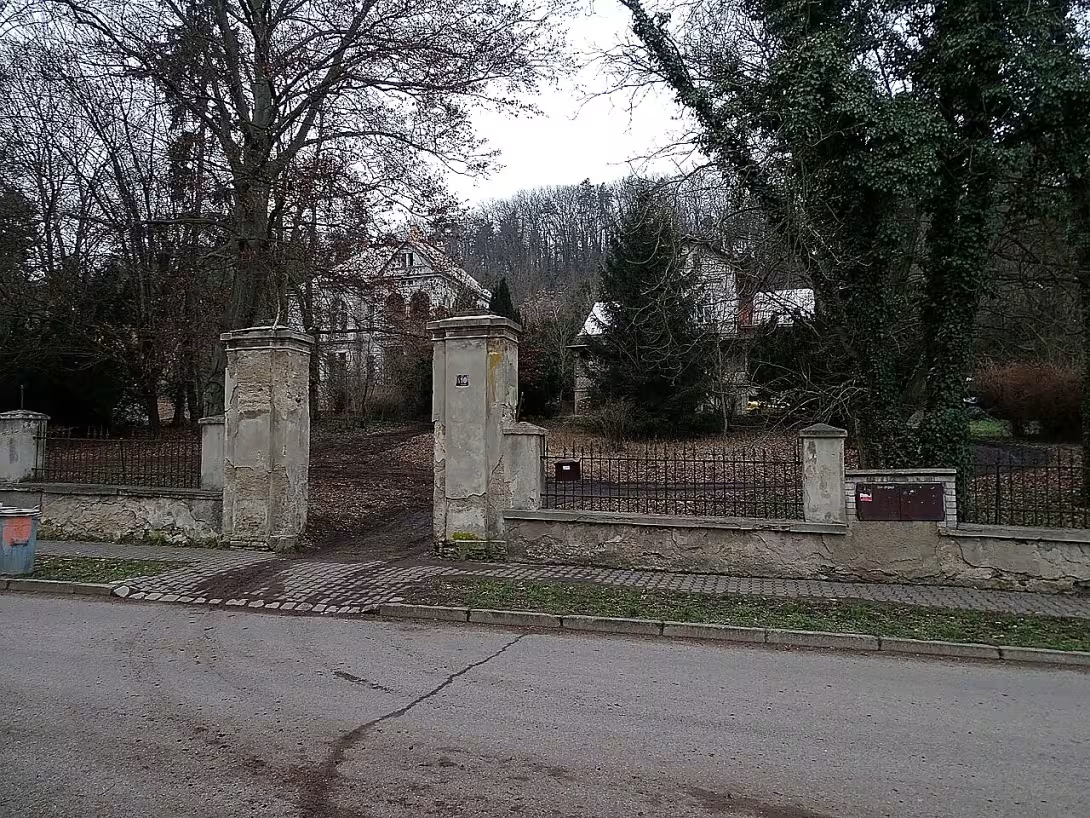
The Villa Silent Valley complex No. 110 and 125, located in Roztoky, represents two separate family objects from the late nineteenth century. These villas are important not only with their architectural value, but also with a rich history associated with the Haurowitz family and their destiny during World War II. Today both buildings are protected as cultural monuments and serve various purposes, making them interesting for visitors.
The villas were built on land purchased by the Haurowitz family in 1874. This business family specialized in hand-held goods, and their investment in these buildings reflects the prosperity it began to enjoy during the expansion of industry at that time. It is an architectural breakthrough between the nineteenth and 20th centuries, when historism was the dominant direction in construction.
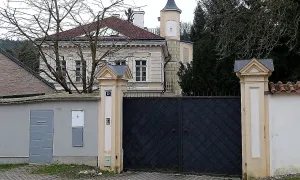
The Villa of the Silent Valley No. 125 is built in a neo-Renaissance style. The most striking feature of the house is the corner risalite with partially open ships and shield, which gives the building elegance and distinctive character. The facade is decorated with volute consoles, decorative jewelers and cartouche with monograms of the investor. In 2016, a general reconstruction started, which lasted until 2020, after which the villa began to serve as a kindergarten. The garden of the house is now publicly accessible and equipped with rare plant species.
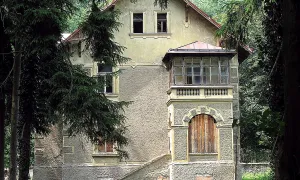
The Villa Silent Valley No. 110, on the contrary, represents a typical Swiss villa with wooden porch. Although its architecture is not as decorated as the adjacent villa, it has its unique character and history. The city plans to reconstruct this villa and in the interior there could be an exhibition about the life of important Jewish industrialists from the Solutions and surroundings.
The Haurowitz family owned both villas until 1942 when they were confiscated because of their Jewish origins. Since then they have served as urban rental houses and since 2009 they have been protected as cultural monuments. This fate is a reminder of the tragic events of World War II that have affected many Jewish families in Europe.
Today Vily Tiché údolí 110 a 125 are not only historical monuments, but also active parts of the community. Villa No. 125 serves as a mother's school and a place for the services of the church of the Bohemian Brotherhood Church in the Roztoky near Prague. The gardens of both villas are equipped with rare plant species, making them an attractive place for lovers of nature and history.
Visiting these villas offers a unique opportunity to become familiar with the rich history of the region, understand architectural changes during the nineteenth and twentieth centuries and appreciate the importance of conservation. These villas are not just building objects, but live witnesses of the past that remind us of the complex history of our region and the importance of remembering.
Historical milestones
- 1874
- Purchase of land by the Haurowitz family
- 1897
- Building Villa 125
- 1942
- Confiscation of property to family due to Jewish origin
- 2009
- Entry into the Monument Protection Register
- 2016
- Opening of the general reconstruction of Villa 125
Architectural development
The villas come from the turn of the nineteenth and twentieth centuries. Villa 125 shows elements of neo-Renaissance with risalite and balustrada. Villa 110 is realized as a wooden building of the Swiss type.
Historical events
In 1874 rodina Haurowitzových purchased land. In 1942, the villas were taken from the family. Since 2009, buildings have been protected as monuments.
Owners
The Haurowitz family until 1942, then the town as rental houses since 1948.
Points of interest
- The complex of Villa Silent Valley No. 110 and 125 presents two family objects from the late nineteenth century. - These villas are linked to the history of the Haurowitz family, who owned them until 1942, when they were confiscated because of their Jewish origins. - Villa Silent Valley No. 125 has a neo-Renaissance style with corner risalite and facade decorated with volute consoles, decorative jewelers and cartouche. - The Villa of the Silent Valley no. 125 serves today as a mother's school and a place for the services of the parish choir of the Czech Brotherhood Church of the Evangelical Church in Rozky near Prague. - The gardens of both villas are equipped with rare plant species, making them an attractive place for lovers of nature and history.
Guide
Show guide text
This text was created by artificial intelligence and has not been editorially reviewed. It may contain inaccuracies.
Welcome to Melts. You are standing right where time has stopped and where stories of the past speak through the shapes of buildings and the silence of the garden. In front of your eyes, there is a space that bears the name of the Silent Valley. Perhaps by the first glance you can feel the strange, calm atmosphere that exists here. It's not just the two buildings you see, but the whole connected world, a garden that connects two separate family villas. Feel this space as a whole, as a harmonious whole, where architecture and nature work closely together. Look around you, at those terraced gardens and the historic fence that surrounds and protects his privacy.
Now let's go back to the past together to understand how this place came to be. This whole story began at the end of the nineteenth century. In the year one thousand eight hundred seventy-four, rodina Haurowitzových here purchased the land on which you are standing today. Imagine the family here looking for peace and a place for their new home. Over time, this land began to change and grow. In the year one thousand eight hundred ninety-seven, the first of these important buildings was built, the villa number twenty-five. Since then, this complex has become a symbol of the success and stability of the family, which left its mark in the form of these beautiful buildings.
Now pay attention to the architecture itself, because here you can see the fascinating differences between the two objects. Although they stand in a common garden, each tells a different story through their appearance. First look at villa number one twenty-five. This building is built in Neo-Renaissance style. Notice the elegance, the serenity and the nobility this style brings. It's an architecture that seems dignified and balanced. It was designed by important creators, including František Pavíkovský and Josef Blecha. This villa has undergone a recent thorough renewal, which can again shine its original beauty today.
Now, however, to move by looking at the second building, to the villa number ciento ten. She may surprise you with her differences. This villa represents typical Swiss buildings. If you look closely, you'll see the typical wooden porch that is so characteristic of this style. While the Neo-Renaissance villa seems rather monumental, the Swiss style in this villa evokes proximity to nature, lightness and well-being. It is a fascinating contrast that you can see right now - two different directions of architecture that meet here in one garden and yet form one whole together.
When you look at these houses, it's hard not to see the shadows of history that are inextricably linked to them. The story of the Haurowitz family is not only a story of building and flourishing, but also a story of deep sadness. These villas were their home, their safe harbor, until the year one thousand nine hundred forty-two. There was a tragic event in this fateful year. Because of the Jewish origin of the family, their property was confiscated. It's the heavy, dark chapter that still resonates in these walls. When you look at the walls and the gardens, remember the people who once lived here, rejoiced and suffered, and their lives were so suddenly and disproportionately interrupted.
Yet this space persisted in the struggle for its own identity. Although it has been through difficult times, history has finally come to the side of protecting this heritage. In the year two thousand and nine, these villas were entered into the register of monument protection. This means that their value has been recognised and decided that it must be maintained for future generations. And in the year two thousand and six began another important chapter when the general reconstruction of Villa number twenty-five was launched to preserve its original, noble appearance.
Perhaps you are now being told, what is the most peculiar thing in this place? It's exactly the invisible force that works here. It is a combination of two completely different architectural directions that have become one thanks to the common history and common garden. It is also the quiet contrast between the beauty of the Neo-Renaissance lines and the cozy Swiss wooden porch. And above all, it is the strong feeling that even though human destinies change and even if history revolves in unexpected and sometimes cruel directions, these buildings remain witnesses to truth and beauty.
But I'm no longer taking you away from your observation. I suggest you take a slow walk around these buildings and pay attention to the details of terraced gardens. Feel how the garden changes according to the villa you're approaching. Let yourself drift through the atmosphere of the Silent Valley and try to imagine what this place looked like a hundred years ago, even in the most difficult moments. Thank you for sharing this story with us. We wish you a pleasant rest of your walk in the Melts and hope that you will remember these villas as a place where history touches the present. Goodbye.
Tips for visitors
For the best experience we recommend a visit during the period when the garden is in the greatest beauty, i.e. during spring or summer months. At this time vegetation is the richest and architecture villas excel in the natural surroundings.
You can reach the Solution either by car or use public transport. The current timetables and connections please check the search engine before travelling. If you arrive by car, look for parking options within the village.
We recommend you take comfortable shoes suitable for moving in the garden and water to drink. For families with children is a walk around the villas and in terraced parts of the garden an ideal way to spend time outdoors in nature.
The best light for pictures of architecture and rare plant species can be found in the morning. Great views offer especially terraced garden, which provides interesting angles to capture the entire complex.
Businesses nearby
Do you run a restaurant, accommodation, shop, museum, rental, wellness or other visitor service near this monument? Show yourself directly to the people heading to it — this is how they will see you in the app and on the web:
Events nearby


Zdroj akcí: otevřená data měst a obcí ČR (Národní katalog otevřených dat) a kalendář akcí Národního památkového ústavu.
Nearby
Roztoky, terasovitá zahrada s vzácnou vegetací.
Accommodation nearby
Trips and activities nearby
Guided tours, tickets and activities nearby from GetYourGuide
Affiliate link: if you buy from the partner, we may receive a commission. The price for you does not change.
Search tours and activities →Themed route
Thematic cruise route to the Solution
1. Vily Tiché údolí 110 a 125 (main destination, monument) - Type: historical buildings - Why is it worth a visit: These villas are an example of architecture from the beginning of the 20th century and offer a view of the lifestyle of the then inhabitants. They are located in a quiet location, which is an ideal place for relaxation and viewing.
2. Terrace garden (natural attractions) - Type: garden park - Why is worth a visit: This garden is famous for its rare vegetation and beautiful terraces. It is an ideal place for walking, photography and enjoying the natural environment in peace.
3. Ambient forests (nature) - Type: forest area - Why is worth visiting: Forests around the Solution are suitable for short walks and camping. They offer a quiet space for relaxation in nature, where you can enjoy the green environment and possibly visit wild animals.
4. Historical Alleys Solution (local history) - Type: urban area - Why is it worth visiting: These streets represent part of the history of the village and offer a view of the older architecture. They are ideal for walking when you can discover the historical details and atmosphere of past times.
5. Municipal courtyard (local centre) - Type: public space - Why is it worth visiting: The tank serves as a central place for local events and meetings. It is a suitable point for starting or ending your trip where you can find information about other activities in the village.
This route offers a combination of historical and natural attractions, ideally for those who want to discover a quiet and charming place like Roztoky.
Seasonal recommendations
Spring: In the spring season, the Silent Valley's villas are surrounded by flowering shrubs and trees, causing them a vivid and colorful impression. The sun rays illuminate the still life of nature in a beautiful light, which emphasizes the historical architecture of the monument. For a visit it is advisable to bring a light hat and sunglasses, especially at noon. Due to the arrival of tourists from a distance, it is recommended to visit the memory early in the morning or later in the afternoon when the crowd decreases.
Summer: In summer, the atmosphere in the Silent Valley is full of heat and light. Long days offer more time to explore the sights, but also means a higher number of visitors. For a comfortable stay it is advisable to bring sun cream and protective clothing against heat. The best time to visit is in the morning or late afternoon when the temperature decreases and fewer people visit the sights.
Autumn: The Silent Valley houses of melancholic beauty take place in the autumn. Tree leaves are colored from yellow to orange to red, giving the landscape a unique atmosphere. The sunlight is softer and creates beautiful shadows on the architecture of the monument. It is recommended to wear warmer clothes as the colder weather begins. For a comfortable visit it is ideal to choose a mild day without rain.
Winter: Winter brings peace and quiet to the Silent Valley, where the villas appear in the snow blanket. Sun rays illuminate the snowy landscape, which is an impressive scene for photography. Visitors should bring warm clothes and protective shoes against freezing. The monument has a shorter opening time, so it is advisable to visit it early in the morning or at noon when the crowd decreases.
Visualizations and artistic views

The visualisations are generated by artificial intelligence and serve as inspiration.
Photos from the area
Real photos taken near the monument


Zdroj a licence jsou uvedeny u každého snímku.
Tips from visitors
No tips yet. Be the first!
Log in and add your tip.
Sources and literature
Photos: ŠJů / CC BY 4.0 — Wikimedia Commons. The author and licence also appear when you hover over the image.
Faktickým podkladem tohoto textu byl článek na Wikipedii, jehož autory jsou přispěvatelé Wikipedie. Článek je dostupný pod licencí CC BY-SA 4.0.
Location on the map
Příběhy a pověsti
Legendy, pověsti a příběhy spjaté s touto památkou
Fotografie návštěvníků
Zatím žádné fotografie. Buďte první, kdo přidá fotografii z návštěvy!
Log in a přidejte svou fotografii nebo hodnoťte.
Za ověřenou návštěvu v aplikaci získáte víc bodů — poznáme podle GPS, že jste na místě.
Reviews and comments