



Rotštejn Rock castle
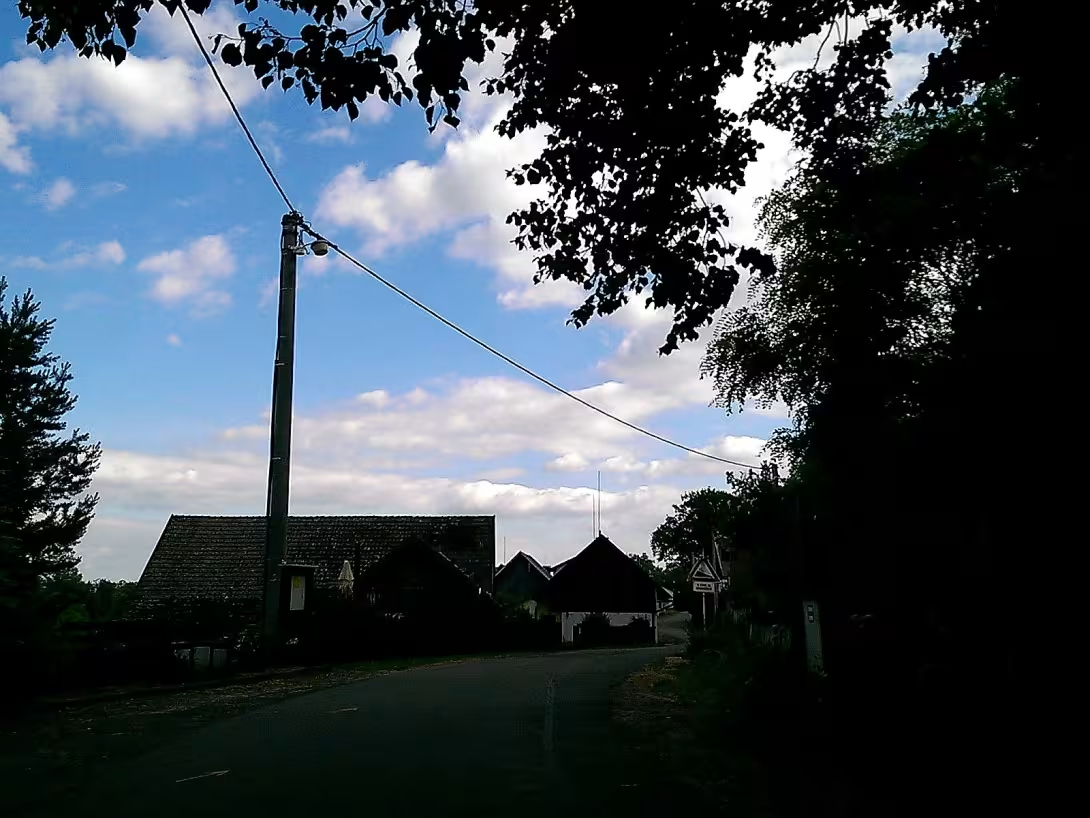
Rotštejn is a ruin of a rock castle. It is located approximately nine kilometres east of Turnov in Semily district, on the cadastral territory of the village Mírová pod Kozákovem and on the edge of the natural reserve of Klokočská rocks. The construction represents a unique combination of wall architecture and space seconds directly into sandstone blocks. This object, whose history dates back to the mid-13th century, is today a tourist destination and a place of environmental education.
At the time of the foundation of the castle in the middle of the 13th century, the castle construction and consolidation of the power of noble families took place in the Czech countries. This area was then part of the process of colonizing and developing the internal areas of the country. The castle was founded shortly after 1250 by nobles of the Markvartice family. The first owner is Mr Jaroslav z Hrutwice, today Hruštice, who built the building for his son Vok from Rotštejna. The second of the sons, Zdeněk, built Valdštejn and became the founder of the House of Valdštejn.
Rotštejn was designed as a rock fortress with elements of brick architecture, where adjacent rocks formed part of the defence system. Security features were complementary to the usual means of the time, such as gates, bridges and bastions. From these, only carved nuggets have been preserved until now. All the original castle buildings have disappeared and the form of the rock castle is indicated by written documents. Part of the ruin consists of partially walled structure and part of the space seconds into sandstone rock blocks.
At the beginning of the 14th century he owned the castle Vok II. from Rotštejna. Since 1312, nobles have been harming him not only from nearby areas, but also from property and property. In 1360, Mr. Ješek z Rotštejna held the castle. He obtained permission from Charles IV to organize weekly markets in the nearby village of Klokočí. In 1415, the Rotštejn family died and the entire estate was owned by Ondrej or Vanek Paldra of Varina, who owned it throughout the Hussite wars. Later, the castle became in a state of decay due to human conflicts and natural ripening of sandstone rocks. In the 1514 sales report, it is already mentioned as desolate, with walls and rocks collapsed into the courtyard. At the beginning of the 17th century, the villagers began to modify the newly emerging rock cavities at the heel of the broken castle and gradually created a unique complex of village settlements.
Among the key historical events are the year 1318, when the estate of Rotštejn and the castle itself were ravaged by a great excess of troops. She read from the book of 152 nobles. Regarding the period of Hussite wars, it is noted that the Hussite Castle may not have been burned down. After 1430, Vaněk Paldra z Vařin returned here and found it in a usable condition. Other sources indicate that the castle was conquered in 1426 and the landlord lived on the farm in the nearby village of Klokočí. Since 1988, the ruins of the free Tramp Association, registered association Protection of the Klokočských Rocks under the leadership of the Casteláčka H. T. Šlubočková.
Today, wooden stands and paths are built here. Visitors can reach the top of the castle from where the panorama of Klokočské rocks is offered. There are hiking routes to the castle. It is, for example, a yellow mark from Turnov over the Klokočská Rocks and Peace under Kozakov, or a blue mark coming from Little Rock and Koberov. The surrounding area also offers connections to cycling routes, such as the route leading through Turnov, Axel's Loučky, Prackovské saddle, Záhoří, Smrčí, Kober, Little Rock, Snow, Kopanin, Frýdštejn, Vobody, Záborčí and Doláky. Visiting this place allows you to recognize the unique connection between medieval rock architecture and later human settlements in a protected nature environment. Discover the history written in sandstone rocks and support your interest in caring for this unique monument.
Then and now
Drag the slider to compare how the landmark may have looked when it was built with the view today.
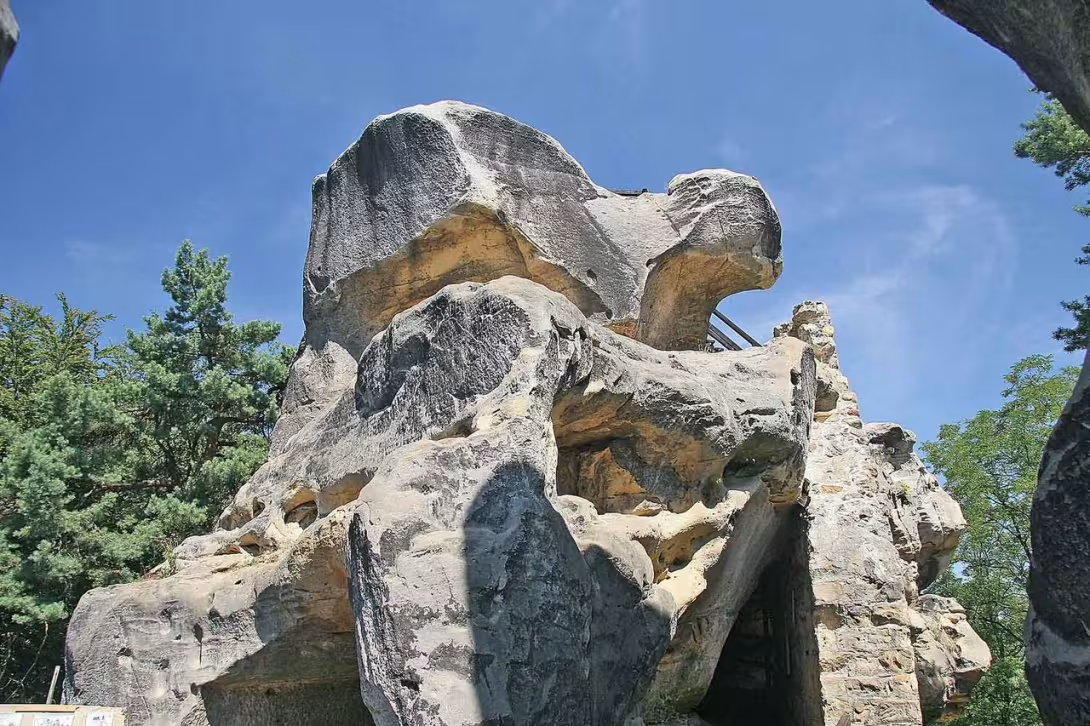

The historical appearance on the left is an AI-generated visualisation and serves as inspiration only.
Historical milestones
- After 1250
- The founding of the castle by the nobles of the Markvartic family.
- 1318
- The destruction of the castle by the army of 152 nobles.
- 1360
- Ješek z Rotštejna obtained permission from Karl IV to organize markets in Klokočí.
- 1415
- The extinction of the Rotštejn family.
- 1514
- The castle is listed as desolate in the sales report.
Architectural development
The castle was designed as a rock fortress with elements of wall architecture, where the rocks formed part of the defence system. Originally, it had gates, bridges and bastions, from which only carved nines were preserved today. In the 17th century some of the rock cavities were further modified by local villagers for settlement needs.
Historical events
1318: The destruction of the castle and the manor by the power of 152 nobles. 1415: The extinction of the Rotštejn family and the takeover of Paldra Manor from Varina.
Owners
Jaroslav z Hrutwice (founder), Rotštejn family (until 1415), Ondřej or Vaněk Paldra z Vařin (since 1415)
Points of interest
- The construction represents a unique combination of wall architecture and space seconds directly into sandstone blocks. - The castle was founded shortly after 1250 by nobles of the Markvartice family, the first owner being Mr Jaroslav z Hrutwice. - All the original castle buildings have ceased to exist, and only written documents speak of the form of the rock castle today. - In the 1514 sales report, the castle is listed as desolate, with walls and rocks collapsed into the courtyard. - Since 1988, the ruins of the free Tramp Association, registered association Protection of Klokočských rocks.
Guide
Show guide text
This text was created by artificial intelligence and has not been editorially reviewed. It may contain inaccuracies.
Welcome to the ruins of Castle Rotštejn. Stop for a moment, take a breath and look around you. You're standing right where human ambition meets the wild beauty of nature. In front of you, sandstone rocks, which were once not just part of the landscape, formed the walls themselves and the foundations of the castle. Feel this strange atmosphere of silence and peace, which today ruled what once was the noisy seat of nobles, the centre of power and the strategic point in the landscape. What you see today is just leftovers, but it is in these stones and holes in the sandstone that the story of several centuries is written.
Let us now return together in time, deep into the thirtieth century, namely until shortly after 1250. It was during this period that Rotštejn began to emerge. It was founded by the nobles of the Markvartic family who were at the time looking for a place that was not only well guarded but also representative. The first owner is listed in the records by Mr. Jaroslav z Hrutwice, but the castle has become the main residence for Vok from Rotštejna. Imagine the idea the builders had back then. They didn't just build a castle on a rock, they wanted a castle off a rock. Rotštejn was thus created in response to the specific terrain situation in the Klokočské skál area.
Now pay attention to what surrounds you. Look at the surrounding sandstone blocks. What makes Rotštejn unique is a fascinating combination of two different approaches to architecture. Note how the classic wall wall is intersected with spaces that were not built, but seconds directly into hard sandstone. Try to imagine the incredible effort that required carving rooms, corridors or storage spaces directly into the rock massif. This symbiosis of nature and human work from the castle makes a real architectural unique. Although the original buildings are almost gone today, these tracks in the stone still tell us about how the castle worked. Notice how naturally the masonry connects to the rock walls. It was this inseparability from the base that made Rotštejna an almost unconquered fortress.
However, life in the castle was not just about silent contextion in sandstone halls. Rotštejn was a strategic point, and that is why it was a target of conflict during the Middle Ages. Let's move on to one of the most dramatic moments in his history. It was 1318. Imagine the sudden noise, screaming and chaos when the castle was invaded by an army of up to 100 fifty-two nobles. It was a massive devastation that caused the castle a hard blow. Such events were common at the time, but for the people of the castle they meant destruction of property and a threat of death. Yet Rotštejn rose from the ashes and blossomed again in the next decades.
In this period there is another significant figure, Ješek z Rotštejna. The hedgehog was not only the castle manager, but a man with vision and influence. In 1360 he obtained a fourth permit from the Emperor Charles himself to organize markets in nearby Klokočí. That was a huge economic impulse for the castle and its surroundings. Markets meant wealth, trade, and contact with the wider world. So the castle stopped being just a military fortress and became the center of the regional economy. In the history of the castle there are also other names such as Zdeněk z Valdštejna or Vaněk Paldra z Vařin, who at different times influenced the fate of this place.
However, no glory lasts forever. Time and fate were relentless to the Rotštejn family. In 1415 the Rotštejn family died out, which meant a slow decline for the castle. Without strong family ties and the care of the owners, the masonry slowly began to decay. The castle was no longer as strategic as before, and gradually it became a shadow of its former size. The highlight of this process was the sales report from 1514, where the castle is already openly mentioned as desolate. Imagine the silent moment when the last guard left the castle gates and Rotštejn remained abandoned to himself, handed over to the hands of wind, rain and time.
When you look at these ruins today, you might wonder exactly what the castle looked like at the time of its greatest glory. And that's where Rotštejn's biggest mystery lies. Since all the original castle buildings have disappeared over the centuries, we have no detailed plans available. We must reconstruct the shape of the castle from the tracks left in the sandstone. It's like writing a giant puzzle where most pieces are missing. It is this incompleteness that encourages imagination. Where was the main gate? What were the chambers carved into the rock? What view did the men from Rotštejna have of the surrounding landscape?
Now I invite you to look around at a slow pace and try to replenish the missing walls in your mind. Feel the texture of sandstone under your fingers, if possible, and think about how many generations of people have lived here, loved and fought. Rotštejn is not just a pile of stones, it is a monument to human efforts to control and adapt to nature.
Imagine the constant frost from these rocks in the winter and the heat of the sun in the summer, while the castle inhabitants watched the movement in the valley. This ruin is now part of the natural reserve of the Klokočská Rock and is proof that nature eventually takes back everything we lent it for a while.
At the end of your stay at this fascinating place, I'd like to invite you to explore the area further. Go through the surrounding roads, perceive the silence of the forest, and look for other traces of ancient times hiding in this landscape. Rotštejn told you its greatest secret today, but many of it remains hidden in the depths of sandstone blocks.
Thank you for accompanying this short trip to history. I hope you enjoyed the atmosphere of this unique rock castle. I wish you a pleasant further journey and beautiful experiences in the embrace of nature. Goodbye.
Tips for visitors
The best time to visit Rotštejna is early morning or morning during working days when you can enjoy the quiet atmosphere of the rock castle without a lot of tourists. In the afternoon, more hikers flow here, especially in nice weather.
The location is also available by public transport, while check the current connection in the local connection search engine.
Take with you fixed shoes suitable for uneven rock terrain, clothing corresponding to outdoor stay and plenty of drinking water. Due to the character of the rock castle, a flashlight is also suitable to explore the darker areas carved into the rock.
For photography offers the best light of the morning sun, which beautifully illuminates sandstone rocks and remnants of castle walls. Great views of the landscape and photogenic composition can be found on the views available at the peaks of rock blocks.
For families with children, the ruin is a great experience, because the discovery of corridors and rooms carved directly in the rock reminds of an adventure fairy tale, but take care of the prospects.
Frequently asked questions
Can the monument be visited?
This is a ruin. Such sites are often freely accessible, but some can only be visited with a guide or are closed for safety reasons. We have not verified the current situation – take care and respect any restrictions.
Where is the monument?
Location: Mírová pod Kozákovem, Liberecký kraj. The map on this page shows the exact spot.
Why is the monument protected?
It is listed in the Central List of Cultural Monuments of the Czech Republic as a cultural monument (register no. 1000139245).
Businesses nearby
Do you run a restaurant, accommodation, shop, museum, rental, wellness or other visitor service near this monument? Show yourself directly to the people heading to it — this is how they will see you in the app and on the web:
Natáčelo se zde
- S čerty nejsou žerty (1985) film
Zdroj: Wikidata (vlastnost „místo natáčení“) · Všechna filmová místa
Events nearby

Zdroj akcí: otevřená data měst a obcí ČR (Národní katalog otevřených dat) a kalendář akcí Národního památkového ústavu.
Nearby
Natural reserve of Klokočská rocks, village Mírová pod Kozákovem and town Turnov.
Accommodation nearby
Trips and activities nearby
Guided tours, tickets and activities nearby from GetYourGuide
Affiliate link: if you buy from the partner, we may receive a commission. The price for you does not change.
Search tours and activities →Themed route
Turnov Type: City Why is worth a visit: The city serves as a starting gate to the whole area of the Czech Paradise and offers all the facilities for tourists. You can start your trip here towards the natural and historical attractions of the region.
Mírová pod Kozákovem Type: Village Why is it worth a visit: This picturesque village is situated in the foothills and forms a natural center for exploring surrounding rock formations and monuments. Walk through the village will lead you to a quiet rural environment.
Natural Reservation of Klokočská Rocks Type: Natural Reservations Why is worth a visit: The vast rock town offers breathtaking views of the landscape, deep ravine and romantic corners between sandstone walls. Walk through this reservation is one of the strongest experiences in the area.
Rotštejn Type: Castle ruin Why is it worth a visit: Medieval castle picturesque built directly into sandstone rocks offers a unique atmosphere and a wonderful view of the surrounding nature. The ruin is the main goal of the whole journey and will capture its unconventional architecture.
Seasonal recommendations
Spring on the ruins of Rotštejn brings awakening nature, where the rocks gradually grow fresh green ferns and the surrounding forests smell of bear garlic. The sun rays penetrate thin treetops and create ideal conditions for the photography of wooden stands and rock lights. Due to the frosty forest roads along the siege, solid waterproof shoes and laminated clothing are suitable to protect you from the cold wind. The number of tourists is still acceptable during this period, the most peaceful atmosphere you will experience in the morning just after the opening of the gates.
Summer in the castle offers a deep shadow under the crowns of grown trees and a pleasant refuge from the hot plain in the Jizera Valley. The sun irradiates sandstone blocks at noon, while the castle is covered in soft golden light with distant views of the Czech Paradise. The main season brings with it a higher attendance rate, which is why it is best to arrive first thing in the morning to enjoy a tour without crowds. Don't forget to bring your headgear, enough drinking water and insect repellent.
Autumn turns the castle's surroundings into a colorful palette of shades from yellow to dark red, making it one of the most photogenic places in the region. The morning fog rolling from the valley supplies the rock castle with a mysterious and melancholy mood, underscored by the rustling of the fallen leaves under its feet. The weather is variable, so you will appreciate a warm hat, gloves and a wind-resistant jacket. Weekends attract lovers of autumn trips, but working days guarantee total peace and quiet.
Winter covers the Rotštejn into a snow blanket that transforms the inadvertently causing ruin into a quiet kingdom with a unique atmosphere of silence and snow statues from sandstone. The low sun creates short but very dramatic shadows on snowy rock stairs. Since the operation is limited during the winter period and the opening time is shorter, it is necessary to check the actual input in advance. Don't forget to put on the jams on the icy access routes and wear highly warm, winter clothes with thermoplastic.
Visualizations and artistic views


The visualisations are generated by artificial intelligence and serve as inspiration.
Photos from the area
Real photos taken near the monument

Zdroj a licence jsou uvedeny u každého snímku.
Tips from visitors
No tips yet. Be the first!
Log in and add your tip.
Sources and literature
Photos: Prazak / CC BY 2.5 — Wikimedia Commons. The author and licence also appear when you hover over the image.
Faktickým podkladem tohoto textu byl článek na Wikipedii, jehož autory jsou přispěvatelé Wikipedie. Článek je dostupný pod licencí CC BY-SA 4.0.
Location on the map
Příběhy a pověsti
Legendy, pověsti a příběhy spjaté s touto památkou

Fotografie návštěvníků
Zatím žádné fotografie. Buďte první, kdo přidá fotografii z návštěvy!
Log in a přidejte svou fotografii nebo hodnoťte.
Za ověřenou návštěvu v aplikaci získáte víc bodů — poznáme podle GPS, že jste na místě.
Reviews and comments