



Ruchomperk Castle
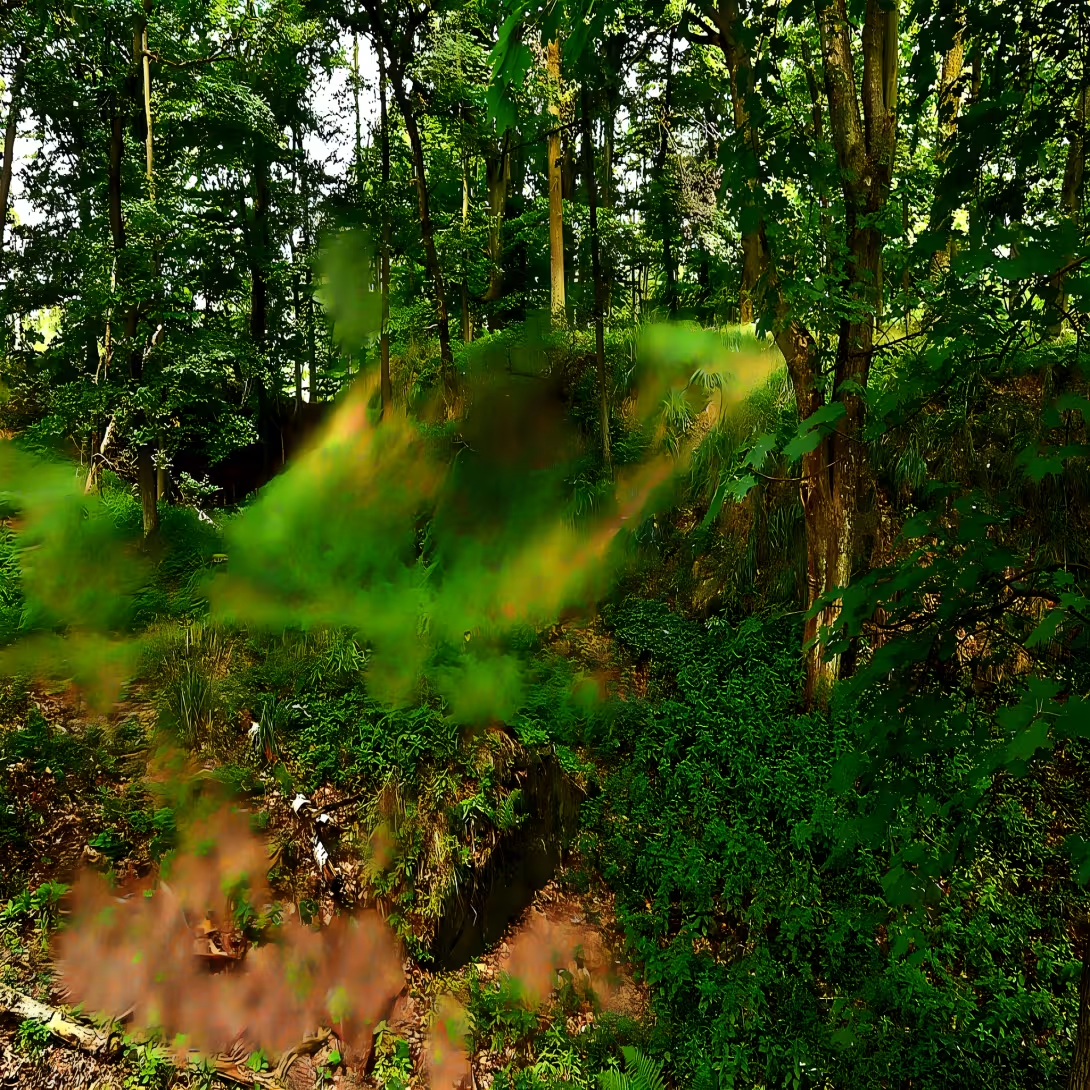
Ruchomperk is a vanished medieval castle near Černíkov village in Klatovy District, Plzeňský kraj. Located on Velký Kouřim hill at about 640 meters elevation, it is one of the oldest Czech castles built mainly from wood, representing a transitional fortification type. The remnants include earthworks and ditches outlining its historical structure. Recognized as a cultural monument since 1964, Ruchomperk provides insights into early medieval defensive architecture.
The origins of Ruchomperk date back to the transition between the 12th and 13th centuries. Historical sources suggest it was constructed when nobility typically did not build castles, indicating its unique role as a strategic power center. The castle likely served as a base for either a nobleman or Černín z rodu Drslaviců, chamberlain of King Přemysl Otakar I. Its remote location underscores its function as a significant stronghold during this period.
Architecturally, Ruchomperk featured an oval ground plan with a defensive ditch and rampart surrounding most sides. The southern section was smaller and lacked building traces, while the western edge had remnants of a hearth from a vanished structure. This design reflects its transitional construction using wood as the primary material, common for early medieval fortifications.
The castle's historical context is set during the late 12th century when Bohemia was under Přemysl Otakar I. This era marked royal power consolidation and territorial expansion across Europe, characterized by feudalism and fortified structures symbolizing authority.
Today, Ruchomperk's remnants are accessible via a trail branching off the red-marked tourist route from Domažlice to Klatovy. Visitors can explore the site and enjoy views of the surrounding countryside, appreciating its historical significance and architectural ingenuity. The castle's status as a cultural monument since 1964 highlights its importance in understanding early medieval Czech history.
Ruchomperk stands as a testament to the strategic and architectural advancements of its time. Its preservation allows visitors to connect with a pivotal era in Bohemian history, offering a unique glimpse into the past. For those interested in medieval architecture and history, Ruchomperk is undoubtedly worth a visit.
Then and now
Drag the slider to compare how the landmark may have looked when it was built with the view today.
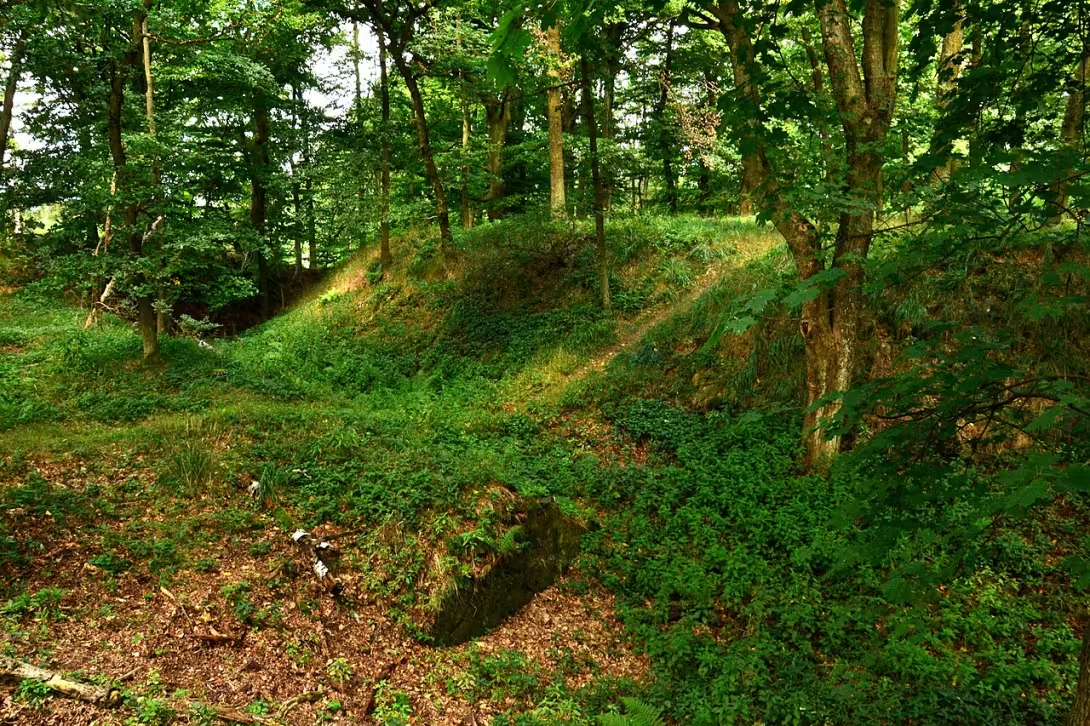

The historical appearance on the left is an AI-generated visualisation and serves as inspiration only.
Historical milestones
- 1200
- Založení hradu Ruchomperk.
- Konec 12. století
- Hrad sloužil jako strategické centrum během vlády Přemysla Otakara I.
- 1964
- Odhlasování hradu Ruchomperk jako kulturní památky.
Architectural development
Ruchomperk had an oval ground plan with a defensive ditch and rampart surrounding most sides. The southern section was smaller and lacked building traces, while the western edge featured remnants of a hearth from a vanished structure.
Historical events
The castle's construction is dated to the transition between the 12th and 13th centuries.
It likely served as a power base for a nobleman or Černín z rodu Drslaviců, a chamberlain of King Přemysl Otakar I.
Points of interest
- Ruchomperk's construction during the transition between the 12th and 13th centuries is intriguing because it was built at a time when nobility typically did not erect castles, suggesting its unique strategic importance as a power center.
- Despite being primarily constructed from wood, which was common for early medieval fortifications, Ruchomperk's oval ground plan with defensive ditches and ramparts represents an innovative transitional design in castle architecture of the era.
- The site is linked to Černín z rodu Drslaviců, who served as chamberlain to King Přemysl Otakar I. This connection highlights Ruchomperk's potential role as a stronghold for influential figures during Bohemia’s consolidation under royal power in the late 12th century.
- The remnants of a hearth found on the western edge of the site suggest that there was once a structure, possibly used for domestic purposes or defense-related activities, providing insights into daily life at Ruchomperk.
- Although much of the castle has vanished, its recognition as a cultural monument since 1964 underscores its historical significance and helps preserve knowledge about early medieval defensive architecture in Bohemia.
Guide
This guide is narrated by a synthetic voice generated by artificial intelligence.
Show guide text
This text was created by artificial intelligence and has not been editorially reviewed. It may contain inaccuracies.
Ruchomperk is an abandoned castle located to the northwest of the village Černíkov in the Klatovy region. Its remains lie on the summit of Velký Kouřim at an altitude of approximately 640 meters. The castle probably ranks among the oldest Czech castles. It was built largely from wood, and therefore belongs among the so-called transitional type castles. Only terrain remains of fortifications have been preserved from it. Since 1964, it has been protected as a cultural monument.
The castle did not arise in an empty place. Already in prehistoric times, there was a settlement here, or possibly a fortified settlement, from the late Hallstatt period.
No written sources have been preserved about the castle itself. Its origins were therefore determined by archaeologists to be the turn of the twelfth and thirteenth centuries. Who founded the castle is not certain. It is most often assumed that it was the ruler. However, the founder could also have been Černín from the House of Drslavice, chamberlain to King Přemysl Otakar the First. Two things speak in favor of the ruler. At the end of the twelfth century, the nobility were not yet building castles. And the castle lay far from a base of support that it could have relied on. It was most likely therefore a seat of power. Its existence was short-lived; it was abandoned already in the first half of the thirteenth century.
The castle had an approximately oval ground plan. Apart from the eastern side, it was surrounded by a rampart and a moat. Within this fortification were two sections, separated from each other by a transverse moat. The southern section is smaller and bears no traces of buildings. In the larger section, a depression runs along the eastern side. At its western edge, a remnant of a hearth from a building that once stood there has been preserved.
Tips for visitors
The best time to visit Ruchomperk is during the late spring or early autumn months, from May to September. During these periods, the weather is generally mild and pleasant, making it ideal for exploring the ruins and enjoying the surrounding landscape. The foliage in spring and fall provides a picturesque backdrop, enhancing the historical ambiance of the site.
The site's accessibility by foot makes it convenient for those arriving by car or public transport.
When visiting Ruchomperk, it is advisable to bring comfortable walking shoes as the trail can be uneven. A hat, sunscreen, and water are essential due to exposure to the elements, especially during sunny days. Additionally, a camera with extra batteries will help capture the stunning views of Velký Kouřim hill and the local countryside.
For photography enthusiasts, the best spots at Ruchomperk include areas where you can capture panoramic views of the surrounding landscape. Early morning or late afternoon light provides soft shadows and warm hues that enhance the ruins' dramatic appearance. The elevated position on Velký Kouřim hill offers excellent vantage points for capturing both the castle's remnants and the expansive countryside.
Nearby attractions within a 30-minute drive include the charming village of Černíkov, which offers insights into local culture and history. Visitors can also explore nearby natural trails that provide opportunities for hiking and enjoying nature. For families with children, these areas offer a chance to engage in outdoor activities while learning about the region's heritage.
Frequently asked questions
Can the monument be visited?
This is a ruin. Such sites are often freely accessible, but some can only be visited with a guide or are closed for safety reasons. We have not verified the current situation – take care and respect any restrictions.
Where is the monument?
Location: Černíkov, Plzeňský kraj. The map on this page shows the exact spot.
Why is the monument protected?
It is listed in the Central List of Cultural Monuments of the Czech Republic as a cultural monument (register no. 30089/4-2161).
Businesses nearby
Do you run a restaurant, accommodation, shop, museum, rental, wellness or other visitor service near this monument? Show yourself directly to the people heading to it — this is how they will see you in the app and on the web:
Nearby
The site is accessible via a trail branching off the red-marked tourist route from Domažlice to Klatovy. The surrounding landscape includes Velký Kouřim hill and offers views of the local countryside.
Accommodation nearby
Themed route
Tematická výletní trasa z Černíkov
1. Ruchomperk (Hrad)
Typ: Historická památka
Proč stojí za návštěvu: Ruchomperk je jednou z nejstarších pevností v Čechách, s bohatou historií sahající až do 12. století. Navštívte toto impozantní místo pro pohled na jeho gotické a renesanční prvky a prozkoumejte jeho historii, která zahrnuje významné postavy jako Jindřich Šlik.
2. Velký Kouřim (Hůrka)
Typ: Naturistické místo na hůlce
Proč stojí za návštěvu: Tato malebná hůrka nabízí vynikající pohledy na okolní krajinu, zahrnující údolí řeky Radbuzy. Je to ideální místo pro odpočinek a prozkoumání přírody, s možností užít si klidné chvíle v malebném prostředí.
3. Cesta z Domažlic do Klatovic (Červeně označená turistická trasa)
Typ: Turistická cesta
Proč stojí za návštěvu: Tato červeně označená trasa vede přes různorodou krajinu, která nabízí pohledy na místní venkov a příležitosti pro krátké zastávky u Ruchomperku. Je to ideální cesta pro cyklisty nebo chodce hledající mírnou výpravu s historickými a přírodními pohledy.
4. Okolní krajina (Pohled na místní venkov)
Typ: Okolní krajinářské procházky
Proč stojí za návštěvu: Prozkoumejte okolní krajinu kolem Ruchomperku, která nabízí klidné chodníky a pohledy na místní venkov. Tato oblast je perfektní pro relaxační procházky nebo pikniky v přírodě.
5. Nádvoří Ruchomperka
Typ: Historické nádvoří
Proč stojí za návštěvu: Nádvoří hradu nabízí pohled na jeho architektonickou krásu a historii. Je to ideální místo pro fotografování a užívání si klidného okamžiku, kde můžete přemýšlet o dlouhé historii hradu.
Tato trasa nabízí kombinaci historických zážitků a přírodních krás, což ji činí ideální pro lidi, kteří chtějí objevit jak kulturní, tak přírodní bohatství oblasti Černíkov.
Seasonal recommendations
Spring: Visiting Ruchomperk Castle during spring offers a unique experience as the surrounding landscape bursts into life with vibrant wildflowers and fresh greenery, creating an enchanting atmosphere that contrasts beautifully against the ancient ruins. The soft, dappled sunlight filtering through budding trees enhances the mystical aura of this historical site. To make the most of your visit, consider arriving early in the day to enjoy the tranquility before larger crowds gather. Light layers are advisable as temperatures can vary, and comfortable walking shoes will help you explore the expansive grounds.
Summer: Summer is an ideal time for exploring Ruchomperk Castle, with long days providing ample opportunity to appreciate both the castle's historical significance and its stunning natural setting. The lush landscape is at its peak, offering a picturesque backdrop that enhances the ruins' grandeur. However, summer also brings larger visitor numbers, so it's wise to arrive early in the morning or later in the afternoon to avoid crowds. Sun protection, such as hats and sunscreen, along with plenty of water, will ensure a comfortable visit during this season.
Autumn: The autumn months transform Ruchomperk Castle into a breathtaking canvas of warm hues, with reds, oranges, and yellows painting the surrounding landscape. This seasonal shift creates a serene and contemplative atmosphere that complements the castle's historical aura. Cooler temperatures make for comfortable exploration without the summer heat, but it’s advisable to bring a light jacket as evenings can become chilly. The reduced number of visitors during this time allows for a more peaceful experience.
Winter: Winter visits to Ruchomperk Castle offer a magical and atmospheric journey through snow-covered ruins that seem almost otherworldly against the stark winter landscape. The quietness of the season, with fewer tourists around, adds to the sense of solitude and reflection. However, it's important to dress warmly in layers, including thermal wear and waterproof outer garments, as temperatures can be quite low.
Visualizations and artistic views


The visualisations are generated by artificial intelligence and serve as inspiration.
Photos from the area
Real photos taken near the monument

Zdroj a licence jsou uvedeny u každého snímku.
Tips from visitors
No tips yet. Be the first!
Log in and add your tip.
Sources and literature
Photos: Petr Kinšt / CC BY-SA 4.0, rozlišení zvýšeno umělou inteligencí — Wikimedia Commons. The author and licence also appear when you hover over the image.
Faktickým podkladem tohoto textu byl článek na Wikipedii, jehož autory jsou přispěvatelé Wikipedie. Článek je dostupný pod licencí CC BY-SA 4.0.
Location on the map
More monuments – Černíkov
Show all in the municipality



Příběhy a pověsti
Legendy, pověsti a příběhy spjaté s touto památkou
Fotografie návštěvníků
Zatím žádné fotografie. Buďte první, kdo přidá fotografii z návštěvy!
Log in a přidejte svou fotografii nebo hodnoťte.
Za ověřenou návštěvu v aplikaci získáte víc bodů — poznáme podle GPS, že jste na místě.
Reviews and comments