



Rudolfinum (Hradec Králové) Hospital
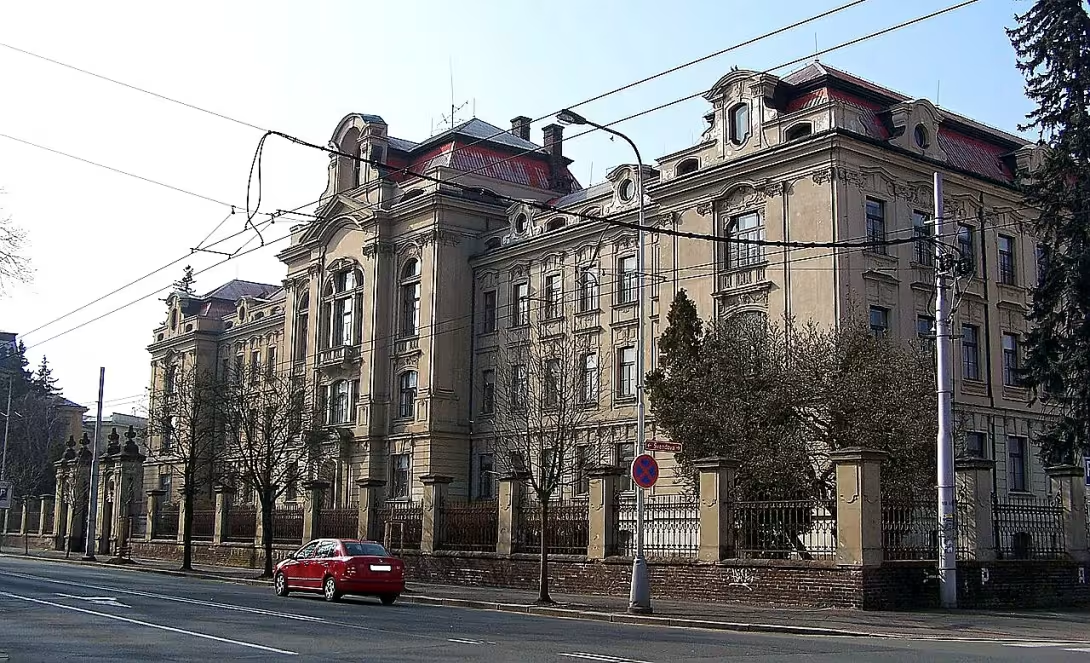
Rudolfinum in Hradec Kralove is a neo-Baroque building on Pospíšil's class. It was created in the early 20th century as an institution for deaf children. Since 1958 the building has been protected as a cultural monument of the Czech Republic and today it serves educational institutions.
The Royal Hradec Bishop Josef Jan Evangelista Hais initiated the constitution in 1881. The institution has been named in honor of the marriage of Crown Prince Rudolf to the Belgian Princess Stefania. Originally located in several houses in Tomkov and Long Street. The actual building was realized between 1901 and 1902 according to the design of architect Arnošt Jenšovský. The creation of the building falls within the period of European modernization and industrialisation, which in the Czech countries brought the development of educational and cultural centres.
Architecturally, the construction belongs to the neo-Baroque style. The ground floor of the building is barefoot and the facade dominates the high order of half columns. They carry a baroque ledge with a shield and an aetika. The inner interior is dominated by a three-arm staircase. At the time of its creation the building was at a high technical level; it has a central heating, gym, swimming pool and its own chapel.
The operation of the Institute was provided by a curatorium headed by a bishop, a professional teacher and eight nurses. The capacity allowed education and accommodation of about 80 children from the entire diocese. During the First World War, the object served as a military hospital. In the period of the first republic, the Institute was intended for Czech children, while under the Protectorate it became exclusively a German educational establishment. After World War II, the institution worked with the medical faculty and operated a specialized kindergarten. As of 1 September 1948, the Institute was nationalized and in 1952 its original activity was definitively completed. Subsequently, the premises were used by the Military Medical Academy and later the skin clinic of the faculty hospital.
In modern history, the building provided facilities for J. K. Tyl Gymnasium during the reconstruction of its own premises. Since 8 February 2016, the object has been used by the Commercial Academy, the High School and the Language School with the right to state language examinations.
Rudolfinum is an important piece of historical and period care for disadvantaged youth in Hradec Králové. Visiting this monument offers the opportunity to become acquainted with the architectural legacy of the early 20th century, which successfully adapted to the needs of modern education.
Then and now
Drag the slider to compare how the landmark may have looked when it was built with the view today.
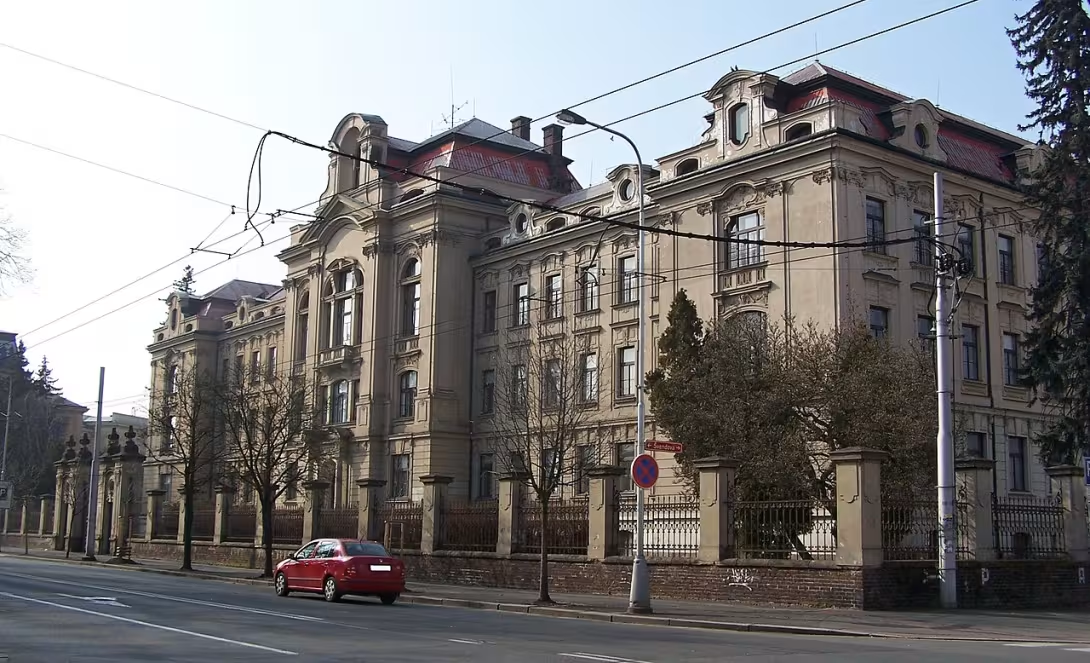
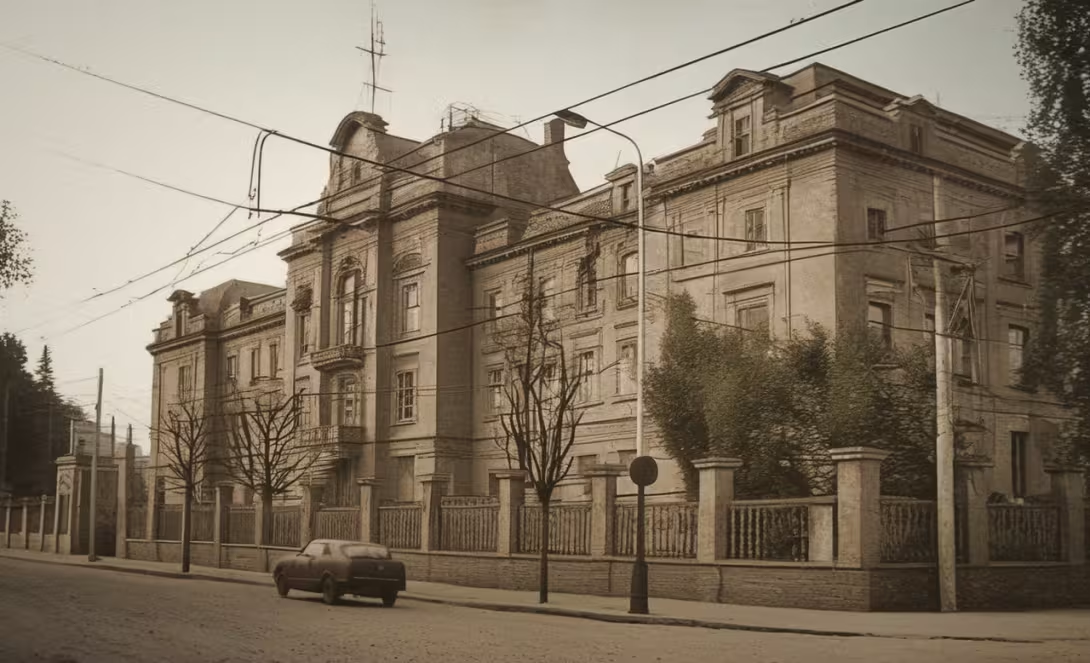
The historical appearance on the left is an AI-generated visualisation and serves as inspiration only.
Historical milestones
- 1881
- Bishop Josef Jan Evangelista Hais initiated the establishment for deaf children.
- 1902
- The exhibition of the building, according to the design of architect Arnott Jensovski.
- 1914
- The object began to serve as a military hospital during the first world wars.
- 1948
- The establishment was taken to the first state organ.
- 1958
- The object was officially declared a protected cultural monument.
- 2016
- The building started using the Business Academy and other educational institutions.
Architectural development
Rudolfinum was built between 1901 and 1902. It is characterized by its neo-Baroque style with semi-columns, ledge and atics. The interior contains three-arm staircase.
Historical events
- 1881
- Establishing an institution for deaf children.
- 1902
- Completion of the Rudolfinum construction.
- 1958
- Protected as a cultural monument of the Czech Republic.
Owners
Started under the auspices of the royal hradec bishop Josef Hais, later he was statesman in 1948 and served various purposes, such as a military hospital or a skin clinic.
Points of interest
- The building was created in the early twentieth century as a institute for deaf children and since 1958 it has been protected as a cultural monument. - The name of the institution was elected in honor of the marriage of Crown Prince Rudolf to the Belgian Princess Stefania. - At the time of its creation, the building was at a high technical level because it had central heating, gym, swimming pool and its own chapel. During the First World War, the building served as a military hospital. - For the Protectorate, the Institute became exclusively a German educational institution, while during the period of the first republic it was intended for Czech children.
Guide
Show guide text
This text was created by artificial intelligence and has not been editorially reviewed. It may contain inaccuracies.
Welcome to the beautiful city of Hradec Králové. Right now, they stopped in front of one of the most important buildings in this area. In front of your eyes is an impressive building known as Rudolfinum. Feel the atmosphere of history that radiates from this place, and try to imagine how many generations have seen these walls. Look at her face and perceive the elegance that radiates from her. This building is not just walls and windows, it is a living witness to the many events that have shaped our city and our nation. Feel the calm size and dignity with which it stands here for over a century.
In order to truly understand why this building is standing right here and why it is so important, we must go back deep into the past together. The whole story of this place didn't start with construction, but with a great human idea. It all started because of a visionary man, a bishop named Josef Jan Evangelista Hais. He was very concerned about children who couldn't hear. He wanted to create a place for them to learn safely, develop their skills and find their way to the world, even if the world around them was quiet. So in the year one thousand eight hundred eighty-one, the idea of setting up an institution for deaf children began to form. This noble effort was the cornerstone on which the whole building stands.
Now pay attention to the name itself that defines the building. Then why is it called Rudolfinum? This name is not random and it is not just a simple label. He was elected in honor of the marriage of Crown Prince Rudolf to the Belgian Princess Stefania. It is a beautiful garment for the royal tradition at the time and for how this building was perceived as something special and noble. When you look at the building, you knowingly realize that its name bears a reference to the royal family and to a time when the fates of different nations were united.
Now let's take a look together at what you're watching. This whole object is an excellent example of the neo-Baroque style. This style is known for its richness and sense of beauty, which is clearly reflected in this building. The whole design was prepared by the architect Arnošt Jenšovský. If you look at her face, you'll see the harmony and the richness of the shapes that the architect put in every detail. Although the building is now being used for other purposes, its architecture continues to tell the story of an effort for beauty and dignity. Feel the line and the overall structure, which in year one thousand nine hundred and two, when the construction was completed, was considered to be the absolute peak.
It is very interesting that at the time of its creation this building was at an incredibly high technical level. This means that at that time it was a top-notch solution that represented the best that people could build back then. It wasn't just an ordinary building, it was a technological miracle of its time. When you look at her facade today, you see not only beauty, but also proof of human art and scientific progress of that time. It was a place that carried modern ideas and the best technical possibilities of the then world.
But the history of this place is very varied and full of unexpected twists that change its character. The building wasn't just a school, as we said in the beginning. When World War I broke out in the year one thousand fourteen, her role changed radically and tragically. Instead of learning, the wounds of war conflict began to heal here. The object became a military hospital where people from different parts of the world fought for their lives. Imagine the change of atmosphere, how the space for nurture and childcare has become a place of healing and relief in the difficult times of war. This is a fascinating and sad story that these walls are witnessing.
Later, in year one thousand nine hundred forty-eight, there was another fundamental change. The Institute was taken over by the State. This change meant a new direction for the building and for its use. And already in the year one thousand nine hundred fifty-eight this building was officially declared a protected cultural monument of the Czech Republic. This clearly tells us how much this place is worth to our common heritage. It's a treasure we must protect for future generations.
Today, the building serves other purposes than at the time of its creation. Since the year two thousand and sixteen, the Commercial Academy and other educational institutions have been based here. Even though new generations of students today learn about modern world and trade, the spirit of history still lives here. The building is constantly changing, adapting to new times, but its basic character and its grandeur remain preserved.
I hope that this brief insight into the past has helped you better understand this place and what it's hiding. Rudolfinum is not just a building, it's a story about human care, the royal tradition, architecture, and hard times of war. Feel this building as part of your city, as part of a history that still breathes. Continue your tour of Hradec Králové and enjoy all the other secrets this city offers you. Thank you for your attention and we will read you the beautiful rest of the day on your next discovery.
Tips for visitors
For a tour of the building, choose the morning hours, when the sunlight best highlights the neo-Baroque details on the facade and the surrounding streets are quieter traffic. Take a wide-angle camera with you to capture rich architecture, with the best light for exterior images in the morning. Since there are no other monuments in the area, focus on the detailed study of the construction itself and its history associated with childcare. For families with children, the location is suitable thanks to the proximity of city parks where children can relax after a tour of the historic building.
Frequently asked questions
Can the monument be visited?
The building is in use (offices, a school, shops and the like). The interior is generally accessible only during operating hours and tours are not usually offered; we have not verified the details. You can see the exterior from the street.
Where is the monument?
Location: Hradec Králové, Královéhradecký kraj. The map on this page shows the exact spot.
Why is the monument protected?
It is listed in the Central List of Cultural Monuments of the Czech Republic as a cultural monument (register no. 1000158091).
Businesses nearby
Do you run a restaurant, accommodation, shop, museum, rental, wellness or other visitor service near this monument? Show yourself directly to the people heading to it — this is how they will see you in the app and on the web:
Nearby
🏰 Historic sites (334)
- Socha Boženy Němcové 0.2 km
- Pomníka Ladislav Jana Pospíšila 0.3 km
- Adolf Černý (Jan Rokyta) 0.4 km
- Václav František Červený 0.4 km
- Galerie Václava Havla 0.4 km
- Muzeum východních Čech - budova DOK 0.5 km Opletalova 334/2
- Muzeum východních Čech 0.5 km
- Havlův dvoreček 0.5 km
- Galerie moderního umění 0.6 km
- Ofelie 0.6 km Klicperova
- Muzeum české lékárny 0.6 km Velké náměstí 29/39
- Karel Šimek 30.4.1945 (21let) 0.6 km web
- Kostel Nanebevzetí P. Marie 0.7 km
- Jesuitská kolej 0.7 km
- Muzeum východních Čech - budova ARCHA 0.7 km Československé armády 333
- Muzeum východních Čech 0.7 km
- Památník padlým legionářům 4. střeleckého pluku Prokopa Velikého. Jan Gayer (1885 - 1918) 0.7 km web
- Judr. Josef Tausik 0.7 km
- Klára Tausiková 0.7 km
- Mariánský sloup 0.7 km web
🍽️ Restaurants and dining (390)
- QR bistro 0.0 km web
- Numidia Kebab 0.1 km Pospíšilova 787/11 +420 770 622 216
- U Flašinetaře 0.2 km
- ROTUNDA 0.2 km
- Čínské bistro Bie Ge 0.3 km Pospíšilova 313/19
- Kebab Deluxe HK 0.3 km Československé armády 408/51 +420 733 794 933
- U Pilnáčka 0.3 km Pospíšilova 281/8 +420 731 125 163 web
- Sushi box UA 0.4 km Československé armády 219/24
- Rychtářka 0.4 km
- Ca Phe District HK 0.4 km
- Robin Kebab 0.4 km
- Budvarka 0.5 km
- Nur Kebab 0.5 km Pilnáčkova
- Šatlava 0.5 km Dlouhá 101/13 +420 776 817 856 web
- Café Na kole 0.5 km Velké náměstí 24
- Na Jedno 0.5 km Velké náměstí 16/26 web
- Divadelní Klub 0.6 km
- Putna 0.6 km Tomkova 139/140
- The Royal Maharaja 0.6 km Velké náměstí 22 +420491617572 web
- Bohemia Sekt Club 0.6 km
🏨 Accommodation (49)
- Penzion Amátka 0.4 km Malé náměstí 120/13 +420 606 776 795 web
- Hotel U Královny Elišky 0.4 km Malé náměstí 117/10 +420 495 518 052 web
- Hnízdo snů 0.6 km +420608024616 web
- Tereziánský dvůr 0.6 km +420495505111 web
- U České koruny 0.6 km
- Nové Adalbertinum 0.7 km Velké náměstí 32/40
- Hotel Pod Věží 0.8 km
- Hotel Okresní dům 0.8 km Palackého 6 +420 495 054 300 web
- Hotel Grand 0.8 km +420 491 514 999 web
- Alessandria 0.9 km
- Hotel Stadion 1.0 km web
- Sasanka 1.2 km web
- Penzion - Ubytovna U Mlejna 1.2 km Zámostí 261/19
- Stulík 1.2 km web
- Hotelový dům Academic 1.4 km +420 495 511 175 web
- Penzion Lena 1.6 km
- Penzion Pupendo 1.9 km
- Penzion Nad Oborou 1.9 km +420 733 151 481 web
- Penzion MAR 1.9 km
- Černigov 1.9 km
🚲 Rentals and sport (167)
- Nextbike 0.1 km web
- Nextbike 0.3 km web
- Nextbike 0.3 km web
- sportovní hala Slávie 0.3 km
- Nextbike 0.3 km web
- Nextbike 0.4 km web
- Nextbike 0.4 km web
- Nextbike 0.5 km web
- Nextbike 0.5 km web
- Nextbike 0.6 km web
- Nextbike 0.7 km web
- Nextbike 0.7 km web
- Nextbike 0.7 km web
- Nextbike 0.7 km web
- Nextbike 0.7 km web
- Kostka 0.7 km
- Nextbike 0.8 km web
- Plavecký Bazén 0.8 km
- Opravna kol Zdeněk Bláhha 0.8 km web
- Nextbike 0.8 km web
🥾 Hiking and nature (190)
- Kubištovy sady 0.1 km
- Bidlův park 0.2 km
- Šimkovy Sady 0.3 km
- Kavčí plácek 0.4 km
- Žižkovy sady 0.5 km
- Vonešovy sady 0.6 km
- Radnice 0.8 km
- Vrcholek batarda 0.9 km web
- Vrcholek batarda 0.9 km web
- pevnostní patníky 1.0 km web
- Pevnostní koridor 1.2 km web
- pozůstatky pontonové lávky 1.3 km web
- Jiráskovy sady 1.3 km
- náměstí Václava Havla 1.3 km
- Poterna 1.4 km web
- Sady architekta Lisky 1.5 km
- Sady architekta Lisky 1.6 km
- Park Skleněnka 1.6 km
- Hraniční patníky pevnosti 1.7 km web
- Vila Václava a Luisy Tesařových 1.8 km web
Accommodation nearby
Themed route
1. Rudolfinum - type: Main building. A tour of the main halls and the award of architecture. 2. Tanks - type: Open space. A quiet place to observe the details of the building up close. 3. Artistic exposition - type: Exhibition. A tour of the works located directly inside the building. 4. Garden by the building - type: Park area. A short walk in the close neighborhood of the monument.
Seasonal recommendations
Spring: In the spring period, Rudolfinum in Hradec Králové is revived by flowers and sunlight, which illuminates the architectural beauty of the building. Nature is awakening from winter sleep, which adds to visiting the colorful and lively atmosphere. For a guide it is advisable to visit a monument at noon so that they can enjoy spring sun rays on outdoor walks around the building. Light clothing is recommended with the possibility to add a layer because temperatures can be medium and suddenly can warm up.
Summer: The summer is Rudolfinum in Hradec Králové's favorite destination for tourists looking for escape from heat. The atmosphere is full of life and music because many people attend concerts and performances in this famous cultural centre. The best time to visit is early morning or late evening to avoid large crowds during the day. Reliable clothing and sun protection such as hats and UV cream are recommended.
Autumn: In autumn, Rudolfinum in Hradec Králové offers a unique view with a changing colour spectrum of leaves. The atmosphere is quieter and friendly, which allows a relaxed tour of the building without tiring crowds. The best time to visit is in the early afternoon or evening period when light changes and adds magic to the visit. It is recommended to wear laminated clothing because temperatures can be variable.
Winter: The winter season in Hradec Kralove brings Rudolfinum to the atmosphere of snowy streets and light festivities. The building is lit, which gives her a romantic view at night. Visiting during this period can be calmer due to shorter opening times and cold temperatures that limit the number of tourists. It is recommended to wear warm clothes, protective shoes and perhaps a hat or scarf to ensure comfort during a visit in the cold.
Visualizations and artistic views


The visualisations are generated by artificial intelligence and serve as inspiration.
Photos from the area
Real photos taken near the monument


Zdroj a licence jsou uvedeny u každého snímku.
Tips from visitors
No tips yet. Be the first!
Log in and add your tip.
Sources and literature
Photos: Kixx / CC BY-SA 3.0 — Wikimedia Commons. The author and licence also appear when you hover over the image.
Faktickým podkladem tohoto textu byl článek na Wikipedii, jehož autory jsou přispěvatelé Wikipedie. Článek je dostupný pod licencí CC BY-SA 4.0.
Location on the map
More monuments – Hradec Králové
Show all in the municipality
Příběhy a pověsti
Legendy, pověsti a příběhy spjaté s touto památkou
Fotografie návštěvníků
Zatím žádné fotografie. Buďte první, kdo přidá fotografii z návštěvy!
Log in a přidejte svou fotografii nebo hodnoťte.
Za ověřenou návštěvu v aplikaci získáte víc bodů — poznáme podle GPS, že jste na místě.
Reviews and comments