



Rýzmberk Lookout tower
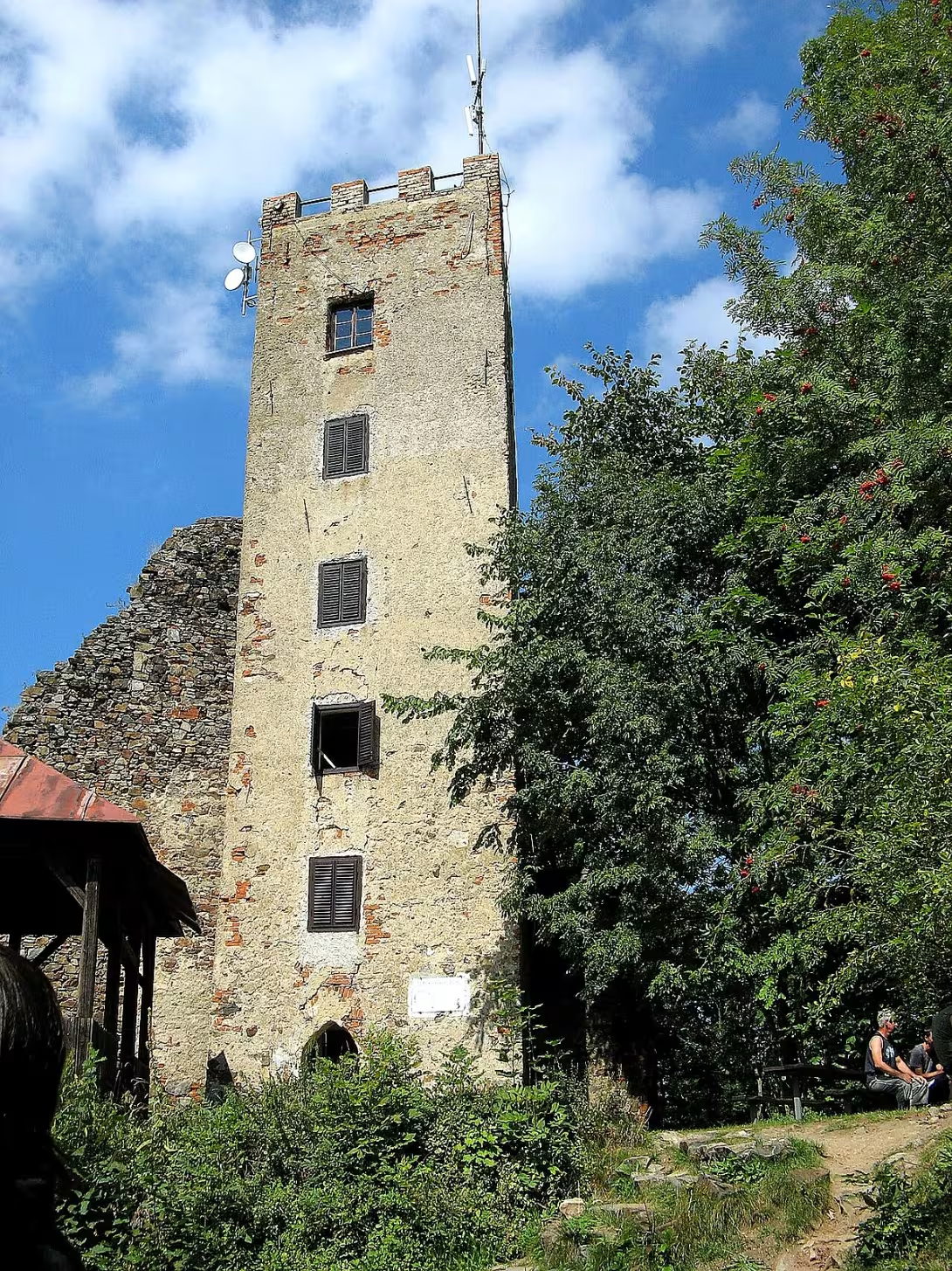
The ruins of the castle Rýzmberk lie on a high wooded hill near Kdyně. This medieval fortress was established in the second half of the 13th century. It served as a strategic point to protect the Earth's path, which led through the Peruvian Pass to the Bavarian Řezen.
The fortress was founded by the influential House of Drslavice, who controlled the region. The first written mention of the construction dates back to 1279. The name Rýzmberk is German and stands for Giant Mountain. It thus refers to the location of the castle on the dominant hill above the town of Sjøí.
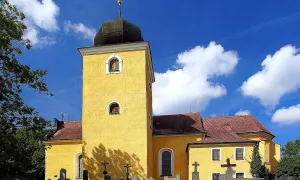
The original complex was a three-storey courtyard. A major reconstruction followed a devastating fire in 1448. It created an extensive front with a defensive tower band and a second large palace in the castle core in the third courtyard. Later, Renaissance adjustments were made. Current remains include parts of walls with bastion, moat and remains of an older palace with underground cellars. A neo-gothic view tower is now attached to the younger Gothic palace, which uses part of the medieval wall.
After the founding castle Drslavice was owned at different times by the masters of Rýzmberka and then Janovský from Janovice. They modified it and ruled it until 1407, then the Švihovský of Rýzmberka briefly stopped here. After a series of changes by owners in 1543, Gutstejns acquired it, who lived in the castle until 1622. A number of holders, such as Habsburgs, Krac of Sharfenstejn and Černínová of Chudenice, followed the estate. In 1676 the family Lamingen of Albenreuth became the owner, in both literature and legend known as Chode oppressors. In 1697 the estate was bought by Baron Jiří Henry of the Stadium, whose family held it until 1908. Since the beginning of the 20th century, the Czech Tourist Club has been taking care of the ruins.
During the Thirty Years' War, the castle suffered considerable damage. In October 1620 it was conquered by Catholic troops under the leadership of General Don Balthazar de Marradas and in 1622 it was confiscated by the Gutstejn earls. In 1641 the Protestant Swedes occupied the fort under the direction of Major General Pful. The construction was then so damaged that it became virtually uninhabitable. In 1676 the castle was described as a ruin in the period records.
In the 19th century the castle was transformed into a popular cruise place with terraces, bowling and a view tower thanks to the modifications of the families from the Stadium. Today, the ruin is open to tourists. On the former third courtyard there is a wooden buffet, gazebo and rest zone with benches and tables. A wooden amphitheater from 1935-1936, which serves for cultural events, lies near the premises.
Rýzmberk offers a view of the complex history of the border fortress and its gradual transformation into a romantic ruin. It is an ideal place to explore medieval building elements and experience history near nature.
Then and now
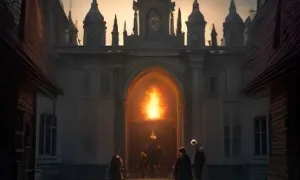
Drag the slider to compare how the landmark may have looked when it was built with the view today.
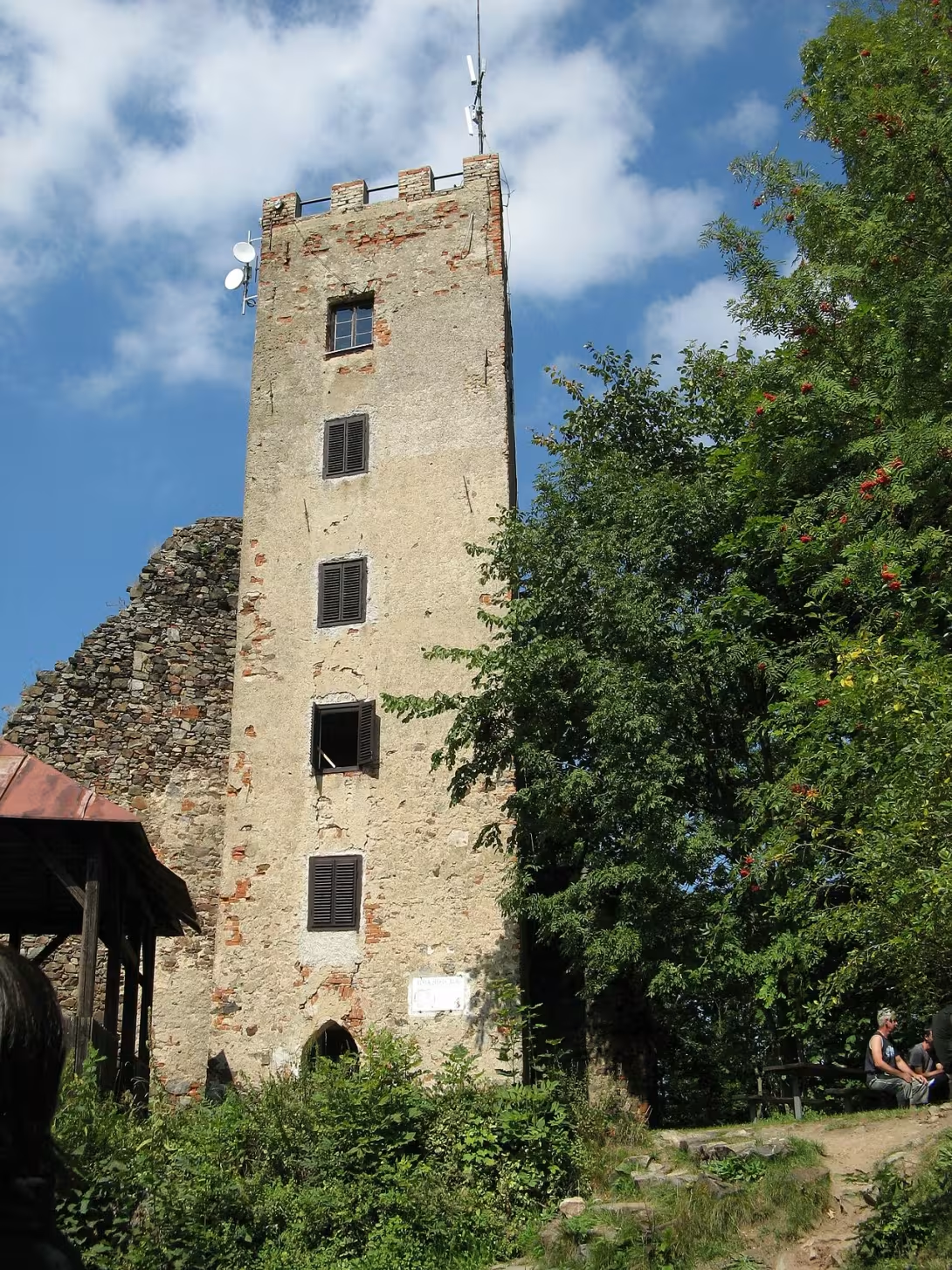

The historical appearance on the left is an AI-generated visualisation and serves as inspiration only.
Historical milestones
- 1279
- First written mention of the castle.
- 1448
- The castle fire and subsequent extensive reconstruction.
- 1620
- The castle was conquered by Catholic troops led by Don Balthazar de Marradas.
- 1641
- The castle was occupied by Protestant Swedes, which led to considerable damage.
Architectural development
After the fire in 1448, there was a major reconstruction involving the construction of a second palace in the core and a large front with defensive towers. Later, the castle was modified in Renaissance style. After a 30-year war, the castle was gradually abandoned and degraded to ruin.
Historical events
1279 - first written mention of the castle; 1448 - destructive fire and subsequent major reconstruction; 1620 - conquest of the castle by the Catholic army; 1641 - Conquest of the castle by Protestant Swedes.
Owners
Drslavice (2nd half of the 13th century), Janovský z Janovice (until 1407, then 1535-1543), Švihovský z Rýzmberka (until 1407, then 1508-1535), Gutštejnova (1543-1622), Habsburg, Krac z Sharfenstejn, Collonnové z Fels, Černín z Chudenice.
Points of interest
- The name Rýzmberk is German and stands for Giant Mountain. - The fortress served as a strategic point to protect the Earth's path to the Bavarian Řezn. - After a devastating fire in 1448, there was a large front with defensive towers and a second large palace. The House of Lamingen of Albenreuth is known in both literature and legend as Chode oppressors. - In the 19th century the castle turned into a cruise spot with terraces and bowling alley.
Guide
Show guide text
This text was created by artificial intelligence and has not been editorially reviewed. It may contain inaccuracies.
Welcome to the ruins of Castle Rýzmberk. Stop for a moment and just feel the atmosphere of this place. You are standing on a high, wooded hill near the city of Kdyně and before you are spread the remains of the once powerful fortress that dominated this landscape for centuries. Inhale the scent of the surrounding forest and look at the stone walls, which are today a silent witness to the past, but still radiate pride and strength. It was here, at this point, that the fates of the people, the armies, and the entire states met.
Let us now return together in time to understand why this very peak was chosen for the construction of the castle. The first written mention of Rýzmberk dates back to 1279, which brings us to the second half of the 13th century. At that time the castle was not only a home of nobility, but mainly a strategic military object. Imagine this place as a key point on the map of Europe back then. Rýzmberk served as an important border fortress whose main task was to protect the Earth's path leading to Bavarian Řezn. The castle was guarded by the International Pass, which was one of the most important routes for trade and troop movement between Czech and Bavarian countries. Whoever controlled Rýzmberk also controlled movement in this sensitive border area.
Now that you're looking around, pay attention to what's left of the castle architecture. Even if you see a ruin today, there was a complex defense system in the past. Notice the layout of the space. The castle has undergone several major changes during its existence. One of the most dramatic breakthroughs was 1448 when the castle hit a devastating fire. Many would say that such a disaster means an end, but for Rýzmberk it was the beginning of a new era. This fire was followed by a massive reconstruction. It was at this very time that a large front was established, which was supplemented by defensive towers to better resist possible attacks. There was also a second large palace, which increased the comfort of the inhabitants and also underlined the status of the castle.
If you look at the remnants of the walls, you can imagine how the castle gradually changed. Later, at the time the Gutstejn family owned the castle, elements of Renaissance style were introduced into the building. Renaissance brought more light, elegance and comfort to medieval forts, although Rýzmberk never stopped being a military fortress in the first place. Take a look at the facade and see how the strict defensive function is mixed with the ambitions of the owners who wanted to modernise their headquarters.
But Rýzmberk's history is full of dramatic clashes that are closely linked to Europe's great politics and religious conflicts. Let's move on to the seventeenth century, to the time of the Thirty Years' War, which left deep traces throughout Central Europe. 1620 was a turning point for the castle. At this time, Rýzmberk was conquered by the Catholic army that Don Baltazar de Marradas commanded. This attack was not only a local scourge, but part of the wider struggle for power and faith that Emperor Ferdinand was involved in. Imagine the noise, the screaming of the soldiers and the sound of the weapons that cut the silence of this hill at the time.
But peace did not last long. A few decades later, in 1641, the castle became the target of another attack. This time it was taken by Protestant Swedes. The Swedish army was at that time one of the most modern and brutal forces in Europe. This cast has led to considerable damage to the castle. The fighting and subsequent devastation left wounds on the building that were never fully healed. So Rýzmberk gradually lost its strategic value and began to turn into what you see today - a melancholy ruin that tells the story of the rise and fall.
Among the personalities associated with this place, for example, the character Pfula appears, which reminds us of how complex and well-connected the administration of this border point was. The House of Lamingen of Albenreuth also left its mark in the history of the castle, and their stories appear in literature and legend, which gives the place a certain touch of mystery.
Now, I want to impress you with one interesting thing that's already in the title itself. Do you know what the name Rýzmberk means? It's German, and in translation it means Giant Mountain. Now, if you look from the castle to the surrounding countryside, you can easily understand why that name was chosen. From this high point the world appears smaller and the castle acts as a giant who watches over the valley. It is a fascinating combination of the physical reality of the terrain and the symbolism of power that the castle has represented in the past.
When you walk between these rocks today, you may feel a strange calm, but remember, centuries of tension sleep under this calm. Rýzmberk was not just a building, it was a border guard, instead of meeting cultures and at the same time a blood conflict. It is fascinating to think how many people have lived here over 500 years, how many soldiers have been guarded here, and how many travelers have looked down from the castle walls for a trip to Bavarian Řezna, hoping to reach their destination safely.
Now all you have to do is explore this place at your own pace. I suggest you go through the premises of the vanguard and try to imagine what those defensive towers were like that used to degrade the enemy. Feel the texture of the stones and look for traces of ancient craftsmen whose names are forgotten today, but their work still stands. Let yourself be guided by your curiosity and feel the silence that is as spoken in Rýzmberk as the chronicles themselves.
Thank you for joining me on this short journey in time. I hope this interpretation helped you see more than just a pile of stones in these ruins. I wish you a pleasant continuing tour and a beautiful day spent in the embrace of nature and history. Goodbye.
Tips for visitors
For the best experience we recommend a visit in the early morning or late afternoon when the light is softer and the ruin looks best on the photographs. The sunny days are ideal for views, but the shadows in the forest area can be more interesting at other times for detailed pictures of architecture.
You can transport by car or use public transport to the nearby city Kdyně. The current transport connections are best checked in the internet search engine.
Since the castle is located on a high wooded hill, it is necessary to bring comfortable shoes suitable for uneven terrain and plenty of drinking water. For families with children, this journey is a great opportunity to move in nature, but it is necessary to ensure that safety is maintained when moving near ruins.
For photography we recommend to use elevated places around the hill to capture a general view of the ruins in the landscape. After the tour you can go to the International Pass or explore the city of Kdyně.
Frequently asked questions
Can the monument be visited?
This is a ruin. Such sites are often freely accessible, but some can only be visited with a guide or are closed for safety reasons. We have not verified the current situation – take care and respect any restrictions.
Where is the monument?
Location: Kdyně, Plzeňský kraj. The map on this page shows the exact spot.
Why is the monument protected?
It is listed in the Central List of Cultural Monuments of the Czech Republic as a cultural monument (register no. 1000142914).
Businesses nearby
Do you run a restaurant, accommodation, shop, museum, rental, wellness or other visitor service near this monument? Show yourself directly to the people heading to it — this is how they will see you in the app and on the web:
Nearby
A high wooded hill, a Peruvian pass, the city of Kdyně.
Accommodation nearby
Themed route
Thematic cruise route around Rýzmberk
1. Rýzmberk (ruin) - * Type: * Historical ruins - * Why is it worth visiting: * Rýzmberk is one of the best known and best preserved walls in the Czech Kras. Here you can explore historical walls, natural rocks and enjoy a noble view of the surrounding landscape.
2. High wooded hill - * Type: * Natural view - * Why is it worth a visit: * This wooded hill offers beautiful opportunities to view the surrounding countryside and is an ideal place for relaxing in a quiet nature. It is also a great place for picnic or exploring wild flora and fauna.
3. - * Type: * Historical location - * Why is it worth a visit: * The Peruvian Pass is an important historical way to connect South Bohemia to Bavaria. Today you can explore the old castles and enjoy a view of the sections of history that have affected regional development.
4. City of Kdyně - * Type: * Urban location - * Why is it worth a visit: * Kdyně offers many cultural and entertainment activities, from a tour of the historical part of the city to a museum visit. The city is also an ideal place for refreshments and grocery shopping for the next day.
This route allows you not only to explore the historical Rýzmberk, but also to discover the natural beauty and cultural richness of the surrounding area.
Seasonal recommendations
Spring on the ruins of the Rýzmberk brings an awakening landscape where the surrounding forests and meadows come to life with fresh greenery and flowers, creating contrast with the dark stone mesh of ruins. The lighting at this time is soft and diffuse, often blending through the fog that rises from the valley in the morning, and gives the place a mysterious, poetic touch. The atmosphere is calm and soothing, ideal for long walks and photographic pictures without disturbing elements. Practical advice focuses on variable weather; Spring rains are common, therefore it is necessary to carry a waterproof jacket and fixed shoes with a good heel to avoid sliding on wet roads. The main season has not yet started, so visitors can expect minimal crowds and have all day to explore the sights in peace. It is best to arrive in the morning when the light is most stable and the temperatures are gradually rising, allowing a comfortable stay outside without the need to hide from the cold.
Summer offers the longest days and brightest lighting, which reveals every detail of stone walls and ruins. Nature is in full bloom, with rich vegetation that provides shade in the noon hours, but at the same time creates hot and dry conditions. The atmosphere is vibrant and full of energy, but that is why it is the most visited monument in the main summer season. Practical advice highlights the importance of earlier arrival, ideally right after opening, in order to avoid the top crowd and unpleasant heat. Suitable clothing includes light, breathable materials, sunglasses and a hat, and it is essential to take with you enough drinking water because in the summer months there is a risk of dehydration. The best time to visit is early morning or late afternoon when the sun is not so hot and the temperature is more tolerable for longer walks between ruins.
Autumn brings a unique atmosphere of golden and red shades of leaves that contradict the grey rock of the ruins and create dramatic visual experiences. The lighting is lower and warmer, often coloured in amber tones, which underlines the historical character of the site. Nature is slowly preparing for sleep, and the air is colder and fresher, which gives a walk of a specific, melancholic nature. Practical advice focuses on layering of clothing because temperatures fall significantly, especially in the morning and evening. It is advisable to carry a warm jacket, hat and gloves, whether you are going to stay longer. The crowds are again lower than in summer, which allows a more intimate experience of the sights. The most appropriate is the arrival around noon, when the temperature is highest and light penetrates through rarely left leaves, creating playful shadows on the ground.
Winter at Rýzmberk is a period of silence and rest, when the ruins often lie below snow and the surrounding landscape is white and calm. Lighting is short and sharp, with low sun, which creates long shadows and emphasizes the texture of stone. The atmosphere is cold and isolated, which attracts lovers of solitude and winter landscape photos. Practical advice is key here: it is necessary to wear multi-layer winter clothes, including warm shoes with anti-slip soles, because the roads can be slippery and frozen. The best time to visit is around noon when the temperature is highest and the day longest, which maximizes the time to explore the monument without the risk of fast darkness and extreme cold.
Visualizations and artistic views


The visualisations are generated by artificial intelligence and serve as inspiration.
Photos from the area
Real photos taken near the monument

Zdroj a licence jsou uvedeny u každého snímku.
Tips from visitors
No tips yet. Be the first!
Log in and add your tip.
Sources and literature
Photos: Navpoint / CC BY-SA 3.0 — Wikimedia Commons. The author and licence also appear when you hover over the image.
Faktickým podkladem tohoto textu byl článek na Wikipedii, jehož autory jsou přispěvatelé Wikipedie. Článek je dostupný pod licencí CC BY-SA 4.0.
Location on the map



Příběhy a pověsti
Legendy, pověsti a příběhy spjaté s touto památkou
Fotografie návštěvníků
Zatím žádné fotografie. Buďte první, kdo přidá fotografii z návštěvy!
Log in a přidejte svou fotografii nebo hodnoťte.
Za ověřenou návštěvu v aplikaci získáte víc bodů — poznáme podle GPS, že jste na místě.
Reviews and comments