






Schönwald Chateau
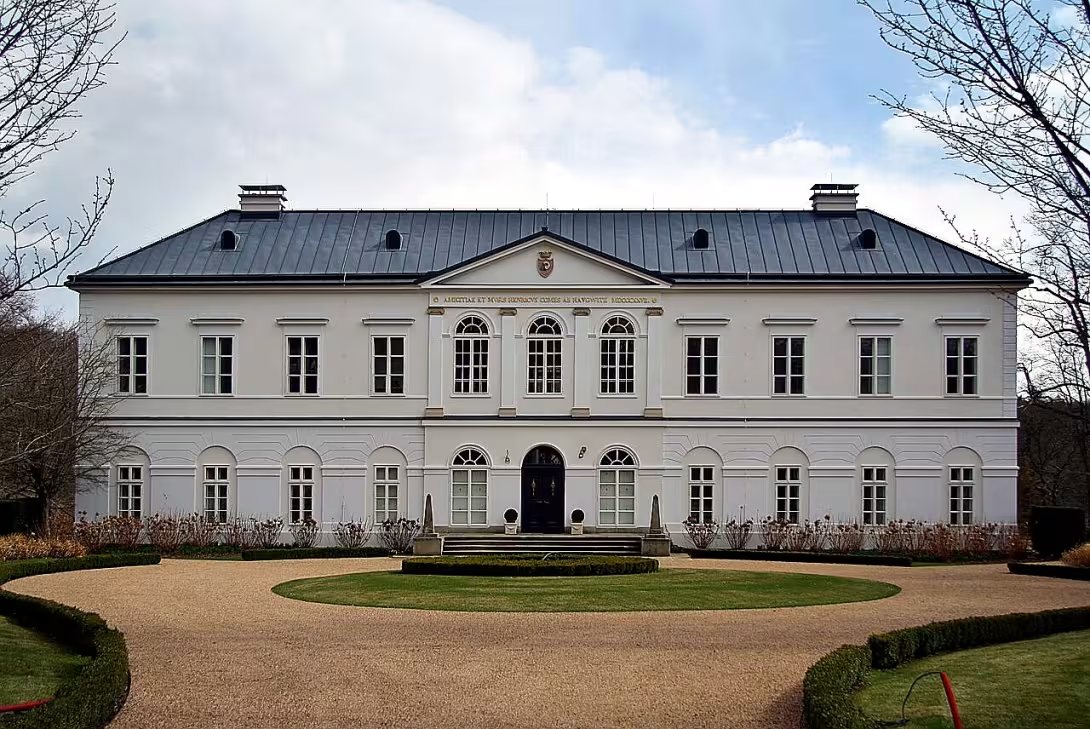
The Schönwald Chateau is located on the edge of the Jinošov, just three kilometres northeast of the Square above the Celebra. It is a storey building of a rectangular plan with dimensions of 36.3 × 19,55 meters, which is today protected as a cultural monument. The dominant role on the facade is the Haugwitz family character accompanied by the Latin inscription "Amicitiae et musis" (For friendship and muses) with the date MDCCCXXVII.
The site of today's chateau was originally a pheasant with a single storey construction, which is first documented in 1775. In the late 18th century, from 1795 to 1798, this place underwent a major transformation under Haugwitz's patronage. The old residence turned into a comfortable summer residence, and the surrounding landscape was given the character of the English park. The key moment came only after Henry Wilhelm Haugwitz, when between 1826 and 1829 he was converted to a classical chateau according to the designs of architect Josef Kornhäusel. A comprehensive revitalisation of the park was also part of the reconstruction, which included various small buildings called the Salets - especially the Silvan Temple, the Apollo Temple and Diana's gazebo. The park was functionally divided into two parts; one of them is now used as a tax branch managed by the Forests of the Czech Republic.
Haugwitz's chateau belonged until 1945. At the end of World War II, it was used by refugees who hid from the advancing Red Army. The same year, the object was nationalized on the basis of the Beneš Decrees. The following decades have brought many interesting uses - from the scouts who held forest schools here between 1945 and 1947, to the home of mining apprentices, to the working preparation for university applicants, to long-term operations as a home for pensioners and, in particular, the Social Welfare Institute. He lived here from 1966 until the tragic accident in February 2008, when the ceiling of one of the rooms fell and seriously injured the client. This incident led to the evacuation of all remaining residents and the gradual transformation of services into six new homes in the Vysočina Region.
In recent years there has been a change in the fate of the chateau. The new owner gradually renovated it and the building remains privately owned. The forest park around it had a significant renewal - in 2012, the forests of the Czech Republic made complex modifications on an area of 36 hectares, created new forest trails, built wooden bridges, and planted over 3,000 new trees. Visitors can get here through the II / 392 road coming from the near II / 399 direction to Kralice nad Sladva. / p >
Then and now
Drag the slider to compare how the landmark may have looked when it was built with the view today.
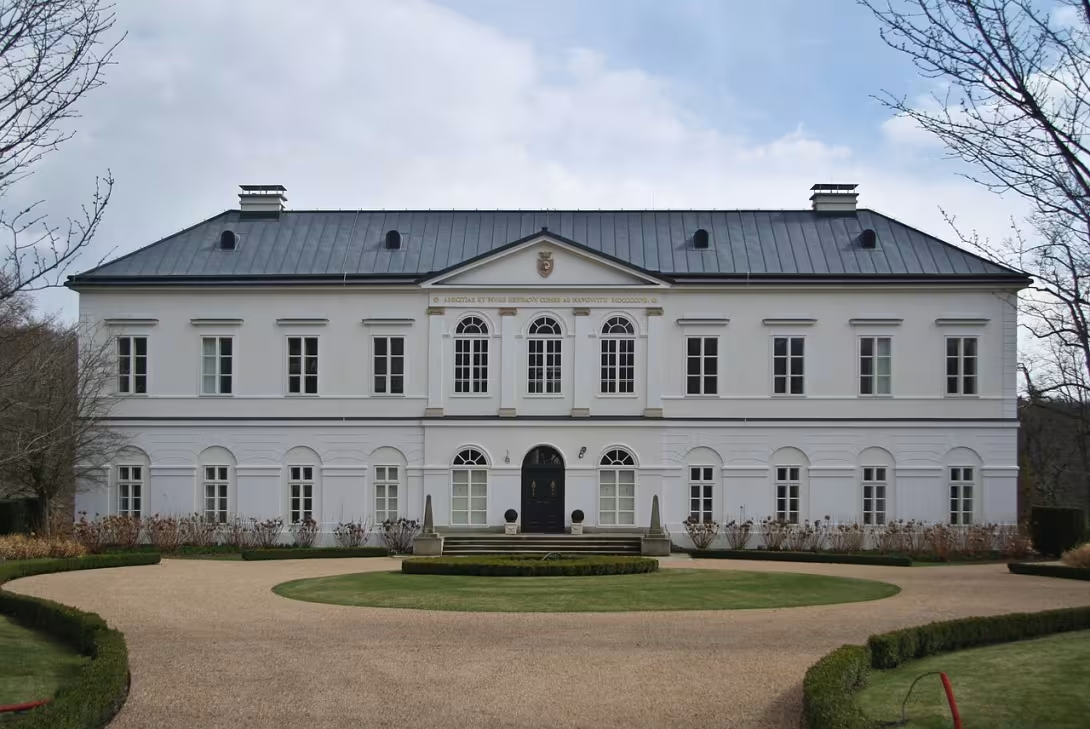
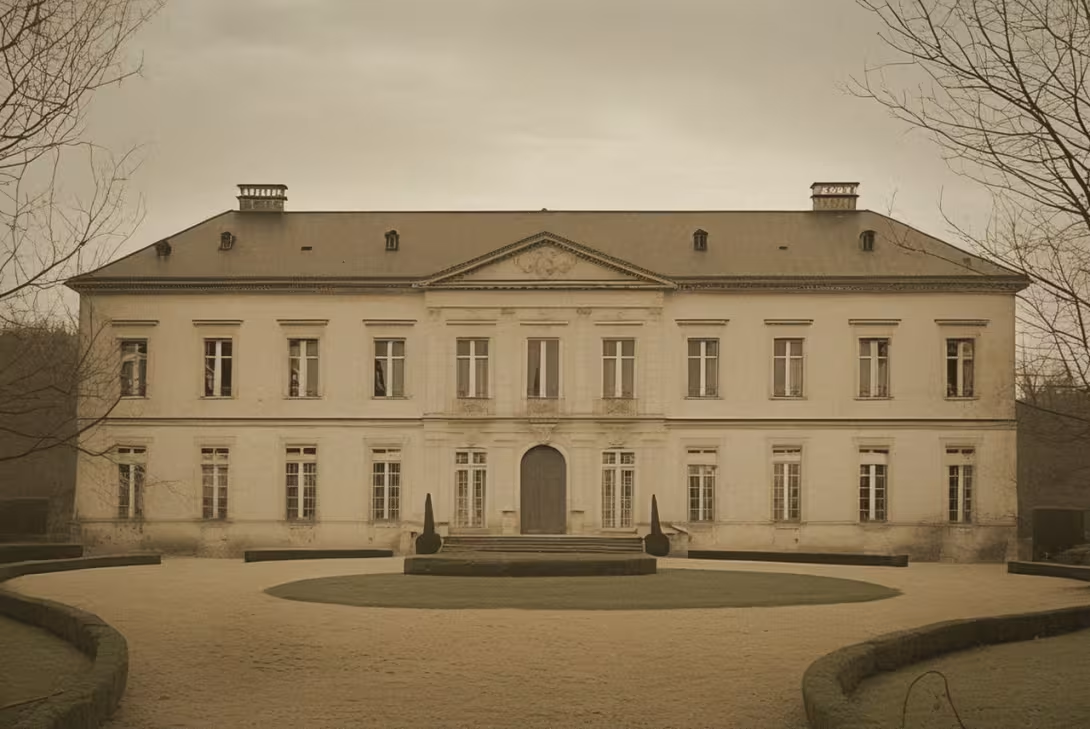
The historical appearance on the left is an AI-generated visualisation and serves as inspiration only.
Historical milestones
- 1775
- The first proof of a pheasant's landing.
- 1826
- Opening of the rebuilding of the mansion into a classical chateau.
- 1945
- The chateau is known on the basis of Beneš's decrees.
- 2008
- The fall of the ceiling in the building and the evacuation of clients of the Social Welfare Institute.
Architectural development
The site was originally hosted by an underground pheasant who was transformed into an English park in 1795-1798. The main reconstruction took place in 1826-1829, when the current classical chateau was created according to the plan of Josef Kornhäusel. There are also romantic buildings in the park, such as various salets.
Historical events
In 1826-1829 there was a fundamental reconstruction of the mansion into a classical chateau. In 1945 the chateau was nationalized on the basis of Beneš's decrees. In 2008, the ceiling fell and the Institute's clients evacuated.
Owners
Rod Haugwitz (until 1945), State (from 1945), private owner (present)
Points of interest
- The chateau is a storey building of a rectangular plan which is protected as a cultural monument. - At the site of today's chateau, it was originally a pheasant with one-story construction. - From 1826 to 1829 the building was rebuilt into a classical chateau according to the designs of architect Josef Kornhäusel. In February 2008, the ceiling of one of the rooms fell and seriously injured the client, which led to the evacuation of the residents. - In 2012, complex modifications took place in the forest park, where over 3,000 new trees were planted.
Guide
This guide is narrated by a synthetic voice generated by artificial intelligence.
Show guide text
This text was created by artificial intelligence and has not been editorially reviewed. It may contain inaccuracies.
Welcome to Chateau Schönwald. You are standing in one of the most picturesque corners of Vysočina region, right next to Jinošova, where history is bound to the calm of nature. In front of your eyes is a building that carries traces of many different epoch and destiny. Before we take a deeper tour, please observe the atmosphere of this place. You are on the edge of an extensive English park whose structure and vegetation have been designed to harmonically complement the architecture of the mansion. Do you feel the special combination of nobility and melancholy? This is precisely because this chateau was not just an ordinary house, but a witness to the transformations that followed our countries for centuries.
Now let's go back to the deep past to understand where this object comes from. Perhaps you'd be surprised that this storey chateau was not created as a luxury summer residence for nobles. If we went back to 1775, we'd only find a modest, ground-floor building here. At the time, there was no chateau, but a pheasant. It was a practical object intended to breed animals, which served as part of his estate to the native owner. Imagine this place two hundred and forty years ago - instead of silence and classicist elegance, there was probably a rush of hunting and natural chaos.
Over time, however, the needs of the family nobles have changed. The House of Haugwitz, which was closely connected to this place, decided that their original pheasants were no longer enough for their ambition and lifestyle. They wanted a representative summer home, a place where they could relax and receive guests in a dignified environment. So began one of the most important chapters in the history of this place.
Now pay attention to the construction itself, which is right in front of you. A major reconstruction took place between 1826 and 1829, which completely transformed the face of this building. The original single storey pheasant became a storey lock. This whole process was managed according to the designs of an important architect at the time, who was Josef Kornhäusel. If you look at the building now, notice its rectangular plan. This geometric purity and symmetry are the fundamental pillars of the classical style which Kornhäusel masterfully worked through.
Notice how balanced the building is. Classicism relies not on unnecessary decorative surplus, but on order, proportion and peace. Even if you look at the finished building today, in your mind, imagine the transformation where a simple rural building becomes a sophisticated mansion. It was this architecture that was supposed to express the stability and culture of the House of Haugwitz. The building was designed to govern its surroundings, and even after years, I still hold on to this dominance in the park.
But Henry Wilhelm Haugvitz's personality is behind this magnificent architectural work. He was the key figure in this transformation. For the House of Haugwitz, Schönwald was not just a building, it was a symbol of their position and tasteful connection with nature within this English park. Imagine those times when there were festivities in these areas, when nobles were walking in the surrounding gardens and the chateau was the center of social life in this part of the region.
However, the history of the chateau is not just a story of ascension and luxury. It is also a story about relentless changes in political and social order. After World War II, a time came that fundamentally changed the ownership of many noble settlements. In 1945 the chateau was known on the basis of Beneš's decrees. This meant the end of an era when the building was in the hands of the Haugwitz family, and started the period when the chateau became the property of the state and began to serve completely different, not aristocratic purposes.
During the 20th century the function of the chateau was constantly changing. The place where the nobles once lived became a place for various social needs. For example, the chateau served as a base for the Boy Scouts camps, which gave it a completely different, youth and adventure full of energy. Later, however, the building became a social welfare institution. This change saw the chateau no longer as a symbol of power, but as a place of service and care for people in need.
However, difficult times have also been linked to this new use. If we continue on our timeline, we will encounter a very dramatic year of 2008. This event remains in the memory of local and historical monuments as a deep blow. Because the ceiling fell in one of the parts of the building. This accident was so serious, it had to be evacuated immediately by all the social security clients. This moment reminds us how fragile history can be and how much depends on the state of matter that keeps these stories.
But now I want to invite you to think about one interesting thing that is still hanging in the power room. Think about how many different life fates have met in these walls. From bird hunters in the eighteenth century, to ambitious nobles and brilliant architects, to people looking for help in the modern era. Each layer of plaster, every stone in a rectangular plan of the chateau, carries a print of someone who's ever been here. The Schönwald Chateau is not only a static monument, it is a living organism that was constantly changing along with the people who inhabited it.
Today, this building is protected as a cultural monument, which means that its classical face and historical value are preserved for future generations. Although the building has been through many difficult times, it still stands here and reminds us of its noble past and complicated present.
I hope this short journey through time and space has helped you better understand what you see before you. It's not just a building made of stone and mortar, it's a chronicle of transformations. Please continue to walk around the chateau and explore the English park. Feel the silence, observe the details of the architecture and let yourself drift through the atmosphere of this place. Thank you for your attention and I wish you a pleasant further encounter with history in Jinošov. I'll say goodbye and have a nice day.
Tips for visitors
The best time to visit Schönwald is spring and autumn, when the English park is full of green and autumn colors, but the weather is still favourable for walks. In summer it may be hot in the park, so choose the morning or evening hours. In winter, the chateau and its surroundings offer a quiet atmosphere, but part of the park may be less accessible due to snow and mud.
Traffic to the monument is the easiest of your own car. In Jinošov, where the chateau is located, there is no large central parking lot directly at the entrance, so it is advisable to park in the immediate vicinity of the mansion or on local parking areas in the village. If you decide to go by public transport, the destination is Jinošov; Check the current connection and departure times in the timetable search engine.
Don't forget to take comfortable shoes to the park for walks on grassy areas and paths that can be slippery after rain. We recommend taking with us drinks and light refreshments, as vending machines or restaurants may not be available in the immediate vicinity of the chateau. For better orientation in the English park, which has looser treatment than formal gardens, a map or mobile navigation is useful.
For photography is ideal morning or late afternoon light, which hits the facade of the chateau at a soft angle and highlights the classicist elements of the building. The most beautiful pictures can be obtained from the edges of the English park, where the trees intersect with the outline of the chateau. Avoid the sharp midday sun, which creates hard shadows and can dazzle the object.
In the surrounding area, at a distance of about 30 minutes, is located Obora Jinošov (Beautiful Forest), which is a great choice for further walking and watching the wild game. The town of Náměště nad Záslavou is located nearby, where you can visit local sights and refresh yourself. For families with children, Obora Jinošov is an ideal supplement to visit the chateau because it offers space for free movement and contact with nature, while the chateau and its park provide historical context.
Frequently asked questions
Is Schönwald open to the public?
The chateau and park are generally accessible to visitors. We recommend to learn about possible time limits or events on the official site of the monument before leaving.
How do I get to the place by car / public transport?
The chateau is easily accessible by car thanks to the proximity of road II / 392. For public transport use online search engines or check with local tourist institutes about current connections.
How much is the entrance fee and is it paid on the spot?
The entrance fee is usually paid on entry, the specific prices can be found on the official site of the chateau Schönwald.
Is the tour suitable for children and seniors?
The tour is accessible for both children and seniors. The park offers various possibilities for relaxation and active outdoor stay.
How long does the tour take?
The visit time depends on how much time you want to spend in the park and what activities you plan to do. For walking around the chateau and park is generally 1-2 hours sufficient.
What are the opening times and booking is required?
Opening hours may vary depending on the year. We recommend to check current information about opening times and booking options before visiting.
What's interesting in the immediate vicinity?
In the vicinity of the chateau Schönwald there is a large park with forests, which is part of the revitalization project of the Forests of the Czech Republic. It is an ideal place for relaxation and activity in nature.
For kids
Hello, young adventurers! Today, the door to the past opens exactly 200 years ago, when the magnificent chateau Schönwald was built. Here, in the picturesque village of Jinošov, stands a beautiful building that seems to be carved out of dreams. It's like knocking on a door to another world, waiting for stories full of secrets and beauty.
Businesses nearby
Do you run a restaurant, accommodation, shop, museum, rental, wellness or other visitor service near this monument? Show yourself directly to the people heading to it — this is how they will see you in the app and on the web:
Nearby
Obora Jinošov (Beautiful Forest)
Accommodation nearby
Themed route
1. Nazemite over Celebration , city. This place serves as an ideal introduction to exploring local history. 2. Obora Jinošov (Beautiful Forest) , natural area. Walk in this area will allow you to relax in nature before visiting the sights. 3. Schönwald (lock) , lock. The main destination of a trip that captures you with its architecture.
Seasonal recommendations
Spring: In the spring season Schönwald Chateau in Jinošov is transformed into a magnificent flower paradise when nature awakens from its winter sleep. The sun illuminates newly grown leaves and flowers, creating a wonderful background for exploring historical corners of the chateau. At this time, the first crowds of tourists may appear, but it is still possible to find quieter moments in the early morning or evening. It is recommended to visit with light clothes and shoes suitable for changing weather, because spring days may be warm, but at night they cool quickly.
Summer: For years, Schönwald is best found in its full summer beauty. The sun rays illuminate every stone of the chateau and the surrounding forests turn into a living color, providing an ideal background for photography or relaxation in adjacent meadows. Summer is also the period of the biggest visitors, especially in the main summer season when the chateau becomes a popular destination for families and tourists. It is recommended to accept an earlier afternoon to avoid the largest crowds, and to avoid missing sun cream and sun protection hat.
Autumn: In the autumn months the Schönwald chateau becomes melancholic but beautiful atmosphere. Tree leaves turn into hot colors and shading illuminates historical architecture in a special way. This period is ideal for quieter walks as the number of visitors decreases compared to the summer period. It is recommended to wear warmer clothes and suitable shoes because autumn can be cold and wet. Also remember the camera or the instant book for enjoying the beauty of this period.
Winter: During winter Schönwald reaches an atmosphere full of peace and mystery. The chateau in illuminated interiors and surrounding snow landscape creates a lovely winter scene. In advent time can become a place for relaxation before Christmas holidays, although specific events are not listed. The winter visit requires warm clothes and a suitable view of the shorter opening time, because the lock may not be fully accessible this season. Remember to take the snow cover camera and illuminated interiors.
Visualizations and artistic views


The visualisations are generated by artificial intelligence and serve as inspiration.
Photos from the area
Real photos taken near the monument


Zdroj a licence jsou uvedeny u každého snímku.
Tips from visitors
No tips yet. Be the first!
Log in and add your tip.
Sources and literature
Fotografie: Jiří Sedláček / CC BY-SA 4.0 — Wikimedia Commons. The author and licence also appear when you hover over the image.
Faktickým podkladem tohoto textu byl článek na Wikipedii, jehož autory jsou přispěvatelé Wikipedie. Článek je dostupný pod licencí CC BY-SA 4.0.
Location on the map

Příběhy a pověsti
Legendy, pověsti a příběhy spjaté s touto památkou
Fotografie návštěvníků
Zatím žádné fotografie. Buďte první, kdo přidá fotografii z návštěvy!
Přihlaste se a přidejte svou fotografii nebo hodnoťte.
Za ověřenou návštěvu v aplikaci získáte víc bodů — poznáme podle GPS, že jste na místě.
Reviews and comments