






Šebín Ruin
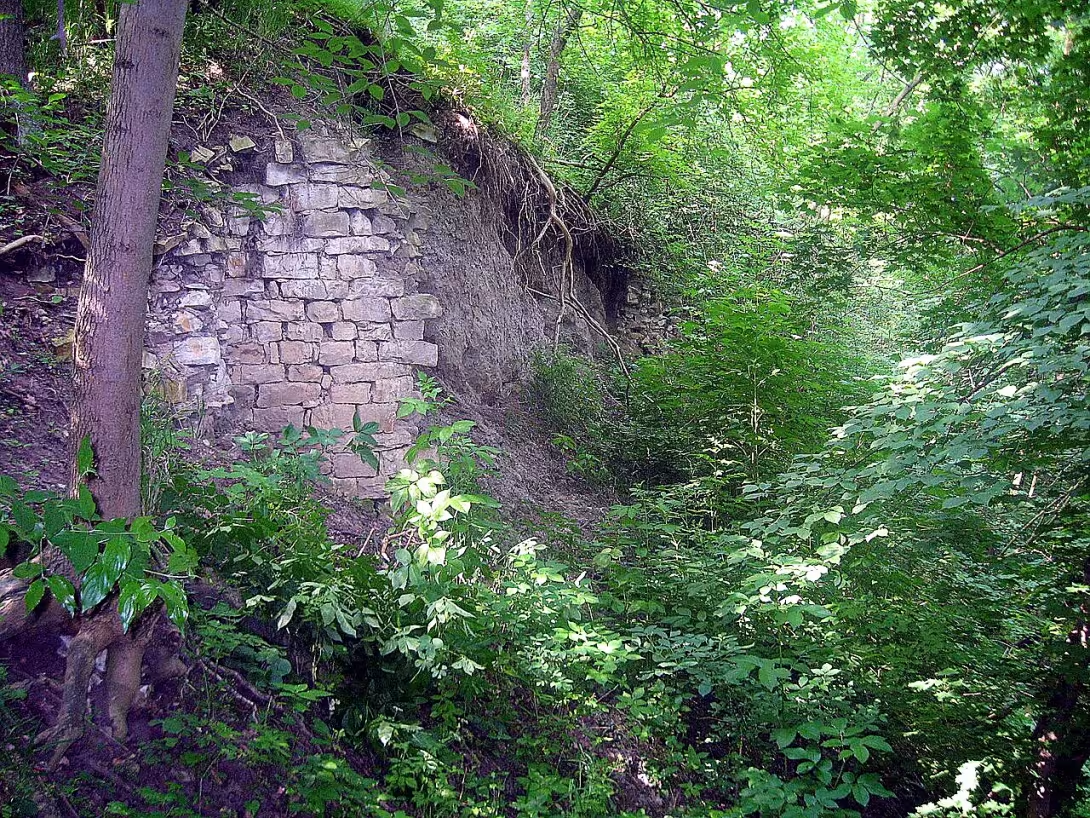
Šebín is a historical monument located in Levousy, within the Křešín district of Ústecký kraj, Czech Republic. The site features ruins of a 14th-century noble castle, notable for its strategic position near an older Bronze Age fortification. Remnants include ramparts and parts of defensive walls, reflecting its past as a small knightly fortress on the boundary between castles and strongholds.
The origins of Šebín are somewhat ambiguous. Historical sources suggest it may have been constructed by the Páni ze Mšeného in the 13th century. The name "Šebín" is derived from personal names such as Šeba or Šebestián. August Sedláček speculated that the castle was built during this period, although concrete evidence remains elusive. By the mid-14th century, Jan ze Šebína became associated with the site, granting land rights in Křešín in 1362 and serving as a patron of the local church by 1374.
Architecturally, Šebín featured an oblong tower with slightly rounded southern walls. The castle's defenses included square watchtowers on its northern and western sides, functioning as pilasters to fortify the surrounding wall. A two-room structure was attached to the main tower from the west, while a south-facing entrance was protected by ramparts. The site is separated from an adjacent Bronze Age fortification by a moat, adding to its defensive complexity.
Ownership of Šebín changed hands several times over the centuries. After Jan ze Šebína's tenure, Předbor z Dubé became associated with the castle in 1405. Subsequently, Vilém Zajíc z Házmburka acquired it and integrated the estate into his holdings. By 1564, when Jiří Zajíc z Házmburka sold the property to Jan nejstarší z Lobkovic, Šebín was already listed as deserted. This decline likely began in the 15th century, with its function as a residential site diminishing over time.
Key events at Šebín include its first documented mention in 1362 when land rights were granted by Jan ze Šebína. By 1564, it had become a deserted site, reflecting broader historical shifts within Bohemia during the Holy Roman Empire era. The castle's name later transferred to a nearby forest, marking its transition from an active fortification to a historical relic.
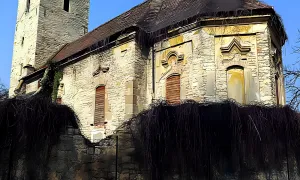
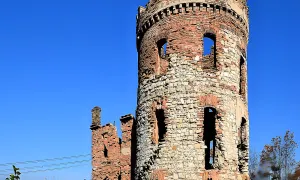
Today, visitors can explore the remnants of Šebín, which include preserved ramparts and fragments of defensive walls. Its proximity to natural features such as a steep northern slope adds to its allure. As a site that encapsulates medieval architectural practices and regional history, Šebín offers valuable insights into the past for those interested in Czech heritage.
Šebín stands as a testament to the region's historical evolution, inviting visitors to reflect on its storied past while appreciating its serene present state. Its ruins provide a tangible connection to the noble families who once inhabited this strategic location, making it a worthwhile destination for history enthusiasts and casual explorers alike.
Then and now
Drag the slider to compare how the landmark may have looked when it was built with the view today.
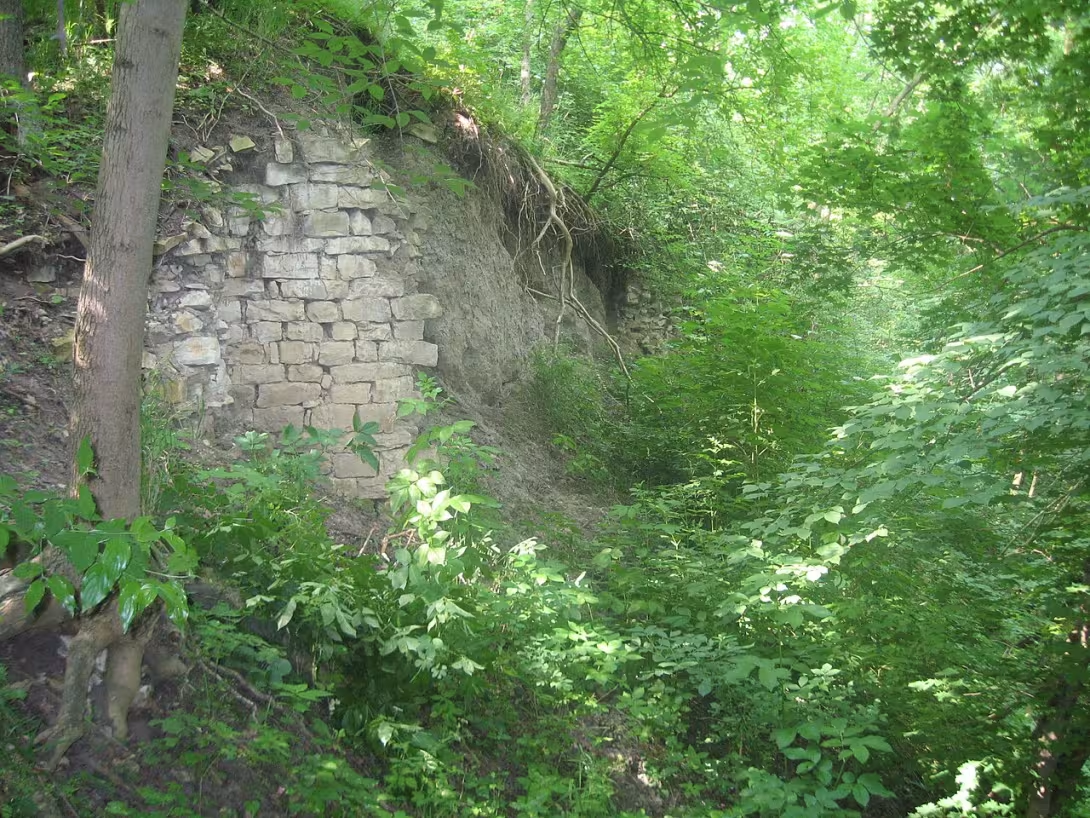

The historical appearance on the left is an AI-generated visualisation and serves as inspiration only.
Historical milestones
- 1362
- Jan ze Šebína granted land rights in Křesín.
- 1374
- Jan ze Šebína was a patron of the church in Křesín.
- 1405
- Předbor z Dubé associated with Šebín.
- 1564
- Šebín listed as deserted when sold by Jiří Zajíc z Házmburka.
Architectural development
The castle featured an oblong tower with slightly rounded southern walls and was fortified by square watchtowers on the north and west. The main entrance faced south, protected by ramparts. A two-room structure attached to the tower from the west.
Historical events
First mention of Jan ze Šebína in 1362, granting land rights.
Šebín listed as a deserted site by 1564.
Owners
Páni ze Mšeného (13th century)
Jan ze Šebína (1362-1374)
Předbor z Dubé (1405)
Vilém Zajíc z Házmburka (after 1405)
Házmburkové family
Jan nejstarší z Lobkovic (1564)
Points of interest
- Despite its association with the 14th century, the origins of Šebín are linked to the 13th-century Páni ze Mšeného, highlighting a historical ambiguity that adds mystery to its early development.
- The name "Šebín" itself is derived from personal names like Šeba or Šebestián, suggesting that it may have been named after an influential figure of the time, which reflects the common medieval practice of naming places after notable individuals.
- A unique feature of Šebín's architecture was its oblong tower with slightly rounded southern walls and square watchtowers on its northern and western sides, showcasing a blend of defensive strategies typical of small knightly fortresses from that era.
- The castle's proximity to an older Bronze Age fortification, separated by a moat, indicates the strategic importance of this location throughout different historical periods, highlighting how successive cultures valued and utilized the same geographic advantages.
- After falling into disuse in the 15th century, the name Šebín was transferred to a nearby forest, illustrating how places can evolve from active settlements to historical landmarks, with their names living on through natural landscapes.
Guide
This guide is narrated by a synthetic voice generated by artificial intelligence.
Show guide text
This text was created by artificial intelligence and has not been editorially reviewed. It may contain inaccuracies.
On the eastern edge of the village of Levousy, at an altitude of two hundred metres, lie the remains of the castle Šebín. It was a small noble residence from the fourteenth century, which stood right next to a much older hillfort from the early Bronze Age. From the castle, only earthen ramparts and small fragments of the castle wall have been preserved.
The name Šebín comes from the personal name Šeba, or Šebestiān. When the castle was built is uncertain. The historian August Sedláček believed it was built by the lords of Mšené already in the thirteenth century. In the year 1279, Půta of Mšené was called by the name Rýzenberg, and it was precisely this that Sedláček considered to be the castle's original name.
The name Šebín first appears in the year 1362. At that time, Jan of Šebína granted his subjects in Křesín twenty manors with purchase rights. Twelve years later, in 1374, the same Jan is mentioned as patron of the church in Křesín. In the year 1405, according to Šebín, Předbor of Dubá, marshal of Queen Žofie, was named. His son of the same name then sold the "fortress Šebín" to Vilém Zajíc of Házmburka. Only this report explicitly mentions the castle for the first time as a property. The estate then included a farm and the villages of Křesín, Levousy and Horka.
The Házmburks initially connected the Šebín estate to Budyně and later to Mšené. When in the year 1564 Jiří Zajíc of Házmburka was selling the Mšené estate to Jan the eldest of Lobkovic at Zbiroh, Šebín is already mentioned as deserted. As a residence it probably disappeared already during the fifteenth century. But its name survived, as it was transferred to the forest in which the castle stood.
A moat separates the castle from the neighbouring hillfort. Its area has a pear-shaped form. The original approach led from the south, and on this front side, remnants of rampart walls remained. The core of the castle was a rectangular tower with a slightly rounded southern wall. From the west, a building with two rooms was attached to it. The perimeter rampart on the north and west sides was reinforced by square towers that served as pillars. From the north, by the Ohře River, a steep slope protected the castle. It is precisely there that masonry of the castle wall has been preserved in two places.
Šebín was a small castle that stood on the border between a castle and a fortress.
Frequently asked questions
Can the monument be visited?
This is a ruin. Such sites are often freely accessible, but some can only be visited with a guide or are closed for safety reasons. We have not verified the current situation – take care and respect any restrictions.
Where is the monument?
Location: Levousy, Ústecký kraj. The map on this page shows the exact spot.
Why is the monument protected?
It is listed in the Central List of Cultural Monuments of the Czech Republic as a cultural monument (register no. 14680/5-2036).
Businesses nearby
Do you run a restaurant, accommodation, shop, museum, rental, wellness or other visitor service near this monument? Show yourself directly to the people heading to it — this is how they will see you in the app and on the web:
Events nearby


Zdroj akcí: otevřená data měst a obcí ČR (Národní katalog otevřených dat) a kalendář akcí Národního památkového ústavu.
Nearby
Located near an older Bronze Age fortification, Šebín is surrounded by natural features including a steep slope on its northern side. The area includes the villages of Křesín, Levousy, and Horka.
Accommodation nearby
Themed route
Tematická výletní trasa: Zřícenina Šebín a okolí
1. Zřícenina Šebín
Typ: Historická zřícenina
Proč stojí za návštěvu: Tato zřícenina, nacházející se v obci Levousy, je fascinujícím svědkem minulosti s přírodním okolím ovlivněným starověkou bronzovou hradbou. Její umístění na strmém svahu nabízí jedinečné pohledy a vhodné podmínky pro zkoumání historických struktur.
2. Křesín
Typ: Vesnice
Proč stojí za návštěvu: Křesín, blízký Šebínu, je malebná vesnice s bohatou historií a tradicemi. Navštívte její klidné uličky a prozkoumejte místní architekturu, která odráží dlouhou historii regionu.
3. Levousy
Typ: Vesnice
Proč stojí za návštěvu: Levousy je centrem této trasy a nabízí pohodlné zastávky pro odpočinek nebo jídlo. Místní obyvatelé jsou známí svou přátelskostí, což vytváří ideální prostředí pro zpomalení a užití místních gastronomických specialit.
4. Horka
Typ: Vesnice
Proč stojí za návštěvu: Horka, nacházející se nedaleko Šebína, je známá svými přírodními krásami a historickým pozadím. Je to ideální místo pro relaxaci a prozkoumání místních zvyků a tradic.
Pořadí trasy:
Začněte v Levousy, kde se připravte na své dobrodružství. Poté se pustíte do cesty směrem k historické zřícenině Šebín. Po prozkoumání Šebína pokračujte do blízké vesnice Křesín, abyste si užili její klid a historii. Následně se vrátíte zpět k Levousům, nebo pokud máte čas, prozkoumejte další vesnici Horka před návratem do Levousů pro uzavření vašeho výletu.
Seasonal recommendations
Spring: Visiting Šebín during spring offers a unique experience as the ruins are enveloped by vibrant greenery and blooming wildflowers, creating a picturesque landscape that enhances the historical ambiance of the site. The soft light filtering through budding trees casts an ethereal glow on the ancient stones, perfect for photography enthusiasts. This season is ideal for those who appreciate nature's renewal, but it can also attract families enjoying outdoor activities. To make the most of your visit, wear comfortable walking shoes and layers to adapt to changing temperatures throughout the day. Arriving early in the morning or later in the afternoon helps avoid larger crowds that gather during peak daylight hours.
Summer: Summer at Šebín is characterized by long days filled with warm sunlight that accentuates the textures and details of the ruins, making it a popular time for tourists seeking to explore historical sites. The lush surroundings are vibrant, but visitors should be prepared for potential heat and crowds, especially during the main summer season. To ensure comfort, wear light, breathable clothing and bring sun protection such as hats and sunscreen. Arriving early in the morning or planning your visit towards the end of the day can help you enjoy a more tranquil experience away from the midday bustle.
Autumn: Autumn brings a stunning transformation to Šebín with its rich tapestry of reds, oranges, and yellows as the leaves change color. This seasonal shift creates a warm, inviting atmosphere that complements the historical aura of the ruins, making it an ideal time for photography and leisurely walks. The cooler temperatures are perfect for exploring without the discomfort of summer heat. Visitors should dress in layers to accommodate fluctuating weather conditions and consider bringing a light jacket or sweater as evenings can be chilly. This is also a quieter season compared to summer, offering a more peaceful visit.
Winter: Winter at Šebín presents a serene and mystical experience with snow-covered ruins that create a dramatic contrast against the stark landscape. The site takes on an almost fairy-tale quality under the soft winter light, providing a unique backdrop for photography or quiet reflection. Dress warmly in insulated layers, wear waterproof boots, and bring gloves and hats to stay comfortable during your visit. Planning your trip on a clear day can enhance the experience with better visibility of the ruins against a crisp winter sky.
Visualizations and artistic views


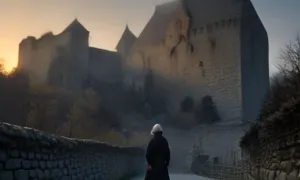
The visualisations are generated by artificial intelligence and serve as inspiration.
Photos from the area
Real photos taken near the monument


Zdroj a licence jsou uvedeny u každého snímku.
Tips from visitors
No tips yet. Be the first!
Log in and add your tip.
Sources and literature
Photos: Gortyna / CC0 — Wikimedia Commons. The author and licence also appear when you hover over the image.
Faktickým podkladem tohoto textu byl článek na Wikipedii, jehož autory jsou přispěvatelé Wikipedie. Článek je dostupný pod licencí CC BY-SA 4.0.
Location on the map

Příběhy a pověsti
Legendy, pověsti a příběhy spjaté s touto památkou
Fotografie návštěvníků
Zatím žádné fotografie. Buďte první, kdo přidá fotografii z návštěvy!
Log in a přidejte svou fotografii nebo hodnoťte.
Za ověřenou návštěvu v aplikaci získáte víc bodů — poznáme podle GPS, že jste na místě.
Reviews and comments