



Šipín Hillfort
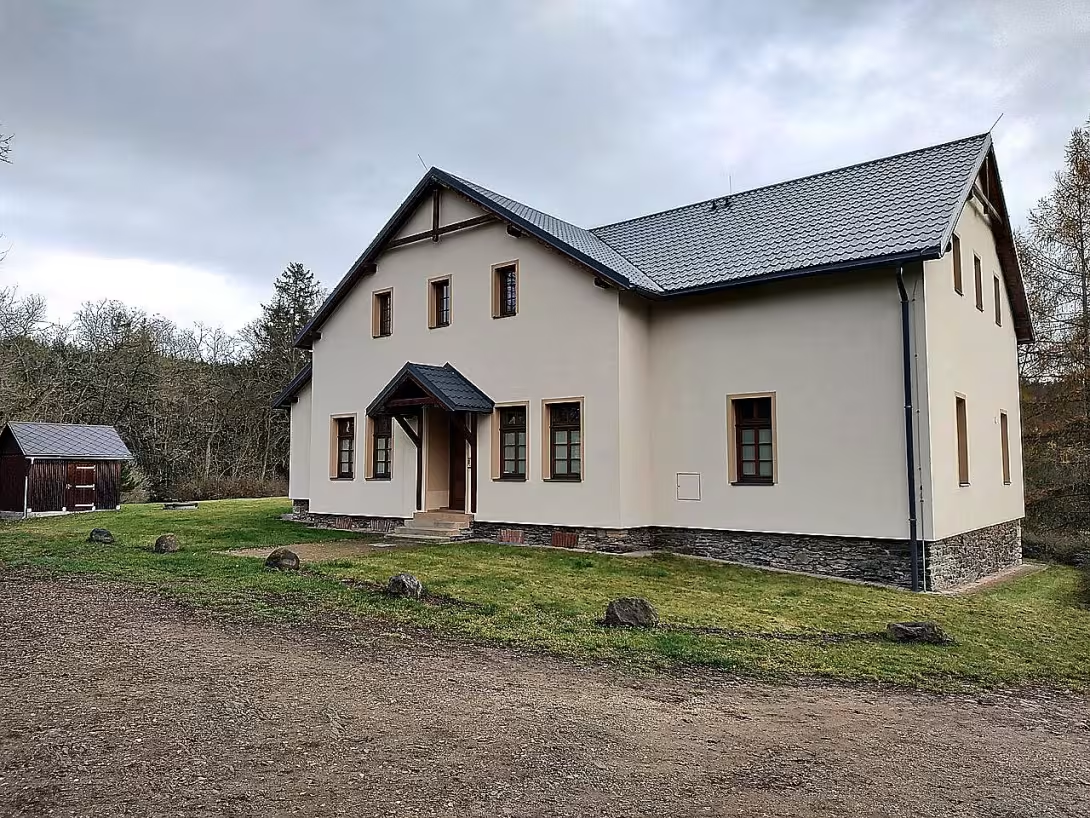
Šipín is an early medieval fort near the village Konstantinovy Lázně in Tachov district. It lies on the edge at 435 meters above sea level, surrounded from two sides by the river of Tuesday. Its fortified area is 1.5 hectares. The archaeological findings of the last century confirmed that the peak period of the castle fell into the 10th-13th century, while the first settlement dates back to the late Bronze Age. Since 2006 it has been protected as a cultural monument.
It is assumed that the Šipín was established as a fortified residence at the time of the development of Slavic power in the Czech Republic. According to the findings of ceramics from 1935, its peak period dates back to the 10th to 13th century. He could replace the extinct fort near Bezemín, whose demise is associated with the fire. Older fortifications on the slopes, dated to the Bronze Age, suggest that Šipín could have been built on the site of the extinct site.
The fort was protected by a moat and a pair of wallows. A section of the first wall of eight metres and a height of up to four metres on the outside and one and a half metres inside was preserved. The second wall is only visible as a field wave 12 meters wide. The perimeter wall acted like another wall. There was probably a settlement among the first times. Today there is a settlement Šipín with the church of St. Barbara, which is not part of the original fortification but lies on its territory.
You can reach Šipín by turning from the road from the Roundabout Hradiště to Pernarce, where it leads the cycling route 2206. There are also three tourist routes: yellow leads from Constantine's Spa through Gutstejn and Bezemín Castle, green passes through the valley of Úterský creek and red leads from the warm valley of Hadovka. There are other important locations in the area, such as the ruins of Gutstejn Castle or Bezemín Castle.
Šipín is today an archaeological site that shows early medieval architecture and settlement. Its importance lies in the long settlement from the Bronze to the Middle Ages. Accessibility and proximity of other attractions make this location ideal for trips to the historical environment. Visiting it is worth it for its archaeological importance as well as for the opportunity to know the surrounding nature and other historical sites.
Historical milestones
- late bronze age
- The first archaeological findings of ceramics and traces of fortifications that may indicate early settlement.
- 10th - 13th century
- A significant period of the castle, supported by medieval ceramics from the 20th century.
- 2006
- Registered as a cultural monument of the Czech Republic.
Architectural development
The fort was fortified by a moat and a pair of valleys, from which a section of the first wall of 8 metres and a height of 3-4 metres was preserved. The second wall is captured only as a field wave. The perimeter wall was preserved as another wall. There was probably a settlement in the space between the walls. Archaeological findings suggest gradual exploitation from bronze to the Middle Ages.
Points of interest
- The castle Šipín is situated on the island at 435 metres above sea level and is surrounded from two sides by the river of Tuesday.
- Its fortified area has an area of 1.5 hectares and is protected by a moat and a pair of valleys.
- A section of the first wall of eight metres and a height of up to four metres on the outside was preserved.
- Older fortification on the slopes dates back to the Bronze Age, while the peak period of the fort falls into the 10th to 13th century.
- Since 2006 it has been protected as a cultural monument.
Guide
Show guide text
This text was created by artificial intelligence and has not been editorially reviewed. It may contain inaccuracies.
Welcome to this special place. You are standing in front of an ancient castle called Šipín, located near Constantine's Spa. Take off your backpacks for a while, take a breath of fresh forest air and look around you. Before you, there is a landscape that hides deep core traces of human presence dating back to far past. When you look at the terrain waves and nature, you see peace and quiet, but beneath this surface lies the rich story of our ancestors who chose this strategic place for their life and protection.
Let us now look deeper into history and find out how this wonderful place was created and evolved. The original settlement of this space goes incredibly far back to the past, until the late Bronze Age. It is from this period that the oldest traces of use and the first archaeological findings of ceramics, along with indications of the fortifications at that time, have come to the conclusion that people had been living up to this height centuries ago. However, the most significant period of this castle fell between the tenth and thirteenth centuries. It is from this time that medieval ceramics was discovered by archaeologists during the twentieth century and which helped us to date more precisely the peak era of this castle. Even though the names of the builders and then prominent figures written in chronicles have not been preserved until today and remain covered with a cover of secrets, the work of unknown hands has left a permanent mark. The professional importance of this territory was officially confirmed in the year two thousand and six, when the whole area was included on the list of cultural monuments of the Czech Republic.
Let us now focus on the very form and architecture of what has survived from the ancient fort to today. The place you're standing on was very cleverly chosen with regard to the defense needs at the time. The fort was built on an elevated island level at an altitude of four hundred thirty-five metres. If you look around you, notice the nature of the protection that the Tuesday stream creates. This stream flows around the island from two sides, creating a natural water barrier for anyone who would like to approach the castle. But people in the early Middle Ages relied not only on nature, but also on their own strength and building arts. The whole fortified area of the castle has a respectable area of one and a half hectares. The inhabitants of the former castle secured the place with a deep moat and a massive pair of valleys. If you look carefully at the terrain in front of you, you can see the most significant preserved part of the entire defense system. This is the section of the first wall, the length of which reaches an impressive eight metres and turns on the outside to a height of up to four metres. Imagine the huge woodwork that people had to build without modern machines. These fouls and trenches formed a solid wall that protected the population from external danger.
Although we do not know the specific names of the princes, chieftains or families who have lived here over the centuries, the key story of this place is human tenacity and the ability to use the landscape to its advantage. Imagine living here in the tenth to 13th century. People got up at dawn, managed the surrounding land, manufactured ceramic containers whose fractions left the ground for future generations, and took care of the safety of their community. This fort was not only a cluster of huts, but a centre of power, trade and defence in the wider area. Every stone, every piece of clay and every metre of preserved wall carries a silent story of generations that have lived their lives, joy and worries here.
When you think about it, the castle Šipín carries an interesting secret hidden in its very position and resistance to time. Even though almost nothing has passed since his greatest glory, and almost nothing has been left after wooden buildings, the vast ramparts and deep ditches resist erosion and time to this day. The rare archaeological findings of the 20th century ceramics allowed us to uncover the veil of mystery and confirm that this place lived fully in the early Middle Ages, although its early beginnings extend far deeper into the Bronze Age. It's fascinating to realize that you're standing in a place that people used to protect 3,000 years ago and later built a massive fortress here.
Now we slowly come to the conclusion of our walk together today. I hope you enjoyed the discovery of this historic jewel and that you perceived the strength and atmosphere of this ancient place. When you continue to explore the surrounding forests and paths in the Constantine Spa area, remember the people who walked here before you and left us a link in the form of these massive waves. Thank you for your attention, I wish you a wonderful rest of the day and a pleasant journey on your next wanderings of history. Goodbye.
Tips for visitors
The best time to visit Šipína is in spring or autumn when the weather is pleasant and less visitors. In summer the open castle can be too hot and the sun too strong, while in winter some parts of the monument can be inaccessible due to weather conditions. Morning hours are ideal because there is peace and plenty of light for shooting without shadows.
The pleasant temperatures and smaller crowds allow a more comfortable walk and a better experience of archaeological sites.
It is recommended to arrive by car because public transport to this location is not very common. There is also the possibility to park near the tourist routes that lead to the monument.
When visiting Šipína, wear comfortable shoes and suitable clothes because the terrain is uneven and parts of the fort are in the field. It is also recommended to take with you enough water, because it is not always easy to access drinking water in the surroundings. If you are planning a longer stay, you can pack a light snack, but there is no restaurant or snack stand nearby.
The fort is situated in nature and is not equipped for a comfortable visit without preparation.
Photography is allowed on Šipín, but the best places for quality pictures are from outside the castle, where there is better view and natural background. The best light is in the morning or in the evening when the sun is not directly above your head. If you want to photograph the inner parts of the castle, avoid direct sunlight because shadows can distort detailed findings. Do not forget that some parts are protected and photography can be restricted.
Natural light and exterior views create the most attractive photos.
Within a 30-minute radius of Šipína there are several interesting places worth visiting. The ruin of Gutstejn Castle offers a view of historical architecture and natural scenery. Konstantinovy Lázně itself is a picturesque place with a natural landscape where you can visit the Tuesday stream and the Hadovka Valley. These sites are ideal for a combination of historical and natural experiences.
These places are nearby and add a visit to Šipín by other historical and natural attractions.
For families with children, visit Šipína is a great opportunity to explore history and nature. Children can look at archaeological findings and imagine what the castle looked like in the past. There is also an opportunity to explore natural landscapes such as streams and valleys, which is interesting for small explorers. It is recommended to bring a map or a simple compass so that children can follow the route and learn how to navigate the field.
The castle offers an interactive experience for children and an opportunity to learn in the natural environment.
Frequently asked questions
Can the monument be visited?
This is an archaeological site. Often there is little to see on the ground and the land may be private. We have not verified access.
Where is the monument?
Location: Konstantinovy Lázně, Plzeňský kraj. The map on this page shows the exact spot.
Why is the monument protected?
It is listed in the Central List of Cultural Monuments of the Czech Republic as a cultural monument (register no. 1950776807).
Businesses nearby
Do you run a restaurant, accommodation, shop, museum, rental, wellness or other visitor service near this monument? Show yourself directly to the people heading to it — this is how they will see you in the app and on the web:
Nearby
V okruhu 5 km se nachází zřícenina hradu Gutštejn, hradiště u Bezemína, Konstantinovy Lázně a přírodní krajina s Úterským potokem a údolím Hadovky. V blízkosti se nachází také zeleně a červeně značené turistické trasy.
Accommodation nearby
Trips and activities nearby
Guided tours, tickets and activities nearby from GetYourGuide
Affiliate link: if you buy from the partner, we may receive a commission. The price for you does not change.
Search tours and activities →Themed route
Thematic cruise route: Archaeological site Šipín and surroundings
1. Archaeological site Šipín Type: Historical sites with iron and Slavic age. It's a unique place where you learn about the settlement of this area thousands of years ago. The findings here reveal the life of ancient inhabitants, their craft and culture.
2. The ruin of Gutstejn Castle Type: Ruins of medieval castle, about 3 km from Šipína. It is a picturesque place with well preserved remnants of castle walls and views of the surrounding landscape. Ideal for lovers of medieval history and photographers.
3. The fort near Bezemín Type: Older fort, located about 2 km from Gutstejna. It brings a view of the next top settlement of this area, perhaps even older than Šipín. Suitable for walking and exploring archaeological tracks.
4.Konstantinovy Lázně Type: Small village with historical centre and natural environment. You can see the local architecture and visit the surroundings of the Třečská creek, which is ideal for a short relaxing walk.
5. Snake Valley and Natural Path Type: Natural area with picturesque valley and hiking trails. A walk along a green marked path will guide you through nature and offer a quiet atmosphere. Suitable for relaxation and observation of local flora and fauna.
Seasonal recommendations
Spring Šipín offers a unique atmosphere in spring months when nature wakes up after winter. The sun shines at an angle that illuminates the remnants of ancient buildings quite differently than in other seasons - shadows are longer and light reveals details that often pass unnoticed in summer. The surrounding area is a green meadow, where the first flowers appear between dry bushes. The air is clear, but sometimes there's still a cool wind that reminds us that winter hasn't been completely forgotten. The ideal period for visiting is after the Velikons, when the crowds are not as big as in the summer months. Suitable is light, but laminated clothing - the sun can be sunny, but the morning and evening are cold. Don't forget the sunglasses, because the light reflects from the stones. The best time to visit is in the morning when the place is quieter and you can see the ruins without rush.
Summer In summer months, Šipín becomes one of the most visited places in the area, mainly due to pleasant weather and long days. The sun stands high in the sky, illuminates the ruins directly from the top and creates contrasts between the shadow and the light that are typical of this period. Nature around is lush - meadows are full of flowers, trees are green and the air smells of herbs. But it is because of popularity that crowds need to be counted on, especially in the high summer season. I recommend arriving early in the morning or in late in the afternoon when the place is less crowded. Suitable is light but protective clothing - the sun can be intense, so feel free to wear a hat or sunscreen. Remember enough water because temperatures often exceed 25 degrees.
Autumn Autumn at Šipín brings a magical atmosphere where nature paints itself in golden and red shades. The sun shines lower and its rays illuminate ruins from a different angle, creating long shadows and creating a feeling of mystery. Leaves on trees and bushes fall and cover the earth, which gives the place a calm and mild mood. The air is colder, but pleasant, and sometimes there's a light wind that distracts leaves. This period is ideal for those who seek peace and quiet. Due to lower temperatures, it is advisable to wear warmer clothes, but still light because the days are still sunny. The best time to visit is in September or early October when there is still enough heat, but the crowds are not as big as in summer. In November, the place becomes colder and less visited, but nature is in full autumn beauty.
Winter Winter visit Šipína is unusual for many, but it is during this period that the ruins offer a unique atmosphere. The sun stands low above the horizon and illuminates the remains of ancient buildings quite differently than in other seasons - shadows are long and the place resembles a fairy tale landscape. Nature is covered with snow or wet leaves, which gives the place peace and quiet. The air is cold and clean, but sometimes there's a slight chill that gives the place a magical mood. This period is ideal for those who seek peace and rest. Due to lower temperatures, you need to wear warm clothes, but still light because the days are short. The best time to visit is in December or January when the site is less visited and you can see the ruins in peace. Don't forget the warm clothes and enough time because the winter visit offers a unique atmosphere that cannot be experienced in another period.
Visualizations and artistic views


The visualisations are generated by artificial intelligence and serve as inspiration.
Photos from the area
Real photos taken near the monument


Zdroj a licence jsou uvedeny u každého snímku.
Tips from visitors
No tips yet. Be the first!
Log in and add your tip.
Sources and literature
Photos: Itsd-foto / CC BY-SA 4.0 — Wikimedia Commons. The author and licence also appear when you hover over the image.
Faktickým podkladem tohoto textu byl článek na Wikipedii, jehož autory jsou přispěvatelé Wikipedie. Článek je dostupný pod licencí CC BY-SA 4.0.
Location on the map
More monuments – Konstantinovy Lázně
Show all in the municipality



Příběhy a pověsti
Legendy, pověsti a příběhy spjaté s touto památkou

Fotografie návštěvníků
Zatím žádné fotografie. Buďte první, kdo přidá fotografii z návštěvy!
Log in a přidejte svou fotografii nebo hodnoťte.
Za ověřenou návštěvu v aplikaci získáte víc bodů — poznáme podle GPS, že jste na místě.
Reviews and comments