



Škodův dům House
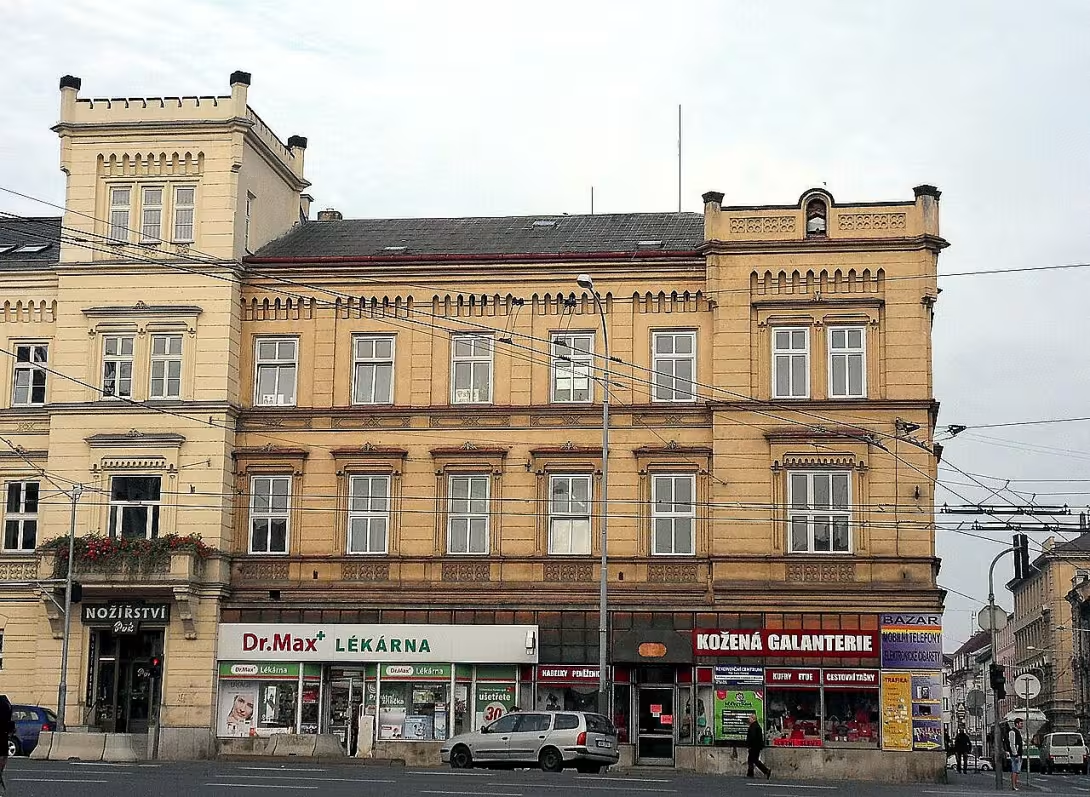
Škodův dům, also known as the House U Work, is a historical monument located in Pilsen in the southern suburb. This neo-gothic object was completed in 1866 and originally served as a family residence for the Hahnenkamm family. Later, the industrialist Emil Škoda settled here, who set up his office. The house represents an important example of Tudor Gothic and was previously luxuriously equipped. At a later time he served as the headquarters of the publishing house Work.
The house was built in 1866 on the area U Work according to the design of Viennese architect Moritz Hinträger. Marie Hahnenkammová, widow of Johann Hahnenkamm, built the house as a family home. The family received the main income from cooking Hahnenkekamma beer. In 1871, Emil Škoda, a new owner of Pilsen machinery plants, settled in the house after marriage to Hermina Hahnenkammova. This has had key consequences for Škoda's businesses by allowing investment in the modernisation of plants.
The architecture of the house is characteristic of the neo-gothic style of Tudor Gothic. The construction took several years and was completed on free land in the central part of the city. The tower portal with decorative cimburi is one of the dominant elements of the building, which consists of a basement, two floors and space at the top of the portal. Originally a self-standing villa was later added to the south side of the houses that formed one side of Klatov Street.
The ownership and administration of the house have undergone several changes. After Marie Hahnenkamm, the house became property of the Skoda family when Emil Škoda rented an office in the building. After 1948, the building was nationalized and served as the headquarters of the publishing house Labour. In the 1990s, the property was transferred to the management of the public estate of Pilsen.
The house witnessed several key events that affected his fate. In 1871, the marriage of Emil Škoda and Hermina Hahnenkamm was concluded here, which had significant consequences for the industrial development of Pilsen. After World War II, the building was transferred to the administration of the state and served as the headquarters of the publishing house Labor, which focused on publishing professional literature.
Today Škodův dům is in the administration of the Public Property Administration of Pilsen. The building is accessible to visitors and is worth visiting because of its historical significance and architectural rendition. Unofficial name of the crossroads U Work, which has entered the memory of the Pilsen people, adds another historical value to the site.
Škodův dům is a reminder of Pilsen's rich industrial and cultural past. Its architecture and history reflect a significant period of the city, when important people like Emil Škoda settled here. Visit this monument and appreciate its beauty and historical value.
Then and now
Drag the slider to compare how the landmark may have looked when it was built with the view today.
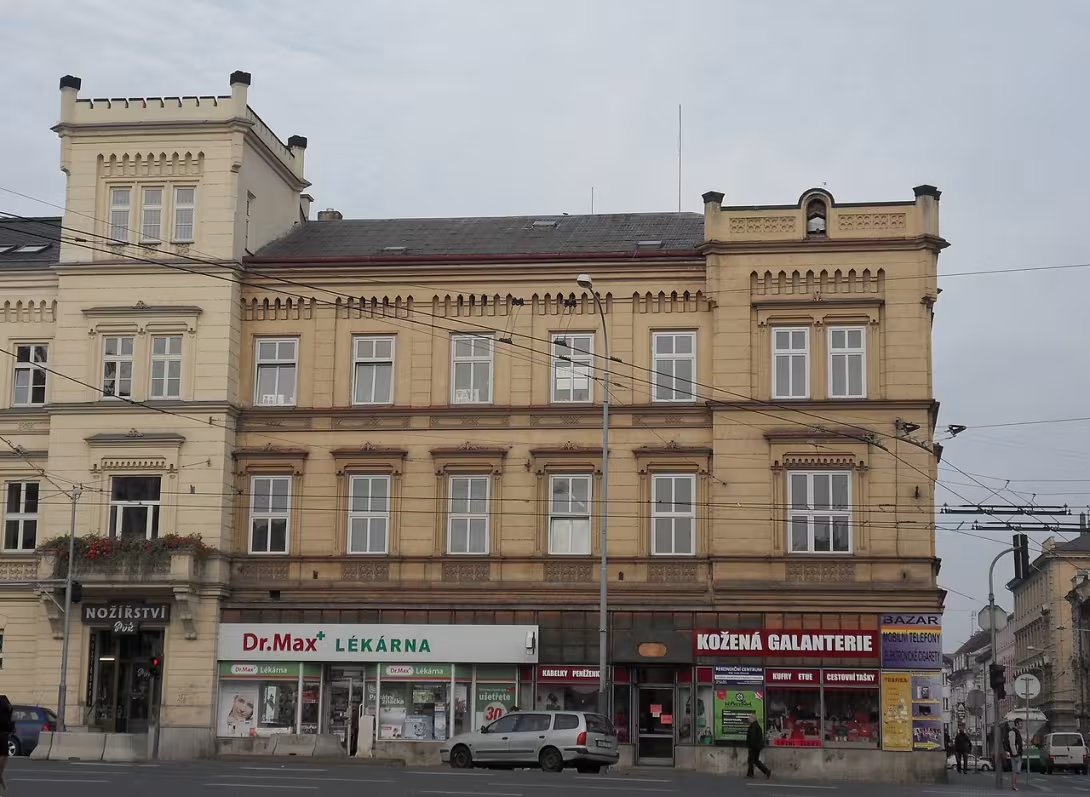
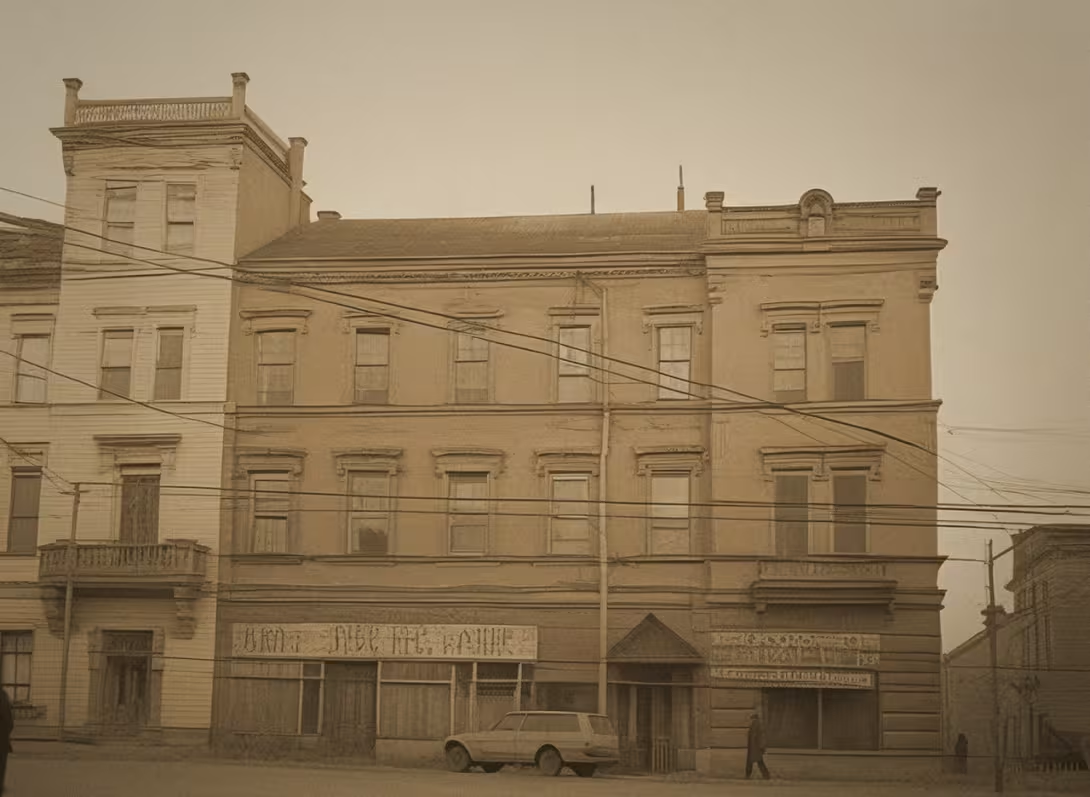
The historical appearance on the left is an AI-generated visualisation and serves as inspiration only.
Historical milestones
- 1866
- completion of the building according to the design of Moritz Hinträger
- 1871
- marriage of Emil Skoda to Hermine Hahnenkamm and his residence in the house
- 1948
- nationalization of the building and creation of bookstores and publishing houses Work
Architectural development
The construction was performed in the style of Tudor Gothic with a tower portal and decorative battlements. Originally it was a self-standing villa, to which the neighboring houses were later added. The interior contained a luxury Oriental and hunting salon.
Historical events
1866: completion of the building of the villa, 1871: marriage of Emil Skoda to Hermina Hahnenkamm, 1948: nationalization of the building.
Owners
Marie Hahnenkammová (from 1866), family Skoda (from 1871), state (from 1948), administration of the public estate of Pilsen (since the 1990s).
Points of interest
- Škodův dům is a historical monument located in Pilsen in the southern suburb. - This neo-gothic object was completed in 1866 and originally served as a family residence for the Hahnenkamm family. - Later the industrialist Emil Škoda settled here, who set up his office. - The architecture of the house is characteristic of the neo-gothic style of Tudor Gothic. - The house witnessed the marriage of Emil Skoda and Hermina Hahnenkamm in 1871, which had significant consequences for the industrial development of Pilsen.
Guide
Show guide text
This text was created by artificial intelligence and has not been editorially reviewed. It may contain inaccuracies.
Welcome to the Skoda House, a unique neo-gothic villa that dominates the peaceful surroundings of the southern suburb of Pilsen. When you enter the space where history meets industrial ambitions, you are surrounded by an impressive facade that bears the traces of the original family home of the Hahnenkamm family. Notice the symmetrical arrangement of windows and ceilings that carry the spirit of the 19th century and remind you that more than one and a half centuries ago, a home was created here to serve as a refuge for a significant noble family. The air carries a light echo of past generations around you, and when you look around, you can also catch the quiet noise of the city street, which complements the atmosphere of the place.
Let's move on to 1866, when the house was completed according to the design of architect Moritz Hinträger. This building represented the effort at the time to create a family residence that would reflect the status and taste of the Hahnenkamm family. At that time, craft and industrial activities were developing in Pilsen and the new construction became not only a private haven, but also a significant symbol of urban modernization. Five years after the completion, in 1871, there was an important family moment in this house - the wedding of Emile Skoda with Hermina Hahnenkamm. Emil Škoda, later industrialist and founder of the famous engineering company, became part of the family whose name the house carried from the beginning. From that moment on, Škodův dům turned into a place where business plans, family pleasures and cultural events met.
Now pay attention to the architecture surrounding you. The neo-Gothic style that characterizes the house draws inspiration from Tudor Gothic, and it manifests itself in narrow niche, pointy windows and rich decorations that decorate the facade. Although details are rather subtle, every stone brick and every cut in the shutters tells the story of careful craftsmanship. Take a look up to the top of the facade, where narrow slender columns and slightly curved lines are alternated, reminding you that the construction was designed with respect to aesthetics and functionality. Note also the roof that protects the inner spaces from rain while maintaining the overall appearance in accordance with the gothic spirit. When you look at the windows, you will notice that they are divided into smaller parts, allowing light to penetrate the interior, creating a pleasant atmosphere that the residents of the house could enjoy during their daily activities.
The key stories associated with this house are closely linked to the personalities who lived and worked here. Emil Škoda, who settled in this house after the wedding, established not only a family home, but also its office, where the first ideas and plans were born, which later became a successful engineering company. His wife, Hermína Hahnenkammová, contributed to the atmosphere of the house with her sense of elegance and hospitality, which was reflected in the feasts and gatherings that took place here. In later years, after 1948, the house was nationalized and transformed into a space for bookshops and publishing houses Work. This new feature brought another layer of cultural importance to the building, as books, newspapers and ideas that influenced public life in Pilsen spread. Every visitor can feel that under the same roof were alternating family pleasures, industrial ambitions and intellectual debates.
An interesting fact, which can attract even the most curious listeners, is that Škodův dům has been luxuriously equipped in the past and was among the most important buildings of its kind in the region. Although no detailed information on specific equipment is available today, it can be imagined that the interiors were decorated with quality furniture, rich fabrics and art items that reflected the status of the family of Hahnenkamm and later industrialist Damage. Another interesting point is that the house, although built as a family home, has witnessed many historical events during its existence, including changes to the political regime and the transformation of the urban structure. This variability gives the building a unique character - not only an architectural object, but also a living archive of the city's memory.
Finally, I invite you to explore this place again. Although you are now in front of the facade itself, you can take the surrounding streets and discover other related buildings that complement the story of the Skoda House. Feel how the historical layers intersect with the modern life of the city, and be inspired by how one house can witness personal fates, industrial innovations and cultural shifts. Thank you for taking the time to listen to this guide, and we wish you a pleasant walk along the historical heart of Pilsen.
Tips for visitors
For the best observation of architecture we recommend a visit on bright days, when the sunlight will highlight the neo-gothic details of the facade beautifully. For photography is the ideal time around sunrise or sunset when shadows are softer and details of the building are better visible.
You can reach the Damage house by car or public transport. Please check the current traffic connections and car options in the Internet search engine or mobile application.
After a tour of the villa you can go for a walk in the area. The roads lead to Ferdinand's class or Klatovy Street. If you are looking for more urban activities, you can continue towards the city centre of Pilsen.
For families with children is a short walk in this part of the city which shows interesting architecture. We recommend to bring comfortable shoes and equipment for capturing photos.
Frequently asked questions
Can the monument be visited?
This is a residential or farm building, not a museum with opening hours. Please view it from public space and respect the owners' privacy. We have no information about access to the interior.
Where is the monument?
Location: Jižní Předměstí. The map on this page shows the exact spot.
Why is the monument protected?
It is listed in the Central List of Cultural Monuments of the Czech Republic as a cultural monument (register no. 1000124845).
Businesses nearby
Do you run a restaurant, accommodation, shop, museum, rental, wellness or other visitor service near this monument? Show yourself directly to the people heading to it — this is how they will see you in the app and on the web:
Events nearby

Zdroj akcí: otevřená data měst a obcí ČR (Národní katalog otevřených dat) a kalendář akcí Národního památkového ústavu.
Nearby
Ferdinandova třída, Klatovská ulice, centrum města Plzně.
Accommodation nearby
Trips and activities nearby
Guided tours, tickets and activities nearby from GetYourGuide
Affiliate link: if you buy from the partner, we may receive a commission. The price for you does not change.
Search tours and activities →Themed route
First city center of Pilsen, city heart. Here you can start your journey and soak up the city's atmosphere. 2. Klatovy street, street. This path will lead you to the main monument. 3. Ferdinand class, class. Take a walk through this part for better orientation in the surroundings. 4. Škodův dům (villa), villa. It is the main objective of your visit and the most important point of the route.
Seasonal recommendations
Spring: In the spring period Škodův dům is surrounded by flowers and trees that are beginning to bloom, which adds color shine to the surrounding environment. The sun illuminates the building with fine shades, creating an attractive atmosphere for photography. At this time the weather can suddenly be variable, so it is advisable to equip yourself with clothes that allow a quick transition between heat and cold. The best time to visit is in the morning or in the evening when fewer people are on the streets.
Summer: In summer Škodův dům is located in full bloom of surrounding green and the sun illuminates its facade with beautiful rays. The warm weather is ideal for long walks around the sights, but it can also be very hot. It is recommended to visit in the early morning or in the evening when the temperature falls and it is possible to enjoy a calm atmosphere without excessive warm sun blows. Don't forget the sun protection and plenty of drinking water.
Autumn: In autumn the surroundings of Škoda's house are covered with golden leaves, which add to the view of melancholy beauty. The sun sets early and light becomes softer, creating ideal conditions for photography. The temperatures are usually mild, but morning and evening it is advisable to be ready for cooler air. The best time to visit is at noon when the temperature is most pleasant.
Winter: During winter Škodův dům is surrounded by a snow umbrella, which adds a romantic touch to its appearance. The sun rays illuminate the building through the winter air and the trees without leaves are visible in full beauty. The temperature is usually cold, so it is important to equip yourself with warm clothes, sun glasses and perhaps an umbrella for snow drapes. The best time to visit is on the middle of the day when you can enjoy the warm sun and mild cooling air.
Visualizations and artistic views


The visualisations are generated by artificial intelligence and serve as inspiration.
Photos from the area
Real photos taken near the monument


Zdroj a licence jsou uvedeny u každého snímku.
Tips from visitors
No tips yet. Be the first!
Log in and add your tip.
Sources and literature
Photos: Jik jik / CC BY-SA 4.0 — Wikimedia Commons. The author and licence also appear when you hover over the image.
Faktickým podkladem tohoto textu byl článek na Wikipedii, jehož autory jsou přispěvatelé Wikipedie. Článek je dostupný pod licencí CC BY-SA 4.0.
Location on the map
More monuments – Jižní Předměstí
Show all in the municipality



Příběhy a pověsti
Legendy, pověsti a příběhy spjaté s touto památkou

Fotografie návštěvníků
Zatím žádné fotografie. Buďte první, kdo přidá fotografii z návštěvy!
Log in a přidejte svou fotografii nebo hodnoťte.
Za ověřenou návštěvu v aplikaci získáte víc bodů — poznáme podle GPS, že jste na místě.
Reviews and comments