






sladovna v Žatci House
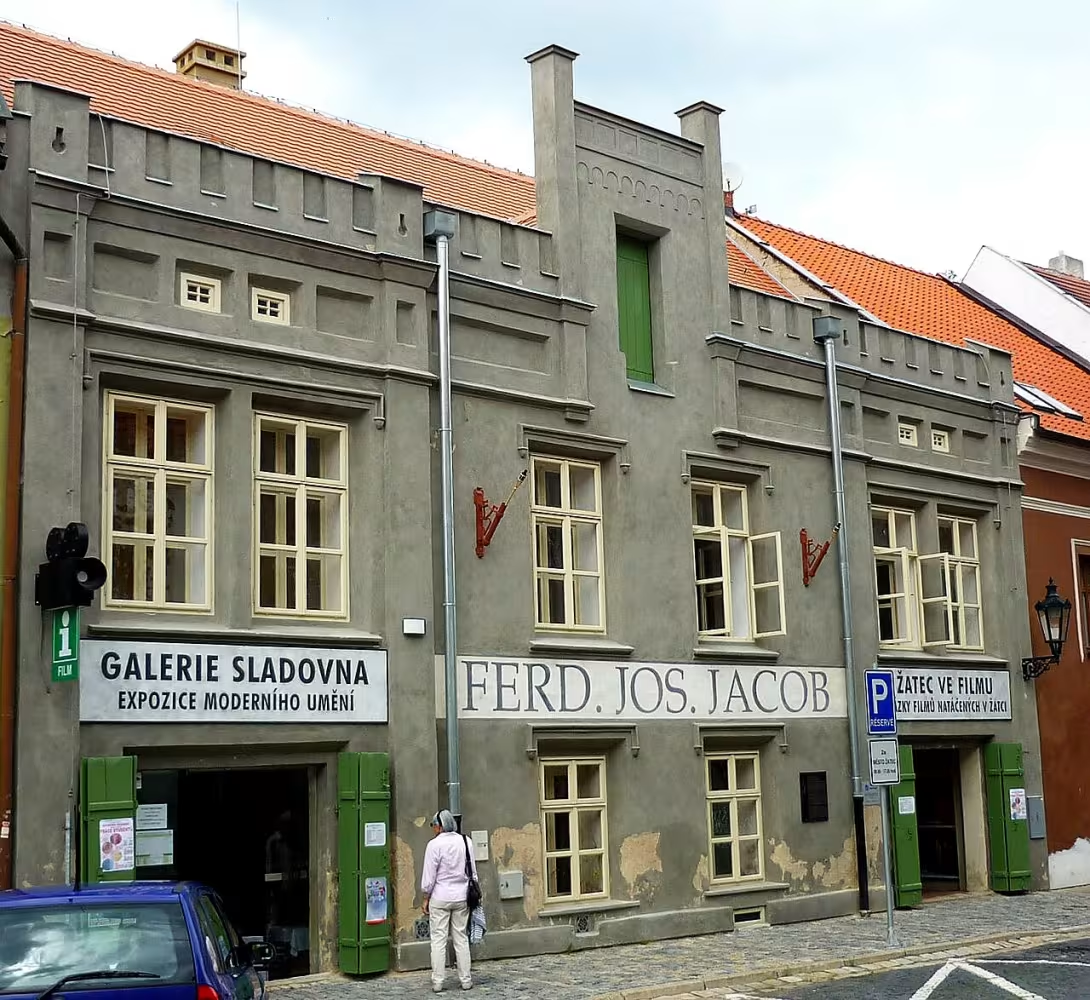
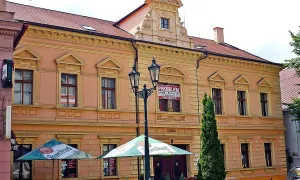
The Renaissance malt house in Žatec, located at Masarykova Street, is one of Europe's oldest malt houses. Constructed between 1573 and 1574, this historical monument has undergone numerous transformations over the centuries. It served various purposes, including a granary, residential building, and paint and varnish factory. Since its inclusion in the Chateau of Hops and Beer project in 2010, it has been restored into an exhibition space with additional services. The malt house is protected as a cultural monument since January 17, 1964.
The origins of this Renaissance malt house date back to the late 16th century when Bohemia was part of the Holy Roman Empire under Habsburg rule. This period marked significant cultural flourishing during the Renaissance across Europe, influencing arts, science, and industry. The building's initial purpose as a malt house reflects the era's industrial developments. A historical survey conducted in 1991 clarified that contrary to earlier beliefs, the structure had no connection with a medieval hospital but was indeed built as a renaissance malt house.
Architecturally, the malt house is characterized by its Renaissance style and U-shaped floor plan. Over time, it has seen several modifications, including changes to its facade during its use as a paint and varnish factory by Ferdinand and Marie Jacobová. Recent restoration efforts have aimed to restore its appearance based on surviving photographs, with new vaulting and roofing added to preserve its historical integrity.
Ownership of the malt house has shifted over the centuries. Initially serving industrial purposes, it was converted into a granary from 1779 onwards. In the early 19th century, it became a residential property and later came under private ownership by several individuals starting in 1801. Following the communist coup in 1953, the building transitioned to state ownership. The city of Žatec acquired it in the early 1990s, marking another significant change in its stewardship.
Key events in the malt house's history include its conversion to a municipal granary from 1779 and its designation as a cultural monument on January 17, 1964. These milestones highlight its evolving role within the community and its enduring historical significance. The building was mistakenly thought to be part of a medieval hospital until clarified by the 1991 survey. Additionally, original German inscriptions from the paint and varnish factory era are preserved on the facade, adding to its historical charm.
Today, the malt house in Žatec serves as an exhibition space with additional services, making it accessible to visitors during the day. The building's transformation into a cultural venue underscores its importance not only as a historical monument but also as a center for community engagement and education. Its rich history and architectural features make it a worthwhile destination for those interested in exploring the heritage of Žatec.
Visiting the Renaissance malt house offers a unique opportunity to delve into the region's brewing history and appreciate the cultural transformations that have shaped this remarkable site. It stands as a testament to the enduring legacy of craftsmanship and industry from centuries past, inviting visitors to explore its storied walls and vibrant exhibitions.
Then and now
Drag the slider to compare how the landmark may have looked when it was built with the view today.
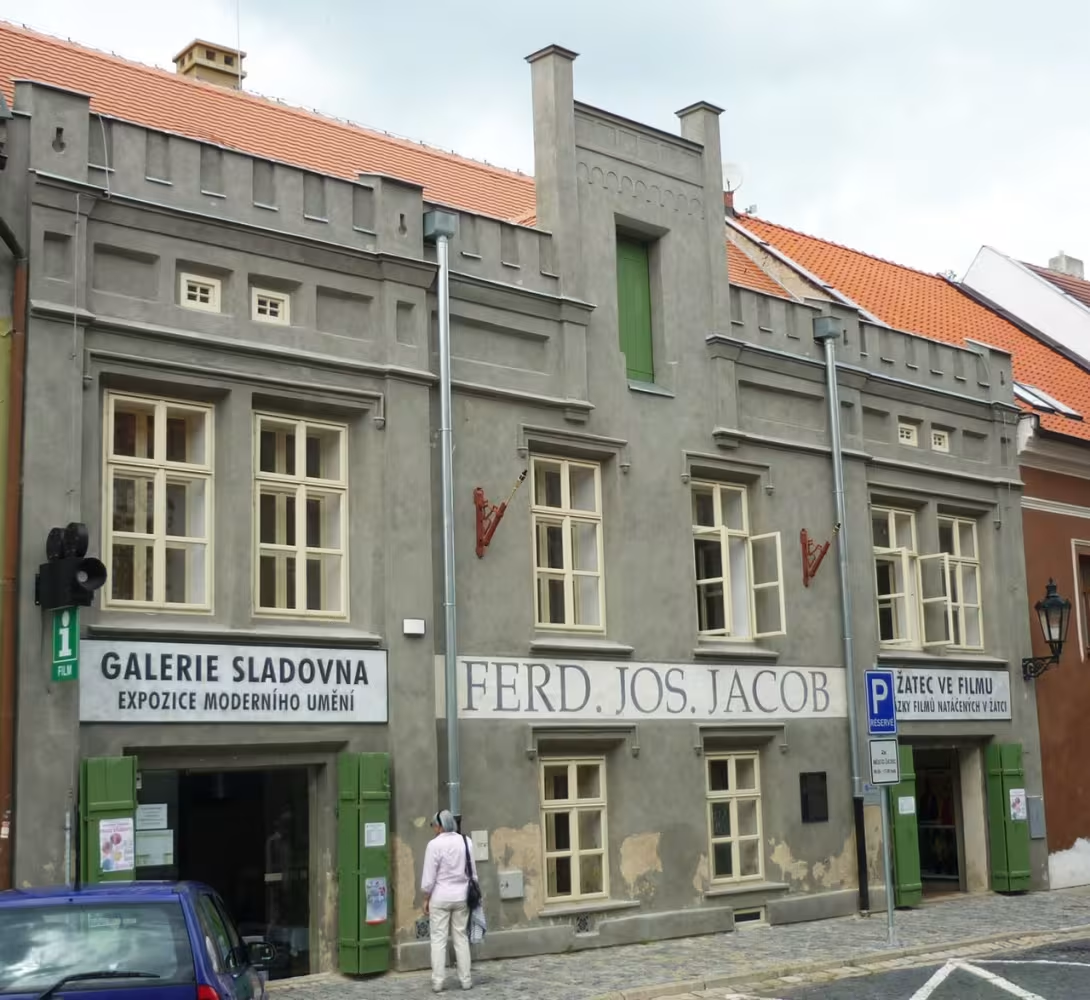

The historical appearance on the left is an AI-generated visualisation and serves as inspiration only.
Historical milestones
- 1574
- Construction of the Renaissance malt house completed.
- 1779
- Conversion to a municipal granary.
- 1964
- Declared a cultural monument.
Architectural development
The building was initially constructed in the Renaissance style with a U-shaped floor plan. Over time, it underwent several modifications and rebuilds, including changes to its facade during its use as a paint and varnish factory by Ferdinand and Marie Jacobová. The recent restoration has restored its appearance based on surviving photographs, with new vaulting and roofing.
Historical events
Built as a malt house between 1573 and 1574.
Converted to a granary from 1779 onwards.
Protected as a cultural monument since January 17, 1964.
Owners
The malt house was initially used for industrial purposes before being converted to various uses including a granary from 1779 and later a residential property in the early 19th century. It became privately owned by several individuals starting in 1801. In 1953, it came under state ownership following the communist coup. The city of Žatec acquired it in the early 1990s.
Points of interest
- The malt house was originally constructed during a period when Bohemia was part of the Holy Roman Empire under Habsburg rule, reflecting the cultural and industrial advancements of the Renaissance era in Europe.
- Contrary to earlier beliefs, historical surveys revealed that the building had no connection with any medieval hospital; it was specifically built as a renaissance malt house, highlighting a common misconception about its origins.
- During its time as a paint and varnish factory under Ferdinand and Marie Jacobová, original German inscriptions were added to the facade, which have been preserved and contribute to its historical charm today.
- The malt house underwent significant architectural changes over the centuries, including modifications to its facade during its industrial use, yet recent restoration efforts aimed at returning it to a state that reflects surviving photographs from earlier periods.
- Ownership of the malt house has shifted multiple times throughout history, transitioning from industrial use to residential property and eventually becoming part of the Chateau of Hops and Beer project in 2010, illustrating its dynamic role within the community.
Guide
This guide is narrated by a synthetic voice generated by artificial intelligence.
Show guide text
This text was created by artificial intelligence and has not been editorially reviewed. It may contain inaccuracies.
The Renaissance malt house on Masaryk Street in Žatec is among the oldest malt houses in Europe. It was built in the years 1573 to 1574 and has undergone many transformations since then. It served as a granary, a residential house, and a factory for paints and varnishes. It nearly disappeared, and today it serves as an exhibition space.
For a long time, it was believed that the building was a remnant of a medieval hospital with a chapel of Corpus Christi. This hospital was founded by Václav the Fourth in a charter from the year 1400 on the outskirts near the Prague Gate. However, a building history survey from 1991 showed that the house had no connection to the hospital and was designed as a malt house from the beginning. Archaeologists confirmed the existence of a kiln in the back part, and there used to be a well in the courtyard.
From 1779, the building served as a municipal granary. From 1801, it belonged successively to several private owners and people lived in it. In the second half of the nineteenth century, the front part was renovated and reconstructed several times. After 1886, the married couple Ferdinand and Marie Jacobovi operated a factory for paints and varnishes there.
In 1953, the house came into state ownership and began to deteriorate. In 1960, the roof was removed and the building was in danger of ruin. Although it had been a cultural monument since 1964, in 1988 a request was filed to revoke its protection. At the beginning of the nineties, the building received a temporary roof, the city took it over, and the request was withdrawn. In the years 1992 to 2007, the city attempted in vain to sell it. A turning point came with the project of the Temple of Hops and Beer, within the framework of which a complete reconstruction began in 2010. An exhibition gallery with displays and an information centre were created here.
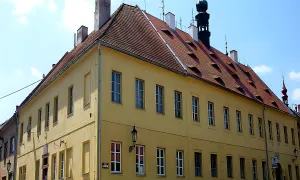
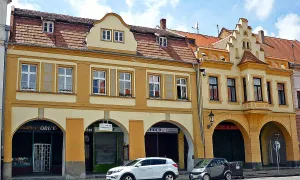
The single-story terraced house extends across the entire city block. It has a ground plan in the shape of the letter U and a combined roof with bull's-eye windows. During renovation, it was given the appearance according to preserved photographs, new vaults and roof trusses. The interior painting was restored according to the only fragment that was preserved in the corner of one room. A passage runs through the building between Masaryk Street and Nákladní Street with a restored functional well and benches. The facade facing Nákladní Street is more restrained. On the more ornate facade facing Masaryk Street, the original German inscriptions of the factory of the Jacobovi couple were uncovered and restored.
Tips for visitors
The best time to visit the Renaissance malt house in Žatec is during late spring or early autumn. During these seasons, you can enjoy pleasant weather that enhances your experience of exploring this historical site and its surroundings. The natural landscapes around Žatec are particularly beautiful during these times, offering a perfect backdrop for your visit.
Additionally, the malt house is reachable via public transportation; check current routes and schedules through an online search to ensure smooth travel plans. The city's infrastructure supports easy access to historical sites like this one.
When visiting the malt house, consider bringing comfortable walking shoes as you'll likely explore both indoor and outdoor areas. A camera or smartphone for capturing photos is recommended, especially if you're interested in architecture and history. Don't forget a water bottle and perhaps a light jacket, as temperatures can vary depending on the season.
For photography enthusiasts, early morning or late afternoon offers the best natural lighting to capture the malt house's architectural details. The exterior of the building is particularly photogenic during these times when the sunlight creates dramatic shadows. Inside, look for well-lit areas where you can photograph historical exhibits and interior features.
Nearby attractions within a 30-minute drive include the Chateau of Hops and Beer, which offers insights into Žatec's brewing history. For families with children, this area provides both educational experiences and enjoyable activities related to beer production. Exploring these sites can make for a comprehensive day trip centered around local culture and history.
Frequently asked questions
Can the monument be visited?
Some buildings of this kind are open for guided tours, others serve another purpose or are privately owned. We have not verified whether and when this monument is open – please ask the operator.
What are the opening hours and admission?
We have not verified the opening hours or admission. Current information is published by the operator.
Where is the monument?
Location: Žatec, Ústecký kraj. The map on this page shows the exact spot.
Why is the monument protected?
It is listed in the Central List of Cultural Monuments of the Czech Republic as a cultural monument (register no. 1000154600).
Businesses nearby
Do you run a restaurant, accommodation, shop, museum, rental, wellness or other visitor service near this monument? Show yourself directly to the people heading to it — this is how they will see you in the app and on the web:
Events nearby

Zdroj akcí: otevřená data měst a obcí ČR (Národní katalog otevřených dat) a kalendář akcí Národního památkového ústavu.
Nearby
Žatec is known for its rich history in brewing, with nearby landmarks including the Chateau of Hops and Beer. The area features a mix of historical architecture and natural landscapes.
Accommodation nearby
Themed route
Žatec Beer Route
This 5-point route explores the charming town of Žatec and its surroundings, showcasing the region's rich brewing history and natural beauty.
1. Žatec Brewery House (Main Attraction) Visit the Žatec Brewery House, a historic building that was once the site of the town's famous brewery. The house now serves as a museum and offers a glimpse into the town's rich brewing heritage.
2. Chateau of Hops and Beer (Historical Landmark) Located just outside Žatec, the Chateau of Hops and Beer is a must-visit for beer enthusiasts. This impressive castle showcases the region's hop-growing traditions and offers stunning views of the surrounding countryside.
3. Žatec Town Square (Historical Architecture) Stroll through Žatec's picturesque town square, surrounded by beautifully preserved historical buildings, including the town hall and several charming houses. The square is a great place to soak up the town's atmosphere and grab a bite to eat at one of the local cafes.
4. Žatec Castle (Historical Landmark) Perched atop a hill overlooking the town, Žatec Castle offers breathtaking views of the surrounding countryside. The castle's history dates back to the 13th century, and its walls have witnessed many significant events in the region's past.
5. Žatec Market Square (Local Culture) End your day with a visit to Žatec's bustling market square, where you can sample local delicacies and drinks, including the famous Žatec beer. The square is a great place to mingle with locals and experience the town's vibrant atmosphere.
Seasonal recommendations
Jaro
Spring is the time when the distillery in Žatec shines in full beauty. The building's lighting is soft and warm, while nature around it is full of life and color. Blooming trees and flowers create a pleasant atmosphere that perfectly complements the historical ambiance of the distillery. For a visit during spring, it’s best to arrive early in the morning to avoid crowds of tourists who come later. Don’t forget to wear hiking boots and comfortable clothing so you can walk comfortably on trails and paths.
Summer
The main summer season is full of life and energy, and the distillery in Žatec is no exception. The lighting is brighter, and sunlight illuminates every corner of this historic landmark. Additionally, summer is an ideal time to explore the exterior of the distillery, where you can see blooming gardens and parks. To avoid crowds of tourists, we recommend coming early in the morning or late in the evening. Don’t forget to bring sunglasses and an umbrella so you can see clearly and stay comfortable.
Autumn
The autumn season is a time when nature around the distillery in Žatec shines in full beauty. The lighting is soft and warm, while tree leaves create a colorful backdrop that perfectly complements the historical ambiance of the distillery. For a visit during autumn, it’s best to arrive early in the morning to avoid crowds of tourists who come later. Don’t forget to wear hiking boots and comfortable clothing so you can walk comfortably on trails and paths.
Winter
Winter is a time when the distillery in Žatec has a slightly different atmosphere. The lighting is soft and warm, while snow and chilly temperatures create a calm and serene ambiance. For a visit during winter, it’s best to arrive early in the morning to avoid crowds of tourists who come later. Don’t forget to wear hiking boots and warm clothing so you can walk comfortably and stay cozy.
Visualizations and artistic views


The visualisations are generated by artificial intelligence and serve as inspiration.
Photos from the area
Real photos taken near the monument


Zdroj a licence jsou uvedeny u každého snímku.
Tips from visitors
No tips yet. Be the first!
Log in and add your tip.
Sources and literature
Photos: SchiDD / CC BY-SA 3.0 — Wikimedia Commons. The author and licence also appear when you hover over the image.
Faktickým podkladem tohoto textu byl článek na Wikipedii, jehož autory jsou přispěvatelé Wikipedie. Článek je dostupný pod licencí CC BY-SA 4.0.
Location on the map
Příběhy a pověsti
Legendy, pověsti a příběhy spjaté s touto památkou
Fotografie návštěvníků
Zatím žádné fotografie. Buďte první, kdo přidá fotografii z návštěvy!
Log in a přidejte svou fotografii nebo hodnoťte.
Za ověřenou návštěvu v aplikaci získáte víc bodů — poznáme podle GPS, že jste na místě.
Reviews and comments