






Dům čp. 315 House
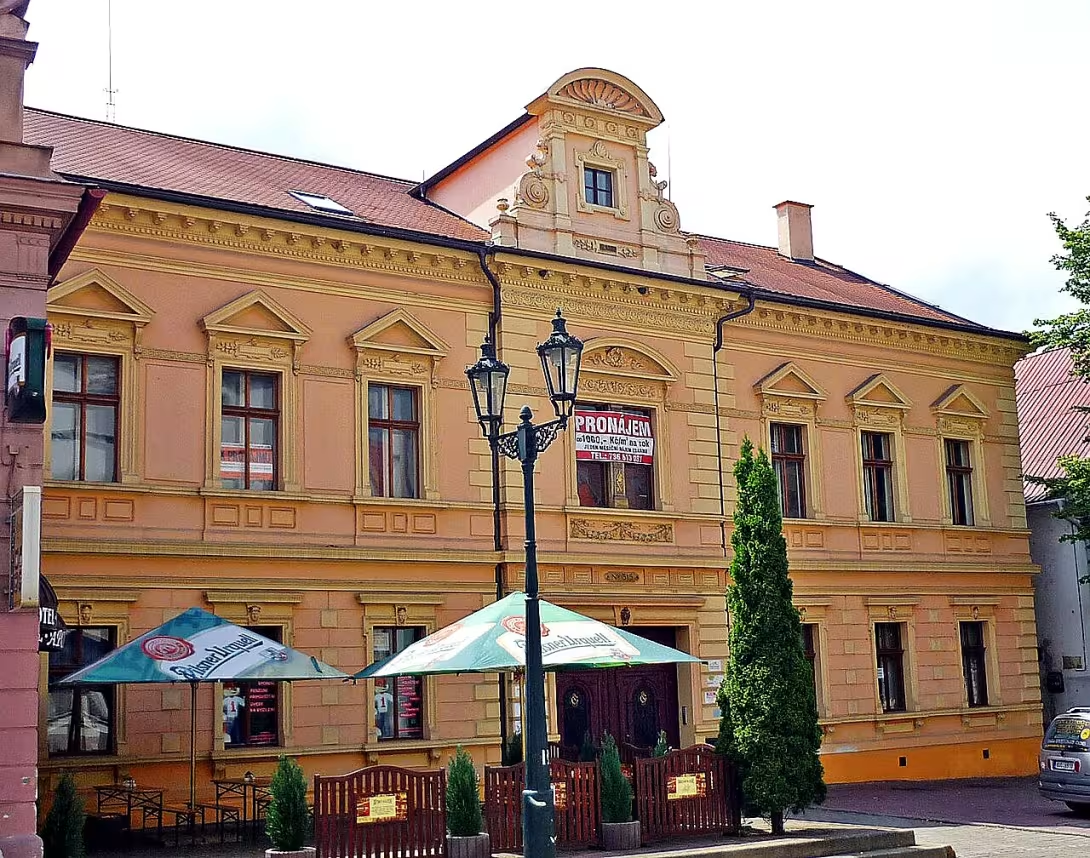
Dům čp. 315 in Žatci is a non-Renaissance township building from 1882, located in the historical core of the city at the Defence of Peace class. The building is important with its historical architecture and close connection to the region's hop tradition.
The construction was created in 1882 as a weekend residence for hop entrepreneurs. In the second half of the 19th century, architecture was influenced by history, which is clearly evident here. Žatec was the key center of the hop industry during this period.
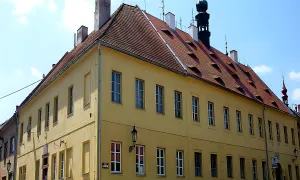
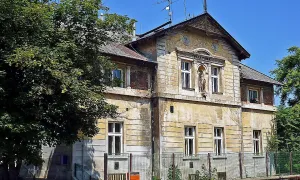
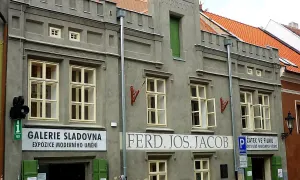
It's a one-storey terraced house with a rectangular plan and a saddle roof with a skylight. The main street facade consists of seven axes. The central entry axis is accentuated by shallow risalite and richly decorated with volutes, which ends with segment fronton. The windows are supplemented by segmental and triangular superstructures. There is a passage into the courtyard with faceted decoration and non-orenesance doors.
The interiors kept the elements of the original device. The entrance area has decorative tiles and ceilings decorated with stucco. There are two statues in the hall. From the yard leads to the building a decorative cast iron spiral staircase or portal to the entrance hall. The stairwell has a richly worked railing and door lining. Through the facet glass fillings of the door it enters the corridor where the mirror and original brass chandelier are located.
In 1913 the property was taken over by Josef Glaser from Kounov, which converted it into a shop and a hop store. The lower floor was used for sale, behind the main building was a large warehouse. He built a carriage and stables in the yard; above them were dwellings for servants and coachmen, while the manager lived in the attic. During World War II, Josef Glaser and his family were deported to a concentration camp for Jewish religion. The house was confiscated and served as a Wehrmacht base.
After the war the construction fell to the state and was used as a rental house. Later there was a club of pensioners and then the Association of Cooperative Farmers. Although the object gradually degraded, many of the original parts were preserved. Since 14 May 1994 the house has been protected as a cultural monument. From 2003 to 2005, the academic sculptor and painter Václav Klimt carried out a complete reconstruction of the building under the leadership of the monument office.
Dům čp. 315 represents a valuable example of Neo-Renaissance architecture and reminds of the Chmelanist history of Žatka. It's a place where entrepreneurial ambition has come together with a high level of artistic representation. We recommend visiting it as part of a tour of the historic city core.
Then and now
Drag the slider to compare how the landmark may have looked when it was built with the view today.
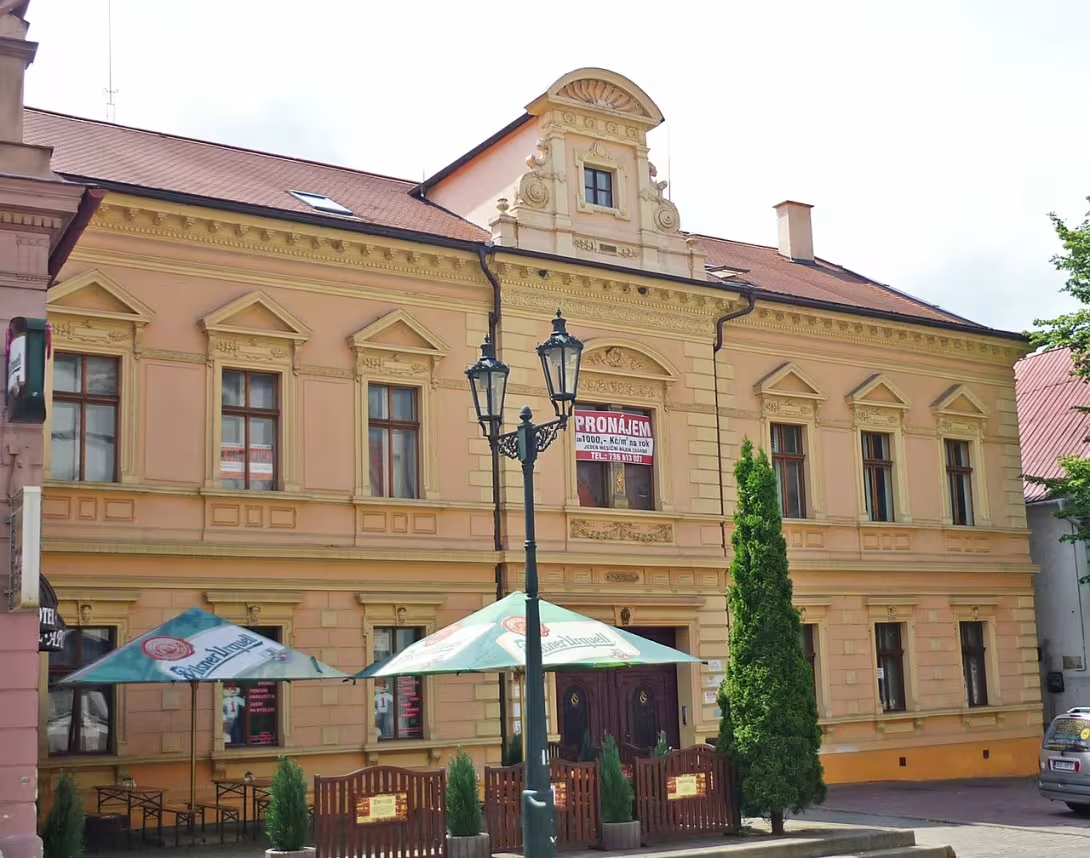
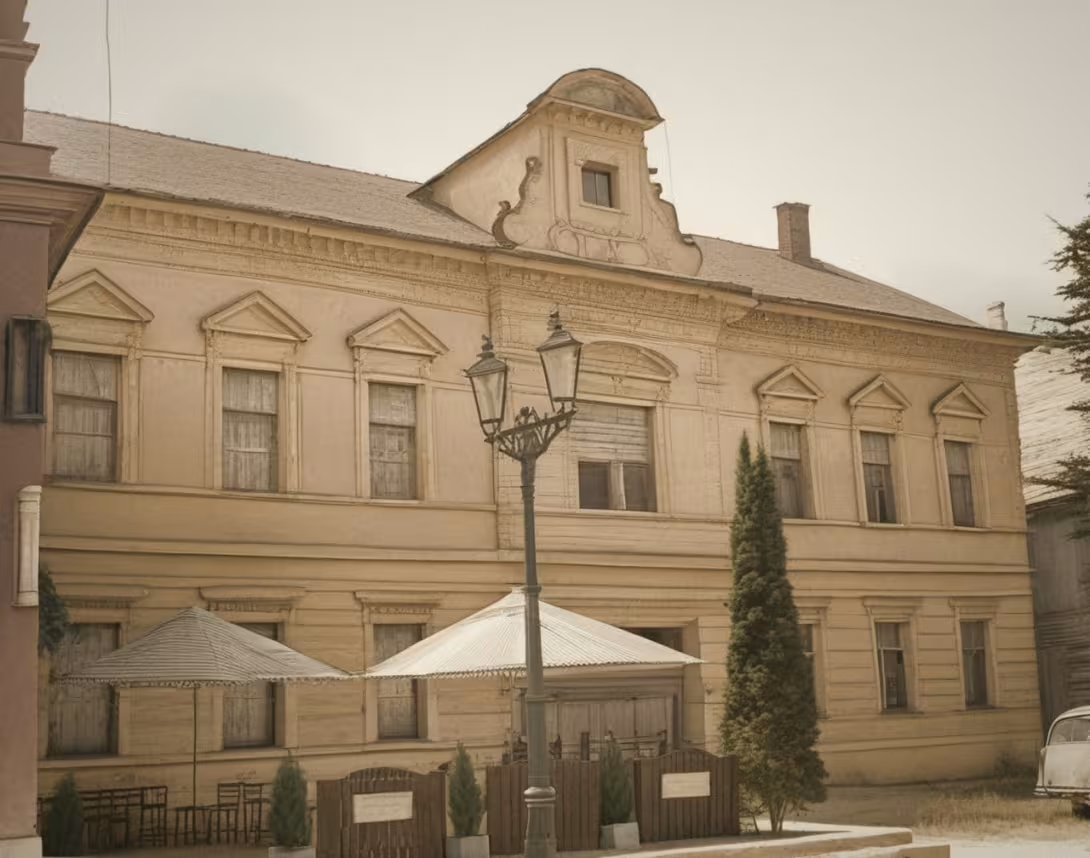
The historical appearance on the left is an AI-generated visualisation and serves as inspiration only.
Historical milestones
- 1882
- The position of the building as a weekend object.
- 1913
- Rebuilding into a shop and a hop warehouse.
- 1994
- A list of cultural monuments.
- 2003
- The beginning of the building reconstruction.
Architectural development
It is a non-Renaissance single-storey house with a saddle roof and a richly decorated shield. In 1913 the building was converted into a sales space and warehouse with the addition of facilities for servants. In recent years she has undergone a comprehensive reconstruction that has restored her original appearance.
Historical events
In 1882, the building was built. In 1913, the shop and the hop store were rebuilt. Since 1994 the building has been protected as a cultural monument. A complete renewal was carried out between 2003 and 2005.
Owners
Hop entrepreneur (1882), Josef Glaser (1913), State (after World War II), Association of cooperative peasants, private owners (since 2003).
Points of interest
- Dům čp. 315 is a non-Renaissance township building from 1882 with historical architecture.
- The construction was originally a weekend residence for hop entrepreneurs and related to the hop tradition of the region.
- In 1913 Josef Glaser rebuilt the building into a shop and a hop warehouse, reflecting its economic significance.
- During World War II, the property was confiscated and served as a Wehrmacht base for the deportation of Josef Glaser.
Guide
Show guide text
This text was created by artificial intelligence and has not been editorially reviewed. It may contain inaccuracies.
Welcome to the historical heart of Žatka, a city that tells a story of green gold like hops with its face and soul of age. Right now, you're standing in front of a house with a descriptive number of 300 15. Stop for a moment, take a breath and just feel the atmosphere of this place. In front of you is a building that immediately reveals with its appearance that it belonged not to ordinary craftsmen, but to people with ambition and means. It is a townhouse that dominates the surrounding space with its elegance and balance and reminds us of the time when architecture was an expression of the social status and pride of its owner.
Let us now return together in time more than a hundred and forty years back, to the year one thousand eight hundred and eighty-two. It was this year that the construction was built. Imagine then Žatec, a city in bloom, where hop-making was not just a craft, but a real industry that brought huge wealth to the region. This house has not since the beginning been gedacht as a primary residence where the family would spend every day of their lives. It was built as a weekend building for hop entrepreneurs. Try to imagine: a successful businessman who ran his affairs during the week and then returned here to rest in peace and comfort, to see the rhythm of the city and perhaps to host his business partners in an environment that reflected his success.
Now pay attention to the architecture itself. The building is carried out in a non-Renaissance style, which was at that time a very popular direction, drawing inspiration from the Renaissance period, but transforming it into a more modern, then-like form. This style, often referred to as historism, sought to resurrect the beauty of the past and combine it with the technical possibilities at the time. Look at the front of the house. Although time leaves its mark, thanks to the recent and meticulous reconstruction that began in the year two thousand and three, today you can see the original architectural and decorative elements in their full beauty. Notice the harmony of lines and details that decorate the facade. It is these elements that make the house No. 300 fifteen the real jewel of Žetek architecture. It is a building that is not only functional, but especially beautiful and representative.
But the history of this house is much more dynamic than one could imagine. The building didn't just remain a quiet weekend sanctuary. With the advancing time and changing economic conditions, the function of the house had to be adjusted. The break came in a thousand nine hundred and thirteen. This year the building was taken over by Josef Glaser, a character that is closely related to the house. Glaser wasn't just the owner, he was the man who built a new meaning. He converted it into a shop and a hops warehouse. This change is fascinating because it shows us how closely the private sphere of business was linked to the Žatci. Where art may have been converted and rested in silence, it now ruled by the noise of trade agreements, the smell of dried hops and the movement of vectors. The house thus became an active link in the economic cycle of the region, which at that time accurately reflected the economic importance of hops for the whole city.
During the twentieth century, the building went through other transformations. As political regimes and social priorities changed, the house lost its original commercial fame and began to serve as rental housing. The luxury manor and thriving warehouse has become a home for more families who found shelter here. Even in this period, however, the building has maintained its dignity, although its decorative elements have gradually faded under the dust and years of indifference. Fortunately, the city and experts realized the value of this building. In a thousand and nine hundred and ninety-four, the house was officially listed in the list of cultural monuments. That was the most important step to ensure that this non-Renaissance pearl was not demolished or inappropriately rebuilt, but protected for future generations.
Perhaps now you're interested in the interesting thing that follows from the whole story of this house. It's a fascinating contrast between beginnings and later periods. Imagine the difference in the atmosphere: on one side, we have a year of a thousand eight hundred and eighty-two, the silence of the weekend mansion, the luxury and calm of the entrepreneur. And on the other hand, the year one thousand nine hundred and thirteen, where the house turned into a vibrant center of business, into a shop where the fate of the hops was decided. This transformation from a resting place to a place of hard work and profit is basically a mirror of how the entire Žatec evolved. House No. 300 15 is not just a pile of bricks and plaster, it is a record of ambition, entrepreneurship and how people's needs change over decades.
When you look at this house today, think of it as a layered book. The first layer is the neo-Renaissance elegance of the late nineteenth century. The second layer is the practical and commercial spirit of Josef Glaser from the beginning of the twentieth century. The third layer is the daily life of tenants from later times and the last layer is the current one, which is the result of careful reconstruction after the year two thousand three. By being at the building today, we can appreciate how important it is to maintain these details. The decorative elements you see on the facade are a silent witness to all these changes.
Now that you know the story of house number three hundred fifteen, I suggest you observe it for a while. Try to imagine what the conversations that took place here in the year one thousand nine hundred and thirteen, or what dreams the first owner had when he had this house built in the year one thousand eight hundred and eighty-two. This building proves that history is not only in textbooks, but that we can touch it and see it right in front of us in the streets of our city.
Thank you for stopping by this beautiful neoRenaissance monument. I hope this short trip to the past has helped you to understand the spirit of the Žatka and its hop tradition. Now we invite you to another walk through the historic heart of the city. Discover other hidden details, perceive the beauty of old houses and let yourself be carried out by the streets that have their own untold stories. I wish you a pleasant rest of the day and an inspiring discovery of our common heritage. Goodbye.
Tips for visitors
The best time to visit is in the spring or autumn season when the weather is pleasant and the light for photography is ideal. This house offers a beautiful view of the historical core of the town of Žatce, making it a perfect place for lovers of architecture.
Parking can be found around the historical core. For those travelling by public transport, the city of Žatec offers comfortable connections to the centre. We recommend checking the actual parking and route possibilities by bus or tram before visiting.
When visiting take a quality camera with you if you are interested in shooting architecture. In addition, it is advisable to carry protective sunglasses and plenty of water, especially during the summer months.
The best times are early morning or late afternoon when the light is soft. The best places for photos include the front facade of the house and the surrounding street with historical character.
In the vicinity of an important townhouse there are several interesting sites that can be visited during one day. We recommend exploring other historical buildings and streets at the heart of the city, offering a rich cultural experience.
Businesses nearby
Do you run a restaurant, accommodation, shop, museum, rental, wellness or other visitor service near this monument? Show yourself directly to the people heading to it — this is how they will see you in the app and on the web:
Nearby
The historical core of the city Žatec.
Accommodation nearby
Themed route
Dům čp. 315 Type: Historical building This house represents the key point of your journey and is worth visiting thanks to its architectural character and historical context within the urban development. It is a place where the past intersects with the present and offers a view of the specific style of the region's building heritage.
Historical core of the city Žatec Type: City Monument Zone After visiting the house you can go directly to the heart of the city, which forms the natural continuation of your route. Walk on the streets of the historical centre allows you to see the urban development of Žatka and appreciate the link between the monuments and the overall impact of the village.
Historical core of the city Žatec (second part of the walk) Type: Cultural and architectural zone Continuing through the centre allows you to discover other details of the urban development that are an integral part of this specific environment. This part of the route serves to explore the atmosphere and architectural elements that surround the main objective of your expedition.
Historical core of the city Žatec (final stop) Type: Vacation and cultural space The final phase of your journey takes place still within the historical centre, where you can enjoy a quieter pace and think about the sights you have seen. This place provides ideal space for relaxing and evaluating the overall experience of the visit to Žatka and its unique heritage.
This route is designed to be maximum compact and focused on the location. It starts with a particular monument and passes smoothly into its immediate surroundings, which ensures logical flow and efficient use of time. Due to the limited extent of information available on other specific points in the vicinity, the route is dedicated to a deeper examination of the historical core itself, which forms the natural framework for visiting the house No. 315. The traveller thus receives a comprehensive picture of the city without having to leave its historical centre.
Seasonal recommendations
Spring brings freshness and awakening nature to Žatka, which complements its greenery with a beautiful historical environment around the house numbered 315. The lighting is fine during this period, which allows detailed observation of architecture without sharp shadows. I recommend you prepare layered clothes because the weather can be variable. The best time to visit are the morning hours when the air is clean and there are not so many visitors around the sights.
In the summer months the atmosphere of the city is very lively and the sun hits the facades in full force. The heat and intense light give the monument a monumental look, but can also be challenging to move outside. Due to the increased number of people, it is best to arrive at the beginning of the day to enjoy the tour in peace. Don't forget light clothes and sun protection.
Autumn is a period of golden colours and morning fog that create a nostalgic and calm atmosphere around historic buildings. Low sun in the afternoon creates interesting shadows on the facades, which is ideal for photography. For comfortable movement along the city streets, I recommend choosing stronger shoes and warmer clothes because moisture may appear.
Zimą is surrounded by silence and the city is very quiet, which underlines the historical character of the place. Days are short and light is weak, so it is best to plan your visit around noon. It is necessary to dress thoroughly in warm layers, including coat and gloves, and take into account that during this period the opening time may be shorter.
Visualizations and artistic views


The visualisations are generated by artificial intelligence and serve as inspiration.
Photos from the area
Real photos taken near the monument


Zdroj a licence jsou uvedeny u každého snímku.
Tips from visitors
No tips yet. Be the first!
Log in and add your tip.
Sources and literature
Fotografie: SchiDD / CC BY-SA 3.0 — Wikimedia Commons. The author and licence also appear when you hover over the image.
Faktickým podkladem tohoto textu byl článek na Wikipedii, jehož autory jsou přispěvatelé Wikipedie. Článek je dostupný pod licencí CC BY-SA 4.0.
Location on the map
Příběhy a pověsti
Legendy, pověsti a příběhy spjaté s touto památkou

Fotografie návštěvníků
Zatím žádné fotografie. Buďte první, kdo přidá fotografii z návštěvy!
Přihlaste se a přidejte svou fotografii nebo hodnoťte.
Za ověřenou návštěvu v aplikaci získáte víc bodů — poznáme podle GPS, že jste na místě.
Reviews and comments