






Sloup se sousoším Nejsvětější Trojice (Výprachtice) Holy trinity column
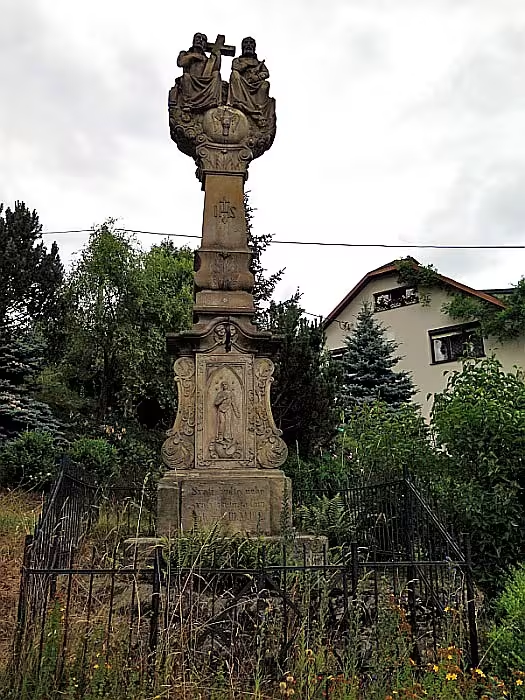
The Sloup Monument with the statue of the Holy Trinity in Dopravice is a historical sculpture monument from 1863, located in the district of Ústí nad Orlicí. This religious building located at the foot of the slope between the rectory and the house No. 391 is protected as a real cultural monument of the Czech Republic since 2001.
The sculptor Franz Lindermann from Hedče u Kralik created this work, which was built in 1863 by Josef Hejlová from the farmhouse No. 238 in Doprahtice. Her intention was a good deed as a atonement for the 1808 murder that happened here. The statue was sanctified on 21 August 1864 by the dusty priest Václav Brukner.
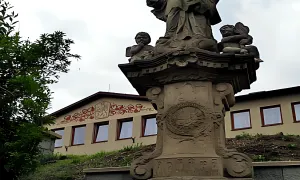
The building is made of sandstone and built on granite ground with stairs. The sculpture is located in a square metal grid with doors on the front, oriented towards the south. On the sandstone step there is a low prism base with a carved forehead and the inscription: "Saints be, or / holy is I Lord / God yours. III. M. 19.2. 'The date of planting is recorded on the back:" Lord's flight / 1863. ".
Pillar above the pedestal is decorated with volutes with plant motifs and ends with a profiled ledge, which is arched in the middle. A medallion with two winged angels heads and a metal console for the lantern is placed at the peak of this surge. The front side of the pillar is decorated with a frame with the relief of the Virgin Mary Immaculata. On the ledge stands a narrowing shank with a bent heel and an acanthus leaf, which is decorated with relief with IHS letters, heart and cross. The base ends with acantic decoration and volutes.
On the warhead is placed the statue of the Holy Trinity: sitting Jesus Christ with the cross, God the Father and the Holy Spirit in the form of a dove in a halo. In the mid-19th century, historism was a dominant style in Czech countries, which often combined elements of earlier styles in religious art. At that time, it served as a public expression of faith, gratitude or repentance.
Today the monument is located in the centre of the village Výprachtice and is listed in the list of real cultural monuments of the Czech Republic since 23 April 2001. This object represents an interesting witness to the then faith and personal tragedies expressed through art, making it an appropriate destination for interested people interested in historical sculptures and local history.
Then and now
Drag the slider to compare how the landmark may have looked when it was built with the view today.
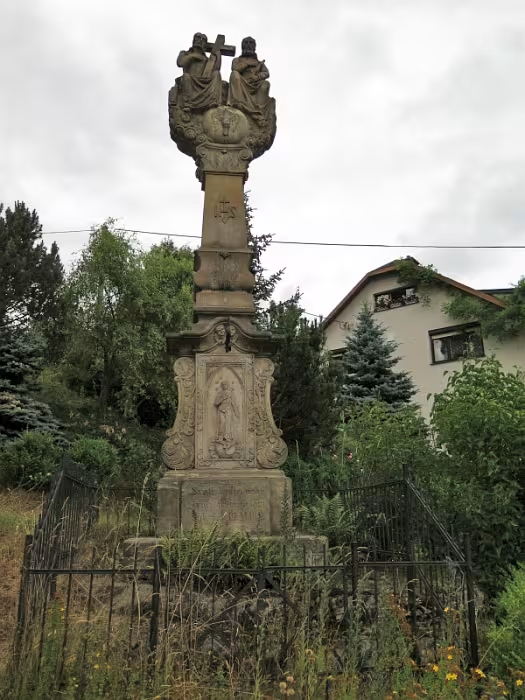
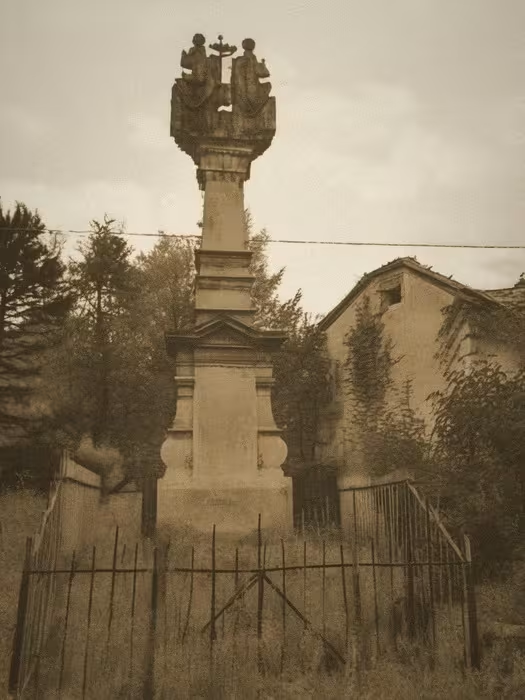
The historical appearance on the left is an AI-generated visualisation and serves as inspiration only.
Historical milestones
- 1863
- The position of the sculptures of Joseph Hejl as a good deed.
- 1864
- The sanctification of the statue by the dusty priest Václav Brukner.
- 2001
- Listing to the list of real cultural monuments of the Czech Republic.
Architectural development
The building is made of sandstone and stands on granite ground. The whole building includes sandstone step, prism base, decorated pillar with volutes and shank with acantic decoration. The entire sculpture is protected by a square metal grid with doors.
Historical events
In 1808 there was a murder on the farm no. 238, which was an incentive to build a sculpture later. In 1864, the statue was sanctified by vicar Václav Brukner.
Points of interest
The statue was built by Josef Hejl as a atonement for the 1808 murder that happened here. - The work was created by sculptor Franz Lindermann and was sanctified on August 21, 1864. - The building is made of sandstone and stands on granite ground with stairs. - The sculpture is located in a square metal grid with doors oriented towards the south. - On the warhead is depicted sitting Jesus Christ with the cross, God the Father and the Holy Spirit in the form of a dove.
Guide
Show guide text
This text was created by artificial intelligence and has not been editorially reviewed. It may contain inaccuracies.
Welcome to the Drifters. Please stop for a moment and focus fully on what you see right in front of you. You are standing in front of one of the very important places in this location, before the sandstone sculpture of the Holy Trinity. The first thing you're probably interested in is the image of the monument itself, which is protected by a square metal grid with doors. This grate here serves as a protective shield to preserve this fragile stone for future generations. Look carefully through metal rods at the figures themselves. Here you see Jesus Christ, who carries his cross, the God of the Father and the Holy Spirit, which is depicted as a dove. The whole complex stands on a solid sandstone pedestal, which is engraved with a biblical inscription, reminding us of the deeper spiritual dimension of this place.
Let us now look together at how this monument was created and what its original purpose was. To the year when the sculpture was built, we return to the middle of the nineteenth century, namely 1863. But it wasn't a work created randomly or as part of some big urban plan. One particular woman, Josefa Hejlová, is behind this column. For Joseph, the position of this sculpture was a good deed, an expression of deep faith and an inner need to deal with the past. In order to achieve the result you see today, she approached an experienced sculptor named Franz Lindermann, who came from the village of Hedce near Kralik. It was his hand that carved these figures out of the sandstone that we now see as a symbol of peace and hope.
Now pay attention to the details that form the overall composition of the work. Notice the material from which the statue is made. Sandstone is a material highly recommended for its workability, but is also prone to weather effects, which explains the presence of the metal grate. If you look below, you will see that the entire sculpture does not only count on sandstone. The entire object is on granite ground, which is supplemented by stairs. This contrast between a lighter sandstone of statues and a hard, grey granite foundation gives the monument stability and a sense of endurance. Look at the characters again. Jesus with the cross, God the Father and the doves form a harmonious whole, which is meant to give the visitor a sense of humility and respect.
When you stand in front of a statue like this, you may wonder why it was built here and why it was so important to Josef Hejl. Here we come to the most freezing and fascinating part of the history of this place. This statue was built not only as a sign of faith, but as a atonement for a terrible crime. More than fifty years ago, since the creation of the statue, namely in 1808, this is where the murder took place. Imagine this quiet place over 200 years ago and the tragedy that took place here. Josefa Hejlová wanted the place of violence and death to be a place of prayer and reconciliation. That is why this sculpture was created here in 1863. So it's a monument that transforms pain into hope and guilt into repentance.
This sanctification process was completed a year later. In 1864, on precisely the 24th of August, a statue of then-washed vicar Václav Brukner came to the statue. It was with his ceremony that he sanctified Franz Lindermann's work and this act definitely changed the character of this space. From the scene of the murder, it became a sacred place where people could stop, pray and think about the passing of life and forgiveness. It is fascinating to realize how strongly one person's faith and personal initiative can affect the landscape and memory of the entire community.
If you think about how the monument was approached over time, you will find that its value with years has only increased. For many years, it served as a local landmark and spiritual support for the inhabitants of Doprachtice. Its historical and artistic importance was finally officially recognised in 2001. This year, the building was entered in the list of real cultural monuments of the Czech Republic. This means that the state has acknowledged that this sandstone sculpture is not only a religious object, but an important part of our national heritage, which must be protected from extinction.
Now try to look at that metal grate again. At first glance, it may seem like an obstacle between you and art, but it's basically a symbol of care. Without it, sandstone, which is relatively soft, could be damaged in time or careless. This door grate teaches us that some things are so valuable that we must actively guard them. Feel the atmosphere of this place. There is a strange calm that stems from the history that this column carries inside of it. From the tragedy of 1808 to the creative work of sculptor Lindermann to today's conservation status.
This monument reminds us that history is not only about great battles or kings, but also about personal stories, about human suffering and about trying to find meaning in it. Josefa Hejlová left us a message that even from the darkest event something beautiful and meaningful could arise. Today, when you look at Jesus, the God of the Father and the Holy Spirit, you see not only religious symbols, but also the result of a long process of reconciliation.
Now that you've learned the story of this place, I suggest you remain silent at the sculpture for a while. Take another look at the granite stairs that may have been raised over a century ago, and try to imagine the day in August of 1864 when Pastor Brukner sanctioned this work. Feel the text of the biblical inscription on the sandstone, which continues here as a silent reminder of eternal values.
I hope this short trip to history has helped you better understand the meaning of this sandstone column. It's a place where art, faith and human destiny meet. I will now invite you to continue to explore the surroundings and discover other hidden corners and stories that this landscape holds inside. We wish you a pleasant continuation of the journey and thank you for spending a moment with us at this extraordinary sculpture of the Holy Trinity. See you at the next points of our journey.
Tips for visitors
The best time to visit is morning or late afternoon hours. The sun hits the sandstone details of the sculpture at an angle, highlighting the plastic shapes of the statues and the text of the biblical inscription on the pedestal.
When shooting, we recommend focusing on detailed images of the figures of the Holy Trinity and sandstone base. The best light to capture the texture of the stone is shortly before sunset.
We recommend taking a telescope with you to help you better recognize the details in the top of the column if you do not have the opportunity to get close to them.
During walks around the monument, do not forget to visit the farm building in the Drifters, which forms a natural connection with the religious character of this place.
For families with children the visit is suitable as a short lesson in history and art. You can encourage children to search for letters in the biblical inscription or to observe the materials from which the statue is made.
Frequently asked questions
Can the monument be visited?
This is a structure in a public space that can usually be seen from outside free of charge. We have not verified that this particular one is freely accessible.
Where is the monument?
Location: Výprachtice. The map on this page shows the exact spot.
Why is the monument protected?
It is listed in the Central List of Cultural Monuments of the Czech Republic as a cultural monument (register no. 1000441246).
Businesses nearby
Do you run a restaurant, accommodation, shop, museum, rental, wellness or other visitor service near this monument? Show yourself directly to the people heading to it — this is how they will see you in the app and on the web:
Nearby
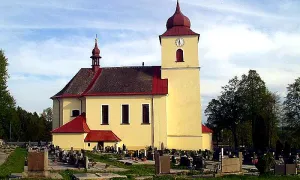
Budova fary ve Výprachticích.
Accommodation nearby
Themed route
Sloup se sousoším Nejsvětější Trojice (Výprachtice) Type: Monument, statue This work represents the main destination of the trip and shows local artistic and spiritual heritage. Visitors can look at detailed sculptures and appreciate the historical importance of this religious symbol for the village.
Farm building in Dishwasher Type: Historical building This building is located in the immediate vicinity of the main destination and complements the picture of the historical core of the village. Its architecture and appearance allow a glimpse into the life of the local clergy and the administration of the parish in the past.
Sloup se sousoším Nejsvětější Trojice (Výprachtice) Type: Monument, statue The refocusing of attention on this object allows for a deeper study of its iconography and technical design. It is advisable to take a break here and enjoy the quiet environment surrounding this important statue.
Farm building in Dishwasher Type: Historical building The final stop at the rectory closes the circle around these two key points. It offers the possibility to compare architectural styles and gain a complete impression from the historical space of the village Výprachtice.
This route is designed to respect the available data and to focus exclusively on those sites. The most proper procedure is to start at the column, then move to the rectory and then return to the column for more detailed observation, or vice versa. Since there are no other places in the area, the route remains compact and focused on the immediate surroundings of these two monuments. The visitor gets a comprehensive view of the cultural and historical values that are explicitly defined in the given background. The entire passage is short and suitable for a quick tour without the need for a long journey.
Seasonal recommendations
Spring: In the spring season, the Column with the statue of the Holy Trinity is an exemplary experience thanks to its fresh flowering carpet, which brings living colours around the building. The sun rays illuminating the statue provide brightness and highlight its details. It is advisable to take a light coat or a plaid with you for a visit, because they can be colder in the morning or evening. The best time for a tour is in the afternoon when the sun lights up the statue and surrounding nature in the most attractive light.
Summer: In the summer period, Sláp with the statue of the Holy Trinity offers ideal conditions for tours thanks to long, sunny days. The atmosphere is revitalized and warm, which allows you to enjoy the surrounding nature in full glory. We recommend wearing light, light clothes and not forgetting sun protection such as a hat or sunglasses. The best time to visit is an early afternoon to avoid the strongest jealousy.
Autumn: In the autumn period, Pláp offers an attractive atmosphere with changing colours of leaves around. When the sun begins to fall rapidly, it illuminates the statue in warm and golden shades, which gives the object a romantic touch. We recommend wearing warmer clothes because autumn cold can be surprisingly strong, especially in the evening. The best time for the tour is the early afternoon, when the temperature is still pleasant and the light illuminates the statue in the most attractive colors.
Winter: In the winter period, Pláp with the statue of the Holy Trinity offers a unique view where snow covers the statue and surrounding landscape in a white tarp. The freezing light of the sun illuminates the object in a strange way, which gives the atmosphere magic. It is recommended to wear warm clothes and frosts such as gloves or cups. The best time to visit is at noon, when sunlight illuminates the statue and surroundings in the most attractive conditions.
Visualizations and artistic views


The visualisations are generated by artificial intelligence and serve as inspiration.
Tips from visitors
No tips yet. Be the first!
Log in and add your tip.
Sources and literature
Photos: Sovicka169 / CC BY-SA 4.0 — Wikimedia Commons. The author and licence also appear when you hover over the image.
Faktickým podkladem tohoto textu byl článek na Wikipedii, jehož autory jsou přispěvatelé Wikipedie. Článek je dostupný pod licencí CC BY-SA 4.0.
Location on the map
Příběhy a pověsti
Legendy, pověsti a příběhy spjaté s touto památkou
Fotografie návštěvníků
Zatím žádné fotografie. Buďte první, kdo přidá fotografii z návštěvy!
Log in a přidejte svou fotografii nebo hodnoťte.
Za ověřenou návštěvu v aplikaci získáte víc bodů — poznáme podle GPS, že jste na místě.
Reviews and comments