






Socha svatého Jana Nepomuckého (Výprachtice) Statue
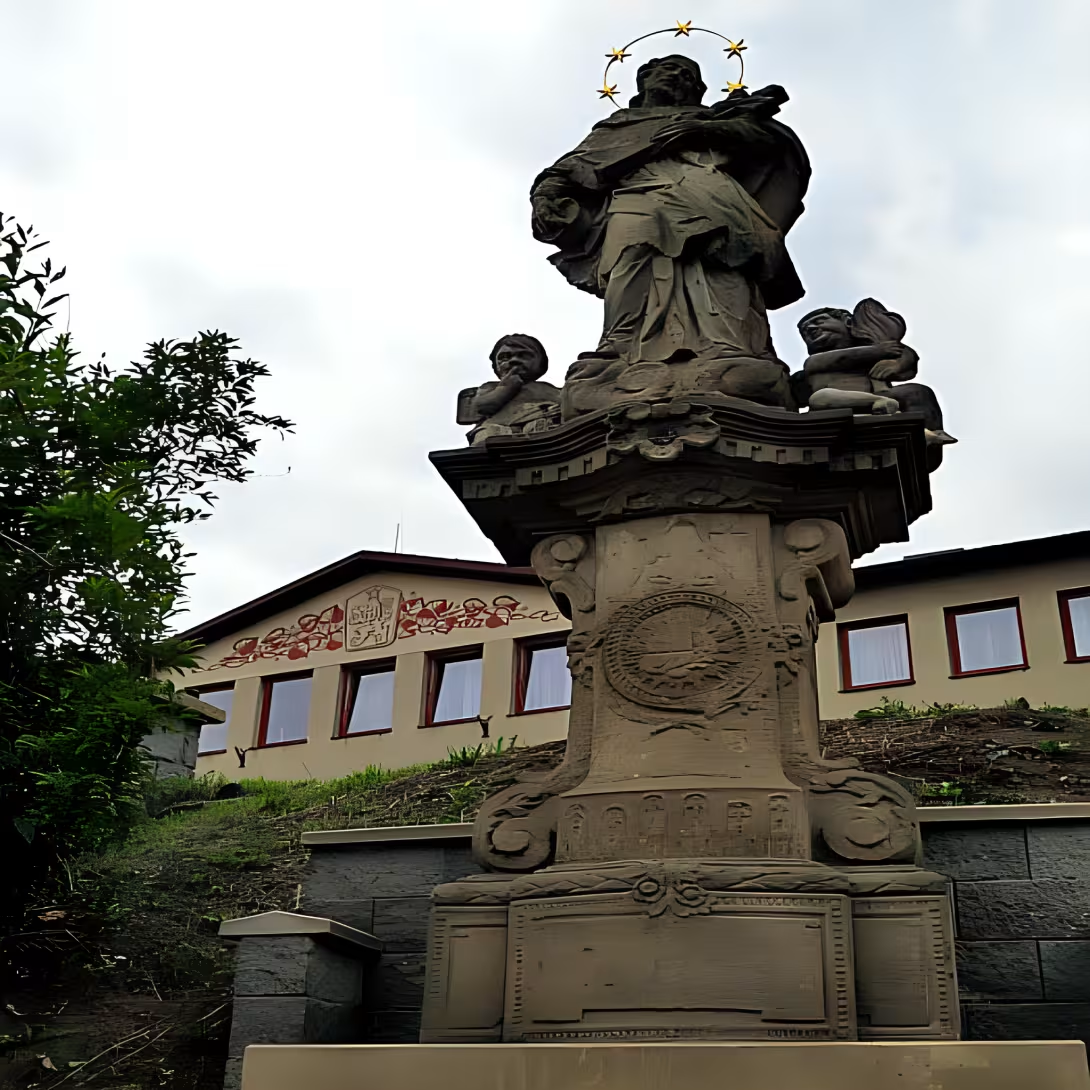
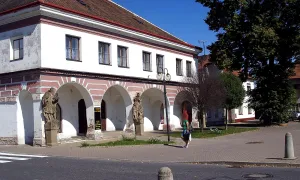
The classical statue of St. John Nepomucký, located in front of the building of the municipal office in the centre of Vydrachtice in Ústí nad Orlicí district, is an important cultural monument of the Czech Republic. Since 1958 it has been protected as a real-estate cultural monument and represents important historical and artistic values for the local community.
The statue was built by a load of Josef Resler, a cottage boy from the village of Výprachtice. It was originally located in the centre of the village, where it was festively sanctified on 16 May 1793 by Adalbert Applem, the Bishop's district vicar, and Jan the vicar of Jabloné nad Orlicí. This event took place after the proper sermon of the localist P. Antonín Schwab and stressed the spiritual importance of the statue for the inhabitants of that time.
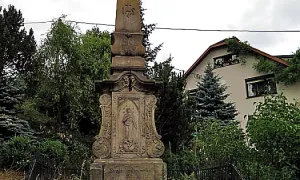
Architecturally, the statue is built on granite blocks with prism pedestal, which is decorated with volutes and rocaic reliefs. Pillar of the statue has a circular medallion with the language of the saint and on the ledge stands a sandstone statue of St. John Nepomuk, supplemented by a pair of angels. The angel holding the palm branch symbolizes glory, while the second angel with a lock and a finger on his lips resembles the secret of silence.
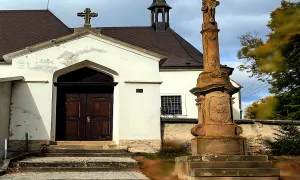
In 1973, the statue was moved during landscaping and road expansion using JZD machines. The new location on the plinth leading to the building of the Local National Committee has highlighted its permanent presence in the centre of the local community.
The statue underwent a total renovation in 2004, which ensures its preservation for future generations. Today, the statue of St. John Nepomuk is not only a monument to historical significance, but also a place where tradition and modernity meet.
A visit to this classical sculpture offers an opportunity to explore the rich history of Dessert and appreciate the artistic skills that appeared in the 18th century. This is where the local heritage lives in cooperation with the national cultural wealth of the Czech Republic.
Then and now
Drag the slider to compare how the landmark may have looked when it was built with the view today.
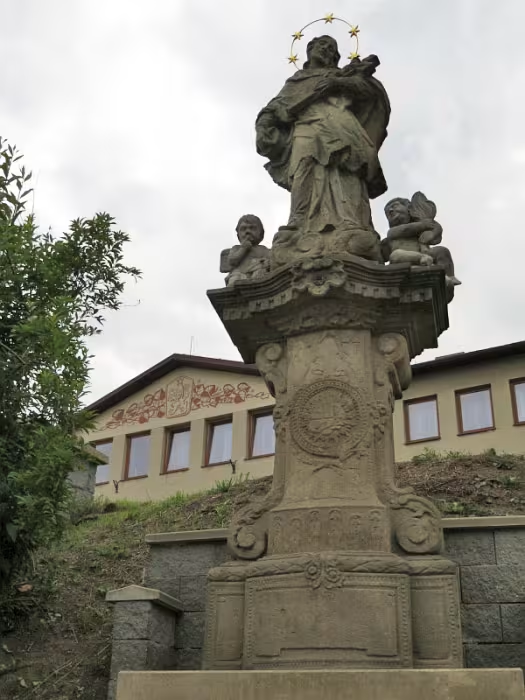
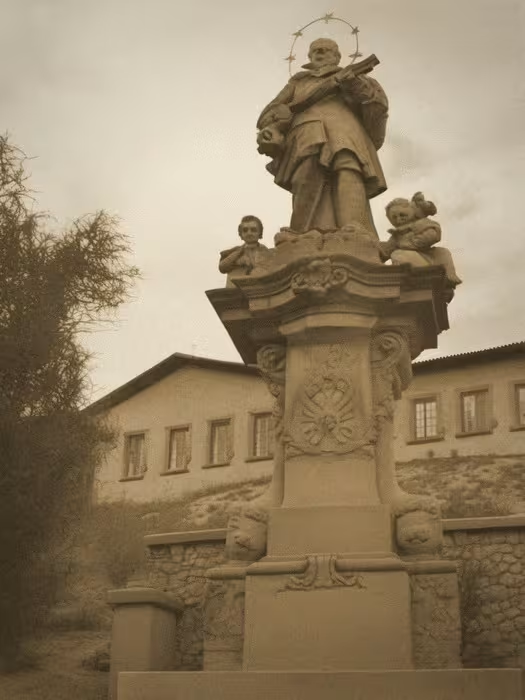
The historical appearance on the left is an AI-generated visualisation and serves as inspiration only.
Historical milestones
- 1958
- The statue was declared a protected cultural monument of the Czech Republic.
Architectural development
The statue of St. John Nepomuk is built on granite blocks with prism pedestal decorated with volutes and rocai reliefs. The pillar of the statue has a circular medallion with the tongue of the saint, while the statue is on the ledge supplemented by a pair of angels.
Historical events
- 1793
- The statue was ceremoniously sanctified by Adalbert Apple and John the vicar of Jabloné nad Orlicí.
- 1973
- When the terrain was modified, the statue was moved by the JZD machines to a new plinth at the staircase leading to the building of the Local National Committee.
Points of interest
- The classical statue of St. John Nepomuk is a protected cultural monument since 1958. - The statue was built with a load of Josef Resler and festively sanctified on 16 May 1793 by Adalbert Applem and Jan the vicar of Jabloná nad Orlicí. - Architecturally, the statue is built on granite blocks with prism pedestal, decorated with volutes and rocaic reliefs. - In 1973 the statue was moved during landscaping and expansion of the road using the JZD machines. - The statue underwent a total renovation in 2004, which ensures its preservation for future generations.
Guide
Show guide text
This text was created by artificial intelligence and has not been editorially reviewed. It may contain inaccuracies.
Welcome to the Drifters. You have just stopped in the very heart of this village and before your eyes stands a monumental witness of ancient times. You're standing right in front of the statue of St. John Nepomuk. Feel the atmosphere of peace that rules around this place. This statue is not just a stone piece, it is a silent guardian of the village, who stands here and watches the daily life of the locals. The sandstone from which it was carved has its own colour and texture, which you can perceive remotely. It's a material that carries a trace of time and natural forces.
Now let's look deeper into the past together to understand why this place is so special. This statue was not created by accident. Her story goes deep into the late 18th century. Imagine those ancient times when a new order formed in this area and people sought spiritual support. The main mover of everything you see today was Josef Resler. It was a man who took a big step forward for this village and it was his generous decision and financial support that made it possible for this statue to arise and stand here for future generations. Without his will, this place would look completely different today.
The whole process was becoming very festive at the time. If we could go back in time, we would see the day the statue was first handed over to the people. It was the 16th of May in the year astesat seventy-three. It was a moment of faith and social importance. The spiritual performance of that time decided to consecrate this monument. The Adalbert Appl and also the priest John of Jabloné above Orlicí entered this event. Imagine the gathering, the people gathered together to honor a new memory to protect their village. These personalities, as was also Antonín Schwab, are firmly linked to this place and their names carry on in the history of the village.
Now pay attention to the work itself and what you see right in front of you. The statue is performed in classical style. What does that mean for you, as a visitor? It means order, peace and harmony. Classicism does not seek unnecessary decorating, but to express dignity and balance. Feel the purity of the shapes. The statue stands on solid foundations that give the whole piece a sense of stability and unshakefulness. Look at the bottom of the statue. See those granite blocks? It's those big, worked stone blocks that have the prism shape. This granite serves as a solid foundation that holds the sandstone statue firmly to the ground. The contrast between hard, darker granite and finer sandstone is very interesting and adds architectural importance to the whole. This combination of materials ensures that the statue resists all weather effects and remains here for centuries.
It is very important to mention that this place is not only a historical object but also a legally protected treasure. Since the year one thousand nine hundred fifty-eight this statue has been declared a real cultural monument of the Czech Republic. This means that the state and the local community are making sure that this piece of history doesn't get destroyed and remains preserved in the form that you see it now. This protection is proof of how much people value their heritage.
Notice also exactly where the statue was placed. He's standing right outside the municipal office building. This location is not random. Right here, in the place where the administration takes place and where people meet for important things, the statue acts as a silent witness to social life. It's a place where history encounters the day-to-day administration and the normal movement of people. It's the point the village revolves around.
You may be interested in one thing that links this stone to human effort. Although the exact name of the architect who designed this project is not known in our records, yet the work is so clear and balanced that his spirit is felt in every detail. Sometimes more important than the name of the creator is what his work can bring to us - a sense of respect for tradition and the fortress that this sandstone brings to our memory.
Now that you have seen this memory and learned its story, I suggest you continue your walk through the villages of Výprachtice. Every corner of this village can hide other little details that tell you about the lives of the people who lived here before us. Thank you for your time and attention to this historical figure. We wish you a beautiful rest of the day and many other experiences in discovering the beauty of our landscapes. We say goodbye and wish you a pleasant continuation on your journey.
Tips for visitors
The best time to visit the statue of St. John Nepomucký in the Drying period is spring and autumn, when the weather is pleasant and mild. This time of year offers the best conditions for a tour because the sun is not too hot and the trees are in full bloom or have colored leaves.
For the journey to the village we recommend to use a passenger car because public transport is not so developed here.
When planning a visit, it is advisable to take with you protective sunglasses, shoes suitable for walking on irregular surfaces and perhaps even some food or drink if you plan to spend more time around. Don't forget the camera too, so you can capture beautiful moments.
Photography of the statue of St. John Nepomuk will offer the best effects during the morning hours or in late afternoon light when light is softer. The best places for photos are from the centre of the village towards the statue, which allows you to capture a general view of the monument.
Other historical and natural attractions can be visited in the vicinity of Dopachtice. In addition, there are places suitable for families with children, such as castles or parks in the nearby area, which offer space for play and relaxation.
Frequently asked questions
Can the monument be visited?
This is a structure in a public space that can usually be seen from outside free of charge. We have not verified that this particular one is freely accessible.
Where is the monument?
Location: Výprachtice, Pardubický kraj. The map on this page shows the exact spot.
Why is the monument protected?
It is listed in the Central List of Cultural Monuments of the Czech Republic as a cultural monument (register no. 1000121631).
Businesses nearby
Do you run a restaurant, accommodation, shop, museum, rental, wellness or other visitor service near this monument? Show yourself directly to the people heading to it — this is how they will see you in the app and on the web:
Nearby
🏰 Historic sites (46)
- Ignác Umlauf 6.2 km
- Ludvík Krejčí (1890-1972) 6.7 km
- Pomník obětem 1. světové války 7.1 km
- Pomník protifašistického odboje 7.3 km
- Pomník padlým v 1. světové válce 8.2 km
- Pomník obětem sv. v. 8.5 km
- Městské muzeum Lanškroun 8.9 km
- Památník Jana Marcuse Marciho 9.1 km
- Sloup se sochou Panny Marie Immaculaty 9.1 km
- Tvrz Bouda 9.3 km
- K-S 25 Na sedle 9.9 km
- Lichtenštejnský památník 10.8 km
- Pomník Obětem 1. a 2. světové války 12.3 km
- Vojenské muzeum Lichkov 12.4 km web
- Muzeum řemesel 12.7 km +420 465 622 160 web
- 1914-1918, 1939-1945 12.9 km
- Brána 12.9 km
- Monument 12.9 km
- památník Járy Cimrmana 12.9 km
- Městské muzeum Králíky 12.9 km +420 465 631 117 web
🍽️ Restaurants and dining (82)
- Restaurace U Jana 0.0 km
- Hostinec U Spicaku 4.0 km
- Restaurace Horský Resort Buková Hora 5.4 km Mlýnický Dvůr 8 +420 731 369 460 web
- U Tisu 6.3 km
- U Luxů 6.6 km
- Pizzeria Srdíčko 6.6 km
- Hotel U Černého medvěda 6.7 km web
- Viky 89 6.7 km
- Acrobat Park 7.4 km U Parku 349 0420583440117 web
- Konet Gastro 7.5 km
- Bufet 7.5 km
- Kramářova chata na Suchém vrchu 7.5 km +420 702 028 154 web
- Gansberg 8.0 km
- Hostinec U Novotnů 8.1 km
- Bufet 8.2 km
- Penzion U trojice 8.3 km
- Bambus 8.4 km
- U města Milána 8.7 km
- Kavárna La Caffé 8.9 km web
- Restuarace U Pastýře 8.9 km +420 734 467 619 web
🏨 Accommodation (47)
- Chalupa Bukovka 3.2 km Čenkovice 93 +420 603 180 041 web
- Chata Vidorka 3.6 km web
- Bovida 3.9 km web
- Unas Doma 5.7 km
- Hotel Filipinum 6.3 km Aloise Hanuše 141 web
- Štíty 6.5 km
- Penzion Srdíčko 6.6 km
- Penzion U Vorlíčků 6.6 km
- Penzion Ječmínek 7.3 km +420 733 106 280 web
- Acrobat Park 7.4 km U Parku 349 +420583440117 web
- Karlov 8.7 km
- Hotel Forea 8.8 km +420 777 357 234 web
- Lesovna 9.1 km
- Martina 9.1 km
- Otmarka 9.2 km
- Auotokemp Knoflík 9.3 km web
- Lanwood - rekreační centrum 9.4 km Obora 348 web
- Rubyk 9.9 km Krátká 193 +420 463 303 220 web
- Na Čertovce 10.6 km
- Hotel Alfa 11.1 km +420 777 708 180; +420 778 052 420 web
🚲 Rentals and sport (11)
- Trailpark Bukovka 5.4 km
- Sport 6.5 km
- Cyklo sport Mach 6.7 km
- Lehkoatletický stadion Romana Šebrleho 8.8 km
- Cyklosport Dvořák 9.0 km
- Radovan Fořt 9.3 km
- Hotel Alfa 11.1 km +420 778 052 420; +420 778 052 419 web
- Tělocvična 11.7 km
- Klub biatlonu Letohrad, p.s. 12.3 km
- Přírodní Koupaliště 12.7 km
- Sportovní potřeby 12.9 km
🥾 Hiking and nature (189)
- Na kopci 1.0 km
- Výprachtický vrch 1.1 km
- Koburk 1.8 km
- Honzova studánka 2.0 km
- Na Hoblovně 2.1 km
- Na vrších 2.1 km
- Varta 2.7 km
- Studánka v Korytkách 3.0 km
- Valentovy vrchy 3.4 km
- Filipův pramen 3.4 km
- Pavlovy vrchy 3.5 km
- Hanesova vyhlídka 3.5 km
- Špičák 3.6 km
- Strážka 3.7 km
- Na skalce 3.7 km
- Na vartě 3.7 km
- Bulík 3.8 km
- U Rybníka 4.0 km
- Okolník 4.1 km
- Buková hora 4.2 km
Accommodation nearby
Themed route
Thematic cruise route from Dishtice
1. Socha svatého Jana Nepomuckého (Výprachtice) - Statue The main objective of our route is the statue of St. John Nepomuk, located in the village Výprachtice. This monument represents an important cultural value and is associated with the legends of St. John, who became the patron saint of secrecy. It's an ideal place to understand local heritage and history.
2. Chapel of the Virgin Mary Victory (Výprachtice) - Chapel After visiting the statue, go to the chapel of Our Lady of Victory, which is close to the main monument. This small sacral structure serves as a place of prayer and peace for both local and visitors. Its history and architecture attract those who are interested in the spiritual traditions of the village.
3. Local rectory (Výprachtice) - Fara Then visit the local parish, which is often the centre of the community in small municipalities like Výprachtice. The parish offers opportunities for understanding the life and traditions of the local clergy. In addition, it may be a source of information on other historical events associated with the municipality.
4. Traditional municipal marketplace (Výprachtice) - Market Explore the traditional municipal marketplace where you can discover local products and traditional meals. This point is ideal for those who want to experience an authentic life experience in the village. It may also be an opportunity for interviews with local people and the knowledge of their daily lives.
5. Garden and Gardens (Výprachtice) - Garden Finally visit the local gardens where you can relax and appreciate the natural beauty of the area. These gardens are often cared for with love and offer a quiet space for relaxation after visiting other places on the route.
This route will allow you to learn in-depth knowledge of Drying, their cultural heritage and the daily life of the people.
Seasonal recommendations
Spring: In the spring period, the statue of St. John Nepomuk is turned towards the sun in Dishopry, which increases its lighting and highlights the details. Nature is awakening, the trees are starting to sprout and the blooming lawns add colour to the panorama. The atmosphere is calm and hopeful. It is recommended to visit the memory in the early spring when the crowds are minimal. Early arrival can be useful due to morning temperatures and unclear weather. Good clothes should include layers to avoid cold in the morning and warm afternoon sun.
Summer: Summer brings long days and warm weather, which is ideal for visiting the statue in Drying. The sun rays illuminate the statue of St. John Nepomuk in the most beautiful way, allowing us to enjoy its details and architectural beauty. Nature is at the top of its beauty with full leaves of trees and flowering bushes. The atmosphere is alive, but in the main summer season, crowds may appear. Visit the memory sooner or later in the day to avoid noon temperatures and crowds. Don't forget the sunflower, short gloves and a light hat for sun protection.
Autumn: In autumn, the statue of St. John Nepomuk is surrounded by colorful tree leaves that provide a bright background. The sun is lower in the sky, which creates a soft and romantic atmosphere. Nature is beginning to move towards winter peace, but the trees are still full of colors. This is an ideal time for a visit without large crowds. A good time to visit is the afternoon when the temperature increases slightly and the sun's rays illuminate the statue in the most beautiful colors. Clothes should be several layers due to cold morning and evening.
Winter: The winter season brings peace and quiet atmosphere around the statue of St. John Nepomuk in Dishwasher. The sun's rays reflect on the snow cover, which increases its illumination and highlights its architectural beauty. Nature is at peace with a white blanket, which provides a unique view of the memory. Visit the monument earlier in the day to enjoy the illuminated statues, and remember to wear warm clothes, including hat, gloves and protective shoes.
Visualizations and artistic views


The visualisations are generated by artificial intelligence and serve as inspiration.
Tips from visitors
No tips yet. Be the first!
Log in and add your tip.
Sources and literature
Photos: Sovicka169 / CC BY-SA 4.0, rozlišení zvýšeno umělou inteligencí — Wikimedia Commons. The author and licence also appear when you hover over the image.
Faktickým podkladem tohoto textu byl článek na Wikipedii, jehož autory jsou přispěvatelé Wikipedie. Článek je dostupný pod licencí CC BY-SA 4.0.
Location on the map
Příběhy a pověsti
Legendy, pověsti a příběhy spjaté s touto památkou

Fotografie návštěvníků
Zatím žádné fotografie. Buďte první, kdo přidá fotografii z návštěvy!
Log in a přidejte svou fotografii nebo hodnoťte.
Za ověřenou návštěvu v aplikaci získáte víc bodů — poznáme podle GPS, že jste na místě.
Reviews and comments