






Snědovice Castle
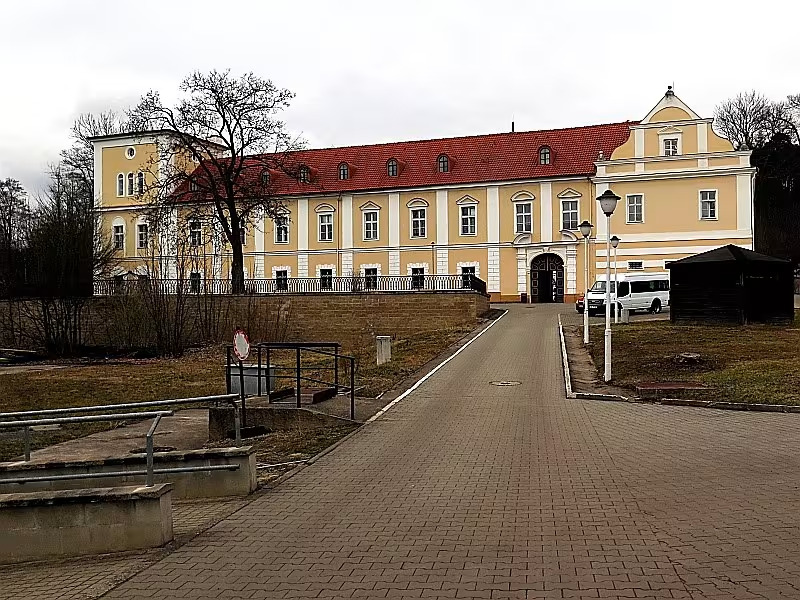
Snědovice Castle is a remarkable historical monument located in the village of Snědovice, within the Litoměřice District of the Ústí nad Labem Region in the Czech Republic. This baroque and classical castle stands as a testament to centuries of architectural evolution, beginning with its origins as an older fortress. Recognized as a cultural monument of the Czech Republic, it now serves as the home of the Social Care Institute Snědovice, making it not only historically significant but also socially relevant today.
The castle's history dates back to at least the sixteenth century when it was first documented under Vlků z Kvítkova. Originally built on the site of an older fortress, likely in the second half of the fourteenth century, Snědovice underwent significant transformations over time. The sixteenth-century renovations by Vlků z Kvítkova transformed it into a Renaissance structure during a period marked by religious and political upheaval in Bohemia, including the Protestant Reformation and subsequent conflicts that culminated in the Thirty Years' War.
Architecturally, Snědovice began as a Gothic fortress before evolving through various styles. The sixteenth-century renovations introduced Renaissance elements, but it was under Jan Baltazar Clary ze Sperbersbachu in the late seventeenth century that the castle acquired its current Baroque appearance. This transformation included significant architectural changes that defined its present form. In the nineteenth century, additional towers and economic buildings were added, further enhancing its grandeur.
Ownership of Snědovice has seen a series of notable figures throughout history. Initially built by Pavel z Čakovic in the fourteenth century, it later came under Vlků z Kvítkova's control in the sixteenth century. Jan Albrecht Vlk z Kvítkova's involvement in the Bohemian Revolt led to his estates being turned into a fiefdom in 1623. The estate was reunited and transformed under Jan Baltazar Clary ze Sperbersbachu, who initiated significant Baroque renovations. Other notable owners included Polyxena Lobkovicová, the Clary family, and baronka Gabriela Neubauerová, who owned it until its confiscation in 1945.
Key events at Snědovice include Jan Albrecht Vlk z Kvítkova's punishment for his role in the Bohemian Revolt and the murder of Jan Vratislav Desiderius Clary by his servants in 1720 due to his cruelty. These incidents highlight the turbulent history associated with the castle, reflecting broader historical conflicts and personal dramas.
Today, Snědovice Castle remains a site of cultural and historical significance. Its transformation into a social care institute underscores its continued relevance in contemporary society. Visitors can explore its rich architectural heritage and learn about its storied past, making it a worthwhile destination for those interested in history and architecture. The castle's enduring legacy as both a monument and a functional institution invites exploration and appreciation from all who visit.
Then and now
Drag the slider to compare how the landmark may have looked when it was built with the view today.
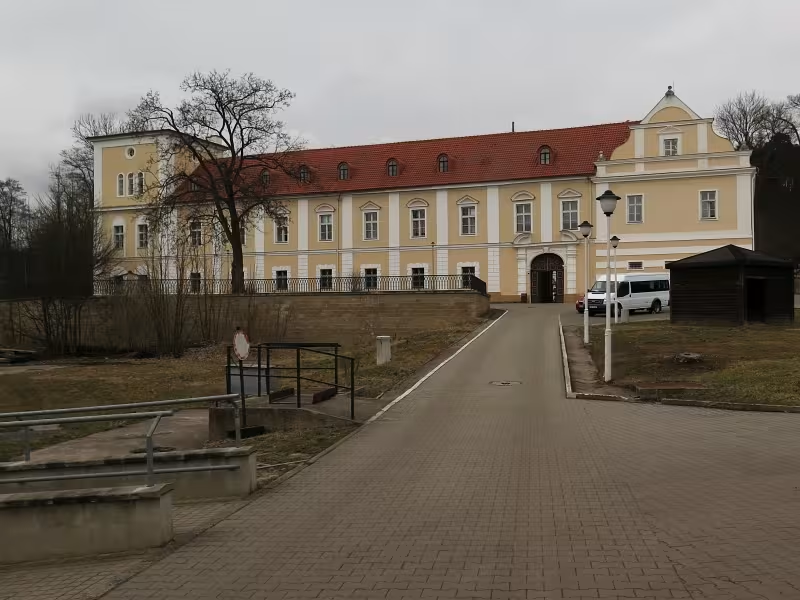

The historical appearance on the left is an AI-generated visualisation and serves as inspiration only.
Historical milestones
- 1623
- Jan Albrecht Vlk z Kvítkova was punished for participating in the Bohemian Revolt by having his estates turned into a fiefdom.
- 1677
- The estate was reunited under Jan Baltazar Clary ze Sperbersbachu, who initiated Baroque renovations.
Architectural development
Snědovice began as a Gothic fortress, likely built in the second half of the fourteenth century. It was transformed into a Renaissance structure in the sixteenth century by Vlků z Kvítkova. The castle's current Baroque appearance resulted from renovations initiated by Jan Baltazar Clary ze Sperbersbachu. In the nineteenth century, additional towers and economic buildings were added.
Historical events
Jan Albrecht Vlk z Kvítkova participated in the Bohemian Revolt and was punished by having his estates turned into a fiefdom in 1623.
The castle underwent significant Baroque transformation under Jan Baltazar Clary ze Sperbersbachu.
Owners
Pavel z Čakovic (14th century)
Vlků z Kvítkova (16th century)
Jan Albrecht Vlk z Kvítkova (until 1623)
Jan Vilém and Volf Bernard z Gerštorfu (from 1628)
Polyxena Lobkovicová (1639 onwards)
Clary family through Jan Baltazar Clary ze Sperbersbachu (1677 onwards)
Jan Vratislav Desiderius Clary
Marie Eleonora and Jan Václav z Oprštorfu
Jan Prokop Hartmann z Klarsteinu (from 1784)
Jakub Veith (from 1802)
Augustin Müller (1850 onwards)
baronka Gabriela Neubauerová (until 1945)
Points of interest
- The castle of Snědovice experienced a dramatic change in ownership due to Jan Albrecht Vlk z Kvítkova's involvement in the Bohemian Revolt; his estates were turned into a fiefdom as punishment, highlighting how political turmoil could directly impact personal fortunes.
- In 1720, an unusual and tragic event occurred at Snědovice when Jan Vratislav Desiderius Clary was murdered by his own servants. This incident underscores the extreme measures taken against perceived cruelty during that era.
- The architectural evolution of Snědovice Castle reflects broader European trends; it transitioned from Gothic to Renaissance and finally to Baroque styles, illustrating how local structures were influenced by wider artistic movements across Europe.
- Despite its turbulent history, Snědovice has been repurposed as a social care institute today. This transformation demonstrates the castle's ability to adapt and remain relevant in modern society, serving current community needs while preserving historical significance.
- The Clary family played a significant role in shaping Snědovice Castle’s Baroque appearance in the late seventeenth century. Their influence is evident in the architectural changes that defined its present form, showcasing how individual families could leave lasting legacies on cultural landmarks.
Guide
This guide is narrated by a synthetic voice generated by artificial intelligence.
Show guide text
This text was created by artificial intelligence and has not been editorially reviewed. It may contain inaccuracies.
Welcome to the enchanting Snědovice Castle, a remarkable blend of Baroque and Classical architecture nestled in the village of Snědovice, just north of Štětí. As you stand here, imagine yourself stepping back into time, surrounded by the serene beauty of this historic site that has stood witness to centuries of change.
The story of Snědovice Castle begins with its origins dating back to the sixteenth century when it was built on the grounds of an older fortress. The castle's history is deeply intertwined with political upheaval and transformation, notably during the Bohemian Revolt in 1623. Jan Albrecht Vlk z Kvítkova faced severe consequences for his involvement; his estates were seized and turned into a fiefdom as punishment. This pivotal moment underscores how political turmoil could drastically alter personal fortunes.
Fast forward to 1677, when the estate was reunited under the ownership of Jan Baltazar Clary ze Sperbersbachu. It was he who initiated significant Baroque renovations, leaving an indelible mark on the castle's architecture and character. As you explore, take a moment to appreciate the seamless blend of styles that tell tales of its storied past.
Although the architects remain unnamed, their work is evident in the grandeur before you. Notice the symmetry and elegance typical of Baroque design as you walk around the exterior. The castle’s transformation during the Classical period added further refinement, creating a harmonious balance between ornate details and classical simplicity. Feel the atmosphere as it whispers stories from centuries past.
Snědovice Castle is not just a structure; it's a tapestry woven with the lives of notable historical figures. Among them are Pavel z Čakovic, Vlků z Kvítkova, Polyxena Lobkovicová, and Jan Prokop Hartmann z Klarsteinu, each contributing to its rich narrative. Their stories echo through the halls, inviting you into a world where history comes alive.
One intriguing aspect of Snědovice is the dramatic shift in ownership due to Jan Albrecht Vlk z Kvítkova's political entanglements. This change highlights not only the castle’s resilience but also its role as a silent witness to the ebb and flow of power and fortune over time.
As you conclude your visit, I invite you to continue exploring this cultural monument recognized for its historical significance in the Czech Republic. The castle has been home to the Social Care Institute since the 1950s, adding another layer to its diverse history. Let the spirit of Snědovice Castle linger with you as you move forward, carrying stories and memories from your journey here.
Thank you for joining me on this exploration of Snědovice Castle. May your curiosity continue to lead you to uncover more hidden gems in the world around us. Farewell, until we meet again.
Tips for visitors
The best time to visit Snědovice Castle is during the late spring or early autumn months, from May to September. During these periods, the weather is generally pleasant, allowing visitors to fully enjoy the castle's gardens and surrounding landscapes without the discomfort of extreme heat or cold. Additionally, visiting outside of peak summer can mean fewer crowds, providing a more serene experience as you explore the baroque and classical architecture.
It's advisable to check current routes and schedules in advance using a transportation search tool to ensure smooth travel plans.
When visiting Snědovice Castle, it’s recommended to bring comfortable walking shoes, especially if you plan to explore the gardens or surrounding areas extensively. A hat and sunscreen are also wise for protection against the sun during warmer months. Additionally, carrying a camera is advisable as there are several picturesque spots around the castle that offer stunning photo opportunities.
For photography enthusiasts, the best light at Snědovice Castle is typically found in the early morning or late afternoon when the sunlight casts soft shadows and highlights the intricate details of the architecture. The gardens provide excellent vantage points for capturing both the castle and its natural surroundings. Be sure to explore different angles around the perimeter for unique perspectives.
Within a 30-minute drive from Snědovice Castle, visitors can explore other historical sites such as the town of Štětí, known for its charming architecture and local history. For families with children, nearby nature trails offer opportunities for outdoor activities like hiking or picnicking, making it an ideal day trip destination that combines cultural exploration with family-friendly fun.
Frequently asked questions
Can the monument be visited?
Some buildings of this kind are open for guided tours, others serve another purpose or are privately owned. We have not verified whether and when this monument is open – please ask the operator.
What are the opening hours and admission?
We have not verified the opening hours or admission. Current information is published by the operator. Official website: http://www.uspsnedovice.cz/
Where is the monument?
Location: č.p. 1, Snědovice, Ústecký kraj. The map on this page shows the exact spot.
Why is the monument protected?
It is listed in the Central List of Cultural Monuments of the Czech Republic as a cultural monument (register no. 42341/5-2298).
Businesses nearby
Do you run a restaurant, accommodation, shop, museum, rental, wellness or other visitor service near this monument? Show yourself directly to the people heading to it — this is how they will see you in the app and on the web:
Accommodation nearby
Themed route
Thematic Tour Plan: Snědovice Castle and Surroundings
1. Snědovice Castle Type: Historical Castle Why Visit: The centerpiece of this tour is the enchanting Snědovice Castle, a splendid example of Renaissance architecture nestled in the heart of Snědovice village. Visitors are captivated by its beautifully preserved interiors, including ornate stucco ceilings and period furniture. The castle's history as a noble residence offers insight into the region’s aristocratic past.
2. St. Wenceslas Chapel Type: Historical Chapel Why Visit: Located within the grounds of Snědovice Castle, the St. Wenceslas Chapel is a serene and historic site worth exploring. This chapel holds significant cultural value with its baroque elements and serves as a testament to the religious heritage intertwined with the castle's history. It provides a peaceful retreat for reflection amidst the grandeur of the estate.
3. Snědovice Village Square Type: Historic Village Center Why Visit: A short walk from the castle leads visitors to the charming Snědovice Village Square, where traditional architecture and quaint shops create an inviting atmosphere. The square is a perfect spot for experiencing local culture, with opportunities to interact with residents and enjoy regional delicacies at nearby cafes.
4. Snědovice Park Type: Historic Garden Why Visit: Adjacent to the castle lies the beautifully landscaped Snědovice Park, offering lush greenery and well-maintained pathways perfect for leisurely strolls. The park's design reflects historical gardening styles, providing a picturesque setting that complements the architectural beauty of the castle.
This tour offers an immersive experience into the history and culture surrounding Snědovice Castle, allowing visitors to appreciate both its grandeur and the charming village life nearby.
Seasonal recommendations
Spring: Visiting Snědovice Castle during spring offers a unique experience as nature awakens with vibrant colors and blooming flowers surrounding the historic site. The soft, warm light of early mornings or late afternoons enhances the picturesque landscape, creating an ideal atmosphere for photography enthusiasts. During this season, it's advisable to wear layers, as temperatures can fluctuate between mild days and cooler evenings. While crowds are generally moderate, arriving earlier in the day ensures a more tranquil visit before families and tourists flock to enjoy the springtime scenery.
Summer: The summer months at Snědovice Castle bring long daylight hours and warm weather, perfect for exploring the extensive grounds and gardens. This is the peak tourist season, so expect larger crowds, especially on weekends and holidays. To avoid congestion, consider arriving early in the morning or visiting during weekdays. Light, breathable clothing is recommended to stay comfortable under the sun, along with hats and sunscreen for protection. The lively atmosphere of summer makes it an excellent time for outdoor activities and appreciating the castle's lush surroundings.
Autumn: Autumn at Snědovice Castle provides a stunning backdrop as the foliage transforms into rich hues of orange, red, and yellow. The cooler temperatures create a cozy ambiance, ideal for leisurely strolls through the estate. During this season, visitors can enjoy fewer crowds compared to summer, allowing for a more peaceful experience. Wearing warm layers is advisable, along with comfortable shoes for walking on potentially damp or leaf-covered paths. The softer light in autumn adds a magical quality to the castle's historic architecture.
Winter: Winter transforms Snědovice Castle into a serene and enchanting destination, often blanketed by snow that enhances its majestic appearance. The shorter days mean visiting hours may be reduced, so planning ahead is crucial. Visitors should dress warmly with layers, including hats, gloves, and insulated footwear to stay comfortable in the cold weather. While winter can deter some tourists, leading to quieter visits, it's important to check for any seasonal closures or limited access due to weather conditions. The unique atmosphere of a castle shrouded in snow creates a memorable experience for those who venture out during this season.
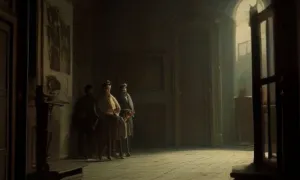
Visualizations and artistic views


The visualisations are generated by artificial intelligence and serve as inspiration.
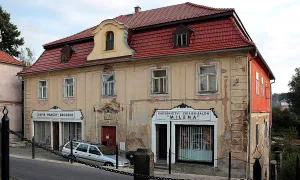
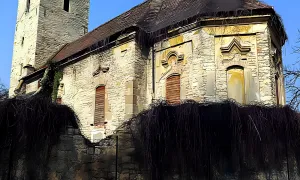
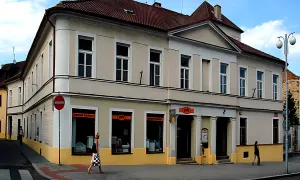
Photos from the area
Real photos taken near the monument


Zdroj a licence jsou uvedeny u každého snímku.
Tips from visitors
No tips yet. Be the first!
Log in and add your tip.
Sources and literature
Photos: Sovicka169 / CC BY-SA 4.0 — Wikimedia Commons. The author and licence also appear when you hover over the image.
Faktickým podkladem tohoto textu byl článek na Wikipedii, jehož autory jsou přispěvatelé Wikipedie. Článek je dostupný pod licencí CC BY-SA 4.0.
Location on the map

Příběhy a pověsti
Legendy, pověsti a příběhy spjaté s touto památkou
Fotografie návštěvníků
Zatím žádné fotografie. Buďte první, kdo přidá fotografii z návštěvy!
Log in a přidejte svou fotografii nebo hodnoťte.
Za ověřenou návštěvu v aplikaci získáte víc bodů — poznáme podle GPS, že jste na místě.
Reviews and comments