



socha svatého Františka Xaverského (Barchov) Statue
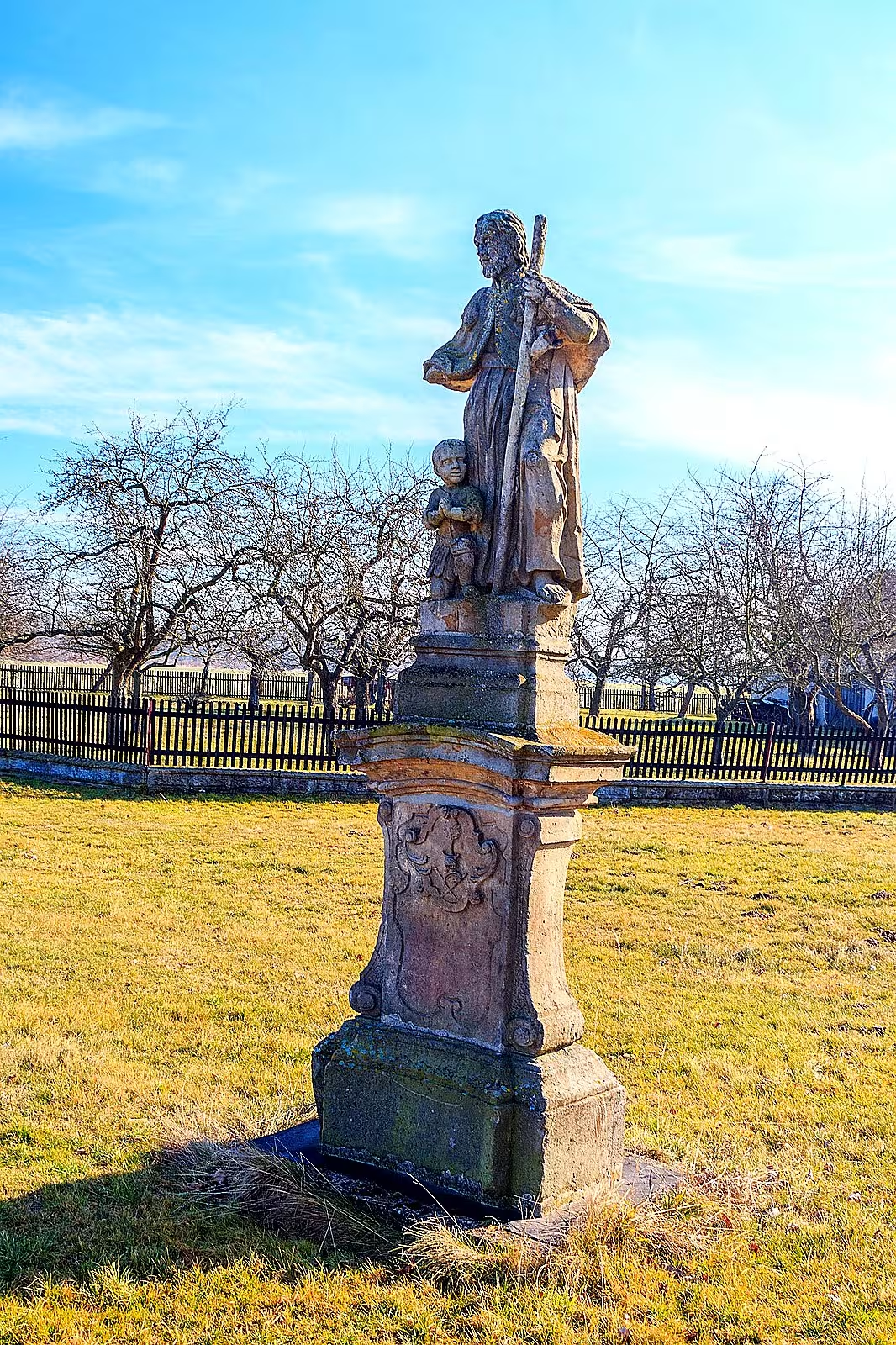
The statue of Saint Francis Xaversky in Barchov is one of the rare preserved late Baroque sculptures in the region of Hradec Kralove. It is located on the road connecting Barchov and Zděkov, but originally it stood by the forest, where forest technology damaged it in the second half of the last century. Today it protects a cultural monument and represents a rare example of rural sculptures from around 1770.
This sandstone statue is a typical work of late Baroque art, which flourished in Czech countries in the context of Catholic counterreformation. The sculpture style of that time is characterized by more dynamic forms and more significant emotional elements. The statue is anonymous - the authorship remains unknown, which was common at the time.
The statue originally misrepresented in cultural monuments as located in the field near Kunčice, which was later repaired. The creation of the statue falls into a time when the ideas of Catholic counterReformation in Europe have spread, supporting the construction of pilgrimage sites and statues of saints. In Czech countries, rural statues were developed to protect passengers and locals.
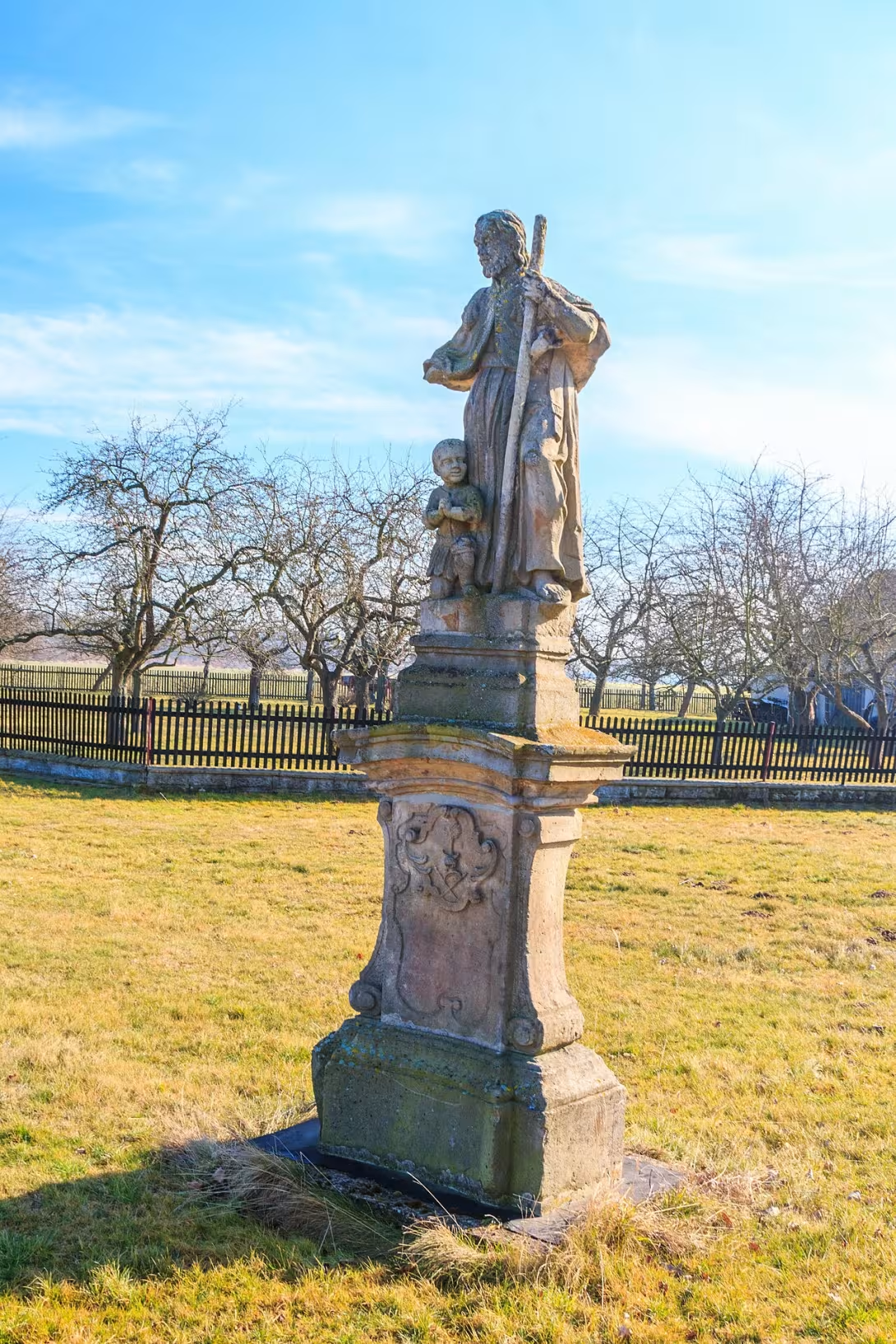
Architecturally, the statue is placed on a prism pedestal with inwards sides, decorated with volutes and embossed. On the ledge of the pedestal is a prismatic plinth, on which stands a statue of a lifelike saint. František Xaverský is depicted in a priest's robe, holding a stick in his left hand while standing at his right side a statue of the boy. This detail may refer to legends about the relationship of a saint to children or the protective function of a statue.
The original location near the forest was disturbed by the forestry technique that damaged it. After restoration it was moved to the road between Barchov and Bůdkov, where it is located today. This transfer was necessary to protect the monument from further damage.
The statue of St. Francis Xaversky is one of the few preserved baroque works of art in the vicinity of Barchov and Bůdkov. Today it is open to the public and is located in a natural environment typical of the region. Although not known by the author, its late Baroque style and detailed processing make it interesting for visitors.
This small but important monument is worth visiting for lovers of history and art. The statue resembles the religious life of the countryside in the 18th century and represents a unique piece of Baroque art.
Then and now
Drag the slider to compare how the landmark may have looked when it was built with the view today.
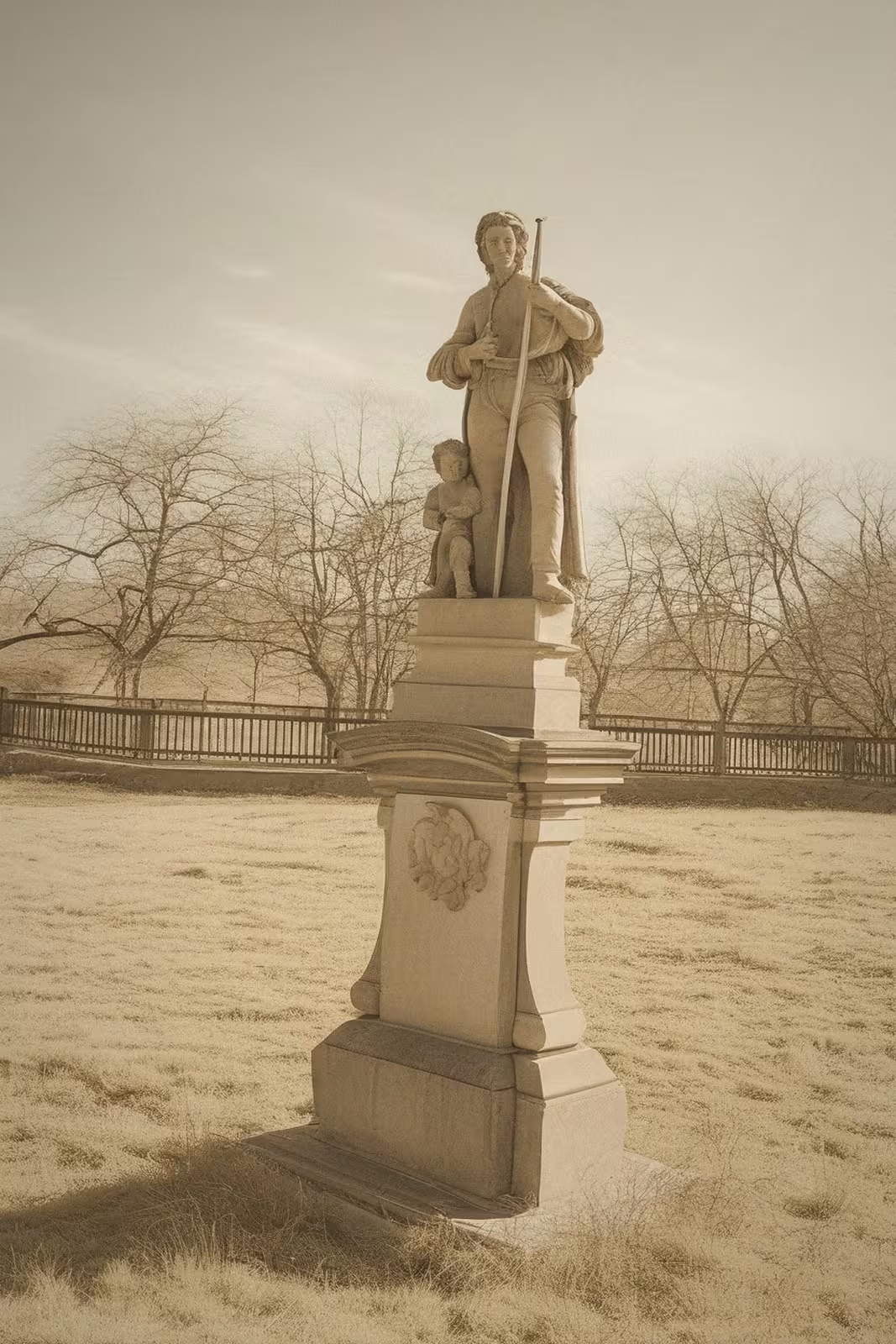
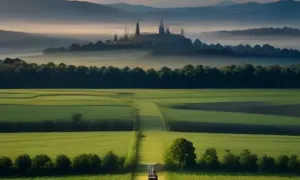
The historical appearance on the left is an AI-generated visualisation and serves as inspiration only.
Historical milestones
- 1770
- The creation of the statue of Saint Francis Xaversky in Barkhov as a late Baroque sculpture associated with Catholic counterreformation.
- around 1750-1780
- The flowering of late Baroque art in Czech countries, when the country statues of saints were built to protect passengers and locals.
- second half of the 20th century
- Damage to the statue by forest technology at the original location near the woods in Barchov.
- after 1990
- Restoring and moving the statue to the road between Barkhov and Animal for its protection.
Architectural development
Originally located near the forest, damaged by forest technology in the second half of the 20th century and after restoration moved to the road. The statue is made of sandstone, typical of late Baroque style with details such as volutes and embossed character.
Points of interest
- The statue of Saint Francis Xaversky is a rare preserved piece of late Baroque sculpture from around 1770.
- Originally, she was standing by the woods where the forest technique damaged her, and that's why she was moved to the road between Barkhov and Animal.
- It's anonymous - the authorship of the statue is unknown.
- On the pedestal is embossed and the statue of the saint stands in life size.
- The statue is placed on a prism plinth with inwards bent hips and decorated with volutes.
Guide
Show guide text
This text was created by artificial intelligence and has not been editorially reviewed. It may contain inaccuracies.
Welcome to this noble statue that stands before you as a witness of the past centuries. You are standing in front of the late Baroque statue of St. Francis Xaversky, which stands on a prism pedestal. You are affected by the peace and sanctity that radiates from it. The statue is made of sandstone, which gives it strength and fineness of detail. Note how light is reflected on the smooth surface of the stone and how the statue becomes a living part of the surroundings.
This statue was created around 1770, when the late Baroque style developed in our countries. It was created as part of a Catholic counterReformation that sought to strengthen the faith and religious identity of people. Rural statues of saints like this served as protectors for passengers and locals. They were placed in strategic places to protect the road and provide spiritual comfort.
Let's take a closer look at the details of the statue. On the pedestal, which is shaped as a prism, is carved embossed and a ledge that distinguishes the statue from the surrounding terrain. The statue itself is in the real size of a man, which gives it impressive. Saint Francis Xaversky is depicted in a priesthood, which is typical of his iconography. In his left hand, he holds a wand that is a symbol of his priesthood. At his right side is a statue of a little boy, which can symbolize his missionary work between children and young people.
Now pay attention to how the statue is placed. Originally, it stood by the forest, where it was part of the natural environment. Unfortunately, the forestry technique damaged it, so it was moved after restoration to the road between Barkhov and Animal. This transfer saved her from further damage and allowed her to become part of a new environment where she can be better protected and admired.
This statue is anonymous, which means its authorship is unknown. Yet it is a rare work of late baroque sculpture that is worth admiring. Notice how the statue integrates into its surroundings, how it becomes part of the landscape and how it attracts the attention of anyone who stops here.
One of the attractions of this statue is its original location near the forest. It was part of nature where it served as a spiritual point in the landscape. Imagine people stopping here to pray or to rest. The damage to forest technology was a great test for her, but thanks to restoration and transfer she became part of a new history.
This statue is also an example of how art has served to strengthen faith and spiritual life in our countries. During the late Baroque, many similar sculptures were built, which were located on roads and in municipalities. Each of them had its own history and meaning, and this statue of St. Francis Xaversky is no exception.
If you like this statue, you can see other similar sights around. Each of them has a story and a meaning worth knowing. Barkhov and animal town are full of historical secrets and beauty that may interest you.
Thank you for stopping by this statue and paying attention to it. Let yourself be carried away by her sanctity and beauty that radiates from her. May this visit bring you not only knowledge, but also peace and inspiration.
Tips for visitors
The best time to visit the statue of Saint Francis Xaversky is in spring or autumn when the weather is pleasant and the sun does not blink directly in the eyes. In summer it may be hot in the sun, while in winter access to the monument may be more difficult due to snow or ice on the road. There's also a smaller crowd of people at these times, which allows for a more peaceful tour.
Mild temperatures and pleasant light create ideal conditions for observing the details of the sculpture and exploring the surroundings without overheating.
It is recommended to arrive by car because public transport to this remote location is not regular.
The roads around here are well maintained, but in winter, caution may be needed because of possible ice.
Take comfortable shoes for the trip, because the way to the statue can be through the field paths or forest paths. It is also suitable to protect against the sun, hat or sunglasses because the statue stands outside and sunlight can create shadows that add depth to details. Bring warmer clothes in winter.
If you plan to stay longer in the area, you can also take a small picnic lunch because there are no restaurants nearby.
Photography is possible from different angles, but the best light for images is in the morning or in the afternoon when the sun shines oblique and avoids direct lighting of the statue. Also interesting are close-up pictures, where you can observe the texture of sandstone and details of holy clothing. In winter, it may be interesting to capture a statue in contrast to snow.
Make sure that foreign objects or people who interfere with the composition don't get into the images.
In the vicinity of the statue there is a village of Barchov and Zděkov, which is worth visiting. The village offers a picturesque setting with forests and field formations typical of the Hradec Králové region. If you have time, you can see the surrounding natural landscape, which is ideal for a short walk or picnic. In both villages typical rural architecture can also be observed.
The village of Barchov is well connected to the surrounding roads, so you can easily get here by car.
It is interesting for families with children to visit the statue thanks to the possibility of exploring historical monuments and nature. Children can view the statue as a general sculpture and find out what baroque sculptures looked like. In the surrounding area it is possible to play on the field paths or in the woods which are safe and well accessible. You can also tell children's stories about St. Francis Xaversky.
In winter, children can enjoy the snow landscape and make a snowman near the statue.
Frequently asked questions
Can the monument be visited?
This is a structure in a public space that can usually be seen from outside free of charge. We have not verified that this particular one is freely accessible.
Where is the monument?
Location: Královéhradecký kraj. The map on this page shows the exact spot.
Why is the monument protected?
It is listed in the Central List of Cultural Monuments of the Czech Republic as a cultural monument (register no. 1000135172).
Businesses nearby
Do you run a restaurant, accommodation, shop, museum, rental, wellness or other visitor service near this monument? Show yourself directly to the people heading to it — this is how they will see you in the app and on the web:
Events nearby


Zdroj akcí: otevřená data měst a obcí ČR (Národní katalog otevřených dat) a kalendář akcí Národního památkového ústavu.
Nearby
V okolí se nachází vesnice Barchov a Zvíkov, lesní oblasti a silnice spojující obě obce. V blízkosti (do 5 km) se nachází také přírodní krajina s lesy a polními útvary typickými pro region Hradec Králové.
Accommodation nearby
Themed route
Thematic cruise route: Statue of Saint Francis Xaversky in Barchov and its surroundings
1. Statue of Saint Francis of Xaversky (Barchov) Type: Baroque sculpture monument Why is it worth a visit: A unique Baroque statue from the 18th century, decorated with a village church or a village village. It is a symbol of local history and craft art. Ideal start for regional knowledge.
2. Barkhov village Type: History and folk architecture Why is it worth a visit: A picturesque village with typical houses and streets that reflect rural life in the past. You can look at older buildings and observe the surrounding nature.
3. Forest Path to Animal Type: Natural walk Why is it worth a visit: About 3 km from Barchov leads the forest road to the neighbouring village of Svěkov. Here you can walk through nature, observe the animals and enjoy the calm atmosphere.
4. Roads connecting Barkhov and Bodkov Type: Short cycling or walking route Why is it worth a visit: A simple but pleasant route between the two villages that offers views of the surrounding fields and forests. Suitable for a short walk or cycling trip.
5. Field and forest surrounding area Type: Natural landscape Why is it worth a visit: Typical fields and forests of the Hradec Králové region. You can relax here, soak up nature and observe local flora and fauna. Ideal for relaxation or short rest.
Seasonal recommendations
Spring: In spring, the surroundings of the statue are awakened by new leaves and flowers. Light is soft and pleasant in this period, which creates a fresh atmosphere. I recommend visiting the morning when the air is freshest. Dress well, because the morning cold can still smell.
Summer: During the summer months there is a strong sun and the surrounding landscape is deep green. Because of the high temperatures and the greater interest of people, it is best to arrive early in the morning. Get your sun cap ready, light clothes and plenty of fluids.
Autumn: Autumn season offers golden shades and often morning fog that create a melancholy and calm mood around the monument. The sun is lower, which is ideal for photography. Get your shoes fixed, because the road can be muddy because of the rain.
Winter: In winter, the statue is very lonely, especially if it is covered with snow or frost. The atmosphere is quiet and steep. Due to short days, plan to visit during the time of the greatest daylight. It is necessary to have very warm clothes and warm shoes to handle the cold.
Visualizations and artistic views


The visualisations are generated by artificial intelligence and serve as inspiration.
Photos from the area
Real photos taken near the monument

Zdroj a licence jsou uvedeny u každého snímku.
Tips from visitors
No tips yet. Be the first!
Log in and add your tip.
Sources and literature
Photos: Petr1888 / CC BY-SA 4.0 — Wikimedia Commons. The author and licence also appear when you hover over the image.
Faktickým podkladem tohoto textu byl článek na Wikipedii, jehož autory jsou přispěvatelé Wikipedie. Článek je dostupný pod licencí CC BY-SA 4.0.
Location on the map

Příběhy a pověsti
Legendy, pověsti a příběhy spjaté s touto památkou
Fotografie návštěvníků
Zatím žádné fotografie. Buďte první, kdo přidá fotografii z návštěvy!
Log in a přidejte svou fotografii nebo hodnoťte.
Za ověřenou návštěvu v aplikaci získáte víc bodů — poznáme podle GPS, že jste na místě.
Reviews and comments