






Socha Ukřižování Statue
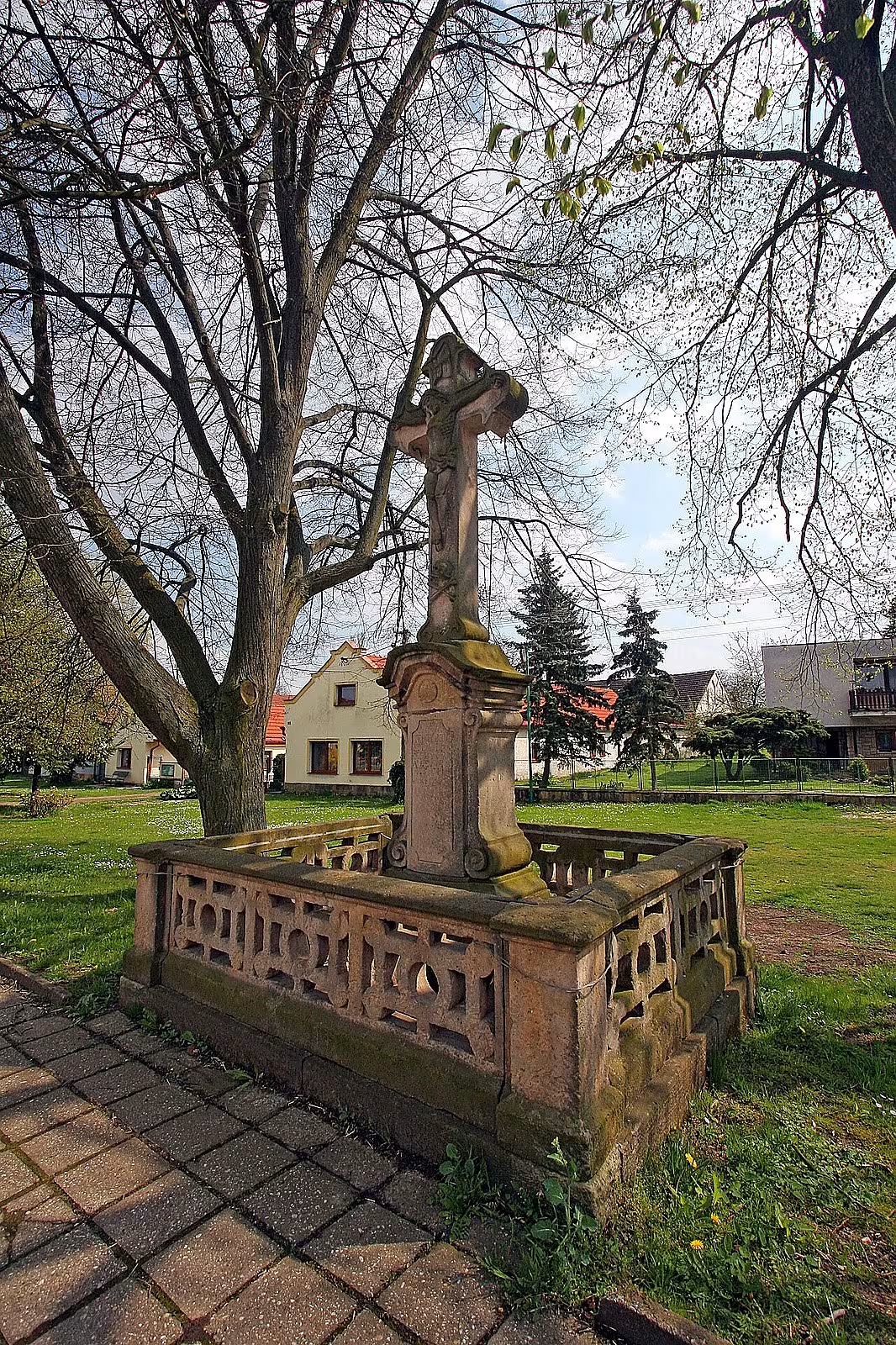
The monument we present is sandstone crucifix located in the heart of the village Smidarska Lhota in Hradec Králové district. This object, made in 1803, is remarkable by its architecture and historical context. Since 2008 it has been protected as a real-estate cultural monument of the Czech Republic.
The crucifix was created in the middle of the 19th century, a period characterized by a classical artistic direction. This style was gradually promoted in Czech countries after the decline of baroque traditions. So crucifix is an example of the contemporary artistic spirit that reflected changes in society and cultural life.
Architecturally, it is a four-paralleled statue consisting of a sandstone stage with a pedestal, pillar, ledge and cross itself. The whole area is enclosed by a sandstone fence on a block suspect with geometric ornaments. The crucifix saw has a convex front wall and a profiled ledge, which forms the third part of the statue. On the pillar is the inscription in the passport highlighted in black, which gives the object a historical character. In the timpanon of the ledge is carved the relief of the sun and under the corpus of Christ there is a relief of the skull with crossed legs.
The history of crucifix has not seen dramatic changes in ownership or administration, which is often the case with many historical monuments. Its protection as a real-estate cultural monument was declared on 17 April 2008, which meant the official recognition of its historical and artistic value.
The crucifix is now open to the public in the center of Smidarska Lhota village. His visit offers not only a view of period craft work, but also the possibility of thinking about the historical context and cultural development of the area. This monument is therefore a great opportunity for those who want to know more about local history and artistic traditions.
The crucifix in Smidar Lhota is not only a monument to our past, but also a witness to the cultural heritage that deserves attention. His visit offers a unique insight into the era of classicism and allows us to understand the importance of these monuments for today's generations.
Then and now
Drag the slider to compare how the landmark may have looked when it was built with the view today.
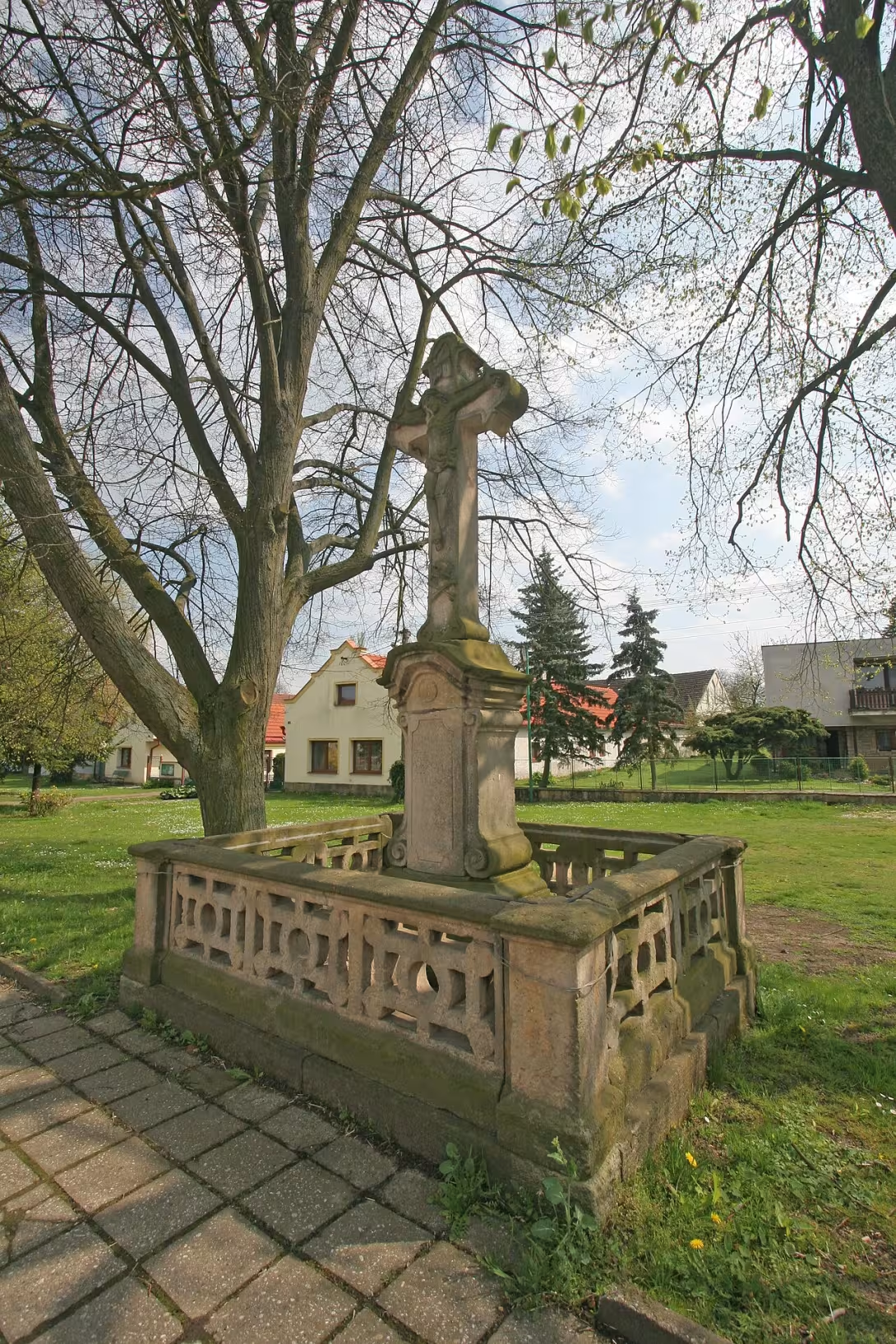
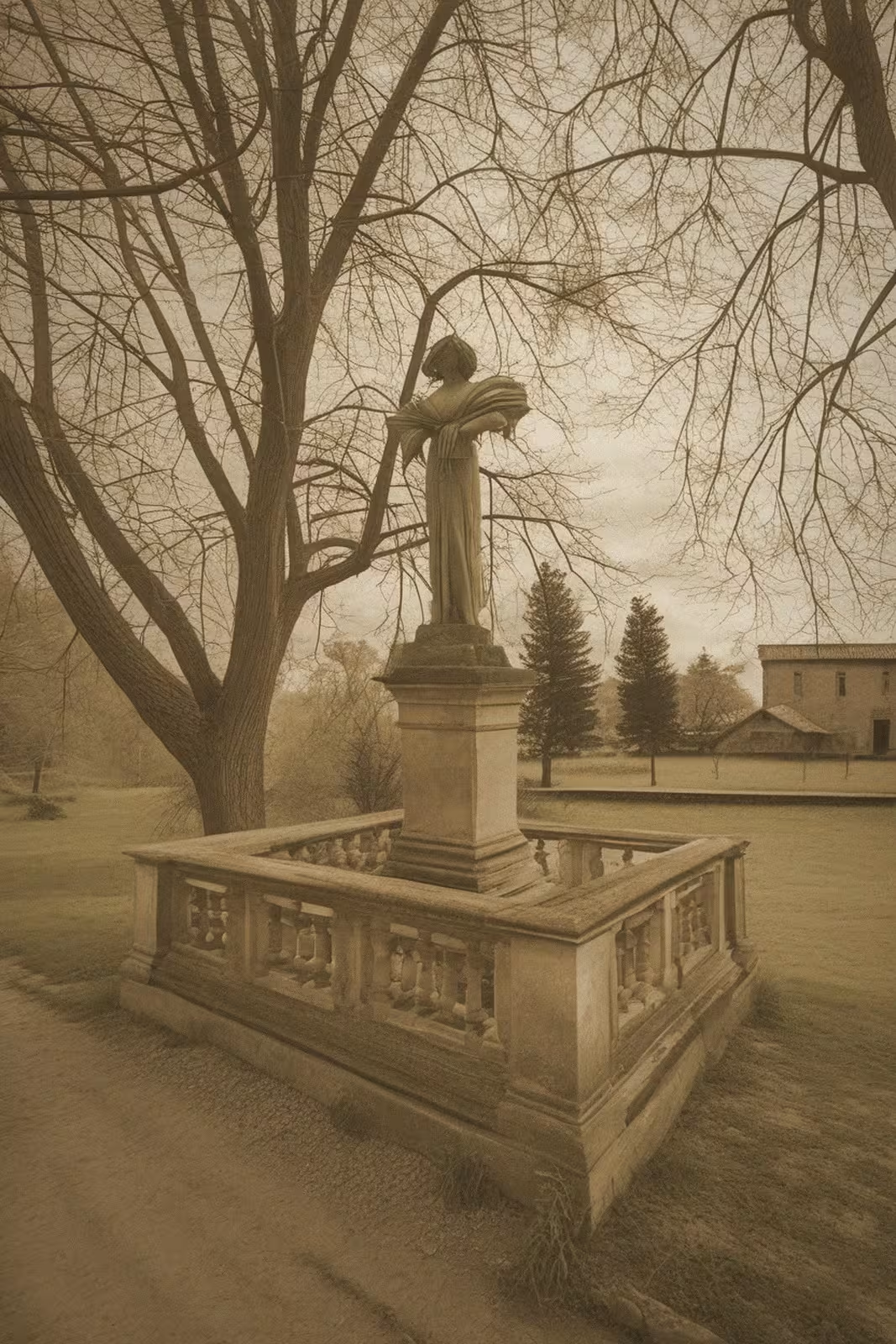
The historical appearance on the left is an AI-generated visualisation and serves as inspiration only.
Historical milestones
- 1803
- Creation of sandstone crucifix
- 2008
- Announcement of protection as a real cultural monument of the Czech Republic
Architectural development
The crucifix is made of sandstone and consists of four parts: degrees with pedestal, pillar, ledge and cross itself. The whole area is enclosed by a sandstone fence with profiled heads and a ledge.
Historical events
17. 4. 2008: Announcement of the building by a cultural monument of the Czech Republic.
Points of interest
- The sandstone crucifix in Smidar Lhota was made in 1803. - Since 17 April 2008 it has been protected as a real-estate cultural monument of the Czech Republic. - The statue is performed in classical style and consists of a degree with a pedestal, pillars, moldings and crosses. - In the timpanoni of the ledge is carved the relief of the sun and under the corpus of Christ lies the relief of the skull with crossed legs. - The area of the monument is bounded by a sandstone fence on a quad suspect with geometric ornaments.
Guide
Show guide text
This text was created by artificial intelligence and has not been editorially reviewed. It may contain inaccuracies.
Welcome to Smidar Lhota. Stop for a moment, take a breath and feel the calm of this place. Right now you're standing in the very center of the village, in a place that served the generations of the local population as a spiritual and social centre. Before you stand a silent witness to history, a sandstone crucifix that defines the nature of this space by its presence. The first impression that radiates from the monument is a sense of stability and deep humility. It is a work that is not monumental in its size, but is extremely strong in its symbolism and craftsmanship.
Let us now look together at how this monument was created and in what context it was inserted into the landscape. This sandstone cross was drawn in 1803. So imagine a time when this village was completely different, the roads were dusty, and people's lives were closely linked to the rhythm of nature and faith. Although today we do not know exactly who was the specific author of this work, it is clear that it was the creation of a skilled craftsman who controlled the work of the stone. At that time, it was not only a religious symbol, but a token of gratitude, a request to protect the village or a reminder of an important event. The year 1803 brings us back to the period when classical art was promoted, which is the style that tried to return to harmony, purity and balance, and that is what we feel in this object.
Now pay attention to the details that form the whole complex. Let's not start with the cross itself, but let's see what surrounds it. Note the sandflap that separates the sacred space of the monument from the surrounding path and surrounding area. This fence stands on the block of suspicion, which is a basic stone structure which ensures the stability of the entire fence. If you approach and look closely at the surface of the stone, you'll see geometric patterns. These are subtle details that give an otherwise simple fence rhythm and aesthetic value. It is fascinating to think how much patience required carving these shapes into hard sandstone over 200 years ago.
Now let's move our view to the center, to the main part of the monument. The whole object stands at a stage with a pedestal which forms a solid base for everything that follows above. Above it is a four-wall pillar. Notice its shape, especially the front wall, which is not flat, but has a convex arc. This slight output gives the statue dynamic in advance and causes it to speak to us visitors in some sense and reach out to us. Above the pillar follows the profiled ledge, which is the rising horizontal hem that optically separates the lower supporting part from the cross itself.
Now look very carefully at the space under this ledge, the so-called tympanone. It's that semi-circular or triangular space that is often decorated. Here you will find carved relief of the sun. The sun is an ancient symbol of light, hope and divine presence, and in the context of crucifixion, it resembles victory over death and a new beginning. It is a small but very important detail that points to the deep symbolic dimension of the entire work. Above the ledge stands the cross itself with the Corpus of Christ. Everything is done in a classical style, which means you will not find excessive decorating or dramatic gestures, but rather peace, dignity and purity of the lines.
If we stop over the personalities associated with this place, we have to acknowledge one particular thing. The names of architects or stonemakers who created this cross in 1803 were not preserved in the annals. They're anonymous. Maybe he was a master from the surrounding region, maybe someone who left similar clues in the Hradec Kralove area. This ignorance, however, does not increase the memory of dust, but rather the mystery. It is a reminder that many beautiful things have been created in our neighbourhood thanks to people who have not sought glory for their name but have formed for their community and for their faith. For centuries, this crucifix has been the silent companion of all those who passed through Smidar Lhota, saw generations changing, heard thousands of prayers and watched the villages change.
You may be wondering why this particular cross is so important that it deserves your attention. In addition to its aesthetic and historical value, it also has official recognition. Since April 17, 2008, sandstone crucifix has been protected in Smidarska Lhota as a real-estate cultural monument of the Czech Republic. This means that the state has acknowledged that this object is not only a religious builder, but an important fragment of our national heritage. Protection guarantees that sandstone material will be cared for and that future generations will be able to stand in the same place as you today and perceive the same peace and history.
Now try to remain silent for a moment and just observe how the light hits the sandstone surface. Sandstone is a grateful material, but at the same time fragile. It carries a trace of time, minor erosion and weather influences that give it paradoxically patina and authenticity. Feel the contrast between the strength of the stone and the fineness of the relief of the sun. It's a place where trade, faith and time meet.
I hope this short trip to history has helped you see more than you can see at first sight. This crucifix is small, but it has a big story about people who lived here two centuries ago and wanted to leave a trail of something lasting and beautiful. Now invited to further explore the Smidar Lhota. Take a walk through the surrounding streets, see the atmosphere of the village and look for other hidden details that tell you stories from the past. Thank you for accompanying me to this monument, and I wish you the pleasant rest of your day. Goodbye.
Tips for visitors
For the best experience we recommend a visit early in the morning or late in the afternoon. In these times the light is softer, which will enhance the texture of sandstone material and geometric details on the block suspect.
Transport to the place is possible by car and public transport. The current timetables and parking possibilities around the village please check the search engine or the carrier's website.
We recommend taking drinking water and comfortable shoes with us, which is suitable for walking around the village. Since it's an outdoor monument, it's good to be ready for changing weather.
If you plan to take pictures, you will get the best results using indirect daylight. Focus on the detail of the crucifix and its decorated base to capture its historical value.
Families with children can use a visit to a quiet walk in the heart of Smidarska Lhota. A tour of the surroundings offers the possibility of observing local architecture at a pleasant pace.
Businesses nearby
Do you run a restaurant, accommodation, shop, museum, rental, wellness or other visitor service near this monument? Show yourself directly to the people heading to it — this is how they will see you in the app and on the web:
Nearby
The monument is located in the heart of Smidarská Lhota in Hradec Králové district.
Accommodation nearby
Themed route
Thematic cruise route: Smidarska Lhota and its sights
1.Socha Ukřižování - Type: Historical statue - Why is it worth a visit: This statue is the central point of Smidarska Lhota and represents an important cultural monument. Its location in the heart of the city offers a view of historical and contemporary aspects of the life of the village.
2. Church of St. Gilji - Type: Religious object - Why is it worth visiting: The church is not only a spiritual centre of the local community, but also an architectural pearl with a rich history. Its interior and artistic features attract visitors from the entire district of Hradec Králové.
3. Local Market - Type: Business location - Why is worth a visit: Market is the lively heart of the village where you can discover local products and get to know the daily life of the Smidar Lhota. It's a meeting place for locals and visitors.
4. Church Park - Type: Green space - Why it is worth a visit: The park offers a quiet break and beautiful space for relaxation. It is an ideal place to look at the surrounding architecture and for a moment of rest after exploring historical monuments.
This route allows you not only to discover the main cultural monuments of Smidar Lhota, but also to immerse yourself in its everyday life and atmosphere.
Seasonal recommendations
In spring it dominates the surrounding area of the awakening nature and fresh green leaves, which creates a gentle contrast with the stone of the statue. The morning light is soft and pleasant in this period, which gives the place a sense of hope and peace. We recommend you put on more layers of clothing so you don't get caught in the weather, and leave first thing in the morning when the air is the cleanest.
The summer months bring intense sunlight that creates deep shadows and highlights the details of the statue. The atmosphere is hot and the surrounding green is in full bloom. Due to the largest number of visitors and high temperatures, it is best to arrive very early in the morning. Don't forget light clothing and plenty of fluids.
Autumn covers the memory with golden colours of fallen leaves and frequent morning fog, which deepen the melancholy and respectful character of the place. The light is golden and radiant in peace in this period. It is convenient to have waterproof clothes and visit in the afternoon when there are many fewer people at the statue than in the season.
In winter, the statue is very sober and dramatic, especially if it is covered by a layer of snow that will dampen all sounds in the surrounding area. There is silence and a sense of isolation from the world. It is necessary to wear warm and functional clothes and count on a shorter day, therefore it is ideal to plan the arrival around noon.
Visualizations and artistic views


The visualisations are generated by artificial intelligence and serve as inspiration.
Photos from the area
Real photos taken near the monument


Zdroj a licence jsou uvedeny u každého snímku.
Tips from visitors
No tips yet. Be the first!
Log in and add your tip.
Sources and literature
Fotografie: Petr1888 / CC BY-SA 3.0 — Wikimedia Commons. The author and licence also appear when you hover over the image.
Faktickým podkladem tohoto textu byl článek na Wikipedii, jehož autory jsou přispěvatelé Wikipedie. Článek je dostupný pod licencí CC BY-SA 4.0.
Location on the map
Příběhy a pověsti
Legendy, pověsti a příběhy spjaté s touto památkou
Fotografie návštěvníků
Zatím žádné fotografie. Buďte první, kdo přidá fotografii z návštěvy!
Přihlaste se a přidejte svou fotografii nebo hodnoťte.
Za ověřenou návštěvu v aplikaci získáte víc bodů — poznáme podle GPS, že jste na místě.
Reviews and comments