



sochy na mostě ve Vyšším Brodě Set of small monuments
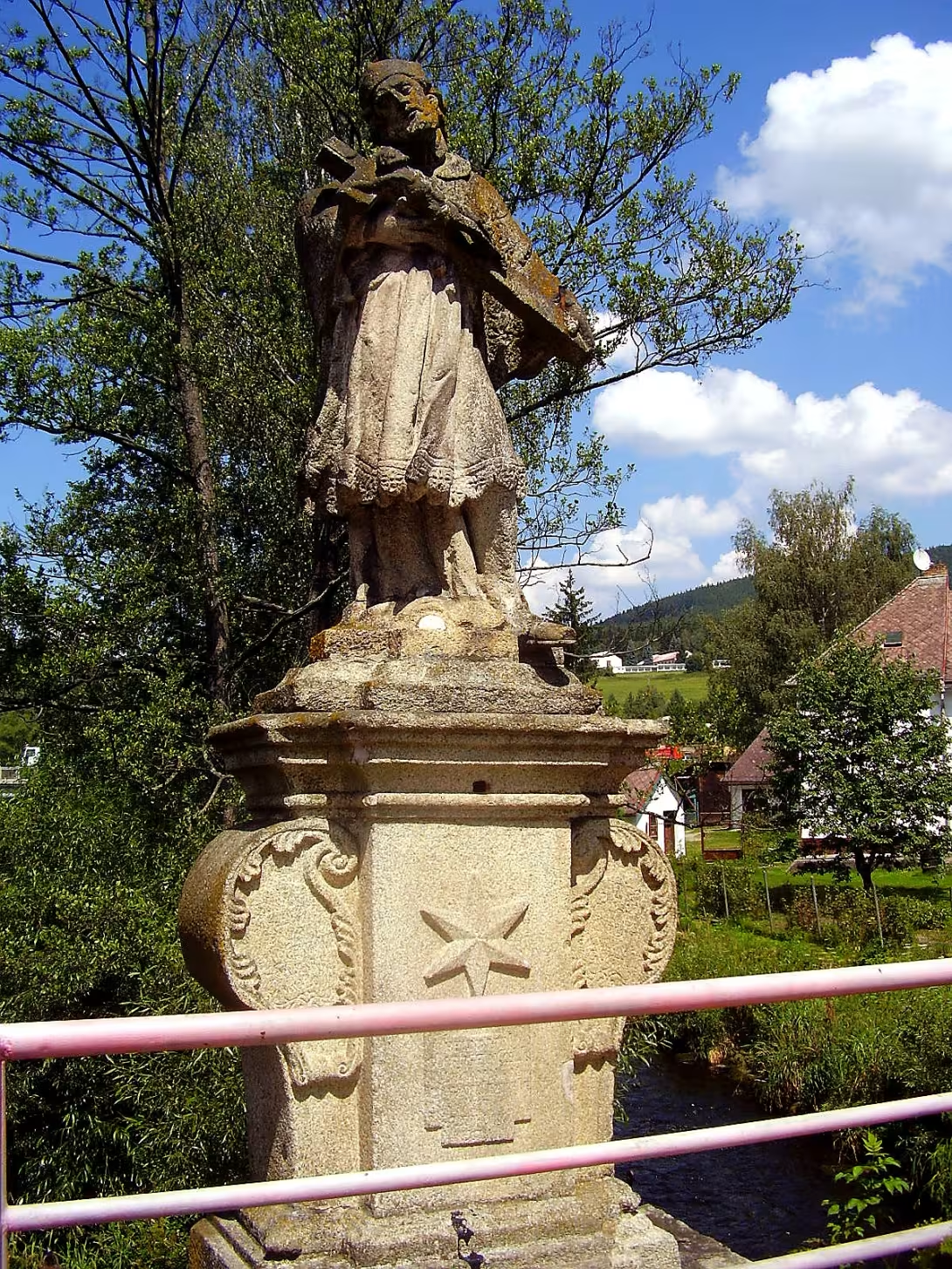
Statues on the bridge in Vyší Broda are a cultural monument of the Czech Republic, representing two Baroque sculptures: St. John Nepomuk and St. Anna. These works from 1724 are located on a concrete bridge over the river Vltava, where they replaced the original stone bridge. Their history is closely linked to the Baroque period in Czech countries and their authors are recognized sculptors Josef Dietrich and Jan Dietrich from České Budějovice.
Baroque style, spread throughout Europe in the 18th century, reached its peak in Czech countries in the first half of this century. This period was characterized by the rich sculpture production and widespread expansion of St. John Nepomuk's cult, which led to the frequent placement of his statues on bridges. Statues in Vyší Broda are the result of the work of the workshop Josef and Jan Dietrich, specializing in Baroque sculpture.
The architecture of the statues corresponds to a typical baroque style with its dynamic form and emotional expression. Originally, these statues were part of a stone bridge, which later replaced concrete construction. This movement not only preserved the artistic value of the statues, but also ensures their protection and sustainability in the modern environment.
The history of these statues is connected to the local cult of St. John Nepomuk, which was very popular in the 18th century. The sculptors Josef and Jan Dietrich from České Budějovice created these works as part of a wider movement of baroque art focused on emotional and dramatic expression. The statues of St. John Nepomuk and Saint Anna are an example of this direction, their location on the bridge underlines both spiritual and aesthetic functions.
The statues in Vyší Broda went through several stages, from their original location on the stone bridge to the current state on the concrete bridge. This transfer was necessary to preserve the statues at a time when the infrastructure was changing and modernising. Thanks to careful relocation and protection, these statues are still visible and accessible to visitors.
Today sochy na mostě ve Vyšším Brodě is not only a cultural monument, but also a popular place for tourists. Their location over the Vltava River offers a beautiful view and provides the opportunity to become acquainted with Baroque art in the context of Czech history. Visiting these statues is also an opportunity to see the beauty of the village Vyšší Brod and surrounding region.
The statues of St. John Nepomuk and St. Anne are evidence of the rich history and artistic tradition of Czech countries. Their presence on the bridge in Vyší Broda is not only a monument to the past, but also a living witness to the lasting influence of baroque art. For those who want to explore Czech history and culture, sochy na mostě ve Vyšším Brodě is a necessary place to visit.
Historical milestones
- 1724
- Creation of Baroque statues of St. John Nepomuk and St. Anne
- first half of the 18th century
- The peak of Baroque art in Czech countries
- 18th century
- Wide spread of St. John Nepomuk's cult
- later
- Relocation of statues from stone bridge to concrete bridge
Architectural development
The statues were originally part of a stone bridge. In a later period, they were moved to a new concrete bridge over Vltava. The entire design corresponds to baroque style.
Points of interest
- Statues of Saint John Nepomuk and Saint Anne are a cultural monument of the Czech Republic. - These sculptures from 1724 were created by Franz Joseph and Jan Dietrich from České Budějovice. - The statues are placed on a concrete bridge over the river Vltava, where they replaced the original stone bridge. - Their Baroque style is characterized by a dynamic form and an emotional expression. - Statues are part of a wider movement of baroque art, focused on emotional and dramatic expression.
Guide
Show guide text
This text was created by artificial intelligence and has not been editorially reviewed. It may contain inaccuracies.
Welcome to Vyšíší Broda, a picturesque place on the Vltava River, where history and art point to their hands. You stand before the bridge, home to two Baroque statues - St. John Nepomuk and St. Anna. These statues will greet you from 1724 when they were created in the famous workshop of Josef and Jan Dietrich from České Budějovice.
Let's dive into the past. Baroque art reached its peak in the first half of the 18th century, a period of creativity and religious revival. During this period, St. John Nepomuk's cult spread throughout the Czech countries, leading to the creation of many works of art in his honour.
Look up at these statues. Saint Jan Nepomucký is known for his bravery and pride, which he showed in the protection of secrets, while Saint Anna symbolizes maternal kindness. These statues are located on the concrete bridge where they replaced the original stone bridge. Note their detailed removal and expression that reflect the skills of the Dietrich workshop.
Josef and Jan Dietrich were the key figure of this time. Their work not only decorated cities, but also contributed to the cultural wealth of the region. These statues are now a recognized cultural heritage of the Czech Republic and a testament to the historical importance of this place.
The interesting thing is that these statues were originally placed on a stone bridge. Their relocation to the current concrete footbridge has preserved their historical importance and allowed generations to enjoy their beauty.
Your visitor is here to explore, so let yourself be inspired by this place full of history and art. May this guide lead you to the other hidden treasures of High Brod. Thank you for your visit!
Tips for visitors
The best time to visit statues on the bridge in Vyší Broda is in spring and autumn months when the light is pleasant and the temperature is suitable for long walks. This time of year also offers the most beautiful views of the river Vltava, which stretches around the village.
Access to the monument can be realized both by car and public transport.
When visiting, have your sunglasses brought to protect you from light during spring and summer months. It is also advisable to wear clothes according to weather, because temperatures can change rapidly, especially in colder periods.
Photography of the statues of St. John Nepomuk and St. Anna will offer the best possibilities from the bridge towards the Vltava River, especially in the morning when the light is pleasant. It is advisable to avoid photography on the middle of the day when the light is most intense and can cause strong shadows.
We recommend visiting the monastery Vyšší Brod, located nearby. This historical complex is an ideal place for those interested in history and architecture. For families with children, the monastery is also an interesting option for a short walk through the monastery courtyard.
Frequently asked questions
Can the monument be visited?
We have not verified whether this monument is accessible. Please ask the owner or operator, or the local municipal office.
Where is the monument?
Location: Vyšší Brod. The map on this page shows the exact spot.
Why is the monument protected?
It is listed in the Central List of Cultural Monuments of the Czech Republic as a cultural monument (register no. 1000135792).
Businesses nearby
Do you run a restaurant, accommodation, shop, museum, rental, wellness or other visitor service near this monument? Show yourself directly to the people heading to it — this is how they will see you in the app and on the web:
Events nearby
Zdroj akcí: otevřená data měst a obcí ČR (Národní katalog otevřených dat) a kalendář akcí Národního památkového ústavu.
Nearby
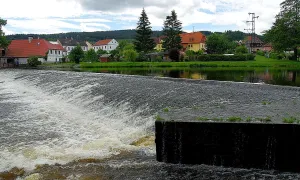
Řeka Vltava a obec Vyšší Brod.
Accommodation nearby
Trips and activities nearby
Guided tours, tickets and activities nearby from GetYourGuide
Affiliate link: if you buy from the partner, we may receive a commission. The price for you does not change.
Search tours and activities →Themed route
Thematic cruise route from the High Brod
1. Statues on the bridge in Vyší Broda (statue) This bridge is home to unique statues that represent the spiritual and historical value of the region. Worth visiting for your artistic expression and connection to local tradition.
2. River Vltava (nature) Shortly from the mostecky statues there is the river Vltava, which offers beautiful views and a quiet atmosphere. It is ideal for moments of relaxation or when you wish to look at the flow of water from a different angle.
3. Municipality of Vyšší Brod (city) Explore the municipal centre itself, which is characterized by its historic buildings and peaceful landscape atmosphere. Here you can find several restaurants where you can enjoy traditional Czech food.
4. Walk along the Vltava (nature) A short walk along the river bank offers a view of natural beauty and a quiet atmosphere. It is an ideal way to enjoy the surrounding countryside and relax after exploring the city.
5. Bridge courtyard (architecture) Visit the area around the bridge where you can enjoy architectural details and views of the surrounding landscape. This space is also suitable for a short break or photography.
This route allows you to explore the main attractions of Vyší Brod and its direct surroundings, offering a combination of cultural, historical and natural experiences.
Seasonal recommendations
Spring: In spring, the bridge in Vyšíší Broda is transformed into a vibrant region, where various kinds of flowers and trees begin to bloom. The sun illuminates the statues on the bridge with a pleasant light, which is an ideal time for photography. We recommend that visitors wear clothes suitable for mild temperatures and carry an umbrella because spring weather can suddenly be variable. The best time to visit is on holiday weekends when nature is the most beautiful.
Summer: During the summer season the bridge in Vyší Broda offers beautiful sunny days with long hot evenings. The sun lights up statues in the afternoon, creating dramatic shadows and effects. Visitors should wear light clothes, sunglasses and UV protection cream. The best time to visit is in the early afternoon or the evening when you avoid heat and distance.
Autumn: In autumn, the bridge offers a beautiful view of the coloured leaves of trees. The sun sets early, creating a romantic atmosphere with darker skies and brighter visible stars. Visitors are advised to wear warmer clothes and have an umbrella because autumn weather can be damp. The best times to visit are trips in the prehistoric hours when the temperature is most pleasant.
Winter: The winter bridge in Vyší Broda offers a unique atmosphere with the possibility of seeing snow sheets on statues and surrounding landscapes. The sun sets very soon, which creates short but bright days. Visitors should wear warm clothes, a protective leg and have an umbrella against snowfalls. The best times to visit are trips in the forecast hours when the temperature is most pleasant and the sun illuminates the statues with its winter light.
Visualizations and artistic views

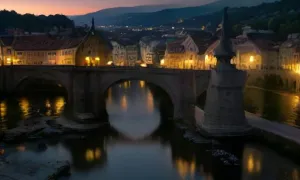
The visualisations are generated by artificial intelligence and serve as inspiration.
Photos from the area
Real photos taken near the monument


Zdroj a licence jsou uvedeny u každého snímku.
Tips from visitors
No tips yet. Be the first!
Log in and add your tip.
Sources and literature
Photos: Isolda11 / CC BY-SA 3.0 — Wikimedia Commons. The author and licence also appear when you hover over the image.
Faktickým podkladem tohoto textu byl článek na Wikipedii, jehož autory jsou přispěvatelé Wikipedie. Článek je dostupný pod licencí CC BY-SA 4.0.
Location on the map


Příběhy a pověsti
Legendy, pověsti a příběhy spjaté s touto památkou
Fotografie návštěvníků
Zatím žádné fotografie. Buďte první, kdo přidá fotografii z návštěvy!
Log in a přidejte svou fotografii nebo hodnoťte.
Za ověřenou návštěvu v aplikaci získáte víc bodů — poznáme podle GPS, že jste na místě.
Reviews and comments