






Kaple svatého Josefa (Vyšší Brod) Chapel
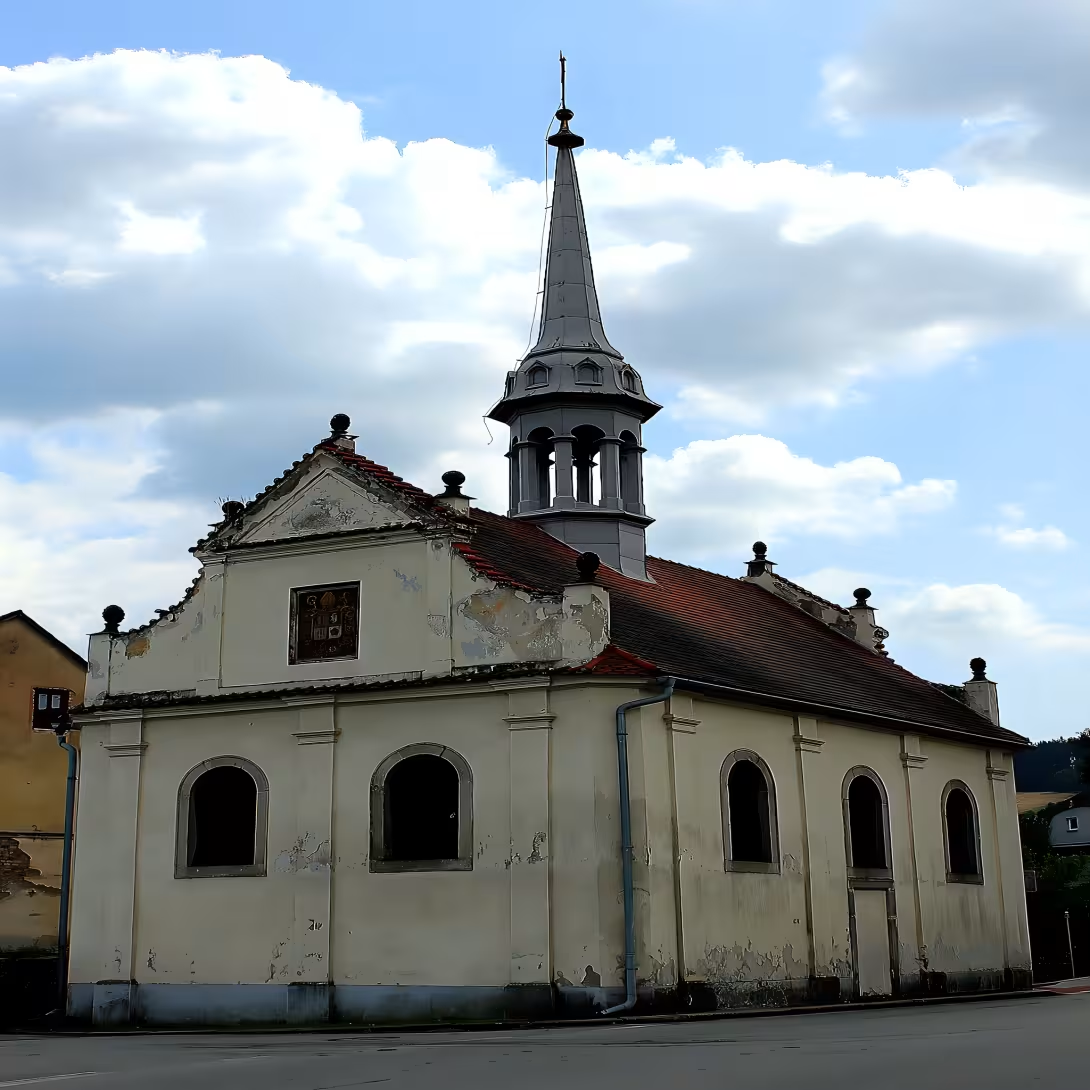
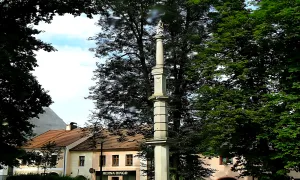
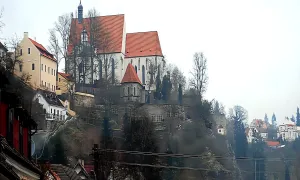
The chapel of St. Joseph is one of the oldest buildings in Vyší Broda and is protected as a pastoral building. It is located in the city monument zone Vyšší Brod, on the road II / 163 leading from Montenegro in Pošumaví to Lower Dvořiště, directly opposite the monastery garden.
Her story begins in 1347, when Petr z Rožmberka founded a hospital in Vyší Broda. At the same time he had built this chapel in a Gothic style, which was typical of the sacral structures of the time. The original dedication of the chapel belonged to Saint Elizabeth. The chapel was consecutively and carefully consecutively consecrated only in 1371, reminiscent of the fact that there was a time distance between the foundation and the complete entry into service.
At the end of the 17th century, the chapel expected the first major reconstruction. In 1678 the chapel was rebuilt in the Baroque style and extended by two ports, which increased its space and changed its shape according to the then aesthetic standards. An organ dating back to 1671 was also acquired during this period. The equipment included a Baroque altar, which became a valuable part of the interior.
But the fate of the chapel has become complicated in modern history. During the Josephine reforms, the sacral space was abolished and the chapel was transformed into a granary - a practical solution, however, which meant the end of its original function. It was only in 1816 that her religious role was restored: the chapel was repaired, reconsecrated, and this time permanently dedicated to Saint Joseph, thereby obtaining a name that she still bears today.
The last major interference with her identity was a shift in the period of normalisation. In 1974, the chapel was rescinded, now with a completely different purpose - it was converted into a puppet theatre. Unfortunately, its valuable inventory, including the baroque altar and the 17th century organ, succumbed to the destruction of this use.
The break occurred after 1989. In 1990, the chapel was returned to the Hosebrod benediktinскомProcessing Monastery and subsequently repaired. By doing so, she returned to the care of the community that originally associated her with spiritual life, and could begin a new chapter in its long history.
Visiting the chapel means taking a walk along the excellent layers of Czech history - from Gothic origin to baroque air, the turbulence of the reform periods to the present day. Its location opposite the monastery garden is naturally anchored in the small-town atmosphere Vyšší Brod, which itself belongs to the most preserved locations of the Czech heritage.
Then and now
Drag the slider to compare how the landmark may have looked when it was built with the view today.
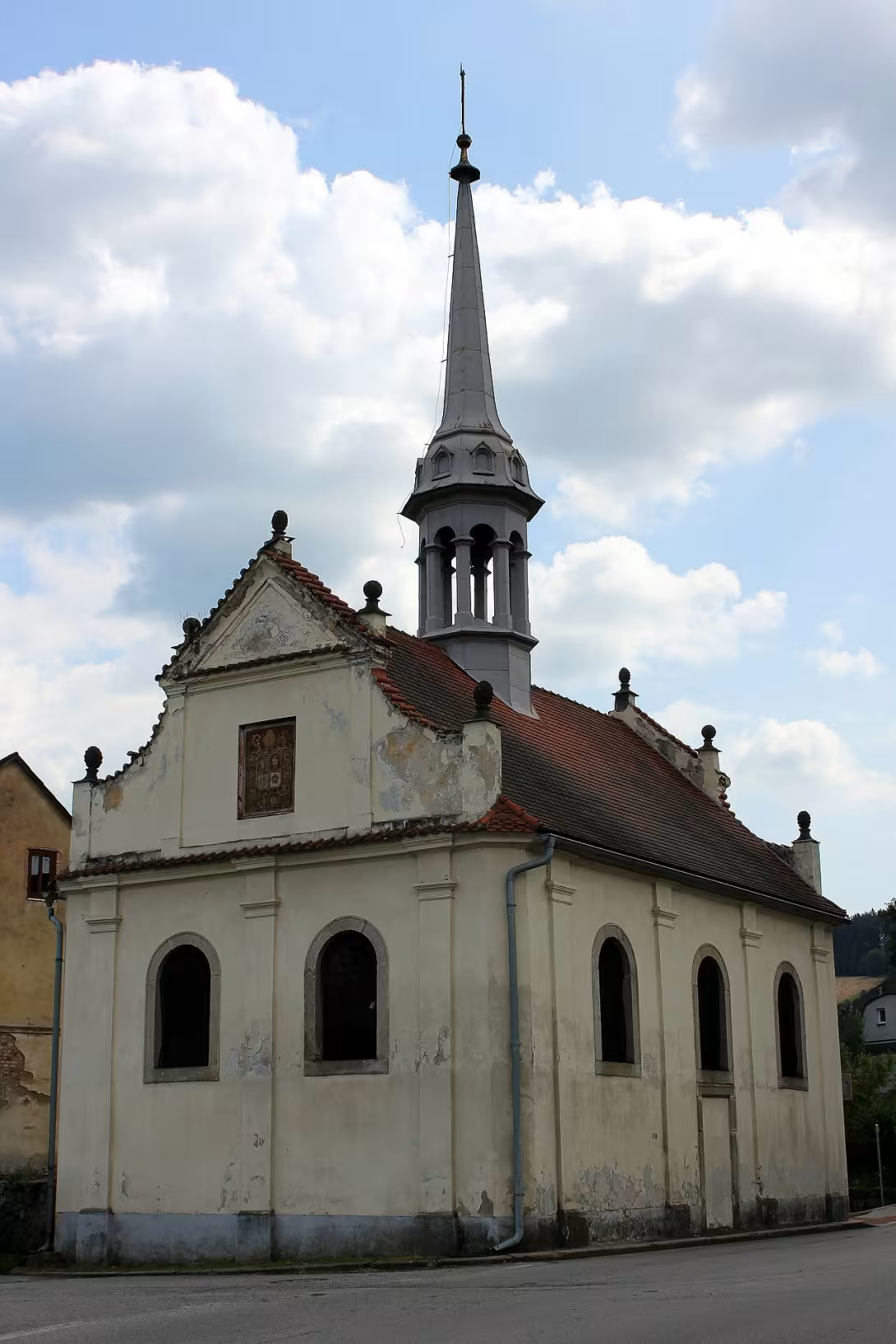

The historical appearance on the left is an AI-generated visualisation and serves as inspiration only.
Historical milestones
- 1347
- establishing a hospital and building a Gothic chapel by Petr from Rožmberk
- 1371
- consecration of the chapel dedicated to Saint Elizabeth
- 1678
- baroque reconstruction and extension with two ports
- 1816
- repair and new initiation to Saint Joseph
- 1974
- cancellation of chapel and conversion into puppet theatre
- 1990
- returning the chapel to the schebrod monastery and repairing it
Architectural development
Originally, it was a gothic tripod ending in 1347. In 1678, the building was rebuilt in the Baroque style and extended by two ports. In a later period it was cancelled and converted into a granary and puppet theatre, which led to the destruction of the original inventory.
Historical events
1371: the consecration of the chapel dedicated to Saint Elizabeth; 1678: Baroque reconstruction and extension; 1974: conversion into puppet theatre; 1990: Return of the monastery and repair.
Owners
Petr z Rožmberka (founder), Vyšebrod monastery (since 1990)
Points of interest
- The chapel of St. Joseph belongs to the oldest buildings in Vyší Broda and is protected as a monument. - It is located in the city monument zone Vyšší Brod, on the road II / 163 leading from Montenegro in Pošumaví to Lower Dvořiště, directly opposite the monastery garden. - Her story begins in 1347, when Petr z Rožmberka was founded with the hospital and built in a Gothic style with the original dedication of St. Elizabeth. - The first major reconstruction took place at the end of the 17th century, when the chapel was rebuilt in the Baroque style and extended by two attachments; Organ dates back to 1671 and Baroque altar became part of the equipment. - During the Josephine reforms, the sacral space was abolished and the chapel was transformed into a granary, but in 1816 it restored its religious function and was permanently dedicated to Saint Joseph.
Guide
This guide is narrated by a synthetic voice generated by artificial intelligence.
Show guide text
This text was created by artificial intelligence and has not been editorially reviewed. It may contain inaccuracies.
Welcome to Vyší Broda. You're standing right where history touches the present and where every stone wall tells a story over centuries old. In front of you is the chapel of St. Joseph, one of the oldest and most important buildings in the whole area. Before we go into deeper exploration, please perceive the atmosphere of this place. You are located in the heart of the town monument zone, right opposite the vast monastery garden. This position is not random. The chapel stands here as a silent guard, observing passengers passing through a road from Montenegro in Pošumaví towards Lower Dvořiště, while remaining a fixed point in a variable world.
Let us go back together deep into the past, until this landscape formed under the influence of powerful generations. To understand the importance of this construction, we need to look at 1347. This is when the first chapter of the story of this chapel began to be written here. At that time, he had it built by Petr z Rožmberka. This figure was extremely influential in the company at the time and its decision significantly affected the face of the entire South Bohemia. However, the chapel was not created as a separate object for the prayers of a few people. It was a solid part of the hospital, which is a key word in the context of the Middle Ages. The hospital wasn't just a hospital, as we would have imagined today, but it was a place of care, a sanctuary for the poor, the sick, and the pilgrims. So the chapel was the heart of a place that was meant to serve human need and compassion.
Note now how different epochs and styles intersect in the structure of this building. Originally, the chapel was carried out in pure Gothic style. If you look at its overall form now, perhaps in its lines you still feel the ancient, medieval rigour and grandeur. But at that time it was not dedicated to Saint Joseph as we know it today. Her original initiation belonged to Saint Elizabeth. Imagine those prayers floating around in Gothic spaces over the centuries.
But time continues to flow, and people's needs change with it. In the other centuries of the chapel, she went through major changes that left her mark. Now pay attention to the Baroque reconstruction that took place in 1678. That was the moment when Gothic rigor began to turn into something else, something that corresponded to a new age. At this time the chapel was extended by two ports, which changed its volume and perception of space. This Baroque layer gave the construction a new character and prepared it for the next century of existence. Another important breakthrough occurred in 1816. After repairs, there was a new initiation, this time to St. Joseph, which gave the chapel the name under which you know her today.
This process of constant conversion is fascinating. The chapel is not just a static object but a living organism that adapted to the time it was in. And this is where we come to one of the most interesting and perhaps even weirdest parts of her history that may surprise you.
Imagine if we could get to 1974 in time. In this period, which was very difficult for sacral buildings in our country, the chapel of St. Joseph became something completely unexpected. Instead of silence, prayer and spiritual peace, there began to be noises in her walls that were not a sacral place. The chapel was transformed into a puppet theatre. Imagine the contrast. Instead of sacred rituals played puppets, instead of spiritual searching there were children's eyes attached to scenes and stories. This era, although it seems bizarre from the point of view of the Chapel's history, is an important witness to how much it can change the use of one space depending on political and social conditions.
Fortunately, however, this unholy period had an end. After major changes in 1990, the chapel returned to its original purpose. It was returned to the Schebrod monastery and subsequently underwent a thorough repair so that it could again serve as a place of spiritual peace and dignity. This return to the roots is a symbol of renewal and respect for history, which has been tested so many times over the centuries.
Now, when you look at this building, you realize that you are facing one of the oldest structures in Vyší Broda. It is a monument that survived hospitals, Baroque reconstruction, and the era of puppet theatre. He is a silent witness to the changing historical processes that shaped this landscape and the lives of the people who lived here before us.
I hope this brief insight into the past helped you better understand the meaning of the chapel of St. Joseph. Before you go any further, pay close attention to her surroundings. Feel how this historical building is compounded into the current rhythm of the village. And when you continue your journey around the monastery garden or along the road towards Black in Pošumava, remember that even in the most common places can hide such deep and unexpected stories. We thank you for the tour together and wish you a wonderful continuation in discovering the beauty of the High Brod.
Tips for visitors
The best time to visit is early morning or late afternoon, when soft light hits the Gothic elements of the building, creating a calm and pleasant atmosphere. The location is available by car and by public transport; We recommend checking the current connections and parking possibilities in the surrounding area in the current maps or search engines.
For comfortable movement, we recommend to take the acclaim suitable for walking on historical paths that are typical of the city monument zone Vyší Brod. When shooting, focus on the details of the facade and the harmony of the building with the surrounding area; The most striking images are made in natural daylight.
As part of a short trip in the surroundings we recommend visiting the Vyšší Brod Monastery with a monastery garden and taking a walk around the town monument zone Vyšíší Brod, which are places close to the chapel.
For families with children the visit is ideal thanks to the possibility of combining a tour of the chapel with a walk in the monastery garden, which provides space for relaxation and movement in the historical environment.
Frequently asked questions
Is Kaple svatého Josefa (Vyšší Brod) open to the public?
Yes, she's open to the public. You can visit her anytime during the opening hours.
How do I get to the place by car / public transport?
The location is well accessible by car or bus from Vyší Brod. Parking is possible in front of the chapel.
How much is the entrance fee and is it paid on the spot?
The entrance to the chapel is free.
Is the tour suitable for children and seniors?
Yes, the tour is also suitable for families with children and seniors. The chapel has a spacious inner part and is not demanding to move.
How long does the tour take?
The tour of the chapel takes approximately 15-30 minutes.
What are the opening times and booking is required?
The chapel is open daily from 9:00 a.m. to 5:00 p.m. Reservation is not necessary, but it is recommended for larger groups.
What's interesting in the immediate vicinity?
The nearby area is Vyšší Brod with its historical core and Vltava River. You can also go through the nearby ruins of Helfenburg Chateau.
For kids
Imagine going back to the past. You will return to the place where the beautiful chapel of St. Joseph stands today in Vyší Broda. But now it's completely different. There's just a forest and a meadow where shepherds spend all day.
Here lived old settlers who lived in small wooden huts. They were kind people who took care of their families and their animals. Those who lived here believed in the guardian angel who protected them from danger.
Businesses nearby
Do you run a restaurant, accommodation, shop, museum, rental, wellness or other visitor service near this monument? Show yourself directly to the people heading to it — this is how they will see you in the app and on the web:
Events nearby
Zdroj akcí: otevřená data měst a obcí ČR (Národní katalog otevřených dat) a kalendář akcí Národního památkového ústavu.
Nearby
Vyšší Brod monastery with monastery garden, town monument zone Vyší Brod.
Accommodation nearby
Trips and activities nearby
Guided tours, tickets and activities nearby from GetYourGuide
Affiliate link: if you buy from the partner, we may receive a commission. The price for you does not change.
Search tours and activities →Themed route
Thematic cruise route Vyšší Brod
1. Kaple svatého Josefa (Vyšší Brod) - Chapel This chapel is not only a spiritual centre but also a beautiful architectural monument in the village Vyšší Brod. Its simplicity and elegance attract visitors seeking peace and shelter.
2. Monastery Vyšší Brod - Monastic Complex Then visit the historical monastery, which is the heart of local spiritual life. Its rich history and architecture represent a fascinating view of the past. The monastery garden offers quiet moments for relaxation and reflection.
3. Monastic garden - Garden monument The monastery garden is an ideal place for visitors who enjoy nature and beautiful landscape. Its carefully modified flowering surfaces and peaceful pavements provide an escape from everyday life.
4. City Monument Zone Vyší Brod - Historical Center Take a look at the urban monument zone, which is full of historic houses and streets with rich heritage. This part of town offers a view of life in the past and is ideal for pedestrian walks.
5. Cave of the monastery - Historical courtyard Take your trip to the monastery courtyard where you can enjoy the view of the overall architecture and atmosphere of the place. It is an ideal place to relax after an intense day in the historic Vyšší Brod.
This route offers a comprehensive view of the cultural and spiritual wealth of the village Vyšší Brod, each point bringing unique experiences.
Seasonal recommendations
Spring: St. Joseph's Chapel in Vyšší Brod offers visitors a renewed atmosphere where nature wakes up from winter sleep. Trees and shrubs are starting to frown, creating a living and colorful background for historical landmarks. Sunshine days take turns with some rainy periods, so it is advisable to wear weather clothes. This time of year is ideal for short walks around the chapel when the crowd usually avoids. The best time to visit is in the afternoon when the sun illuminates the architectural beauty of the monument.
Summer: In the summer season the chapel of St. Joseph shines under full sunlight and surrounding nature is in bloom. Warm weather and long days attract many visitors, which means more crowds may appear. It is advisable to visit the memory early in the morning or later in the evening to avoid the main times of attendance. Don't forget to wear protective sun clothes and plenty of water because temperatures can be high. The summer atmosphere gives the chapel of St. Joseph a unique touch of relaxation and beauty.
Autumn: In autumn, the chapel of St. Joseph offers a cozy and slightly melancholy atmosphere when the leaves turn into different shades of yellow, orange and red. Short days and colder weather can affect traffic, but the prospects for changing seasons are unforgettable. This time of year is ideal for quiet tours without crowd overloading. It is recommended to wear warmer clothes and perhaps even an umbrella, as a suddenly rainy season can occur.
Winter: Winter visit to the chapel of St. Joseph offers a different view of the historical monument. The roofs and surrounding countryside are covered by snow, creating an idyllic winter paradise. Warm clothes are necessary because of cold weather and because the chapel can be closed in the short term due to adverse conditions. Winter Dawn creates a breathtaking atmosphere to photograph the sights, although it is advisable to avoid the hottest time of the day due to shorter opening hours. Visiting the chapel in the winter months is a strange way to enjoy the quiet and quiet beauty of the High Brod.
Visualizations and artistic views


The visualisations are generated by artificial intelligence and serve as inspiration.
Photos from the area
Real photos taken near the monument


Zdroj a licence jsou uvedeny u každého snímku.
View from the area
This animation was generated by artificial intelligence from a real photograph of the surroundings. The motion and details are not real footage of the location.
Tips from visitors
No tips yet. Be the first!
Log in and add your tip.
Sources and literature
Photos: Aleš Makovec / CC BY-SA 3.0, rozlišení zvýšeno umělou inteligencí — Wikimedia Commons. The author and licence also appear when you hover over the image.
Faktickým podkladem tohoto textu byl článek na Wikipedii, jehož autory jsou přispěvatelé Wikipedie. Článek je dostupný pod licencí CC BY-SA 4.0.
Location on the map

Příběhy a pověsti
Legendy, pověsti a příběhy spjaté s touto památkou
Fotografie návštěvníků
Zatím žádné fotografie. Buďte první, kdo přidá fotografii z návštěvy!
Log in a přidejte svou fotografii nebo hodnoťte.
Za ověřenou návštěvu v aplikaci získáte víc bodů — poznáme podle GPS, že jste na místě.
Reviews and comments