






pranýř se sochou svaté Barbory Set of small monuments
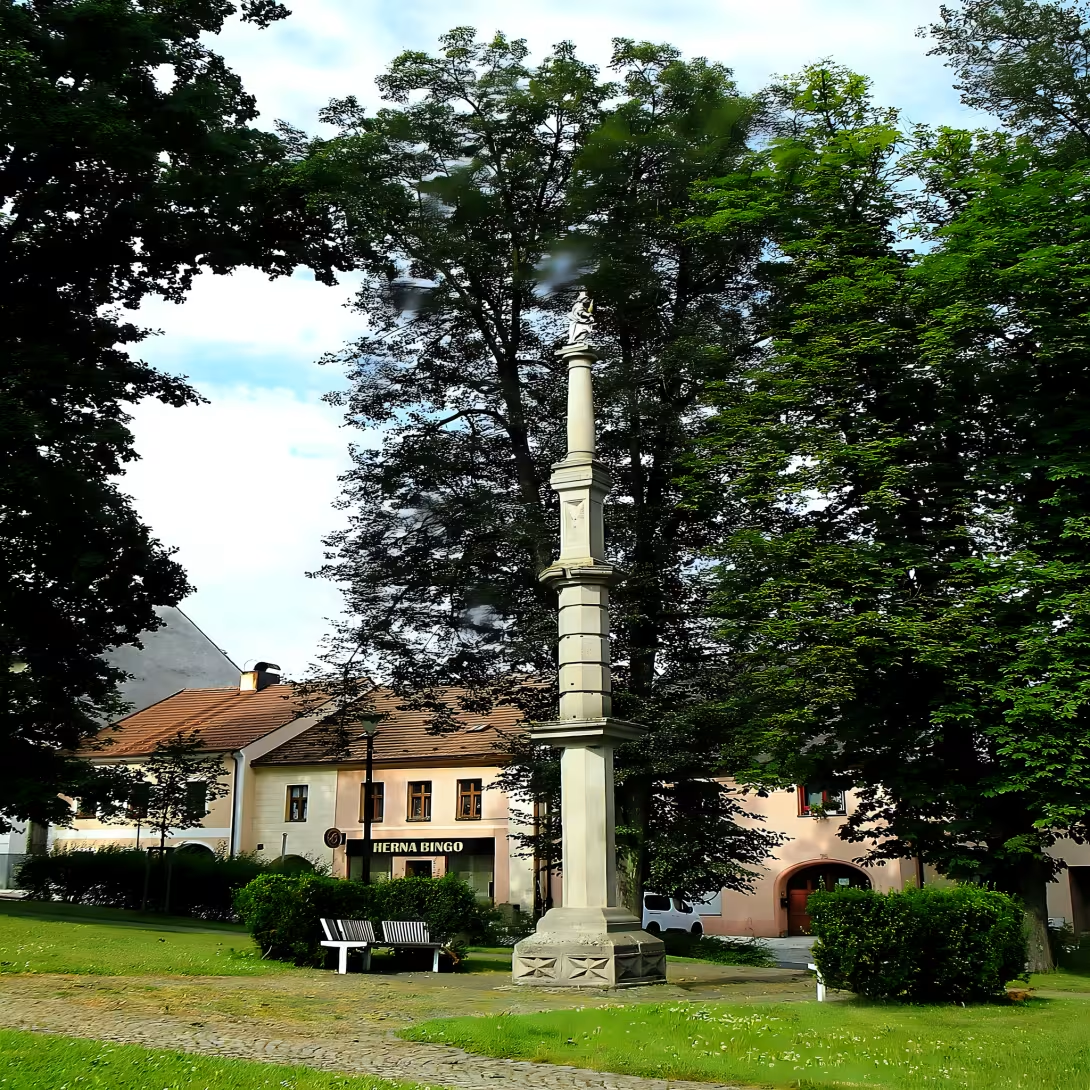
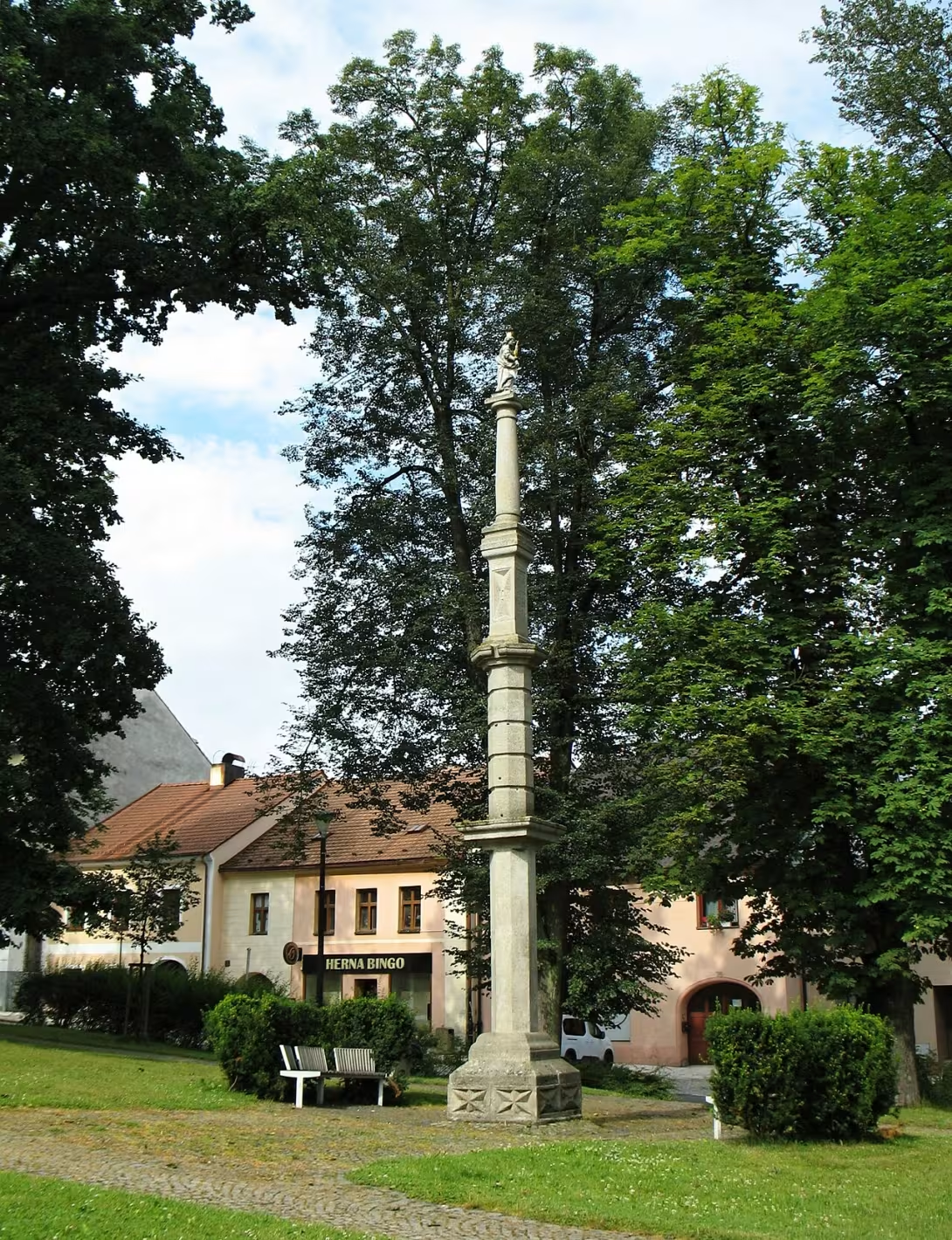
The Praner with the statue of St. Barbara in Vyší Brod is a Gothic stone monument from 1597. It is located in a conservation area in the northern part of the square. This object is remarkable with its complex five-way structure and history involving transfers between the square and the cemetery.
The monument served in the context of Czech countries at the end of the 16th century under the rule of Rudolf II, when the construction of small urban buildings and representative elements of urban law continued to take place. Praniers performed the function of public punishment for the lesser offenders while representing a symbol of the city's autonomy and powers.
Architecturally, the object is made of stone and shows a gotifying form. The current construction consists of five main parts. On a quadruple square stone block, there is an eight-sided stone column with a roof, on which stands another eight-sided column decorated with four notches. It ends with an eight-sided stone roof. It is followed by another four-sided stone column with German inscription. This part is finished with a four-sided head, on which is a cylindrical Tuscan column carrying on top of the statue of Saint Barbara.
Throughout history, individual components of the monument have undergone changes and movements. Since the beginning of the 18th century, a Tuscan column with a statue of St. Barbara has been standing at a nearby cemetery near St. Bartholomew's Church. Back to the duster was transferred in 1788. In the past there was also an occipital fountain with a statue of St. John Nepomucký, which was later taken by surprise.
Today, pranýř se sochou svaté Barbory is located in the conservation area of the town park in the northern part of the square in Vyší Brod in the district of Český Krumlov. Visitors can see with their own eyes this historic building with gotifying shape, preserved German inscription on one of the stones and unique combination of columns. A tour of this building on the historic square offers a direct view of the material documents of city law and the building culture of the late 16th century.
Then and now
Drag the slider to compare how the landmark may have looked when it was built with the view today.
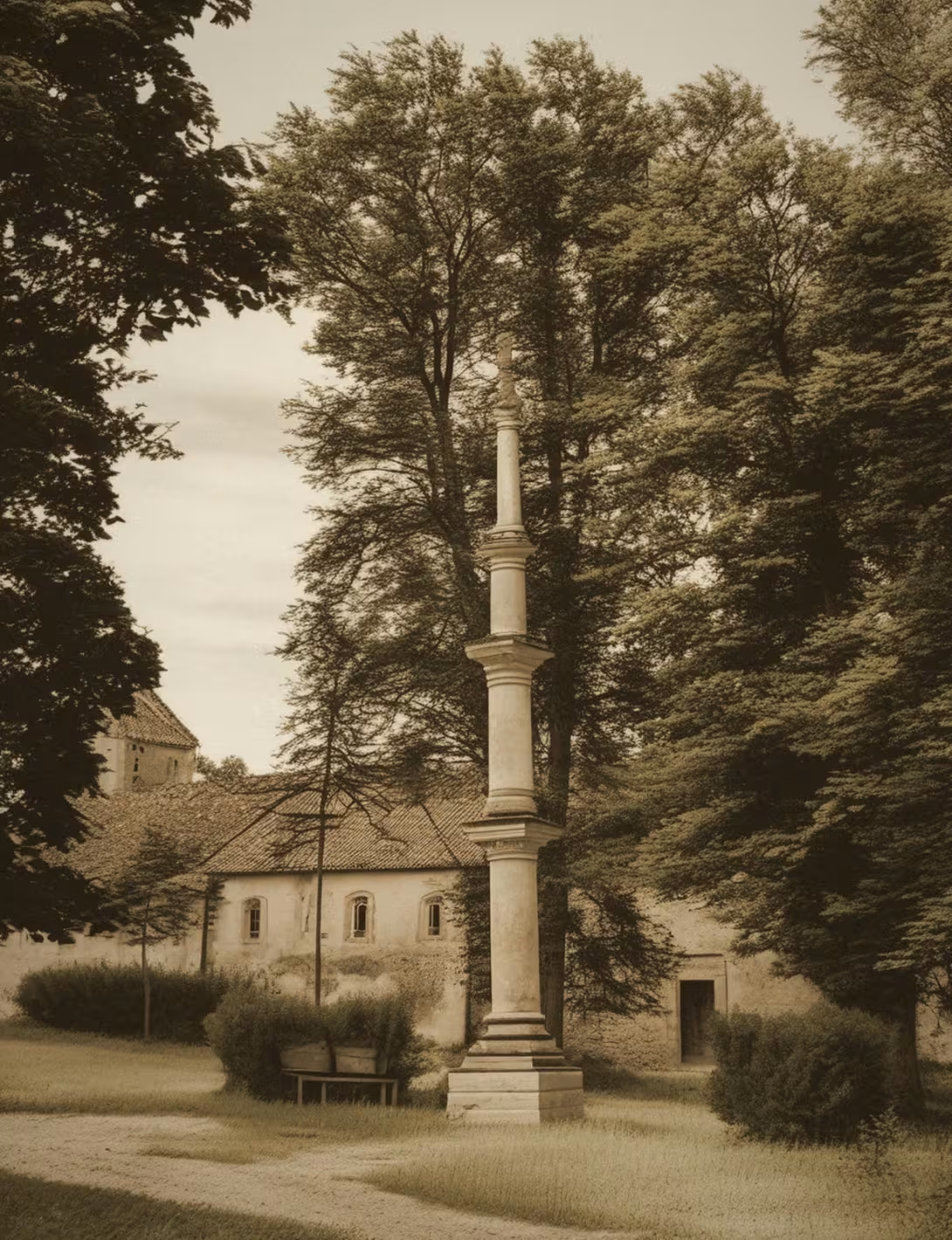
The historical appearance on the left is an AI-generated visualisation and serves as inspiration only.
Historical milestones
- 1597
- The creation of a gotifying stone duster on the square in Vyší Brod.
- 1788
- The transfer of the Tuscan column with the statue of St. Barbara back to the box from the cemetery at St. Bartholomew's church.
Architectural development
The Praner is made of stone and shows a gotifying form. It consists of five main parts which include a square block, several octave and quadruple columns with canopy and inscription and finally a Tuscan column with a statue of saint. The original components were supplemented and moved throughout history between the square and the cemetery.
Historical events
In 1597 a stone duster was built on the square in Vyší Brod. Since the beginning of the 18th century, a Tuscan column with a statue stood at a nearby cemetery near St. Bartholomew's church. In 1788, the column was transferred back to the box.
Points of interest
- This Gothic stone monument from 1597 is remarkable by its complex five-part structure and history involving transfers between the square and the cemetery. - The current building consists of five main parts, including, for example, a four-sided stone column with German inscription or a cylindrical Tuscan column carrying on top of the statue of St. Barbara. - Since the beginning of the eighteenth century, the Tuscan column with the statue of St. Barbara has been standing at a nearby cemetery near the church of St. Bartholomew and was transferred back to the pantry in 1788. - In the past, there was also an occipital fountain with a statue of St. John Nepomuk, which was later taken by surprise.
Guide
Show guide text
This text was created by artificial intelligence and has not been editorially reviewed. It may contain inaccuracies.
Welcome to Vyší Broda. You just stopped in a quiet part of the city park, in the north part of the local square. In front of you is this stone monument that immediately transmits you to other times. You're standing right in front of a dusty, historical object that's a fixed point in this place. Feel this atmosphere, feel the calm of this park and look at this stone that has been standing here for hundreds of years. This object is not just an ordinary piece of stone, it is a witness of ancient events that has endured centuries and remained preserved as evidence of the past.
Look at his face and try to imagine what this square looked like at the time of its creation. This Gothic building dates back to 15 hundred and ninety-seven. Imagine the times when people in other clothes moved here when they spoke in a different way and when the rules of life were much different. This box was part of the order at the time and its existence here was completely natural. Even though today serves primarily as a monument that teaches us about history, at that time this object had a very different meaning for everyone who moved here. It's a fascinating piece of history that allows us to touch the past directly through this hard, worked stone.
Now pay attention to his architecture and look at him closely. This building is very interesting with its complex structure, which consists of five main parts. Notice how these parts are connected and how they form one whole. If you look down, you'll see stone columns. One of them is very distinctive, four-sided and bears an engraved German inscription. Try to think about the words that are engraved in the stone. Although the inscription is old, it still stands here and reminds us of the language and culture of the people who inhabited this place before us. It's a fascinating detail that gives the whole object depth and authenticity.
Then slowly raise your sight upwards. Your eyes should follow the path from the base to the very top. Above these stone parts is a cylindrical column, which is in Tuscan style. This column is elegant and acts as a solid pillar that holds this whole structure. And it is at its peak, at the highest point of the entire set, that the most important thing is found. Look up and see the statue of Saint Barbara. She's looking up from you and watching the neighborhood. It's a beautiful and noble view of this statue floating above the ground on its cylindrical column. This whole five-part structure creates a harmonious whole where each part is supplemented.
However, there is also one interesting thing in the story of this place that relates to the movement of these historical elements. This statue of St. Barbara wasn't always here. It's one of those things that often happens in history that monuments travel from one place to another. A significant shift took place in the 1970s. The statue was transferred from the cemetery, which was at the church of St. Bartholomew, and was replaced back to this box. Imagine the way this piece of art must have offended to find itself here again in the heart of this park where it is now standing. This transfer shows us how people in the past cared about preserving their precious objects and how important it was for them to have these symbols in the right place.
If you look around now, you might notice that something is missing in this space. Once upon a time there was not just this stone object. In the past, there was one other thing that would provide life and movement. There used to be an eight-sided fountain. Imagine the sound of water running down a rock, and how people around it probably stopped to relax or drink. Even though the fountain is gone today, and instead it is standing here, its presence in the history of this place is still perceived when we can imagine it. But this absence also helps us to better understand how space around us changed over the centuries.
This monument is truly remarkable by its complexity and by its different layers of time. It has a Gothic style, it has Tuscan elements in it, and it has stories about moving between the cemetery and this square. It's like a book written in a stone you can read if you just stop and start looking more carefully. Every column, every inscription and every part of this building has its meaning and its own history.
I hope that this brief view of this box and statue of St. Barbara has brought you interesting insights into the past of this place. It's just a small part of the many stories Vyšší Brod hides. But now we invite you to further explore. Continue walking through this beautiful park, discover further corners and let yourself drift through the atmosphere of this place. Thank you for your attention and we will wait you out at the next stop at another historical monument. Goodbye.
Tips for visitors
The best time to visit the stone duster with the statue of St. Barbara is early in the morning or in the morning, when the city park is calm and sunlight ideally illuminates the details of gotifying stonework from the year fifteen hundred ninety-seven. You can use a passenger car or local public transport for transport, check the current connection in the internet search engine and park in the historic part of the city Vyšší Brod. Take with you comfortable shoes to walk on the historic tile path, camera and in case of sunny weather also a headgear. The best place to get a picture is from a slight ceiling to excel the total height of the monument and the statue of the saint on its top. In the immediate vicinity, within 30 minutes' walk, visit the historical square Vyšší Brod, the connecting city park and the nearby church of St. Bartholomew in the district of Český Krumlov. For families with children this stop is suitable as a short and enlightening interpretation of the old law during a walk through the green zone of the city.
Businesses nearby
Do you run a restaurant, accommodation, shop, museum, rental, wellness or other visitor service near this monument? Show yourself directly to the people heading to it — this is how they will see you in the app and on the web:
Events nearby
Zdroj akcí: otevřená data měst a obcí ČR (Národní katalog otevřených dat) a kalendář akcí Národního památkového ústavu.
Nearby
Město Vyšší Brod v okrese Český Krumlov, historické náměstí, městský park, kostel svatého Bartoloměje.
Accommodation nearby
Trips and activities nearby
Guided tours, tickets and activities nearby from GetYourGuide
Affiliate link: if you buy from the partner, we may receive a commission. The price for you does not change.
Search tours and activities →Themed route
I propose an interesting cruise route through the village Vyšší Brod, which connects the main destination and selected places in the area.
1. Pranier with statue of Saint Barbara Type: Historical monument Why it is worth a visit: This precious stonework from the past centuries represents the main objective of our journey and reminds us of old legal customs. The statue of the saint at the top of the pillar gives this historic place a unique spiritual atmosphere.
2. Historical Square Type: Public space Why is worth a visit: It is located in the immediate vicinity of the main destination and forms the natural center of the village. It offers a view of the traditional development and the ancient character of the whole place.
3. Church of St. Bartholomew Type: Sacral construction Why is it worth a visit: This important church monument that dominates the village attracts the admiration of historical architecture. The interior and exterior of the temple breathe through ancient history.
4. City Park Type: Natural and relaxing zone Why is worth a visit: Quiet area in the village provides a pleasant environment to relax after a walk. The green area offers an ideal ending to the whole trip.
Seasonal recommendations
Spring brings to this historic piece the awakening nature, when the surrounding trees are only just beginning to erupt and the sun's rays penetrate the cold air, creating a fine and clean light to admire the details of the stone sculpture. During this period you will not meet a crowd of curious people, so you will enjoy a deep peace and quiet at the monument, while the best time for visiting is the morning hours, when the morning fog slowly retreats. In view of the changing weather and still cold soil, wear fixed shoes and a waterproof jacket, because the terrain in the surrounding area may be wet after dressing.
Summer offers a completely different atmosphere full of lush green and rich colors, where the sun stands high in the sky and strong side lighting during the late afternoon beautifully shaves the face of the saint and the rough features of the old duster. Since this is the main tourist season, the biggest movement of people is in this area, and therefore we recommend arriving early in the morning or late in the evening when the biggest heat and crowds of hikers fall. The appropriate choice is light breathable clothes, sun-proof headgear and plenty of drinking water, as you will not find shade of permanent trees around the monument.
Autumn covers the surrounding landscape in warm earthy colors yellow and red, while the low sun creates long shadows and melancholy mood ideal for quiet contemplation at the ancient stone. Tourists will stay significantly at this time, which guarantees an undisturbed atmosphere, especially in the afternoon, when the landscape smells of falling leaves. For the autumn trip, prepare yourself with a warm sweater, windbreaker and umbrella, because the weather in the South Bohemian region is very volatile in this part of the year and frequent showers can surprise unprepared visitors.
Winter transforms the space into a quiet snow landscape, where the white blanket contrasts with a dark stone of monument and early dimming together with occasional artificial lighting gives the place a mysterious touch. People only come here in the winter months so you can enjoy the absolute solitude of the statue of the saint. The best time for a tour is around noon, when the light is at least a little friendly. Don't forget to wear very warm winter clothes, high snow boots and gloves, because the freezing wind can be very unpleasant here and staying outside quickly becomes challenging without good equipment.
Visualizations and artistic views


The visualisations are generated by artificial intelligence and serve as inspiration.
Photos from the area
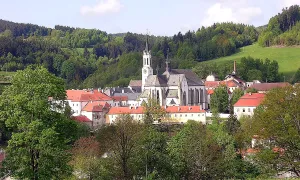
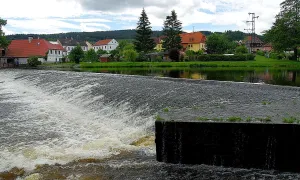
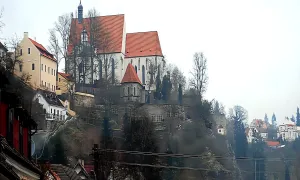
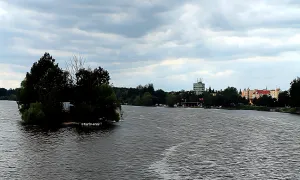
Real photos taken near the monument


Zdroj a licence jsou uvedeny u každého snímku.
Tips from visitors
No tips yet. Be the first!
Log in and add your tip.
Sources and literature
Photos: Marie Čcheidzeová / CC BY-SA 4.0, rozlišení zvýšeno umělou inteligencí — Wikimedia Commons. The author and licence also appear when you hover over the image.
Faktickým podkladem tohoto textu byl článek na Wikipedii, jehož autory jsou přispěvatelé Wikipedie. Článek je dostupný pod licencí CC BY-SA 4.0.
Location on the map

Příběhy a pověsti
Legendy, pověsti a příběhy spjaté s touto památkou
Fotografie návštěvníků
Zatím žádné fotografie. Buďte první, kdo přidá fotografii z návštěvy!
Log in a přidejte svou fotografii nebo hodnoťte.
Za ověřenou návštěvu v aplikaci získáte víc bodů — poznáme podle GPS, že jste na místě.
Reviews and comments