






Staronová synagoga Synagogue
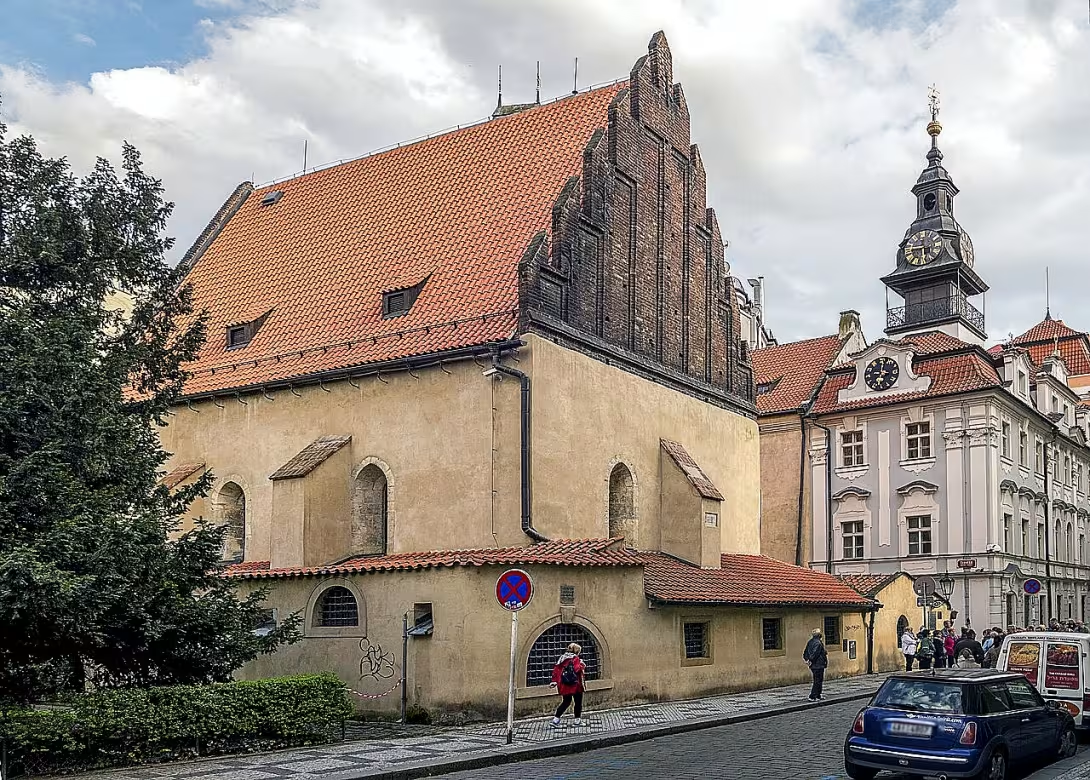
The Old New Synagogue, known as Staronová synagoga or Altneuschul, stands in Prague's historic Josefov district. It is Europe's oldest active synagogue, completed in 1270. Renowned for its unique twin-nave design and Gothic architectural elements, it holds significant religious and historical value.
Originally named the New or Great Synagogue, it became known as the Old-New Synagogue after newer synagogues were built in the 16th century. Its name also has mystical significance from Hebrew and Yiddish interpretations, suggesting its stones might have been brought by angels from Jerusalem's Temple "on condition" they be returned for rebuilding.
Architecturally, Staronová synagoga is one of Prague’s earliest Gothic structures. It features a double-nave design with six vaulted bays supported by two large pillars aligned east to west. The interior showcases twelve vines and grape bunches on the tympanum, symbolizing the twelve tribes of Israel. Its twelve lancet windows direct light towards the bimah, reminiscent of Solomon's Temple.
The synagogue has undergone several restorations over centuries, with significant work in 1883 by architect Josef Mocker. These efforts have preserved its historical integrity and restored Hebrew inscriptions inside. The building also holds a rich history of ownership and administration changes, including receiving a banner from Emperor Ferdinand III during the Thirty Years War.
Key events associated with Staronová synagoga include the tragic massacre of approximately 3,000 Jews in 1389 near its premises during Easter riots. Despite such dark periods, it has remained central to Jewish worship and community life. The synagogue's walls were once believed to bear traces of blood from this massacre until their restoration in 1618.
Today, Staronová synagoga is open to visitors, offering insights into the rich cultural heritage of Prague’s Jewish community. Its historical significance, coupled with its architectural beauty, makes it a must-visit site for those interested in history and architecture. The synagogue continues to serve as an Orthodox Jewish congregation, maintaining its role as a living monument of faith and resilience.
Then and now
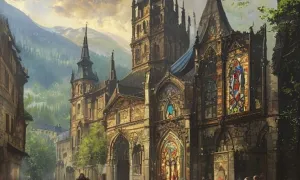
Drag the slider to compare how the landmark may have looked when it was built with the view today.
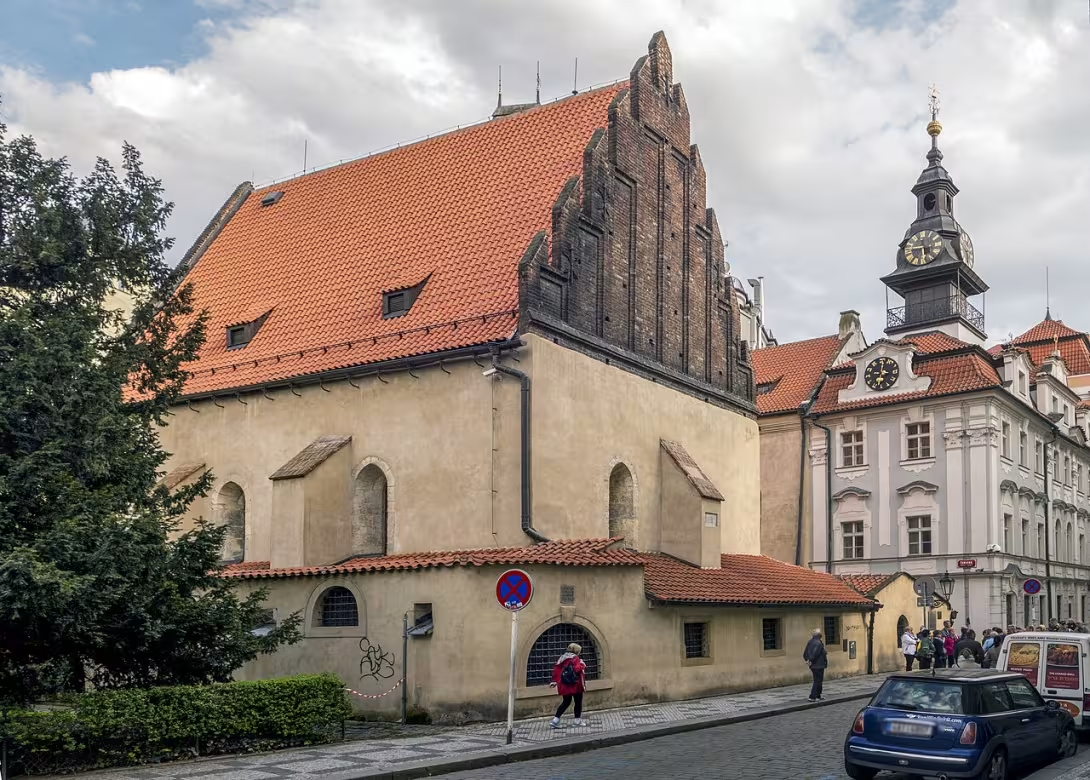
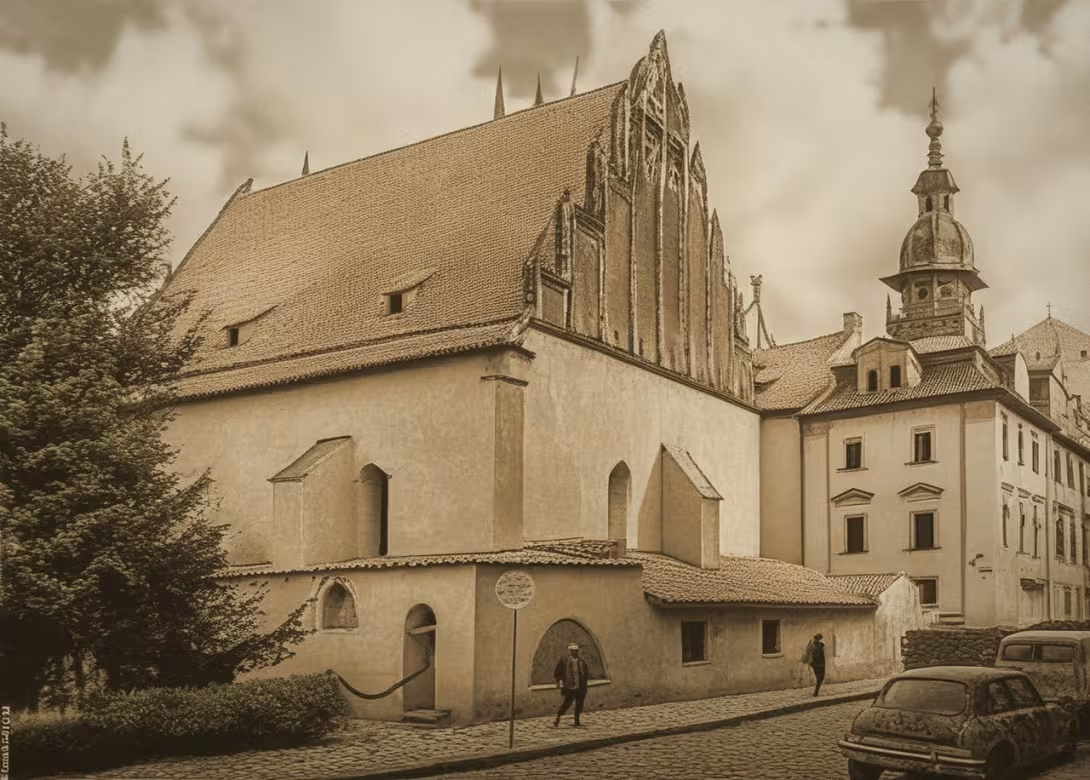
The historical appearance on the left is an AI-generated visualisation and serves as inspiration only.
Historical milestones
- 1270
- Completion of the Staronová Synagogue.
- 16th century
- The synagogue became known as Staronová after the construction of newer synagogues.
- 1389
- Massacre of approximately 3,000 Jews near the synagogue during the Easter Riots.
- 1618
- The restoration of the synagogue dispelled rumors about bloodstains on the walls.
- 1883
- Significant renovations carried out by architect Josef Mocker.
Architectural development
The core of Staronová synagoga was built in the late 13th century with early Gothic style. Over time, it underwent several modifications including the addition of a southern entrance hall and women's galleries on both western and northern sides. In 1883, architect Josef Mocker led a purist restoration, replacing roofs and other elements with copies. Further restorations occurred in 1922-24 and 1966-67, focusing on preserving its historical integrity.
Historical events
1358: Emperor Charles IV granted the synagogue a banner.
1389: Witnessed a massacre during Easter riots where approximately 3,000 Jews were killed near its premises.
Points of interest
- The name "Staronová synagoga" is a fascinating linguistic twist; it translates to "Old-New Synagogue," reflecting its status as the original synagogue in Prague before newer ones were built in the 16th century.
- A mystical legend suggests that the stones of Staronová synagoga were brought by angels from Jerusalem's Temple, with the condition they be returned for rebuilding the temple, adding a layer of spiritual significance to its construction.
- During the Thirty Years War, Emperor Ferdinand III presented the synagogue with a banner as a token of gratitude for Jewish support during his military campaigns, highlighting historical ties between Jewish communities and European rulers.
- The synagogue's walls were once believed to bear traces of blood from the 1389 massacre of approximately 3,000 Jews near its premises; however, these marks disappeared after restoration in 1618, blending history with myth.
- Architecturally unique for its time, Staronová synagoga features a double-nave design and twelve lancet windows that channel light towards the bimah, symbolizing Solomon's Temple, showcasing an early example of Gothic style in Prague.
Guide
This guide is narrated by a synthetic voice generated by artificial intelligence.
Show guide text
This text was created by artificial intelligence and has not been editorially reviewed. It may contain inaccuracies.
The Old New Synagogue in Prague's Josefov is among the oldest synagogues in Europe and the world that continue to serve religious purposes to this day. It is also one of the oldest preserved synagogue buildings in existence and the oldest preserved building of Josefov. Throughout the world, it is also known by the name Altneuschul.
It arose in the second half of the thirteenth century on the embankments of the Old Town, whose level was being raised at that time by one to three meters as protection against floods. Originally it was called the New School, because in what is now Dušní Street there already stood an older synagogue called the Old School. When later another synagogue with the name New School was built, the oldest one came to be called the Old New School. In historical sources it also appears under the designation Great School.
The synagogue gradually became the center of the Jewish Town. Around it there developed an open space where there was a marketplace and where people would come to wash their laundry. The space at the same time provided protection against fire. If the surrounding houses were burning, flames would not easily jump over to the synagogue.
The two-nave core was constructed in the style of early Cistercian Gothic after the rights were granted during the reign of Premysl Otakar the Second. Later, an entrance hall was added to the south, women's galleries to the west and north, and also a smaller antechamber with a special entrance to the women's nave.
In thirteen fifty-eight, Charles the Fourth granted the synagogue a banner. During the Easter storms of thirteen eighty-nine, approximately three thousand Jews died in its surroundings while trying to get inside. The walls apparently bore traces of their blood until sixteen eighteen, when the synagogue was repaired. This is commemorated by Hebrew inscriptions in the main hall. In seventeen sixteen, Charles the Sixth had the building renovated.
In eighteen eighty-three, architect Josef Mocker underwent a purist renovation of the synagogue. He replaced the roof trusses and replaced the Gothic gable and numerous other elements with copies. These unsuitable interventions were partly removed in the years nineteen twenty-two through nineteen twenty-four. Further reconstructions took place in nineteen sixty-six and nineteen sixty-seven and in the second half of nineteen ninety-eight. During that last one, errors occurred and due to an error by the designer, the original Gothic stone bench was later damaged.
The main hall is a rectangular two-nave room with three bays of cross-ribbed vault. Unusual is the fifth rib added to each bay. The naves are divided by a pair of octagonal columns. Light is admitted by twelve narrow pointed windows and two small rosettes in the front wall. Between the columns, the bimah with its richly wrought Gothic grille has been preserved, and at the end of the hall stands the Aron ha-kodesh with its reading lectern.
Tips for visitors
The best time to visit Staronová Synagoga is during the late spring or early fall, when the weather is pleasant, and the crowds are smaller compared to peak tourist seasons like summer or winter holidays. This timing allows for a more intimate experience of this historic site, as you can explore its architecture and history without the rush. Additionally, visiting in these months provides softer natural lighting, which enhances the beauty of the synagogue's interior.
Parking near Staronová Synagoga can be challenging due to its location in Prague’s Old Town, a popular tourist area with limited space. Public transportation is recommended; you can easily reach the site by tram or bus from various parts of the city. For those driving, consider parking at one of the nearby garages and walking the short distance to the synagogue. Always check for current public transport options online before your visit.
When visiting Staronová Synagoga, it's advisable to wear comfortable shoes as you'll be doing a fair amount of walking, both within the site itself and exploring its surroundings. A hat or sunscreen might also be useful if you're planning to spend time outside in the sun. Since photography inside may have restrictions, check ahead for any guidelines regarding cameras or tripods.
Photography enthusiasts will find several spots around Staronová Synagoga offering excellent views, especially during golden hour when the light is soft and warm. The open space that once served as a marketplace provides a unique backdrop for capturing the synagogue's architecture. For interior shots, ask about photography policies to ensure you respect any restrictions.
Nearby attractions within a 30-minute walk include Prague Castle, an iconic symbol of the Czech Republic with its stunning views over the city, and the Old Town Square, known for its historic buildings like the Astronomical Clock. These sites offer additional cultural insights into Prague's rich history. For families with children, these areas provide plenty of sights to see and explore, making them perfect complements to a visit at Staronová Synagoga.
Frequently asked questions
Can the monument be visited?
Yes. We verified the opening hours or admission on the official website (10. 10. 2026); you will find them in the visitor information on this page. Please double-check with the operator before you travel.
What are the opening hours and admission?
Details verified on the official website (10. 10. 2026) are listed in the visitor information on this page. Official website: http://www.synagogue.cz/
Where is the monument?
Location: Červená/2, Josefov, Praha, Hlavní město Praha. The map on this page shows the exact spot.
Why is the monument protected?
It is listed in the Central List of Cultural Monuments of the Czech Republic as a national cultural monument (register no. 179).
Businesses nearby
Do you run a restaurant, accommodation, shop, museum, rental, wellness or other visitor service near this monument? Show yourself directly to the people heading to it — this is how they will see you in the app and on the web:
Events nearby

Zdroj akcí: otevřená data měst a obcí ČR (Národní katalog otevřených dat) a kalendář akcí Národního památkového ústavu.
Nearby
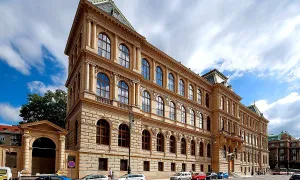
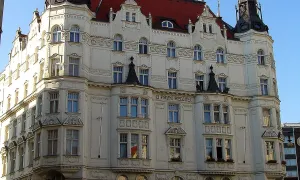
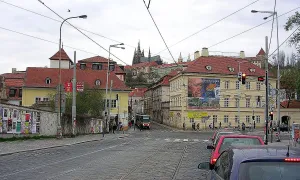
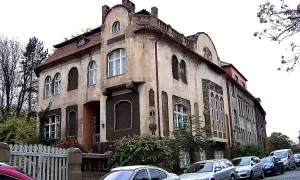
Staronová synagoga is located in Prague's Old Town, surrounded by historical buildings and landmarks. The area once served as a marketplace and was used for washing clothes due to its open space acting as a firebreak.
Accommodation nearby
Trips and activities nearby
Guided tours, tickets and activities nearby from GetYourGuide
Affiliate link: if you buy from the partner, we may receive a commission. The price for you does not change.
Search tours and activities →Themed route
Staronová Synagoga Thematic Walking Tour
1. Staronová Synagoga (Synagogue) Start your journey at the heart of Prague's Old Town with a visit to the Staronová Synagoga, one of the oldest active synagogues in Europe. This architectural gem offers insights into Jewish history and culture through its stunning Moorish Revival design and richly decorated interior.
2. Old-New Synagogue Square Explore the open space surrounding the synagogue, historically used as a marketplace and for washing clothes due to its role as a firebreak. The square's historical significance adds depth to your understanding of how this area functioned in past centuries, providing a glimpse into daily life in medieval Prague.
3. Old Jewish Cemetery A short walk from the Staronová Synagoga leads you to the Old Jewish Cemetery, an evocative site with its densely packed tombstones that have been used for centuries due to limited space. This cemetery is not only a poignant reminder of the Jewish community's history but also offers unique insights into their burial traditions and resilience.
4. Pinkas Synagogue Continue your exploration by visiting the nearby Pinkas Synagogue, which now serves as a memorial to the Czech Jews who perished in the Holocaust. The walls are adorned with names and artwork that pay tribute to the victims, making it an important site for reflection on history and loss.
5. Jewish Town Hall Conclude your tour at the Jewish Town Hall, located near the Staronová Synagoga. This historic building once served as a center of administration for the Jewish community in Prague. Today, it houses exhibitions that delve into Jewish life and culture, providing valuable context to the synagogues you've visited.
This thematic walking tour offers a profound journey through history, art, and memory, all within the vibrant heart of Prague's Old Town.
Seasonal recommendations
Spring: Visiting Staronová Synagoga during spring offers a unique experience as the Prague skyline is softened by blooming cherry blossoms and vibrant tulips, creating an enchanting backdrop for this historic site. The mild temperatures and longer daylight hours make it a pleasant time to explore. However, be mindful of occasional rain showers that can add a reflective sheen to the city streets. It's advisable to wear comfortable layers and bring an umbrella or raincoat just in case. Spring is less crowded than summer, making it ideal for those who prefer a quieter visit.
Summer: The summer months at Staronová Synagoga are characterized by warm weather and extended daylight hours, providing ample time to appreciate the intricate architecture bathed in golden sunlight. This period attracts more visitors due to Prague's popularity as a tourist destination, so arriving early is recommended to avoid larger crowds. Lightweight clothing is advisable to stay comfortable during your visit, along with sunscreen for protection against the sun. The lively atmosphere of summer offers an energetic backdrop, perfect for those looking to immerse themselves in the city’s vibrant culture.
Autumn: Autumn brings a magical transformation to Prague as the leaves change into rich hues of red, orange, and gold, offering a picturesque setting around Staronová Synagoga. This season is ideal for photography enthusiasts who wish to capture the historic site amidst the fall foliage. The cooler temperatures make it comfortable for walking tours without the summer heat, though carrying a light jacket might be necessary as evenings can get chilly. Autumn sees moderate tourism compared to summer, providing a balance between tranquility and accessibility.
Winter: Winter in Prague transforms Staronová Synagoga into a serene and enchanting destination with snow-dusted rooftops and festive lights adorning the cityscape. The cooler temperatures mean shorter opening hours for many attractions, so planning your visit is essential to ensure you make the most of your time there. Dress warmly in layers, including a heavy coat, scarf, gloves, and hats, as the weather can be quite brisk. Winter's quieter atmosphere offers a peaceful experience, allowing visitors to enjoy the historic site with fewer crowds and a touch of holiday magic.
Visualizations and artistic views


The visualisations are generated by artificial intelligence and serve as inspiration.
Photos from the area
Real photos taken near the monument


Zdroj a licence jsou uvedeny u každého snímku.
Tips from visitors
No tips yet. Be the first!
Log in and add your tip.
Sources and literature
Photos: Jerzy Strzelecki / CC BY-SA 3.0 — Wikimedia Commons. The author and licence also appear when you hover over the image.
Faktickým podkladem tohoto textu byl článek na Wikipedii, jehož autory jsou přispěvatelé Wikipedie. Článek je dostupný pod licencí CC BY-SA 4.0.
Location on the map

Příběhy a pověsti
Legendy, pověsti a příběhy spjaté s touto památkou
Fotografie návštěvníků
Zatím žádné fotografie. Buďte první, kdo přidá fotografii z návštěvy!
Log in a přidejte svou fotografii nebo hodnoťte.
Za ověřenou návštěvu v aplikaci získáte víc bodů — poznáme podle GPS, že jste na místě.
Reviews and comments