



Starý Těšín Hillfort
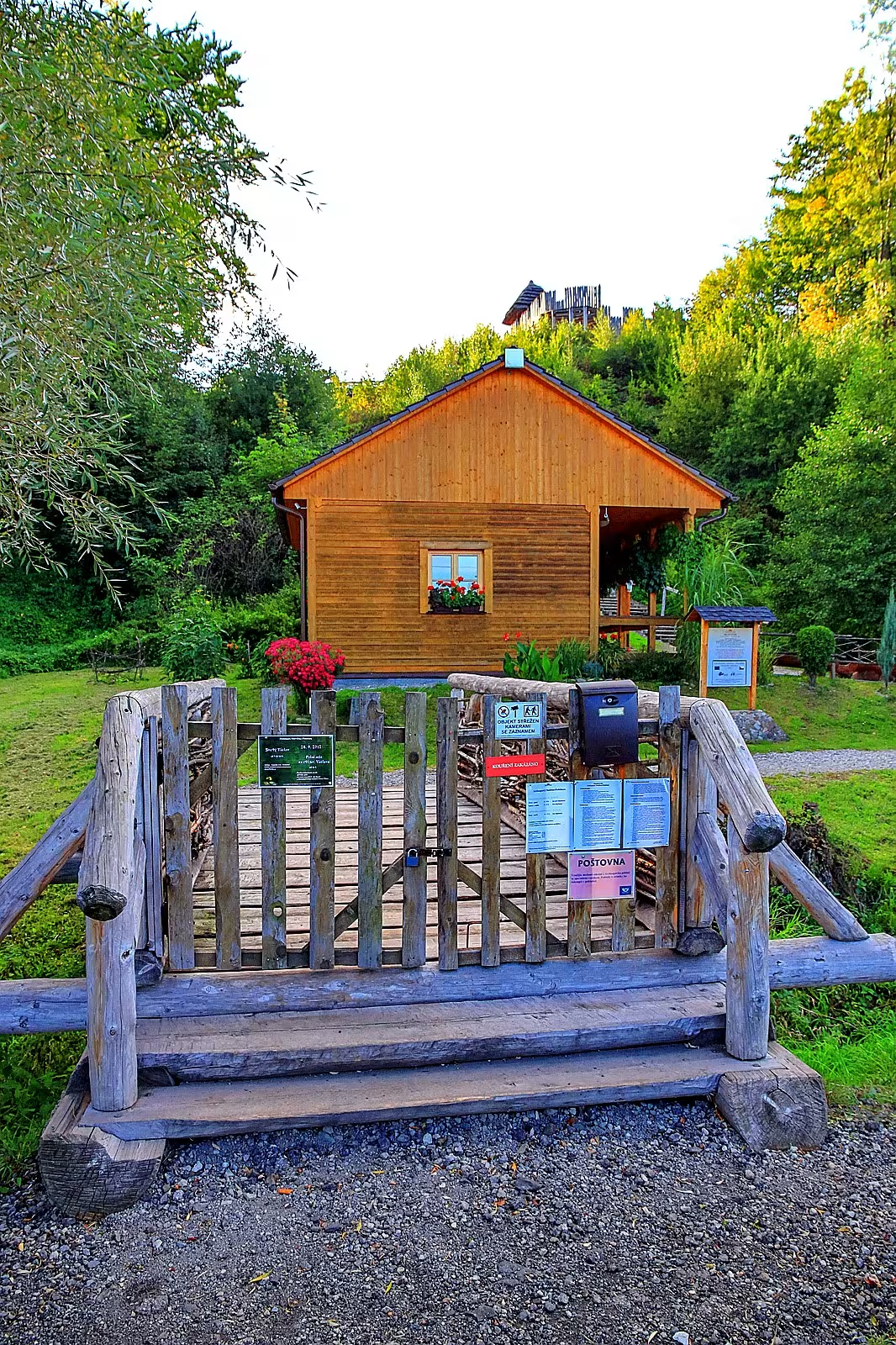
Starý Těšín, in Polish Stary Cieszyn or also Cieszynisko, is an important Slavic castle of the Holasice tribe. It was probably established in the 7th century on the cadastral territory of today's Probory in the village Chotěbuz in Karviná district. This archaeological site was located on the top above the left bank of the Olše River and it was fulfilling both the settlement and the defence function. The monument is remarkable for the early medieval development of the region. This importance was evidenced by the older settlement from the Halštat period and the present presentation in the form of a modern archaeopark.
The formation of the fort falls into the 7th century. In Central Europe today, the first Slavic Tribal Unions were formed and early political formations formed. The estate was founded by the Holasic tribe on the hill above the steep shore of the Olš River, whose trough had a different course than today. In the 9th century, the Welkomorava Empire developed. In the region, there was a struggle for influence between the Moravian monarchs and the surrounding tribes. During these struggles between the Moravian tribes and the Vislan tribes, the castle was heavily damaged, probably by the arrival of the Grand Moravian prince Svatopluk I. Due to the destruction of the surrounding settlements, Starý Těšín was repaired. Together with the new castle on Castle Hill in Těšín, he became an administrative, spiritual and economic centre between the tribes living in Moravia and the Visla region.
The architectural form of the castle consisted of a fortified settlement built in a high place above the river. During its existence it underwent structural modifications, especially in the framework of necessary repairs after destruction in the 9th century. There is currently a restoration of the appearance of the castle associated with archaeological research with the support of UNESCO.
In the course of the time the castle lost its meaning. All functions moved to a new castle on the castle hill in Těšín, which originally served as a background for Starý Těšín. At the turn of the 11th and 12th centuries, probably in the first period of the 11th century, the original castle was completely abandoned. The site became the subject of a long-standing interest in archaeologists. On 3 May 1958, he was declared an archaeological monument.
A key moment in the history of the site was the military conflict in the 9th century and the subsequent abandonment of the settlement at the turn of the 11th and 12th centuries. The archaeological survey also brought interesting findings. He showed that the territory had already been inhabited in the Halštat period, between 800 and 500 years before the AD. In 2012, a tourist and archaeological park known as Archeopark Chotěbuz - Podobora was opened on site.
Currently, the location is accessible to the public as a tourist and archaeological park. It is located on the county road number 67 leading from Český Těšín to Karviné, about one kilometre from the train station Chotěbuz. Visiting this place offers a unique view of the beginnings of the settlement of Těšín Silesia and the results of modern archaeological work. Discover traces of ancient Slavic tribes and go to this historically valuable place in person.
Historical milestones
- 1958
- The site of the original castle was archaeologically protected.
- 2012
- It was opened by Archeopark Chotěbuz-Podobor.
Architectural development
The fort was built on the hill above the steep shore to the Olš River, whose trough had a different course than at the time. During its existence, the fortified settlement underwent construction modifications and repairs after destruction in the 9th century. There is currently a restoration of the appearance of the fort associated with archaeological research with the support of UNESCO.
Historical events
In the 9th century, the fort was heavily damaged by the entrance of the Grand Moravian Prince Svatopluk I. At the turn of the 11th and 12th centuries the castle was completely abandoned and the centre moved to Castle Hill in Těšín. On 3 May 1958, the site was declared an archaeological monument. In 2012, a tourist and archaeological park known as Archeopark Chotěbuz-Podobora was opened on site.
Points of interest
- The castle Starý Těšín, also known in Polish as Stary Cieszyn or Cieszynisko, was founded in the 7th century by the Slavic tribe of Holasice on the hill above the left bank of the Olše River. - In the 9th century, the fort was badly damaged during the struggle of power, probably by the arrival of the Grand Moravian Prince Svatopluk I. - The original fort was completely abandoned at the turn of the eleventh and twelfth centuries, namely in the first third of the eleventh century, and all functions moved to Castle Hill in Těšín. - Archaeological research has shown an earlier settlement of the territory already in the Halshta period, between 800 and 500 years before the beginning of the year. - In 2012, a tourist and archaeological park known as Archeopark Chotěbuz-Podobor was opened on site.
Guide
Show guide text
This text was created by artificial intelligence and has not been editorially reviewed. It may contain inaccuracies.
Welcome to Chotěbuzi, a place that keeps secrets within many centuries. Right now, you're standing on a land that once formed the heart of an entire region. Stop for a moment, take a breath and look around you. In front of you is a landscape that may look calm and ordinary, but under your feet and in the surrounding terrain is the history of Old Těšín. Feel the atmosphere of this place, feel the rustling of the Olš River, which flows in the valley beneath you. This river was the key to why the castle was founded here. Water was a source of life, a path for trade and a natural obstacle to enemies. You are standing on a design that provided a strategic advantage, a clear overview of the surroundings and safety, which was absolutely essential in the early days of Slavic settlement.
Let us now move deep into time into the past, namely the seventh century. Imagine this area as the first inhabitants saw it, the Holasic tribe. They were the ones who built their forts here over a thousand years ago. The Holasice chose this above the left bank of Olš with careful consideration. The fort was not just an ordinary village, but it performed an important settlement and defence function. It was a place where people lived, worked, but in the event of a threat, they could hide behind protective walls. At that time, this fortress was a symbol of power and stability in a landscape that was densely wooded and filled with unknown challenges. For the people of the seventh century Starý Těšín was a safe port and center of their world.
Now pay attention to the terrain around you. Even if you don't see tall walls of stone or monumental palaces today, because the castle is an archaeological site, try to reconstruct its shape in your mind. Notice the slope of the top and how naturally it dominates the surrounding valley. Legally, this landscape configuration determined where the defensive elements were located. As part of the ARCHEPARK Chotěbuz-Podobor, which was opened in the year two thousand and twelve, you can see how this area was organized. Take a look around and see how the area of the castle extends. Note that everything is directed towards optimizing defense and utilizing the natural advantages of the landscape. Don't look for complex ornaments here, but look for logic in the arrangement of space to ensure the survival of the community.
But the history of this place is not just a story of peaceful growth. The ninth century brought a storm to this area. Starý Těšín has become a target of power struggles that have shaken the entire central and eastern space. At that time, there were tough clashes between the Moravian tribes and the Vislan tribes. It was during this period that the castle was badly damaged. Historical sources and archaeological findings suggest that this destruction may have resulted in the raid of the Grand Moravian Prince Svatopluk first. Imagine the contrast that must have existed at the time. Where there used to be order and everyday work, all of a sudden chaos, flames and the sound of weapons. Svatopluk first was an ambitious ruler who expanded his power, and Starý Těšín was one of the victims of this expansion. The destruction of the castle in the ninth century was a deep blow, but it was not the end.
Once the fighting dust settled, it was time for recovery. The fort was rebuilt and gained a whole new role in the following centuries. It was no longer just a defensive fortress, but it became the real center of the region. Imagine people from around here coming here to do their administrative work, to seek spiritual guidance or to trade with their products. Starý Těšín has thus turned into the administrative, spiritual and economic core of the region. It was a place where power, faith and economics met. This era of bloom lasted until the turn of the eleventh and twelfth centuries, when the fort gradually lost its meaning and was abandoned to be taken over later by nature and oblivion.
When we think about this place, we find one interesting thing that shows how strongly Starý Těšín is etched into the memory of the surrounding nations. In Polish history and tradition this place is known as Stary Cieszyn or Cieszynisko. This bilingual and different names suggest that the castle in Chotěbuzi was not just a local matter, but an important point on a map that exceeded the borders of today's states. It's a fascinating mystery how one place can be so strongly perceived in various cultural contexts. Is it possible that it is here that the first treaties have been introduced and the first ties between people who are now two different national identities? This idea adds a special depth to walking on the top.
For years, the fort remained hidden beneath the layers of the earth and grass, until in the year one thousand nine hundred fifty-eight the place of the original castle was officially archaeologically protected. This was a crucial step that allowed this information to reach us at all. Thanks to the patient work of archaeologists, we now know about Holasice, the attacks of Svatopluk and the later blossom of the centre. Without this protection, valuable traces of the past could be lost forever. Now, when you're standing in the space of Archeopark, you realize that every metre of soil under your shoes can hide a fragment of ceramics, a trace of burnt wood, or any other evidence of people who lived here thousands of years ago.
Now invited to further explore. Go through the rest of the premises at a slow pace. Take your time. Try to return in spirit to the time when the guardians from this hill looked at the curved ribbons of the river Olš and guarded the safety of their families. Feel the silence that rules today, and imagine it filled with people's conversations, the sounds of artisanal workshops and the rustling of linen and wool clothes. Starý Těšín in Chotěbuzi is not just a set of data and years, it is a story about human resistance, about the ability to start again even after the greatest destruction and about the constant search for security and stability.
Thank you for spending this short time with us in the depths of history. We hope that this journey has helped you better understand the importance of this unique place and that you are leaving with a sense of respect for our ancestors who once built their world here. We wish you a pleasant next tour and inspiring rest of the day. Goodbye.
Tips for visitors
The best time to visit Old Těšín is during spring or autumn months, when nature on the hill above the Olší River offers an impressive atmosphere and the terrain of the castle is not overgrown by lush summer vegetation. The morning clock is ideal for a peaceful walk and discovery of the remains of the Slavic settlement of the Holasice tribe.
Take with you mainly fixed shoes because you are moving in the natural terrain of the former ruins of the castle, where there can be slippery slopes after the rain. We recommend that you also pack snacks and drinks, as you will not find the usual facilities with refreshments on the premises, and repellent due to location near the Olš River. For photography lovers, the best footage offers the edge of the hill overlooking the river valley, with the softest light to capture the atmosphere of this historic place in the late afternoon.
The city of Český Těšín and the town of Karviná is situated within 30 minutes' drive, offering additional possibilities for exploring the region of Těšín. You can visit city buildings, cultural monuments or use the facilities of these cities to provide more refreshments and rest after visiting archaeological terrain.
For families with children, the trip is suitable as a light outdoor walk associated with the discovery of history. Children can admire the remnants of the waves here and imagine the life of the ancient Slavs in the 7th century, however, it is necessary to keep smaller children under constant supervision because of the steep slopes falling down to the Olš River.
Frequently asked questions
Can the monument be visited?
This is an archaeological site. Often there is little to see on the ground and the land may be private. We have not verified access.
Where is the monument?
Location: Chotěbuz, Moravskoslezský kraj. The map on this page shows the exact spot.
Why is the monument protected?
It is listed in the Central List of Cultural Monuments of the Czech Republic as a cultural monument (register no. 1000158576).
Businesses nearby
Do you run a restaurant, accommodation, shop, museum, rental, wellness or other visitor service near this monument? Show yourself directly to the people heading to it — this is how they will see you in the app and on the web:
Nearby
The locality is located on the cadastral territory of the Podobory in the municipality of Chotěbuz in Karviná district, about 1 km from the train station Chotěbuz and close to road number 67 leading from Český Těšín to Karviné.
Accommodation nearby
Themed route
1. Train station Chotěbuz Type: Transport Node Why is it worth a visit: This point represents the starting point of the whole trip. It is located approximately one kilometre from the main destination, which allows comfortable and easy access to the entire area.
Starý Těšín Type: Archaeological site Why is it worth a visit: The main destination of the trip is located on the cadastral territory of Podobory in the municipality of Chotěbuz in Karviná district. It offers a unique view of history and the remains of the old settlement in the region.
3. Road number 67 Type: Communication Why is it worth a visit: This road leads from Český Těšín to Karviné and is located in the immediate vicinity of the archaeological site. They form an important transport artery for the journey back or further discovery of the surrounding area.
Seasonal recommendations
Spring in Old Týšín in Chotěbuz Nature awakens the surrounding forests to a new life. The specific atmosphere of the ruins is mixed with fresh greenery and bird singing, while the low spring sun lights beautifully the sparse crowns of trees and reveals the terrain waves of the former castle. The practical advice for this period is to adapt to the variable weather and put on fixed, waterproof shoes, because melting snow and spring rains can dilute field paths into mud. You will only meet tourists here at this time of year with a small spot, so for a quiet walk and undisturbed contemplation over history, choose the morning hours.
Summer brings to the castle a deep shadow of grown trees and lush vegetation, which can almost consume the modest remains of the masonry. Unique light arises when sharp midday rays penetrate thick leaves and create a dramatic game of shadows on the ground, ideal for contrast photography of stone and clay textures. More visitors are sometimes heard in the main summer season, so it is best time to visit early morning or late evening when the air is colder. Do not forget to bring with you an effective repellent against ticks and insects, which belong to this forested river valley.
Autumn transforms Chotěbuz into a picturesque gallery full of golden and rusty colors, with morning fog covering the valley of the Olše River supplying an extremely mysterious, mystical, place. The low sun relies on the landscape all day long and provides great lighting conditions for lovers of landscape photography. On the weekends, there are a little more hikers on their way here taking advantage of Grandma's summer, but working days offer total silence. Put on several layers of warm clothes, as the autumn wind blowing from the river can quickly cool down on the raised.
Winter reveals the design secrets of the entire archaeological site, as fallen leaves and snow sheets make it possible to see perfectly the ground plan and times of the former estate. The landscape under snow is extremely clean and quiet, which does not disturb any noise of the outside world, creates an exceptional atmosphere for deep perception of history. It is necessary to count on a very short day in advent time and winter months, so plan your arrival for the morning. The basis of the successful expedition is high-quality winter footwear with anti-slip soles and warm, non-inflatable clothes, as there may be a noticeable frost on the exposed top.
Visualizations and artistic views


The visualisations are generated by artificial intelligence and serve as inspiration.
Photos from the area
Real photos taken near the monument


Zdroj a licence jsou uvedeny u každého snímku.
Tips from visitors
No tips yet. Be the first!
Log in and add your tip.
Sources and literature
Photos: Qasinka / CC0 — Wikimedia Commons. The author and licence also appear when you hover over the image.
Faktickým podkladem tohoto textu byl článek na Wikipedii, jehož autory jsou přispěvatelé Wikipedie. Článek je dostupný pod licencí CC BY-SA 4.0.
Location on the map


Příběhy a pověsti
Legendy, pověsti a příběhy spjaté s touto památkou

Fotografie návštěvníků
Zatím žádné fotografie. Buďte první, kdo přidá fotografii z návštěvy!
Log in a přidejte svou fotografii nebo hodnoťte.
Za ověřenou návštěvu v aplikaci získáte víc bodů — poznáme podle GPS, že jste na místě.
Reviews and comments