



Zámek Chotěbuz Chateau
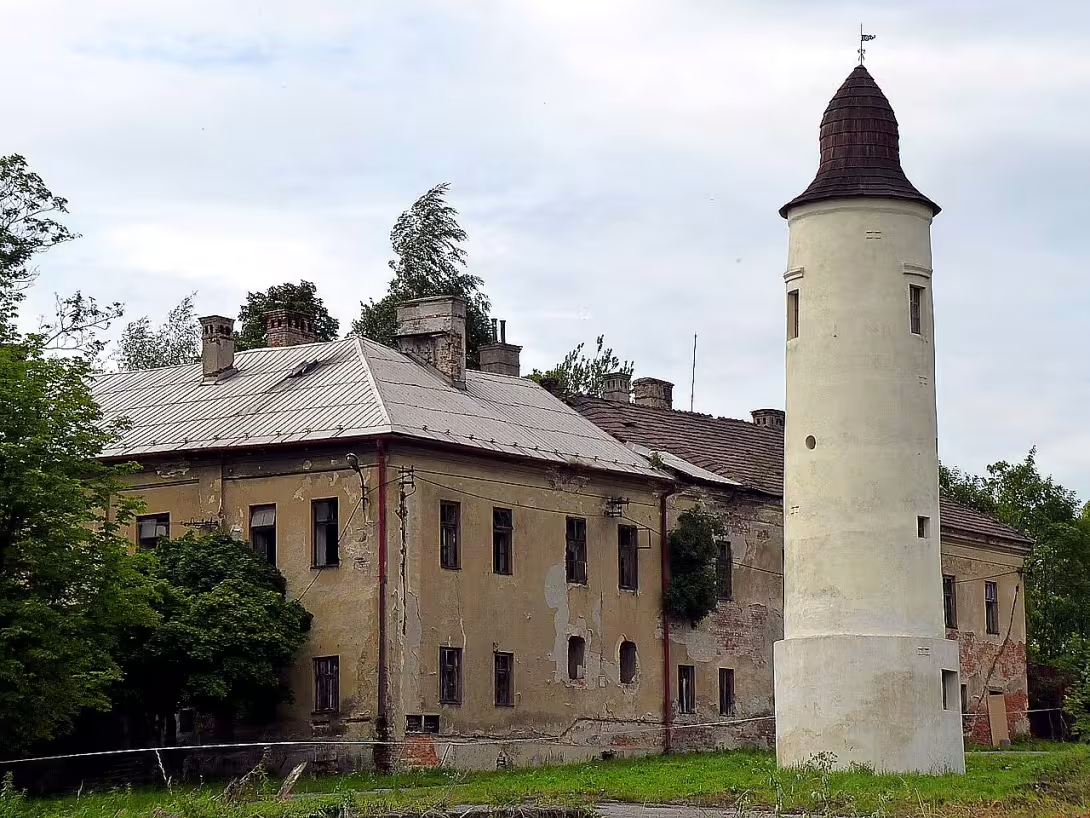
Zámek Chotěbuz is a Baroque castle in the village of Chotebuz, within the district of Karvinský, Moravskoslezský kraj. This cultural monument dates back to the beginning of the 13th century of the fortified farm and has undergone significant transformations over time. Its historical importance is highlighted by its connection with various noble families, including Benedict monks, Teschen Piastas and later Lichnov families.
The history of the site began at the beginning of the 13th century as a fortified agricultural site, probably serving as a defensive structure or sightseeing site. In the middle of the 13th century it was linked to the Benedict monks who built a closed courtyard for their monastery in Eagle. The first documented mention of Chotebuz dates back to 1229 under Kazimír I. Opolský, when Pope Gregory IX confirmed the list of tithes for the Abbey of Tyniec. In 1447 ownership was transferred to the Těšín Square and later sold to Jan Kyselovský z Kyselova.
In architecture, Zámek Chotěbuz evolved from its original form into an earthly brick fortress in the 16th century under Václav Rudzký z Rudz. This building was subsequently converted into a Baroque castle during the ownership of František Trach and his wife Caroline Josefa Bees from 1780 to 1782. Despite the baroque transformation, there are still remains of the original fortress, such as the vaults.
During his history Zámek Chotěbuz saw a number of prominent owners. After the Benedict monks, it came under the control of Teschen plains in 1447 and was sold Jan Kyselovský z Kyselova. In 1552 Václav III. Adam transferred Chotěbuze to his chancellor Václav Rudzký z Rudz. The castle later became part of the Frystácký estate and was sold in 1771 to Karel Joseph Trach. In 1757, she went into the hands of the Lichnov family.
Key events include its first documented mention in 1229 and the transition to ownership of Teschen Piast in 1447. Jan Karel Count Lichnovský sought protection for the sale of Chotěbuz in 1770 and highlighted its continued importance as valuable property.
Today, Zámek Chotěbuz is proof of its rich history and architectural evolution. It is located in the hilly landscape of Podbeskyd hill, which offers strategic advantages due to its altitude between the highest points in the cadastral area. The proximity of the castle to historical monuments such as Old Těšín contributes to its cultural importance.
Visitors are invited to explore Zámek Chotěbuz to appreciate its historical and architectural heritage. Its historical history and permanent presence make it a valuable destination for interested people in Czech history and Baroque architecture.
Then and now
Drag the slider to compare how the landmark may have looked when it was built with the view today.
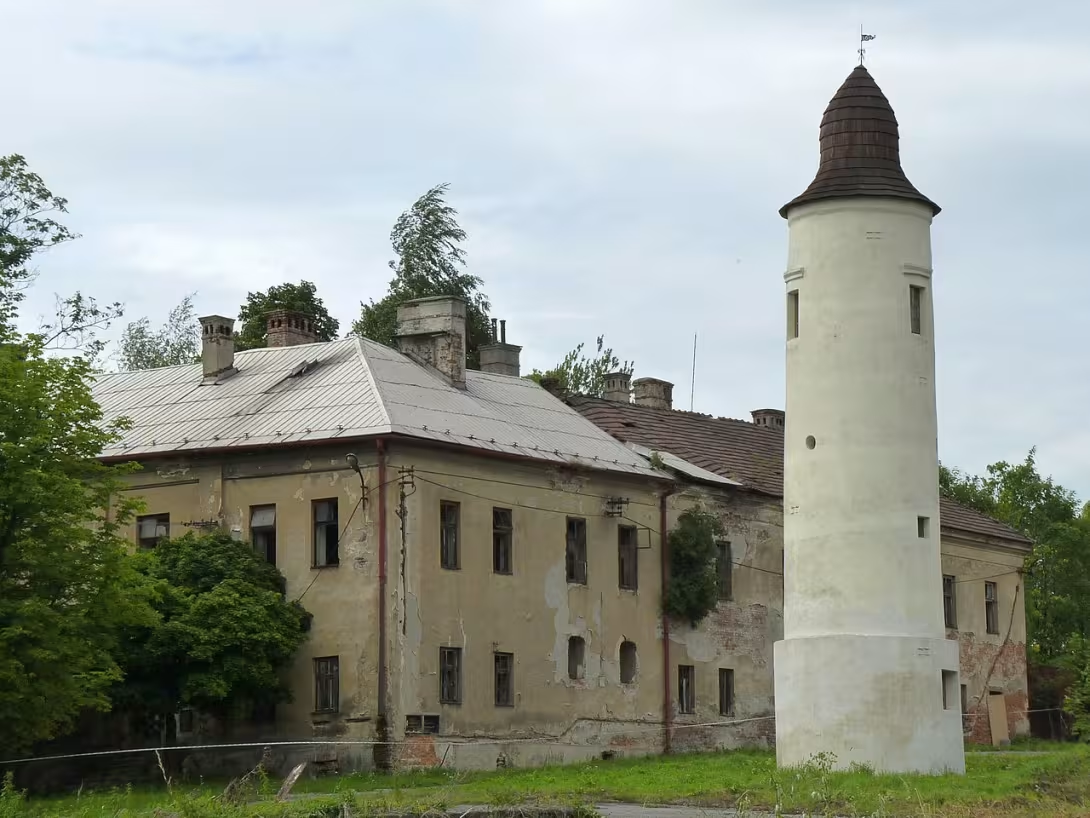
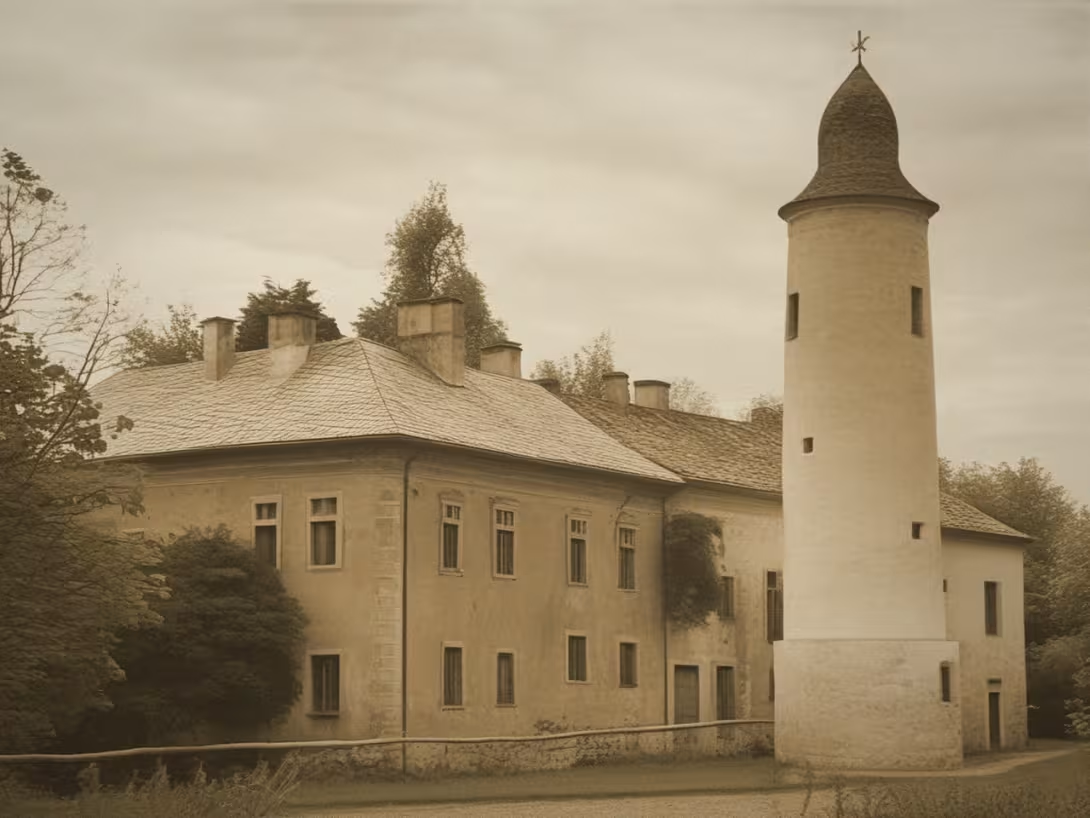
The historical appearance on the left is an AI-generated visualisation and serves as inspiration only.
Historical milestones
- 1229
- The first documented mention of Chotebuzz.
- 1447
- He became part of the Frystát Pansteva and sold to Jan Kyselovský z Kyselova.
- 1552
- Translated to Václav Rudzký z Rudz Václav III. Adam.
- 1770
- Jan Karel Count Lichnovský sought protection for the sale of Chotebuz.
Architectural development
At the beginning of the 13th-century fortified agricultural site, Zámek Chotěbuz underwent significant transformations. In the 16th century it was converted into an Earth brick fortress Václav Rudzký z Rudz. The construction was later converted into a Baroque castle in the possession of František Trach and his wife Caroline Josefa Bees.
Historical events
1229: First documented mention of Chotebuz under Kazimír I. Opolský.
1447: Transferred to the ownership of Těšín Piastovci and later sold to Jan Kyselovský z Kyselova.
1552: Václav III. Adam transferred Chotebuz to its chancellor Václav Rudzký z Rudz.
1770: Jan Karel Count Lichnovský has requested protection for the sale of Chotebuz.
Owners
Benedict monks (1229-1268)
Teschen plains (1447)
Jan Kyselovský z Kyselova (1447)
Těšín prince's court (16th century)
Václav Rudzký z Rudz (1552-1578)
Kaspar st. Rudzký z Rudz (1603)
Mikuláš starší II. Rudzký z Rudz (1651-1658)
Bernard Rudzký (post-1658)
Mikuláš Gurecký from Kornic (1701)
Marking from Beggar (after 1701)
(1717)
Karel svobodný pán Lichnovský (1757)
Jan Karel hrabě Lichnovský z Voštic (1770)
Anna Charlotta ovdovělá Lichnovská z Voštic (1771)
Karel Joseph Trach (1771)
Points of interest
- The transformation of Zámek Chotěbuz into a Baroque castle was completed in just two years between 1780 and 1782 by František Trach and his wife Caroline Josefa Bees, which represents a rapid architectural development typical of the period.
- Despite the baroque exterior, visitors can still find the remains of the original brick fortress from the 16th century in Zámek Chotěbuz, including vaults that mimic its medieval past.
- Jan Karel Count Lichnovský attempted protection for the sale of Chotebuz during a remarkable historical transaction in 1770, suggesting the strategic and economic importance of this property at the time.
- The location of the castle in Podbesky hill town provides it not only a picturesque environment, but also strategic advantages thanks to its altitude among the best points in the area that has historically contributed to its defence capabilities.
- Zámek Chotěbuz was originally connected with the Benedict monks who built a closed courtyard for their monastery in Orlová, reflecting the religious and cultural influences that shaped early medieval settlements in the region.
Guide
This guide is narrated by a synthetic voice generated by artificial intelligence.
Show guide text
This text was created by artificial intelligence and has not been editorially reviewed. It may contain inaccuracies.
Welcome to the historic Zámek Chotěbuz, located in the picturesque village of Chotebuz in the Kreis Karvinský. As you stand before this cultural monument, take a moment to absorb its noble and rich history that goes back centuries.
The origin of Zámek Chotěbuz dates back to the beginning of the 13th-century fortified agricultural site, first documented in 1229. Over time, it has evolved considerably from the defensive structure to the amazing baroque castle you see today. This transformation reflects not only architectural progress, but also the changing influx of history and the ownership of noble families.
When you look at his impressive facade, notice how architecture harmoniously blends old fortifications with elegance typical of baroque design. A quick development from a simple farm to a large castle was completed in just two years between 1780 and 1782 by František Trach and his wife Caroline Josefa Bees, who showed their remarkable vision and skills.
During its history, Zámek Chotěbuz is associated with remarkable historical figures. When sold to Jan Kyselovský z Kyselova, it became part of the Frystácký estate in 1447. Later, in 1552, he was transferred to Václav Rudzký z Rudz Václav III. Adam. The castle story is further enriched by the involvement of the Piaste dynasty, with connections to figures such as Kazimír I. Opolský and Vladislav I. Opolský.
The fascinating aspect of this site is its connection with Jan Karl Hrabová Lichnovský in 1770, who sought protection for the sale of Chotěbuz and highlighted the crucial moment of his history. Despite the baroque exterior, the remnants of earlier buildings still whisper stories from centuries ago.
As you continue your research, dive into the atmosphere that has taken visitors and historians for generations. Every corner of Zámek Chotěbuz offers a view of the lives and times of those who once walked these halls.
We invite you to dive deeper into this remarkable place, discover its secrets and marvel at its transformation into time. Thank you for joining us on this journey of history, and may your visit be enlightening and inspiring.
Tips for visitors
The best time to visit Zámek Chotěbuz is at the end of spring or early autumn when the weather is pleasant, allowing you to fully enjoy the surrounding hilly landscape of Podbeskyda hill. During these months, the natural beauty of the area is on top of the vibrant flora and comfortable temperatures, making it ideal for exploring the castle grounds as well as the surrounding attractions such as Old Těšín.
Public transport options are available, although it is recommended to check current routes and plans using the travel planner for the most accurate information.
When visiting Zámek Chotěbuz, consider bringing comfortable walking shoes as you wish to explore the castle grounds and surrounding by foot. A camera or smartphone with a good camera will be useful for capturing picturesque landscapes and architectural details of the castle. In addition, due to variable weather conditions, it is recommended to wear a light jacket.
For photographic enthusiasts, some of the best places around Zámek Chotěbuz include elevated views that offer panoramic views of the surrounding hills and valleys. Soft morning or late afternoon light can improve the texture and colors of the landscape to make for stunning photographs. Capture the castle itself, which is the focus of its historical architecture.
In addition to Zámek Chotěbuz, consider visiting Old Teschen, located within 30 minutes. This nearby city offers cultural observations and other historical monuments that complement your visit to the castle. For families with children, both locations provide interesting experiences; The open spaces around the castle are great for children to explore while Old Těšín has various family attractions.
Frequently asked questions
Can the monument be visited?
Some buildings of this kind are open for guided tours, others serve another purpose or are privately owned. We have not verified whether and when this monument is open – please ask the operator.
What are the opening hours and admission?
We have not verified the opening hours or admission. Current information is published by the operator.
Where is the monument?
Location: Náves 123, Chotěbuz, Moravskoslezský kraj. The map on this page shows the exact spot.
Why is the monument protected?
It is listed in the Central List of Cultural Monuments of the Czech Republic as a cultural monument (register no. 10367/8-3516).
Businesses nearby
Do you run a restaurant, accommodation, shop, museum, rental, wellness or other visitor service near this monument? Show yourself directly to the people heading to it — this is how they will see you in the app and on the web:
Nearby
The Zámek Chotěbuz is located in the hilly landscape of Podbesky hill. The area has natural beauty and historical monuments, including the nearby Old Těšín, which contributes to its cultural importance.
Accommodation nearby
Themed route
Thematic cruise route: Zámek Chotěbuz and its surroundings
1.Zámek Chotěbuz - Type: Historical castle - Why is it worth the effort: Zámek Chotěbuz is an architectural pearl with a rich history dating back to the 13th century. It is known that enterprises from various areas in which baroque reconstructions, which are intended to be used for historical output and art value. The castle offers fascinating interiors with rich frescos and kenbs that go into history and milestones of architecture.
2. Old Teschen - Type: Historical city - It is worth the effort: An approximate 10 km from Chotěbuze is located Old Těšín, known for its own history and cultural heritage. The city is home to the Old Castle overlooking the hand of Olší and the characteristic streets full of historical buildings. It is an ideal place for those who want to explore the rich past of the region and also the quiet prods of this picturesque paths.
3. Podbeskyda hill - Type: Nature landscaping - Proc stands behind the scenes: This city offers a beautiful occasion for relaxation and enrichment. Mountain hills excavated one-landscapes that are ideal for picnics or just for outdoor use. This class is also intended for dairy products and for food production.
4.Zámek Chotěbuz - Tanks - Type: Historical area - Why is it worth fulfilling: The rent lock is the positive sum of the common impression from Chotebuz Castle. With these historic buds and parking spaces, they encourage participation in their own space to be put into service. It is an ideal place to use the historical context and to use the quiet moments they pass through.
This route offers combined history, culture and nature in one place, an ideal for anyone who has a thin backdrop to the past and beauty of the surrounding landscapes.
Seasonal recommendations
Spring: As snow melts and nature wakes up, Zámek Chotěbuz is surrounded by a pulsating tapestry of flowering flowers and fresh greenery, offering a charming atmosphere ideal for peaceful walks around its historic gardens. The soft light of the spring casts fine shadows through the architecture of the castle, stressing its complex details. Visitors are advised to wear comfortable walking shoes suitable for exploring the premises and perhaps bring a light jacket because temperatures can change all day. Spring is usually less crowded than summer, so it's an ideal time to enjoy a place at a quiet pace.
Summer: The castle comes alive in summer with long daily hours that illuminate its grandeur and create a lively atmosphere ideal for exploring the interior and outside. During this peak season, visitors can expect larger crowds, especially on weekends and holidays, so arriving early is recommended to fully enjoy the site without rush and hustle. Comfortable shoes and light clothes are suitable due to high temperatures and don't forget the sun protection. The lush green and flowering gardens offer a picturesque background for unforgettable photos.
Autumn: Autumn in Zámek Chotěbuz is marked with a wonderful depiction of autumn leaves, the surrounding landscape turns into a palette of warm colors that complement the historical charm of the castle. This season offers a slightly quieter experience than summer, allowing visitors to appreciate the calm atmosphere and fresh air. Laminated clothing is recommended because temperatures can be cold, especially in the evening. Soft autumn light provides excellent conditions for shooting, capturing the castle against its colorful background.
Winter: Zámek Chotěbuz takes on magical quality in winter, when snow declines the landscape, transforming it into a picturesque scene reminiscent of fairy tales. Shorter daily hours and potential for unpleasant weather mean that a visit in the morning is advisable to use as much of your time at the castle. Hot clothes, including hats, gloves and insulated shoes, are essential to stay comfortable during your visit. While some outdoor areas may be less accessible due to snow, the winter atmosphere adds a unique charm to the experience.
Visualizations and artistic views


The visualisations are generated by artificial intelligence and serve as inspiration.
Photos from the area
Real photos taken near the monument


Zdroj a licence jsou uvedeny u každého snímku.
Tips from visitors
No tips yet. Be the first!
Log in and add your tip.
Sources and literature
Photos: Michal Klajban / CC BY-SA 3.0 — Wikimedia Commons. The author and licence also appear when you hover over the image.
Faktickým podkladem tohoto textu byl článek na Wikipedii, jehož autory jsou přispěvatelé Wikipedie. Článek je dostupný pod licencí CC BY-SA 4.0.
Location on the map

Příběhy a pověsti
Legendy, pověsti a příběhy spjaté s touto památkou
Fotografie návštěvníků
Zatím žádné fotografie. Buďte první, kdo přidá fotografii z návštěvy!
Log in a přidejte svou fotografii nebo hodnoťte.
Za ověřenou návštěvu v aplikaci získáte víc bodů — poznáme podle GPS, že jste na místě.
Reviews and comments