






Steinův rodinný dům Family house
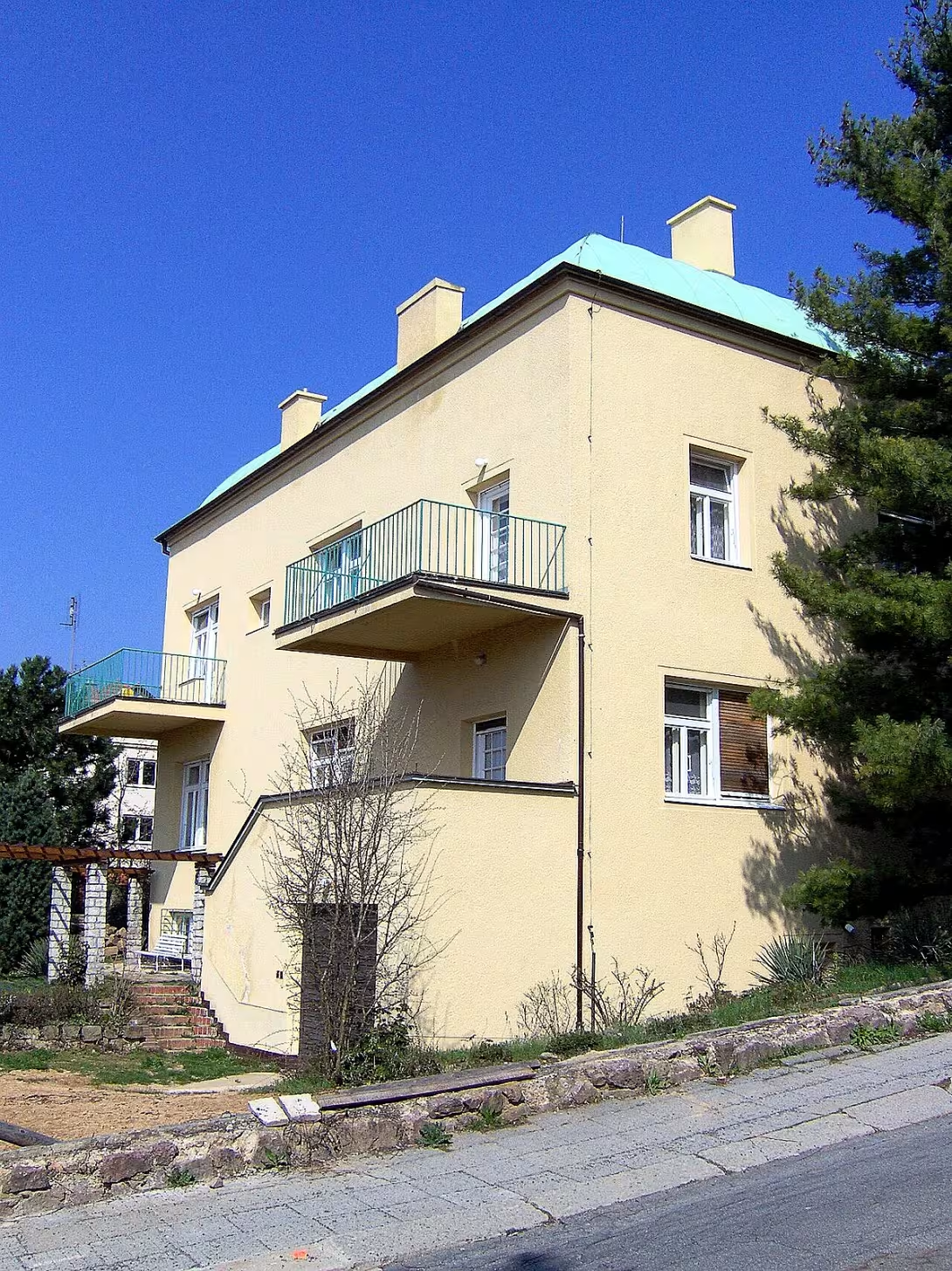
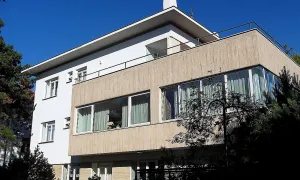
Steinův rodinný dům represents one of the key functionalist structures in the Masaryk district of Brno. It was designed by architect Ernst Wiesner between 1925 and 1926. The villa, situated in the cadastral area of Stránice in Barvičova Street, is valued for sensitive installation in the sloping terrain and unique architectural elements affected by the creation of Adolf Loose. The object serves as evidence of a high level of interwar housing, while at the same time commemorating the tragic fates of the Brno Jewish elite during World War II.
The builder of the villa was Willy Leo Stein, who worked as the sales director of the Telephone and Electric Company in Brno. He lived in the house with his wife Margaret and the children Jan Peter and Margaret. The history of the family is closely linked to persecution after the creation of the Protectorate of Bohemia and Moravia. While John Peter's son died prematurely in 1930 and Willy Leo's father probably in 1937, Margarete Steinová and his daughter had to leave the house at the beginning of the occupation. In May 1942, both were transported from Terezin to the Sobibor extermination camp, where their trail ends.
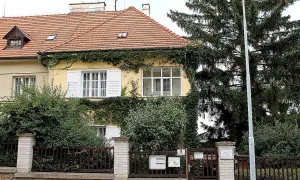
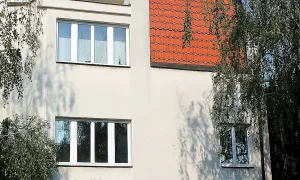
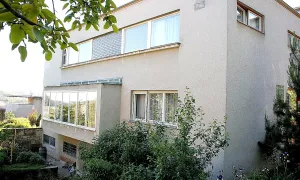
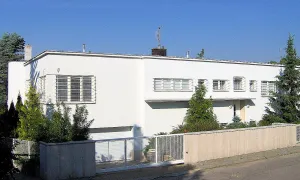
Ernst Wiesner's architectural solution uses the steep southwest slope of the Yellow Hill. This makes the house from Barvichov Street look like a two-storey block, while the garden makes it look like a three-storey building. A characteristic feature is a hernia roof with a lamel roof and a low halves roof above the main entrance. The exterior is complemented by significant chimneys coming out of the atics and garden facade divided by two balconies and terrace on the roof of the garage. In 1937 the garden was modernised; building a swimming and children's pool further increased the comfort of living.
The interior layout of the house was divided into floors according to their functions. The lowest level served as an economic background with a cellar and a garage accessible from the garden. On the ground floor there was a central hall, a library, a room for servants and a spacious living room with a dining room which was connected to the preparation meals and kitchen. The revolving staircase led to the top floor with five bedrooms and a bathroom. The overall concept reflected Wiesner's close relationship with Adolf Loos at the time, which manifested itself in the efficiency of the forms as well as the thoughtful internal availability.
After the forced departure of the original owners the house went to the administration of the Immigration Fund for Bohemia and Moravia. In 1943 his owner became the Standartenführer SS Karl Schwabe, Police Director and Vice President of the Moravian-Silesian Country. After the end of the war the building was under national administration and since 1948 it fell under the National Property Administration in Prague. In 1958 the facade of the villa was officially listed on the list of cultural monuments, confirming its exceptional architectural importance.
Currently Steinův rodinný dům is privately owned and is partly used for housing and partly as office space. Although interiors are not commonly accessible to the public, the villa remains an important point on the map of Brno functionalism. Her visit to the prestigious Masaryk Quarter offers a view of Ernst Wiesner's masterpiece and allows to perceive the historical context that shaped Brno's modern face in the period of the first republic.
Then and now
Drag the slider to compare how the landmark may have looked when it was built with the view today.
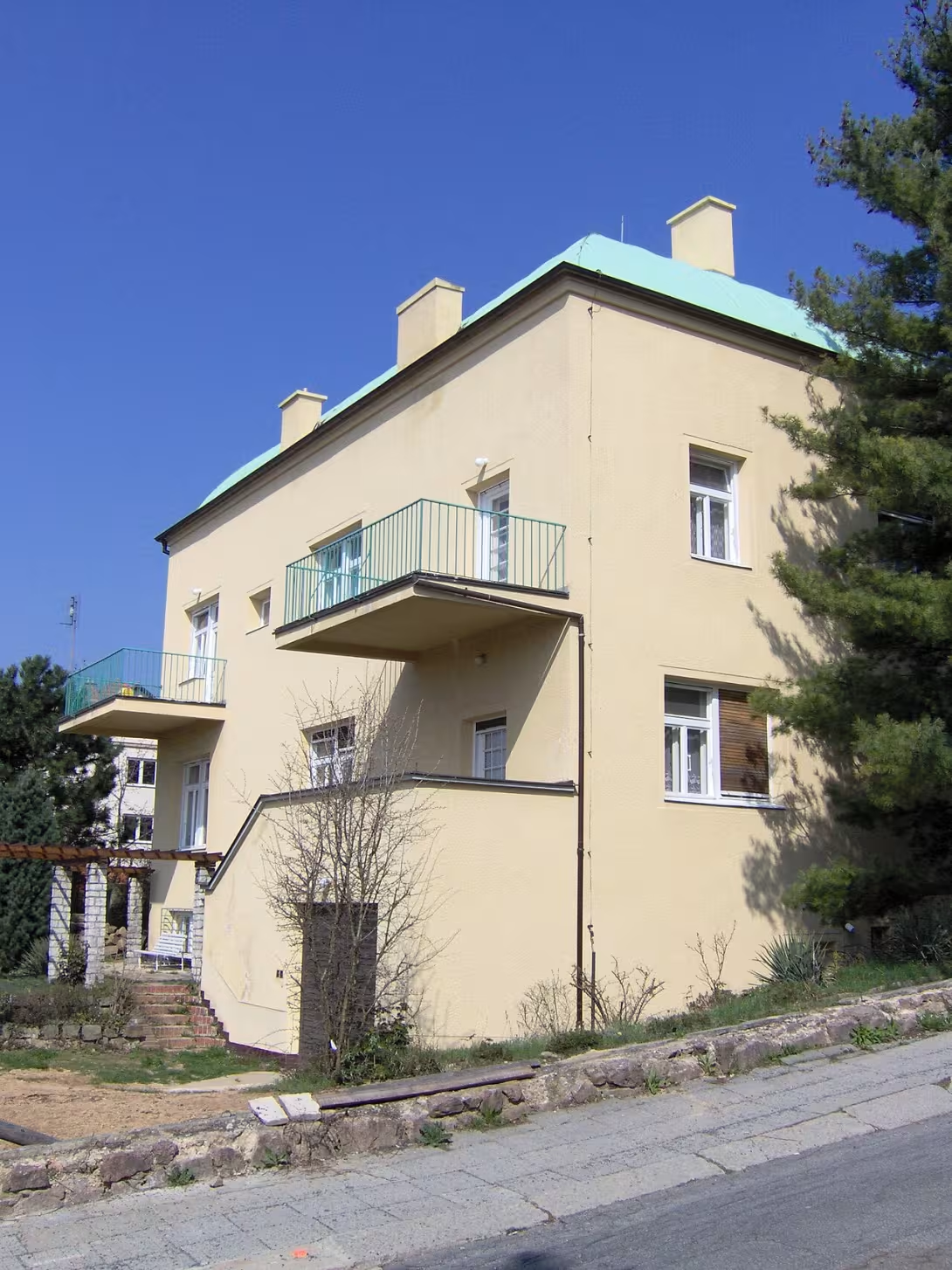
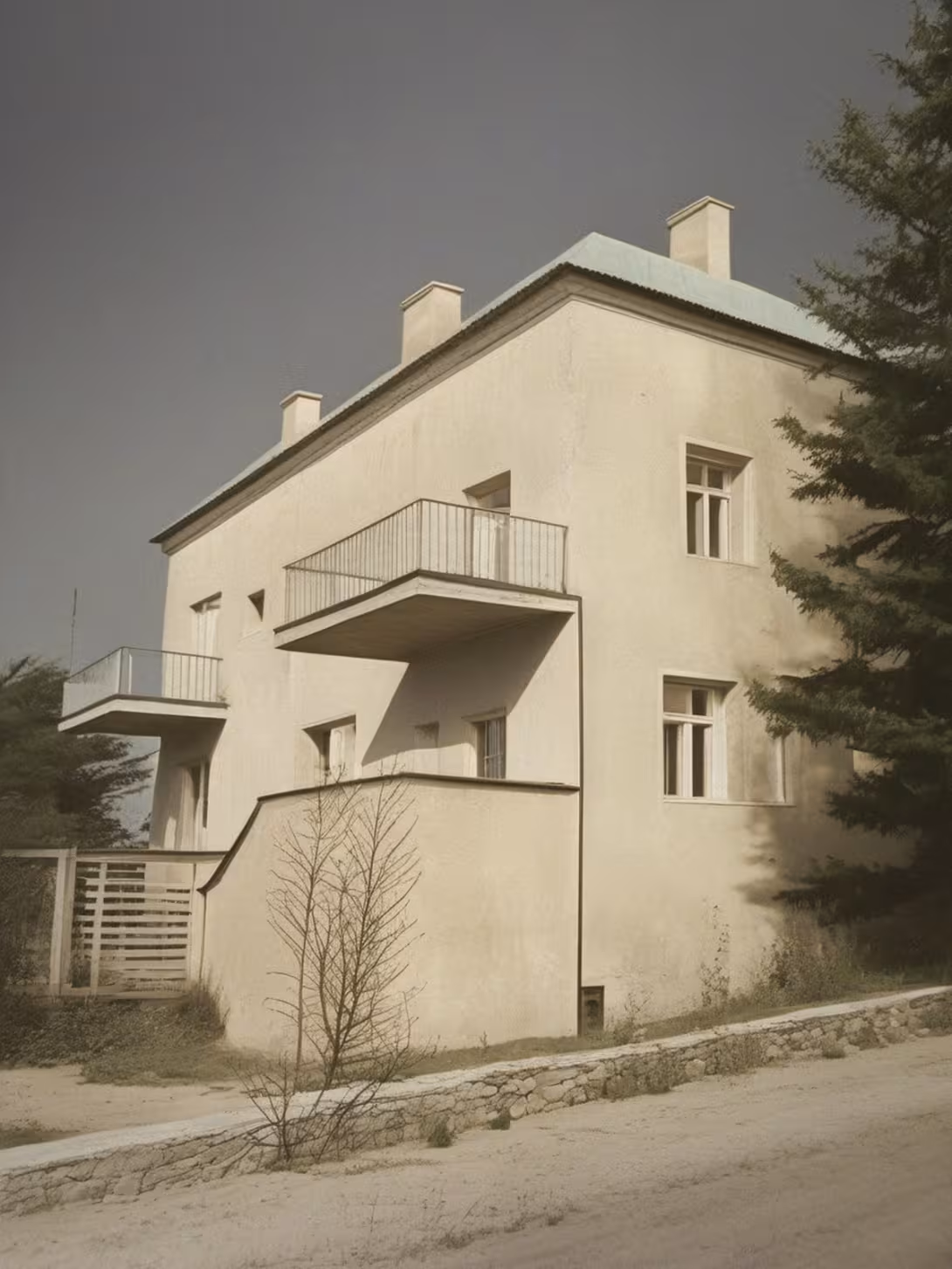
The historical appearance on the left is an AI-generated visualisation and serves as inspiration only.
Historical milestones
- 1925
- Opening of construction according to the design of architect Ernst Wiesner.
- 1937
- Completing the garden with a modern swimming pool.
- 1943
- Buying a house with a Nazi head named Karl Schwab.
- 1958
- Official statement of the front of the house for a cultural monument.
Architectural development
The house was built as a walled block with an unconventional hernia roof with a lamen roof. In 1937 the complex was supplemented by a swimming and children's pool in the garden. The exterior is characterized by significant chimneys coming out of the atics and terraces connecting the house with the garden. The interior layout is divided into economic facilities in the basement, common areas on the ground floor and private bedrooms on the floor.
Historical events
Construction of the villa in the years 1925-1926. Building a swimming pool in the garden of 1937. The Stein family transport to Sobibor extermination camp in 1942. Writing the front of the house on the list of cultural monuments in 1958.
Owners
Willy Leo Stein (1925- 1937), Margarete Steinová (1937- 1942), Immigration Fund for Bohemia and Moravia (1942- 1943), Karl Schwabe (1943- 1945), National Administration (1945- 1948), Private Owners (present).
Points of interest
- Steinův rodinný dům is a key functionalist building in the Masaryk district of Brno. - It was designed by architect Ernst Wiesner between 1925 and 1926, influenced by the creation of Adolf Loose. - The house resembles the tragic fates of the Jewish elite in Brno during World War II. - The architecture uses the steep slope of the Yellow Hill, which makes the house two-storey from Barvich Street and three-storey from the garden. - In 1937 the garden was modernized with the construction of a swimming pool.
Guide
Show guide text
This text was created by artificial intelligence and has not been editorially reviewed. It may contain inaccuracies.
Welcome to the tour of the Masaryk district in Brno. Right now, you're standing on the street in the Stránice district, and before your eyes, there's a significant functionalist structure known as Steinův rodinný dům. Take some time, take a deep breath, and let the atmosphere of this place take hold. If you look in front of you, you see an object in the shape of a simple block, which is very sensitively placed in the steep slope of the Yellow Hill. It is this position in the slope that strongly affects the outer shape of the building floor, which you can now observe.
Let's look into the past and remember how this monument came into being and what fates followed it. The year is nineteen hundred twenty-five and on this slope construction begins according to the project of an important architect, which was Ernst Wiesner. The house was built by the director of the telephone company Willy Leo Stein along with his Mrs. Margaret Stein. They wanted to find a comfortable and modern living here, which thanks to Wiesner's skill they managed to do the most. Ernst Wiesner was based on the great ideas and influences that came from the famous architect Adolf Loos at the time. These marks are still visible on the house today, especially in the cleanliness of shapes, efficiency and overall concept of the building as a simple geometric body.
Now pay attention to the architecture itself and the details that extend before you. Note how the building uses demanding terrain. Architect Ernst Wiesner was great in connecting human work to the natural impact of the steep slope of the Yellow Hill. The object has the shape of a simple block and its outer floor changes depending on where you look at it because the slope below it is falling. When you look at the front of the house, you realize that this part was officially declared a cultural monument in nineteen-hundred and fifty-eight. It reflects clean lines and emphasis on the function of each part of the house, which are the main features of functionalism, the villa of which is a key representative in the entire Masaryk district of Brno.
But the stories associated with this place are far from just the beauty of architecture and modern housing. Steinův rodinný dům also carries a deep and tragic subtext. It reminds us of the dark fates of the Jewish elite in Brno during World War II. The original owners, married to Stein, had to face terrible events of that time. Their home was taken from them, and in nineteen hundred forty-three houses were bought by the Nazi leader Karl Schwabe. Imagine for a moment the sudden upheaval of fate, when in a building that was designed for the joy, peace and development of family life, suddenly there were representatives of power who bore destruction. It's a memento that we should always remember when we look at these walls.
The garden that belongs to the house also carries an interesting chronology. The original space was supplemented by a modern swimming pool in nineteen hundred thirty-seven. Imagine what technical and social news it was at the time. The owners could enjoy relaxing right by their house, set on the slope with a beautiful view. Today, the garden and pool form an integral part of the historical complex, which breathes the atmosphere of interwar modernity, but also bears the scars of the twentieth century.
When we're slowly finishing our stop today, look again at this clean functionalist facade. Steinův rodinný dům is not only an example of the masterful work of architect Ernst Wiesner and influence of Adolf Loos, but it is also a witness of human joys, of building enthusiasm, but also of great human tragedies. Thank you for listening to this audio guide. I hope there was a walk for you in the Masaryk district and a stop at this villa rewarding. I wish you a beautiful rest of the day and a happy journey on your next discovery of the historical beauty of Brno. Goodbye.
Tips for visitors
The best time to visit Stein's family house is in the morning, when the sunlight ideally radiates a clean line of functionalist architecture designed by the famous architect Ernst Wiesner. You avoid the afternoon crowds and experience the quiet atmosphere of the prestigious Masaryk district.
You can use a passenger car or public transport for transport to the villa. Check the specific line numbers and the current connection in the Internet connection search engine.
Take your comfortable hiking and tiling shoes with you for a tour, a drinking bottle and a small snack. As you move in a residential area with limited possibility of buying refreshments directly at the villa, it is worth having the supplies with you.
To photograph the exterior appearance of the villa, choose the morning hours when the sun best models the plastic façade of the house and its terrace. The best places for the footage are from the opposite pavement, where the total composition of the building will stand out, planted in the narrow terrain.
Within walking distance of 30 minutes walk from the villa there are a number of interesting places listed in the background. You can visit the nearby Wilson Forest, explore other important functionalist villas, including the Stiassni Villa, or visit the unique historical waterways on the Yellow Hill. For families with children, staying in nearby parks and forest parks is a pleasant walk, however, it is necessary to take into account that strollers can have minor problems on steep pavement and in mountainous terrain.
Frequently asked questions
Can the monument be visited?
This is a residential or farm building, not a museum with opening hours. Please view it from public space and respect the owners' privacy. We have no information about access to the interior.
Where is the monument?
Location: Stránice, Jihomoravský kraj. The map on this page shows the exact spot.
Why is the monument protected?
It is listed in the Central List of Cultural Monuments of the Czech Republic as a cultural monument (register no. 1000161384_0001).
Businesses nearby
Do you run a restaurant, accommodation, shop, museum, rental, wellness or other visitor service near this monument? Show yourself directly to the people heading to it — this is how they will see you in the app and on the web:
Events nearby


Zdroj akcí: otevřená data měst a obcí ČR (Národní katalog otevřených dat) a kalendář akcí Národního památkového ústavu.
Nearby
Vila se nachází v prestižní Masarykově čtvrti na úbočí Žlutého kopce. V blízkosti se rozkládá Wilsonův les a nacházejí se další významné funkcionalistické vily, například vila Stiassni. Nedaleko jsou také unikátní historické vodojemy na Žlutém kopci.
Accommodation nearby
Trips and activities nearby
Guided tours, tickets and activities nearby from GetYourGuide
Affiliate link: if you buy from the partner, we may receive a commission. The price for you does not change.
Search tours and activities →Themed route
I propose a thematic tour in the prestigious Masaryk district and its surroundings on the side of the Yellow Hill.
1.Steinův rodinný dům (villa) Type: Architectural monument Why it is worth a visit: This important villa represents the main destination of our journey and shows great examples of modern construction. It is located in the Masaryk district.
2. Villa Stiassni Type: Architectural monument Why is it worth a visit: In the immediate vicinity of our main destination is this other famous functionalist villa. You can admire the timeless design and the surrounding garden.
3. Wilson Forest Type: Natural area Why is it worth a visit: Not far from the villas is this forest that offers a pleasant environment for a peaceful nature walk on the side of the Yellow Hill.
4. Historical water jams on the Yellow Hill Type: Technical monument Why is it worth visiting: Near are these unique underground spaces. It's an admirable construction of an old water system.
Seasonal recommendations
Spring in the garden around the famous family building in Brno's Stránice district brings awakening nature and flowering trees that gently shade the bright facade of the house. The lighting is very clean and soft thanks to extending days, which creates a calm and optimistic atmosphere. You will not meet many tourists here during this period, so you will enjoy the tour in silence. We recommend to wear fixed shoes because of possible moisture on the lawn and light jacket, because spring weather is usually variable. The best time to visit is in the morning, when the sun warms pleasantly, but does not burn as much.
Summer in this historic place offers a lush green garden and deep shadows that provide a welcome shelter from the heat. Sun rays penetrate thick leaves and create interesting games of light and shadow on the outside walls, which gives the tour a unique summer character. Since this is the main tourist season, it is often the largest visitor. It is necessary to count on crowds interested in architecture. Wear breathtaking clothes, don't forget the headgear and bottle of drinking water.
Autumn turns the surrounding slopes into a colorful landscape full of yellow, red and brown shades. The unique outdoor spaces of the house are very melancholy and nostalgic in the morning mist, while the muffled autumn light underlines clean architectural lines of the building. The number of visitors is falling significantly at this time, which guarantees a calm and chamber atmosphere. Don't forget to wear a warm sweater, waterproof layer and solid shoes, because falling leaves on the road can slide. The ideal time for visiting is around noon, when the fog falls and the sun can still warm up the outdoor space slightly.
Winter provides a very different villa in the Sites, a rough and elegant look, especially when its roofs and surrounding garden cover the snow cover. The early dimming and long shadows create a mysterious atmosphere that amplifies artificial illumination of architectural details. In winter, only a few people come here, so you can look at the memory in complete privacy. It is absolutely necessary to wear a winter coat, hat, gloves and warm waterproof shoes. Due to the short day and limited operating time in winter time, plan your arrival for the early afternoon to make the full tour in daylight.
Visualizations and artistic views


The visualisations are generated by artificial intelligence and serve as inspiration.
Photos from the area
Real photos taken near the monument


Zdroj a licence jsou uvedeny u každého snímku.
Tips from visitors
No tips yet. Be the first!
Log in and add your tip.
Sources and literature
Photos: Harold / CC BY-SA 3.0 — Wikimedia Commons. The author and licence also appear when you hover over the image.
Faktickým podkladem tohoto textu byl článek na Wikipedii, jehož autory jsou přispěvatelé Wikipedie. Článek je dostupný pod licencí CC BY-SA 4.0.
Location on the map
More monuments – Stránice
Show all in the municipality
Příběhy a pověsti
Legendy, pověsti a příběhy spjaté s touto památkou
Fotografie návštěvníků
Zatím žádné fotografie. Buďte první, kdo přidá fotografii z návštěvy!
Log in a přidejte svou fotografii nebo hodnoťte.
Za ověřenou návštěvu v aplikaci získáte víc bodů — poznáme podle GPS, že jste na místě.
Reviews and comments