



Švamberk Ruin
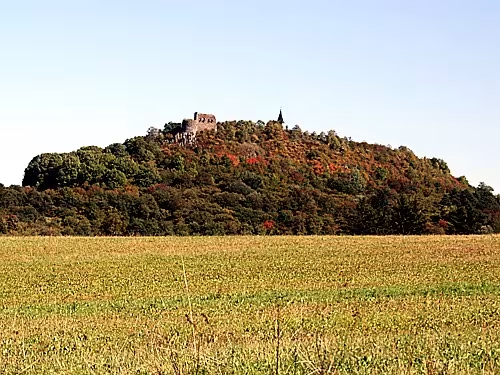
Švamberk, also known as Krasíkov or Švamberk in German, is a charming historical monument near Constantine's Spa in the Pilsen Region of the Czech Republic. This Gothic chateau is situated on the top of the hill Krasíkov 636 meters above the Hadovka River. Švamberk, built at the end of the 13th century Ratmír ze Skviřína, played an important role in events such as the Hussite War and the Thirty Years War. Since 1964 it has been recognised as a protected cultural monument and offers visitors a view of medieval Czech history.
The origin of Švamberk dates back to the end of the 13th century when Ratmír ze Skviřína founded the chateau in accordance with contemporary architectural trends and named it after the German term "Schwanberg" or "Švamberk." The place has been inhabited since ancient times, as evidenced by artifacts from late Hallstatt period discovered during 2007 excavation. This makes Švamberk located in Czech temporary history from the Premyslid dynasty to the Luxembourg era.
The Švamberk was built in a Gothic style typical of its time. The chateau went through several stages of construction and reconstruction, especially after fires in 1443 and 1644. Despite these challenges, ruins remain evidence of medieval craftsmanship, which reflects both resilience and historical significance.
The ownership of Švamberk has changed dramatically for centuries. At first Ratmír ze Skviřína was founded, later it came under control of Bohuslav I. ze Švamberka in the early 14th century. The chateau played a key role in the Hussite Wars when Jan Zizka caught Bohuslav from Švamberka in 1421. After this event Hynk Krušina successfully redeemed the chateau from its siege in 1422. Over time, various owners managed the property until it was influenced by the 30-year war.
Key events in Švamberk include its capture and ransom during the Hussite Wars and subsequent destruction by fire in 1443, followed by the reconstruction effort of Hynk Krušina. Another significant event occurred in 1644, when the fire destroyed most of the chateau during the Thirty Years' War. Despite these advertisements, the chapel dedicated to Saint Mary Magdalene was built on confiscated, although the main building was never fully restored.
Today, Švamberk is a ruin that offers visitors the opportunity to explore its historical significance and architectural remains. The site is accessible and surrounded by picturesque landscape, including the River Hadovka and hill Krasíkov. Near Constantine's Spa offers other historical attractions that strengthen the attractiveness of the area for history lovers.
The value of Švamberk consists of a rich historical narrative and a permanent presence as a cultural monument. Visitors are invited to explore this site to appreciate his medieval heritage and the stories that he keeps in his ruins.
Then and now
Drag the slider to compare how the landmark may have looked when it was built with the view today.
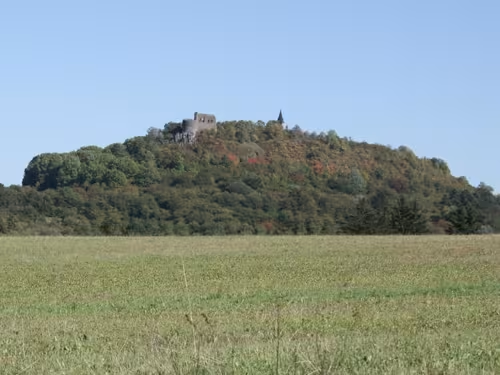
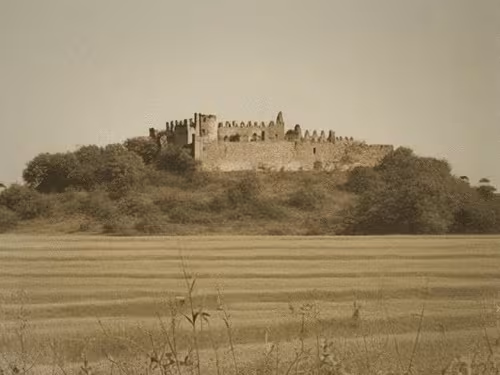
The historical appearance on the left is an AI-generated visualisation and serves as inspiration only.
Historical milestones
- 1421
- Jan Žizka captured Bohuslav from Švamberka in the chateau.
- 1443
- The chateau was burned, but later rebuilt Hynk Krušina.
- 1644
- During the Thirty Years' War, the chateau was destroyed by a fire.
Architectural development
Švamberk was originally built as a Gothic chateau that reflects the architectural style of its time. In the years 1443 and 1644 she went through several stages of construction and reconstruction, especially after fires. The ruins now serve as a source of historical interest rather than functional architecture.
Historical events
Zajala Jan Žižka in 1421
Attack failed twice in 1422, then redeemed Hynk Krušina
Burned in 1443 and later rebuilt
Destroyed by fire in 1644 during the Thirty Years' War
Owners
Ratmír ze Skviřína (end of 13th century)
Bohuslav I. ze Švamberka (beginning of the 14th century)
Hynk Krušina (mid-15th century)
Various owners until the 30-year war
Points of interest
- Despite the name "Schwanberg," which means "Swan Mountain," there is no historical evidence to suggest that swans were sometimes significant or symbolic for the history of the chateau.
- Chateau ruins Švamberk are known for their mysterious acoustics; Some visitors report hearing weak echoes reminiscent of medieval singing, although this phenomenon has never been scientifically explained.
- In 2007, an unexpected discovery was made in the dig: a hidden stash of late-Hallstatt artifacts, suggesting that the site was of strategic importance even before the construction of the chateau in the 13th century.
- Legend has it that the secret tunnel once connected Švamberk to a nearby monastery, allegedly used to smuggle religious relics and messages at a time of conflict, although no physical evidence was found to support this story.
- The chapel dedicated to St. Mary Magdalene, built on the chateau castle chateau after its destruction in 1644, is said to have been built by stones from a demolished local church, adding an element of mystery to its origin.
Guide
This guide is narrated by a synthetic voice generated by artificial intelligence.
Show guide text
This text was created by artificial intelligence and has not been editorially reviewed. It may contain inaccuracies.
Welcome to the historical site Švamberk, also known as Krasíkov or Švamberk in German. As you stand on this quiet hill near Constantine's Spa, take a moment to absorb the breathtaking panorama that stretches before you. The remnants of what was once an impressive chateau are marked at an altitude of 636 meters above the Hadovka stream by the mighty, silent and powerful will of the past.
The origin of Švamberk dates back to the end of the 13th century when Ratmír ze Skviřína built this fortress. Over time, he became an important player in regional history, especially during the stormy Hussite wars. Jan Žižka captured Bohuslav from Švamberka in 1421 and marked the key moment of his history.
As you explore the site today, notice the architectural remains that whisper stories of resilience and rebirth. Although much has fallen to time, elements such as robust walls and towers invite you to imagine their former grandeur. The history of the chateau is carved into every stone, reveals stories of destruction and reconstruction - especially after the devastating fire in 1644 during the Thirty Years' War.
Švamberk is home to many influential personalities throughout its existence. For Ratmír ze Skviřína, Bohuslav I. ze Švamberka, Jan Žižka z Trocnova, and Hynk Krušina all left their mark here. Each of them played a role in shaping the fate of the chateau, which contributed to its complex tapestry of history.
One interesting aspect of Švamberk is its mysterious acoustics. Some visitors report hearing faint echoes that appear to resonate with medieval melodies or voices from ancient times. This sound phenomenon adds a charming layer to your visit, which invites you to listen carefully and perhaps hear the whispers of history.
As you conclude your survey of this remarkable place, I urge you to hold on a little longer, immerse yourselves in its quiet atmosphere and think of the countless stories that it holds. Švamberk is not just a place, it's a journey through time. Thank you for joining me today, and may your curiosity lead you to other historical miracles.
Frequently asked questions
Can the monument be visited?
This is a ruin. Such sites are often freely accessible, but some can only be visited with a guide or are closed for safety reasons. We have not verified the current situation – take care and respect any restrictions.
Where is the monument?
Location: Krasíkov, Plzeňský kraj. The map on this page shows the exact spot.
Why is the monument protected?
It is listed in the Central List of Cultural Monuments of the Czech Republic as a cultural monument (register no. 45531/4-1781).
Businesses nearby
Do you run a restaurant, accommodation, shop, museum, rental, wellness or other visitor service near this monument? Show yourself directly to the people heading to it — this is how they will see you in the app and on the web:
Nearby
Švamberk is surrounded by picturesque landscape including the River Hadovka and the hills Krasíkov. Near Constantine The spa offers other historical monuments, while the natural beauty of the area includes forests and rolling hills.
Accommodation nearby
Themed route
Thematic tour of the itinerary: Charming ruins Švamberk
1.Švamberk (Ruins) - Type: Castle Ruin - Why Visit: Start your journey on the historic site of Švamberk, a captivating medieval chateau ruin set on hill Krasíkov. This impressive structure offers panoramic views of the surrounding landscape and serves as evidence of the region's rich history. Explore the remains of his nobility and imagine life in this one majestic fortress.
2. Snake Stream - Type: Natural functions - Why Visit: A short walk from Švamberk, watching the picturesque Snake stream winding through the fresh woods and rolling hills. This quiet natural environment provides a peaceful background for reflection and offers the opportunity to connect with nature while enjoying the picturesque beauty of the area.
3. Constantine Spa - Type: Historical pages - Why Visit: Approximately 10 km from Švamberk, a visit to Constantine Spa, a charming spa town known for its historical significance and therapeutic springs. Explore picturesque streets and dive into local culture with a unique blend of history and relaxation.
4.Krasíkov Hill - Type: Natural landscape - Why Visit: Return to hill Krasíkov, where Švamberk is nestled, for a peaceful hike or picnic in the middle of its rolling hills and garden forests. The natural beauty of the area offers an ideal environment for outdoor activities and offers stunning views of the surrounding countryside.
This itinerary combines historical research with nature assessment, which offers a well-rounded experience of charming landscapes and cultural heritage near Švamberk.
Seasonal recommendations
Spring: Švamberka Square in the spring season offered single view, where the moor begins to pass through the lubricating sleep. Green meadows and which shrub their own landscape to the chateau, which gives the atmosphere a feeling of new and hope. Sunbeam settlement of ruins extracted by dramatic stalls, which are intended for architecture of the beauty of the remains of the chateau. This season it is advisable to joke more slowly because of the growing crowd tourists prehit with spring temperatures and beautiful views. It is supplied to wear complementary shoes for the disease on uneven terrain and light siege, which makes it easy to change the temperature. It is not known that, on the basis of this Decision, the deferral in respect of the fulfilment of the conditions laid down in Article 4 (1) of Regulation (EU) No 1307 / 2013 is appropriate.
Summer: The summer Švamberk is published in a lively destination for milestones of history and nature. The sun is entitled to a permit and is surrounding, which means dramatic conditions that are ideal for photography. Intense vegetation in this case presupposes that leakage into nature, but at the same time it can make it harder on the ground. Summer is the most popular time to get what stands for a high return crowd, especially in the warehouse of the day. Vstavy should be added early in the morning or may be postponed to exterminate with warm time and long queues. Wearing a light, light round, forbidden sunny bree and plenty of drinking water is peaceful for possible changes.
Autumn: Autumn offers Švamberk melancholic beauty when tree leaves promote to golden and red colors. The atmosphere is an expression that in the summer range, which allows the possibility of expanding the chateau structure without exceeding the crowd. The sunny days provide an ideal assessment for photographic architectural details, while the cooling of the festival transferred to the chateau under the city. The entrustment authorities should be invited to be secured and produced by shoes, since temperatures have decreased and aid which is not valid should be used. Not to mention it's in the early afternoon when the sun lights up the wounds, but before cold evenings.
Winter: Winter national value Švamberka offers a completely different production, with a chateau surrounded by snow and ice landscape. Cold temperatures can be set for a safe period, but providing one-way time for a historical structure under a white plan. Sunshine countries located in clear and special situations that may represent dramatic aesthetics. The intrinsic organs should be transported with warm clothing, protective gloves and high-quality shoes for snow or ice. The best times on demand are at noon, when the sun justifies the betrayals, but before temperatures become direct midpoints.
Visualizations and artistic views


The visualisations are generated by artificial intelligence and serve as inspiration.
Photos from the area
Real photos taken near the monument


Zdroj a licence jsou uvedeny u každého snímku.
Tips from visitors
No tips yet. Be the first!
Log in and add your tip.
Sources and literature
Photos: Eva Haunerová / CC BY 3.0 — Wikimedia Commons. The author and licence also appear when you hover over the image.
Faktickým podkladem tohoto textu byl článek na Wikipedii, jehož autory jsou přispěvatelé Wikipedie. Článek je dostupný pod licencí CC BY-SA 4.0.
Location on the map
More monuments – Krasíkov
Show all in the municipality


Příběhy a pověsti
Legendy, pověsti a příběhy spjaté s touto památkou
Fotografie návštěvníků
Zatím žádné fotografie. Buďte první, kdo přidá fotografii z návštěvy!
Log in a přidejte svou fotografii nebo hodnoťte.
Za ověřenou návštěvu v aplikaci získáte víc bodů — poznáme podle GPS, že jste na místě.
Reviews and comments