



Sýpka Jevišovice Granary
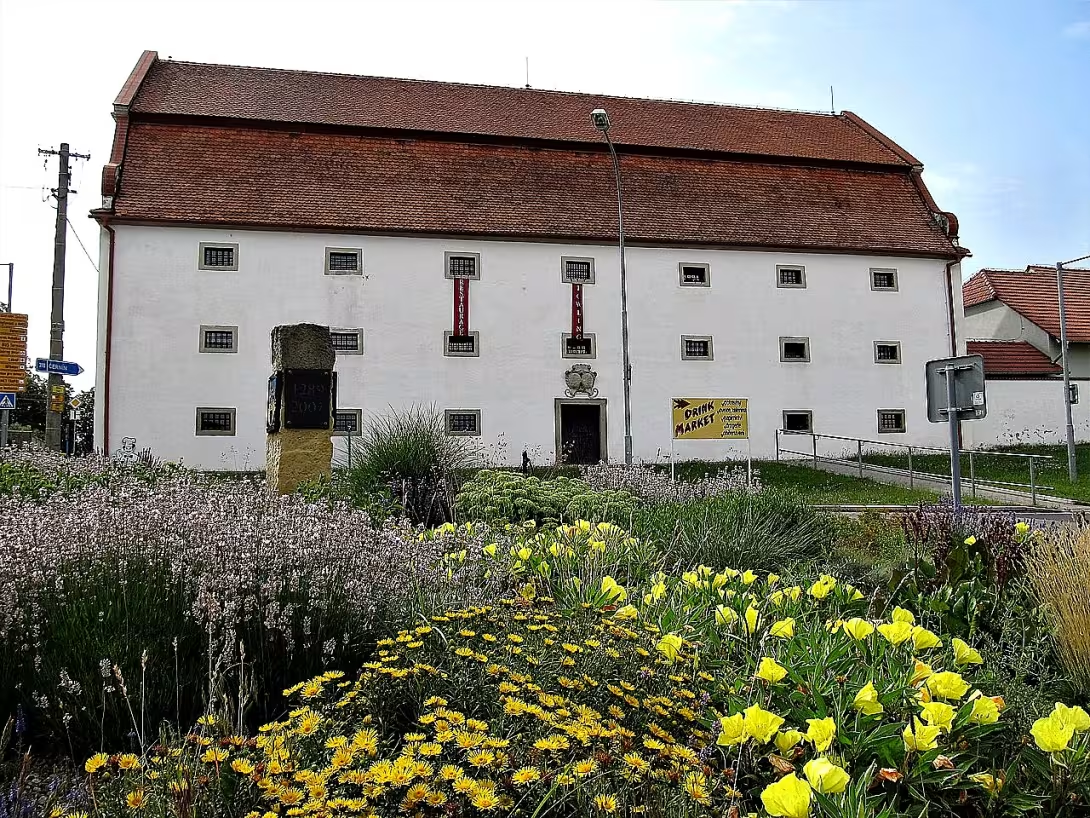
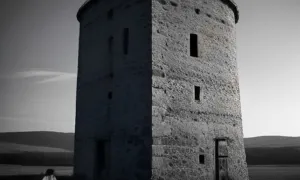
The Baroque granary in Yevišovice, built around 1750, is a cultural monument and part of the historical economic court of the theatre estate. Its architectural character and history make it important for local and national heritage. The granary, along with the church of St. Joseph, forms a dominant view of the southern part of František Štursa Square in Jevišovice. Its historical importance is highlighted by the entry into the list of cultural monuments in 1973 and its current function as a multi-functional centre under the administration of the Brno City Museum.
The granary was built during the Baroque era, a period characterized by rich decorations and dramatic forms in architecture. Although the exact date of its creation is not known, dendrological surveys of wood elements suggest that it was built around 1750. This time frame is related to the period when Count Jan Ugart and his wife Marie Vilemína de Souches owned the Theater Manor, which is reflected in the central alliance coat of arms located above the entrance to the granary from the square. This historical context shows the development of agricultural estates in Bohemia during the 18th century, when the granary became an important part of the economic court.
The granary is considered a baroque monument. Its significant construction includes a two-storey building with volute shields that provide the structure of its characteristic charm. After centuries of decaying, the granary was undergoing a major reconstruction after 2000 thanks to the Jevishovicka Union initiative, which brought it back to its original state and adapted it to its new features. Today it serves as a multifunctional centre offering cultural, sporting and social activities, making it a living part of the local community.
The history of granary ownership is linked to its original status as part of the farm yard. Originally it belonged to the estate, which reflected its function in the agricultural and economic context of that time. In 1973, the granary was officially recognised as a cultural monument, which highlighted its historical value. After reconstruction in 2000 it went to the administration of the Brno City Museum which transformed it into a multifunctional centre.
Key events in the development of the granary include its inclusion in the list of cultural monuments in 1973 and reconstruction after 2000. These events not only preserved its historical nature, but also contributed to its modern purpose as centres for various activities.
Today, a granary in Yevišovice is not only a monument to the past, but also a living place for the community. Its transformation into a multifunctional centre enables visitors to take on with diverse activities and benefits such as accommodation or restaurant services. Its historical value and modern features make the granary an important destination for visitors who want to discover the rich heritage of Yevišovice.
The granary in Yevišovice is a reminder of the past and the present symbol of local life. Its history, architecture and transformation into a multifunctional centre make it not only a monument to protection, but also an active place for the community. The visit to the granary offers a unique view of the history and present of Yevišovice, which makes it a necessary destination for everyone interested in the Czech cultural heritage.
Historical milestones
- 1973
- Putting a granary in the list of cultural monuments.
- 2000
- The reconstruction of the granary was thanks to the Jevishovicka Association initiative.
Architectural development
The granary was built in Baroque style in the middle of the 18th century, probably around 1750. After centuries of decaying, it underwent a major reconstruction after 2000, bringing it back to its original state and adapting it to its new features.
Historical events
- 1973
- The granary was included in the list of cultural monuments.
- 2000
- A major reconstruction of the granary was carried out thanks to the Jevišovicka Association initiative.
Owners
Originally it belonged to the theatre estate, later in the property of the Brno City Museum.
Points of interest
- It was built during the Baroque era, a period with rich decorations and dramatic architectural forms. - Dendrological surveys suggest its formation around 1750, although the exact date is unknown. - Its historical significance is highlighted by the alliance coat of arms of Count Jan Ugarth placed above the entrance. - Architecturally significant thanks to a two-storey building with volute shields that provide a characteristic charm structure. - Since 2000 it serves as a multifunctional centre under the administration of the Brno City Museum, offering cultural, sports and social activities.
Guide
Show guide text
This text was created by artificial intelligence and has not been editorially reviewed. It may contain inaccuracies.
Welcome to Yevišovice, a place where history meets the peace of the present. Right now, you're in front of one of the most interesting buildings in this city. In front of you, there is a granary, a building that can act as a simple warehouse at first glance, but when you look closely, it tells you the story of wealth, power and aesthetics of the time when the baroque ruled these parts. Stop for a moment, take a breath and feel the atmosphere of this place. Together with the church of St. Joseph, located nearby, this granary forms a dominant view of the southern part of František Štursa. It is a space that defines the character of this whole corner of the city and reminds us of what the economic background looked like earlier.
Now let's look at how this building came into being and why it actually stands here. The granary was built in the middle of the eighteenth century and was an integral part of the economic court of the theatre estate. At the time, the granary was not just an ordinary grain storage building, but it was basically a symbol of stability and wealth of the estate. At that time, the grain was the most valuable asset, the basis of survival and the source of profit. That is why a lot of effort has been invested in preserving it, and the granary has often been built with care that can be surprising today. This particular building was created during the period when the Baroque triumphant in architecture, a style that loved rich decorations, dramatic shapes and a sense of grandeur.
Now please pay attention to the architecture of the building itself. Look at its overall form. The granary has a two-story structure, which gives it some monumental and stability. But what you should really notice is her shields. Look up. You'll see the so-called volute shields. Volutes are those characteristic spiral ornaments that pass smoothly from one line to another. These elements are typical of the Baroque style and are designed to bring movement and dynamics into the building. Instead of sharp edges and simple surfaces here, we see curves playing with light and shadow. It is fascinating that even a building with a practical purpose such as the storage of grain was designed with such a sense of beauty. The whole appearance of the building reflects the spirit of its time, when even functional structures had to represent the status of its owner.
Now when you move a little closer to the entrance, look directly above it. Notice the allied coat of arms placed there. This is one of the most important details of the entire building. An alliance coat of arms isn't just an ornament, it's a historical document carved in stone. This particular character combines two important personalities of his time, Count Jan Ugart and Maria Vilemín de Souches. In heraldice, that is, in the science of characters, the alliance coat of arms symbolizes the marriage and union of two noble families. In this way, the building directly tells us who ruled here at the time of its creation and who was responsible for its position. Jan Ugart and Marie Vilemina were not just names in archives, they were the people who shaped this estate and decided on its development. Their presence here has been preserved for centuries to remind us of the hierarchy and social order of the eighteenth century.
Perhaps now you're wondering exactly when the granary was built. And this is where we get to the part that resembles the work of detectives. Although we may not find the exact day or year of laying the base stone in historical records, modern science has helped us find the answer. A so-called dendrological analysis has been carried out. This is the method in which you examine the structure of the rings in wooden elements of the construction. Thanks to this survey, we know that the granary was probably built around a year or so of seven hundred and fifty. It's fascinating how the material of the building itself, i.e. wood, can tell us the truth about its age, even though the people who built it forgot to write the exact date into the chronicle. This little mystery about the origin of the building gives the granary a certain charm and reminds us that history is not only about the dates, but also about the traces that we leave behind.
However, it does not exist only in the past, but it is part of a living city today. Her journey through the 20th century was full of changes. In the year nine hundred seventy-three, the granary was officially included in the list of cultural monuments. This was a crucial step, because this recognised its irreplaceable value for the whole area and ensured protection against loss or inappropriate modifications. The building, however, suffered from years of support and needed help. This is where the local initiative comes in. At the beginning of the new millennium, namely in the year two thousand, a major reconstruction took place. This correction was possible not only because of the state authorities, but mainly because of the Jevišovicka Union initiative. It is a beautiful example of how local people appreciate their heritage and are willing to look after it so that future generations can admire the baroque beauty in the heart of their city.
Now, if you look around again, try to imagine what this place looked like two years ago. Imagine the noise of a wagon full of grain, the voices of the farm and the workers who have been eating crops from the surrounding fields. The granary was the heart of the estate economy, a place where wealth and bread were decided for many people. Today the granary no longer serves its original purpose, but its walls and volutes still tell about the ambitions of baroque builders and the life of the noble families of Ugarts and de Souches. He's a silent witness to the transformation of time that survived wars, regime changes and oblivion.
Take a last look at her facade and perceive the harmony she creates with the surrounding space of the square. This construction is proof that even practical buildings can have a soul if they are created with a love for art and architecture. Its simplicity combined with the Baroque detail creates a unique atmosphere that is so typical of Jevišovice.
Now that you know the story of this granary, I suggest you continue to explore the surroundings. Walk towards the church of St. Joseph, which with the granary forms the dominant view that we talked about at the beginning. Notice how these two buildings complement each other and how together they define the character of the southern part of František Štursa Square. Let yourself be guided by curiosity and discover other hidden corners of this beautiful city. I hope this short trip to history has helped you see the granary in a new light and that you will take away the memory of its elegant curves and noble characters.
Thank you for your attention and I wish you a pleasant further walk Jevišovicemi. Goodbye.
Tips for visitors
The best time to visit the granary is in the morning or late afternoon when the sun is the strongest and light most suitable for photography.
Joseph's Church, where the granary is in walking availability.
It is advisable to bring your camera because the granary is very photogenic, and also bring your water and food because there are not many shops around.
Photography is allowed, but it is better to avoid photography during the main season so as not to upset other visitors.
In the vicinity of the granary you will find a church of St. Joseph and other historical buildings worth a tour.
Frequently asked questions
Can the monument be visited?
Some buildings of this kind are open for guided tours, others serve another purpose or are privately owned. We have not verified whether and when this monument is open – please ask the operator.
What are the opening hours and admission?
We have not verified the opening hours or admission. Current information is published by the operator.
Where is the monument?
Location: Jevišovice, Jihomoravský kraj. The map on this page shows the exact spot.
Why is the monument protected?
It is listed in the Central List of Cultural Monuments of the Czech Republic as a cultural monument (register no. 1000126785).
Businesses nearby
Do you run a restaurant, accommodation, shop, museum, rental, wellness or other visitor service near this monument? Show yourself directly to the people heading to it — this is how they will see you in the app and on the web:
Nearby
🏰 Historic sites (91)
- sv. Florián 0.2 km
- Muzeum Jevišovicka 0.4 km 728141797
- Starý hrad Jevišovice 0.4 km
- Nový zámek Jevišovice 0.5 km
- sv. Václav 2.3 km
- James Ralph Jones 3.3 km
- Bukovina 4.6 km
- Boskovštejn 4.7 km
- Sv. Jan Nepomucký 5.7 km
- Pulkov 6.4 km
- Památník Dr. Josefa Mareše 6.7 km
- Lapikus 7.2 km
- Památník osvobození 7.4 km
- sv. Jan Nepomucký 7.5 km
- sv. Václav 7.6 km
- sv. Ludmila 7.6 km
- sv. Prokop 7.6 km
- sv. Anežka Česká 7.6 km
- sv. Cyril 7.6 km
- sv. Metoděj 7.6 km
🍽️ Restaurants and dining (71)
- Čas na kávu... 0.0 km web
- J. Čada 0.3 km
- U Suchého Čerta 0.4 km 607 190 990 web
- Hospůdka Rozkoš 4.7 km
- Club 6.5 km
- Ham 6.7 km
- Kantýna 6.9 km
- Restaurace Ranč 6.9 km
- Sklípek 7.5 km
- Pod Lipami 7.5 km
- U Rybníka 7.6 km
- Pizza 7.7 km
- HOSTINEC U ŠTOČKŮ 8.3 km
- Peklo 9.0 km
- Stop Cafe 9.0 km web
- občerstvení 9.8 km
- Hospůdka u Miroslava 10.1 km
- Zmolský pivovar 11.1 km
- U Molíků 11.2 km
- U hřiště 11.2 km
🏨 Accommodation (23)
- Penzion Šalamoun 0.3 km
- ATC Mexico 7.8 km
- Country 7.9 km
- Camping Country 7.9 km
- Boříkovský dvůr 10.7 km +420727855770 web
- Přehrada 10.9 km web
- Přehrada 11.0 km web
- KEMP Rouchovany 11.4 km web
- Cyklopenzion Višňové 11.5 km +420 725 116 532 web
- Althanský hostinec 11.7 km 731163172 web
- Hotel N 11.9 km Křížové náměstí 4 +420 515 228 164 web
- Penzion Lihovar 12.2 km +420720521521 web
- Ubytovací areál Rouchovany 119 13.1 km web
- Motorest pension u Benziny 13.6 km Pražská 94 515 221 259 web
- Grand Hotel Opera 14.0 km web
- Sport-V-Hotel 14.3 km
- Penzion U Marka 14.6 km web
- Kemp u Švestků 14.8 km Čížov 153 +420 733 745 670 web
- Dana 14.8 km
- Kateřina 14.9 km Na Valech 1556/7 web
🚲 Rentals and sport (4)
- Bazén v parku 11.7 km
- Sport-V-Hotelu výceúčelová hala 14.4 km
- Ronja 14.6 km
- Hostinec Na Vlachovce 14.9 km
🥾 Hiking and nature (26)
- Biskupické safari 5.4 km
- Dobíjení mobilů 7.2 km
- Bylinková zahrádka 8.2 km
- Mikulovické jezero 9.3 km
- zámecký park 10.1 km
- Losolosy 10.1 km
- Pánova studánka 11.3 km
- Zámecký park 12.0 km
- Pod Šibeničním kopcem 12.2 km
- Cínová hora 13.3 km
- Pivcův pramen 13.6 km
- Zámecký park zámku Jaroměřice nad Rokytnou 13.7 km
- Červený rybníček 14.2 km
- Červený rybníček 14.2 km
- PP Mašovický lom 14.3 km
- Jubilejní park 14.4 km
- Základy Kostela z doby Velké Moravy 14.6 km
- Velkomoravská Chýše 14.6 km web
- Vlčí jáma 14.6 km
- Větrník 14.7 km
Accommodation nearby
Themed route
Thematic cruise route around Sýpek Jevišovice
1.Sýpka Jevišovice (granary)
Why is worth a visit: This granary is the largest and best preserved rest of the industrial era in Bohemia. It's an architectural pearl that attracts historians and architecture lovers.
2. Lock Jevišovice (lock)
Why is worth a visit: The castle is located near the granary and offers beautiful gardens and parks that are an ideal place for relaxation. Its history dates back to the 16th century and today serves as a cultural centre.
3. St. Gilji Chapel (Chapel)
Why is worth a visit: This chapel is a small but important sacral monument object which represents historical and spiritual aspects of the area. Its simplicity and quiet environment are ideal for relaxation.
4. Monastery Jevišovice (monastery)
Why it is worth a visit: The monastery is an important historical place, which represents the life and activity of religious people in the past. Its architecture and location offer a view of the development of the village.
5. Park sets Jevišovice (park)
Why is worth a visit: The park is an ideal place to walk, offers beautiful green spaces and an opportunity to observe wild flora and fauna. It's a place of peace and relaxation in nature.
This route offers a combination of historical, cultural and natural experiences around the Jevišovice granary.
Seasonal recommendations
Spring: In the spring period, the granary in Yevišovice receives beautiful lighting, when the sun rays play on its historic roof structures. Nature awakens from winter and surrounds the memory of living colors of flowering shrubs and trees. The atmosphere is calm, which allows relaxed tours without excessive crowd pressure. We recommend to visit the granary in reflection on the sun days and suitable clothes to protect against cold brizies. The best time to visit is in the afternoon, when the temperature increases slightly.
Summer: In the summer, inspections of the granary in Yevišovice take place thanks to long daylight and warm weather. Nature is in full bloom, which makes space attractive. Summer is the period of the highest visitor burden, so we recommend visiting the granary earlier on the day to avoid long fronts. Hot clothes and sun protection (hat, sunglasses) are necessary for a comfortable visit.
Autumn: Autumn offers a unique atmosphere for granaries in Yevišovice. The colours of leaves and sunlight add another layer of beauty to the historical architecture. This period is ideal for quiet tours as the crowd load decreases. When visiting, remember the temporary nature of the weather; warm clothes and umbrella can be useful, especially in cold days. The best time to visit is early afternoon.
Winter: The winter season brings a frosty beauty in Yevišovice, when snow covers the surrounding countryside and dazzling sun rays reflect off the roof. The atmosphere is calm and quiet, which allows a peaceful tour without unnecessary interruption. Due to cold temperatures we recommend wearing warm clothes and the entry time may be limited, so it is advisable to visit the granary soon after the start of operation.
Visualizations and artistic views


The visualisations are generated by artificial intelligence and serve as inspiration.
Photos from the area
Real photos taken near the monument


Zdroj a licence jsou uvedeny u každého snímku.
Tips from visitors
No tips yet. Be the first!
Log in and add your tip.
Sources and literature
Photos: Vlach Pavel / CC BY-SA 4.0 — Wikimedia Commons. The author and licence also appear when you hover over the image.
Faktickým podkladem tohoto textu byl článek na Wikipedii, jehož autory jsou přispěvatelé Wikipedie. Článek je dostupný pod licencí CC BY-SA 4.0.
Location on the map


Příběhy a pověsti
Legendy, pověsti a příběhy spjaté s touto památkou
Fotografie návštěvníků
Zatím žádné fotografie. Buďte první, kdo přidá fotografii z návštěvy!
Log in a přidejte svou fotografii nebo hodnoťte.
Za ověřenou návštěvu v aplikaci získáte víc bodů — poznáme podle GPS, že jste na místě.
Reviews and comments