



Starý zámek Jevišovice Chateau
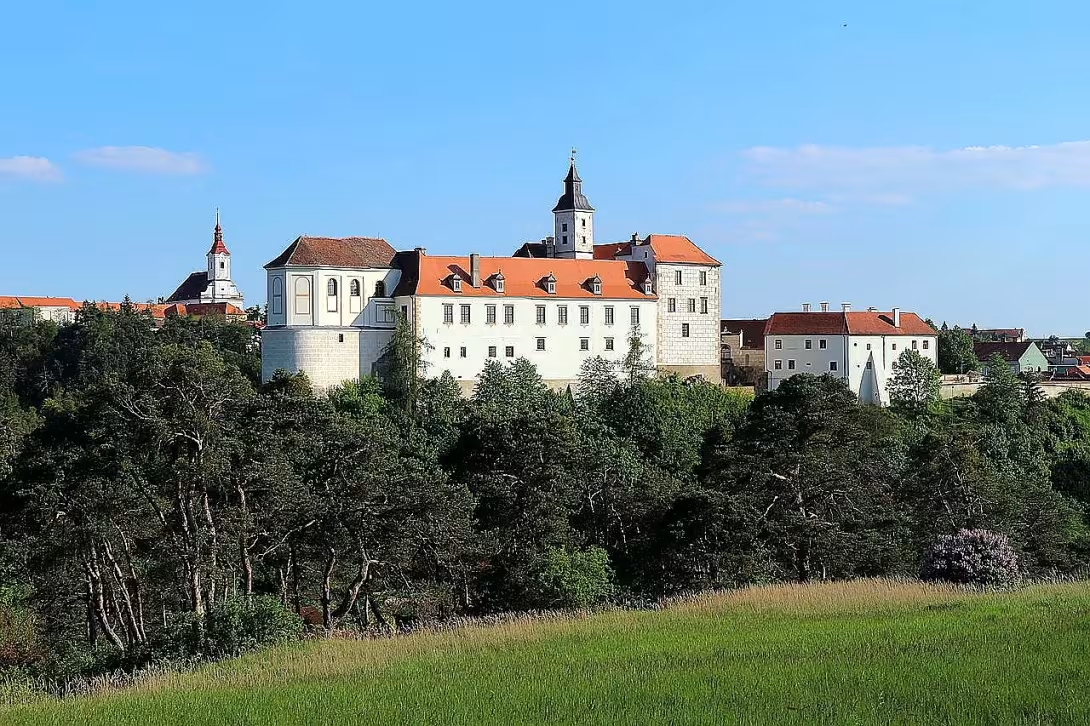
Starý zámek Jevišovice was built by the gentlemen of Kunštát in the first third of the 15th century on the island in the middle of the river Yevishovka, after their original castle on the opposite side of the valley stopped being eligible. The new location provided a natural defence construction and a distinctive landscape framework. During the 16th and 17th centuries the castle transformed from the original Gothic core into a Renaissance and early Baroque building, which has been preserved to this day.
The castle achieved fame especially for Jan Ludvik Raduita de Souches, who owned it in the 17th century. He became famous for the defense of Brno against the Swedes in 1645 and another fight against Ottoman expansion. His son Karel Louis, who inherited the castle, fell in 1691 in the battle against the Turks in Slanklov, Serbia during the Habsburg-Ottoman wars. In the 17th and 18th centuries, the princes of Minsterberg-Olešnický, and the Emperor Ferdinand III, later the Count of Souches and the House of Ugarte, took turns among the other owners. In the 19th and early 20th centuries, Biedermann, Ofenheim and the last noble owner of Eduard Larisch-Mönnich owned the farm.
The building has a characteristic quadruple available with a prism tower in the south facade from 1564, which together with the tower of St. Joseph's Church creates a dominant panorama town. On the north side there is a single-boat chapel of St. Louis - the only larger sanctuary of this saint in the Czech Republic. The facades show elements of Renaissance and early Baroque architecture, in particular block sgraffiti. The original Renaissance grid was preserved in one window. The castle is accessible through the original castle bridge; The castle made up of Renaissance and early Baroque style houses was preserved towards the town.
Since 1945, the castle has been confiscated as a result of Beneš's decrees. Since 1973, it has been managed by the Moravian Museum, which has established an exposition and depository. The extensive restoration took place between 1995 and 2011 according to the project of ing. Miroslav Fuchs; new roofs were taken to replace the older roofs damaged by fire in 1905. The castle chapel with its original mobility remains the most valuable space. The castle is open to the public with a guide route. The most beautiful views are offered from the direction of Střelice and from the location of the Old Castle, where the first Kunštátský castle stood.
Then and now
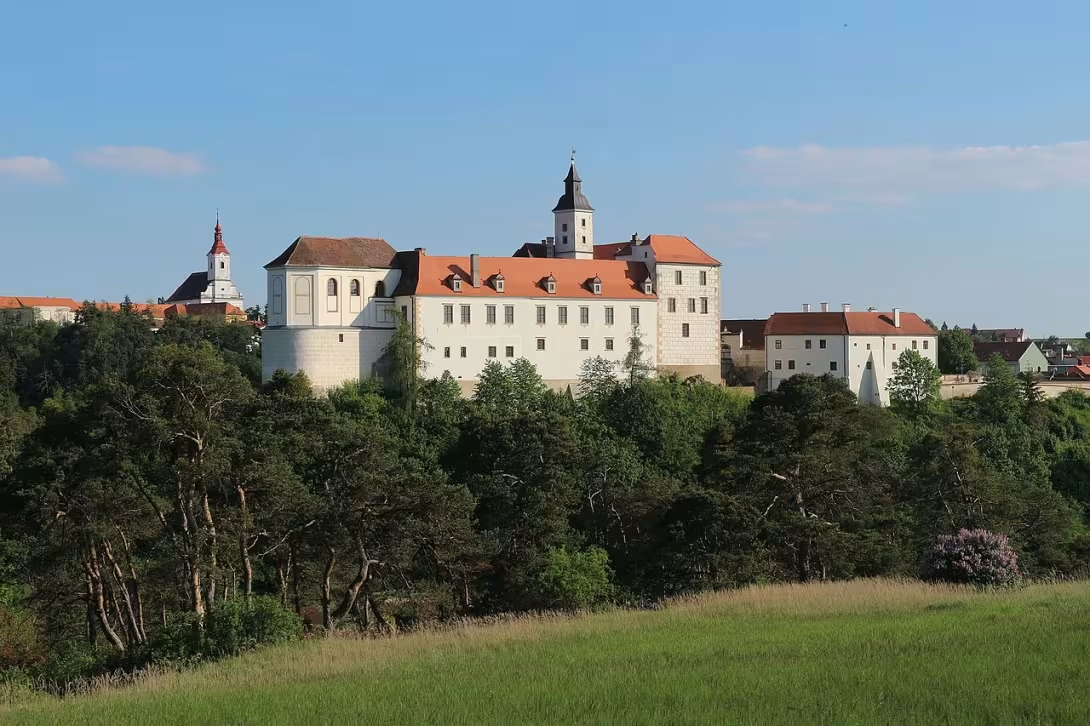
Drag the slider to compare how the landmark may have looked when it was built with the view today.
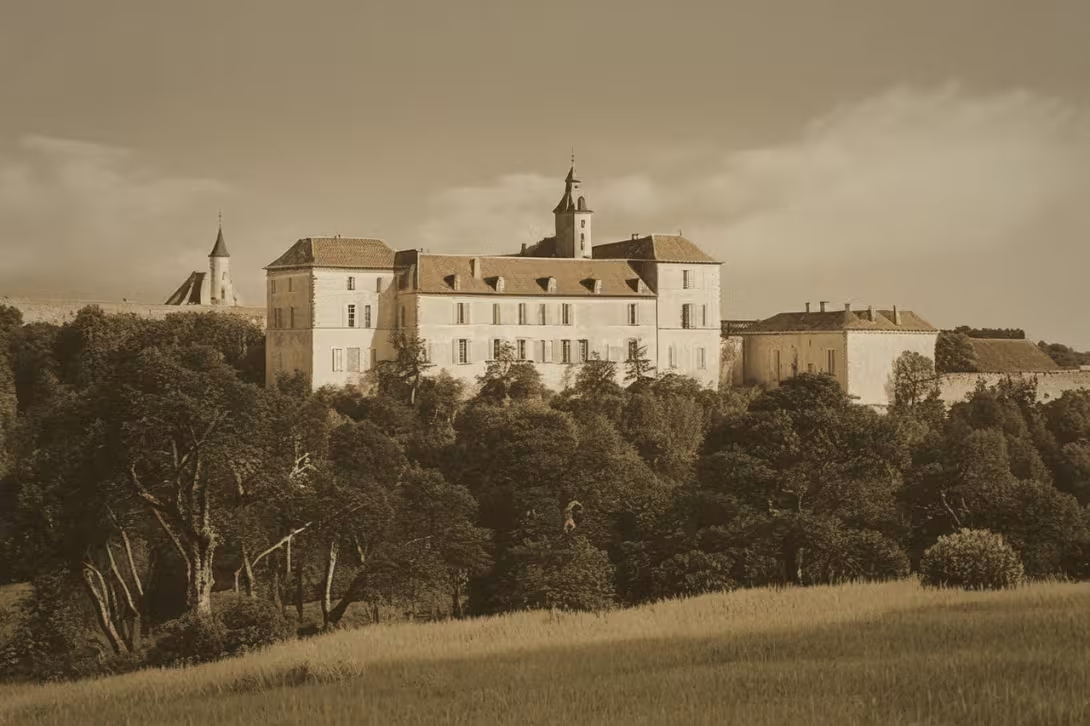
The historical appearance on the left is an AI-generated visualisation and serves as inspiration only.
Historical milestones
- 1564
- Construction of the main prism tower.
Architectural development
The castle experienced several construction phases, starting with the Gothic core and continuing with Renaissance and early Baroque reconstruction. In the 17th century he gained his present form thanks to modifications by Jan Ludvik Raduit de Souches. After 1945 there were other repairs which included new roofs and reconstruction of interiors.
Historical events
- 1645
- Jan Ludvík Raduit de Souches turned Brno against the Swedes.
- 1691
- Karel Ludvík Raduit de Souches fell in battle against the Turks in Slanklov.
Owners
- 1600-1647
- minsterberg-oily princes
- 1649-1736
- count de Souches
- 1736-1879
- ugarte genus
- 1898-1916
- Robert Biedermann of Turona
- 1916-1939
- Offenheim
- 1939-1945
- count Eduard Larisch-Mönnich
Points of interest
- Starý zámek Jevišovice was built by gentlemen from Kunštát in the first third of the 15th century on the island in the middle of the Jevišovka River.
- The castle achieved fame especially for Jan Ludvik Raduita de Souches, who owned it in the 17th century and became famous for the defence of Brno against the Swedes in 1645.
- On the north side of the castle there is a single-boat chapel of St. Louis - the only larger sanctuary of this saint in the Czech Republic.
- The castle has a characteristic quadruple available with a prism tower from 1564, which together with the tower of St. Joseph's Church creates a dominant panorama of the town.
- Since 1973, the Moravian Museum has managed the chateau and has set up an exposition and depository.
Guide
This guide is narrated by a synthetic voice generated by artificial intelligence.
Show guide text
This text was created by artificial intelligence and has not been editorially reviewed. It may contain inaccuracies.
The Old Castle in Jevišovicích on the Znojem region stands on a rocky promontory in a meander of the Jevišovka river. Access to it leads by only one path from the small town. When viewed from the north and northwest, it forms a striking landmark of the landscape. Since 1973, it has been managed by the Moravian Regional Museum in Brno, which has exhibitions and storage facilities here.
Originally it was a castle. It was built by the Lords of Kunštát in the first third of the fifteenth century after their older castle on the opposite side of the valley was demolished. This place is called Starý hrad and there was already a settlement here in the Eneolithic period. In the sixteenth and seventeenth centuries, the building acquired its present appearance. The Gothic core was supplemented by Renaissance and early Baroque alterations. These ended in the seventeenth century under Jan Ludvík Raduit de Souches. He was the most famous owner of the castle, the defender of Brno against the Swedes in 1645 and later also a defender of the monarchy against the Turks. His son Karel Ludvík fell in 1691 at the Battle of Slankamen in Serbia.
After the Lords of Kunštát, the castle belonged to the princes of Münsterberg-Oels and for three years to Emperor Ferdinand the Third. From 1649 it was held by the Counts of Souches and after them by the related Ugartes. Later owners were Robert Biedermann of Turony, the Ofenheims and finally Count Eduard Larisch-Mönnich. In 1945 the large estate was confiscated under the Beneš Decrees.
The castle has a closed four-wing layout. In the south façade stands a prismatic tower, on the north side a single-nave chapel of Saint Louis. The façade facing the small town is decorated with ashlar sgraffito and one window has an original Renaissance grille. An original castle bridge arches over the moat and towards the small town there is a preserved closed forecourt with a courtyard. Until the nineteenth century the castle had three towers. Two smaller ones were demolished and only the main tower remained with the date 1564. Together with the tower of the Church of Saint Joseph, it defines the panorama of the small town.
During the last major renovation, from 1995 to 2011, the castle received new roofs. The former viewing terrace was covered by a massive mansard roof. It replaced a low shingled roof that was destroyed by fire in 1905.
The most valuable space is the Chapel of Saint Louis the King with its original furnishings. It is the only larger sanctuary of this saint in the Czech Republic. Much of the Jevišovicích furnishings is now elsewhere, mainly in Jaroměřice nad Rokytnou and Náměšť nad Oslavou. A seventeenth century tapestry with a scene of David and Abigail was taken to Náměšť.
In the town there still stands the Nový zámek, which today houses a home for the elderly. Both castles belonged to one estate and always had the same owners.
Tips for visitors
The best time to visit the Old Castle Jevišovice is in the spring or autumn season when the natural beauty surrounding is in full bloom and fewer people. This time offers a peaceful experience with ideal light for photography.
When visiting, bring a protective suit from the sun, shoes suitable for walking on stone paths and perhaps even water or ice cream for afternoon entertainment. It is great to photograph here especially at the castle in the sunshine, when decorated facades are radiant in the autumn forest background.
In the vicinity of the castle you can visit the historic church and park with a large garden that are ideal for short walks. These places offer a peaceful atmosphere for relaxation after exploring the castle itself.
For families with children, the Jevišovice Castle is a suitable place to enjoy not only historical interiors, but also parks and gardens nearby. Children are looking forward to exploring outdoor space and perhaps even playing in medieval costumes if available.
Frequently asked questions
Can the monument be visited?
Some buildings of this kind are open for guided tours, others serve another purpose or are privately owned. We have not verified whether and when this monument is open – please ask the operator.
What are the opening hours and admission?
We have not verified the opening hours or admission. Current information is published by the operator. Official website: https://www.mzm.cz/stary-zamek-v-jevisovicich
Where is the monument?
Location: Jevišovice, Jihomoravský kraj. The map on this page shows the exact spot.
Why is the monument protected?
It is listed in the Central List of Cultural Monuments of the Czech Republic as a cultural monument (register no. 26906/7-6412).
For kids
Imagine going back to the past in the Middle Ages. The place where we would have taken a car or a train today was an impenetrable and full of secrets. And so we return to the town of Yevišovice, where the old castle stands.
It was like playing princess and knight. The castle stood in the middle of forests and valleys where the river flowed like silver thread. Who lived here? It was the gentlemen of Yevišovice who had power and wealth, but also secrets and danger. Times were difficult, nations were at war and people had to fight to survive.
Businesses nearby
Do you run a restaurant, accommodation, shop, museum, rental, wellness or other visitor service near this monument? Show yourself directly to the people heading to it — this is how they will see you in the app and on the web:
Nearby
Ambient landscape, other monuments, natural elements up to 5 km or zero.
Accommodation nearby
Themed route
Thematic cruise route: Starý zámek Jevišovice
1. Starý zámek Jevišovice (lock) This Baroque castle is one of the region's most prominent architectural monuments. He is known for his impressive park and historical exhibits, which represent the rich history of the Liechtenstein family. Here you can see exceptional collections of works of art and architectural elements from different periods.
2. Park at the Old Castle Jevišovice The park is part of the whole castle area and offers a beautiful view of its architecture. It is an ideal place for relaxation, walking or photography. With its size and nature, the park attracts visitors seeking peace in an idyllic environment.
3. St. Gilji Chapel (Chapel) This chapel is located in the castle area and served as a family chapel for Liechtenstein. It is a place full of historical memories that offers a peaceful space for meditation or a short prayer. Architectural is interesting with its simplicity and location in the park.
4. Water tank (water tank) There is also a water tank in the castle, which used to serve as a pond for the needs of the castle. Today, it is a place for peaceful moments and observations of nature. It is ideal for those who want to enjoy a view of the water and surrounding green landscape.
This route offers visitors the opportunity not only to explore the historical castle Jevišovice, but also its natural and cultural surroundings.
Seasonal recommendations
Spring:
Specific is lighting, which in this period offers beautiful sunrise and sunset. The atmosphere is calm and relaxed, making it an ideal time to visit the castle. Local traditions lie in Easter, where a traditional fair with sales stands and live music is held.
Summer:
Specific is rich lighting, which allows a sightseeing tour even at night. The atmosphere is relaxed and fun, making it an ideal time to visit the castle with family or friends. Local traditions lie in the festival of music and art, which is held in the courtyard of the castle.
Autumn:
Specific is lighting, which offers a beautiful color serve of nature. The atmosphere is calm and relaxed, making it an ideal time to visit the castle. The local traditions lie in the wine festival, which is held in a nearby vineyard.
Winter:
Specific is lighting, which offers beautiful dawn and sunset. The atmosphere is calm and relaxed, making it an ideal time to visit the castle. Local traditions lie in the Christmas market, which is held in the courtyard of the castle.
Visualizations and artistic views


The visualisations are generated by artificial intelligence and serve as inspiration.
Photos from the area
Real photos taken near the monument


Zdroj a licence jsou uvedeny u každého snímku.
View from the area
This animation was generated by artificial intelligence from a real photograph of the surroundings. The motion and details are not real footage of the location.
Tips from visitors
No tips yet. Be the first!
Log in and add your tip.
Sources and literature
Photos: Ametystek / CC BY-SA 4.0 — Wikimedia Commons. The author and licence also appear when you hover over the image.
Faktickým podkladem tohoto textu byl článek na Wikipedii, jehož autory jsou přispěvatelé Wikipedie. Článek je dostupný pod licencí CC BY-SA 4.0.
Location on the map


Příběhy a pověsti
Legendy, pověsti a příběhy spjaté s touto památkou
Fotografie návštěvníků
Zatím žádné fotografie. Buďte první, kdo přidá fotografii z návštěvy!
Log in a přidejte svou fotografii nebo hodnoťte.
Za ověřenou návštěvu v aplikaci získáte víc bodů — poznáme podle GPS, že jste na místě.
Reviews and comments