



Sýpka (Řestoky) Granary
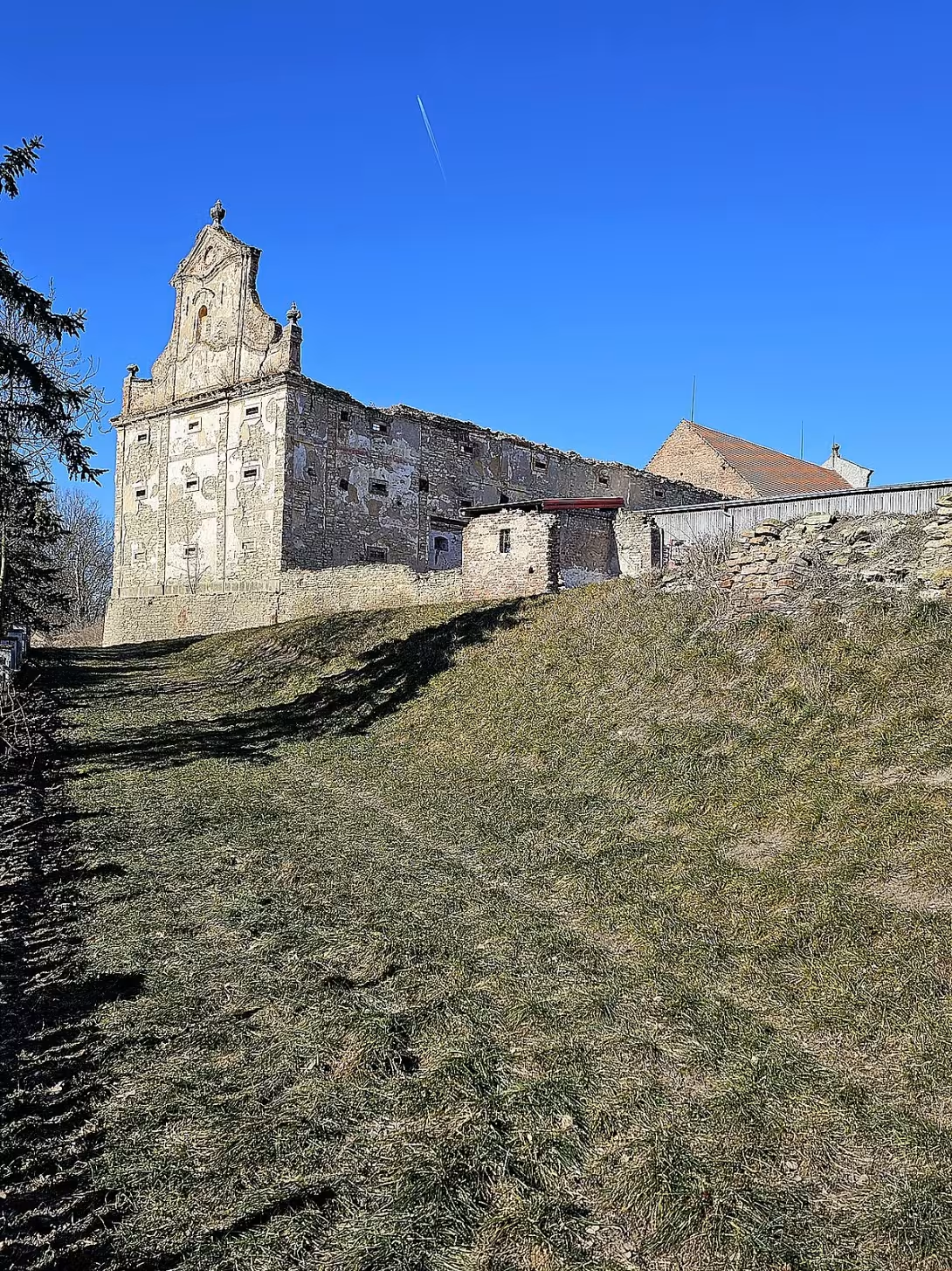
The granary in Řestok is a Baroque monument from the 18th century, located in the village Řestoky in the district of Chrudim, Pardubice region. This two-storey building with distinctive shields decorated with vases is part of the former Supreme Court. In 1964 it was included in the national list of cultural monuments, which underlines its historical and architectural value.
The sypka was created as part of the development of the agricultural economy in the superseded courts, which was typical of the 18th century in Czech countries. This period is characterised by the intensive development of Baroque architecture and agricultural innovation. The granite served as a storage space within the economic complex, built on a stone suspicion balancing the terrain over the former mill from 1604.
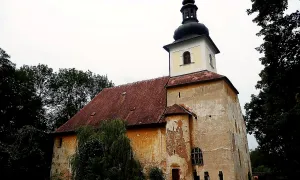
Architecturally, the granary is remarkable by its baroque shields, which exceed both facades of the building. These shields are made up of three fields separated by thrones; The highest field is a triangle with a circular window, the middle field has volutes and a sealed window, while on top of the shield are placed stone vases. Originally a three-storey building is built on a stone suspect, which gives its appearance of solidarity and durability.
The ownership of the granary has changed over the years. Currently, the building is owned by a private person. Although the bad condition of the building was established in 2000, in particular the damage to the roof and the collapse of the roof, the monument protection was not abolished due to its exceptional size. In 2025, a roof cover was repaired on the north half of the building, while the south half has collapsed.
The granary in Řestok is witnessing important historical changes and architectural art of the Baroque era. Its conservation, despite technical conditions, highlights its importance for the cultural heritage of the region.
Today the granary is in bad technical condition, which makes it an interesting location for historically curious tourists. Despite its condition, it is still possible to appreciate its architectural elements and understand its importance in the context of the local agricultural economy. A visit to the granary offers an opportunity to explore a unique part of the cultural history of the Pardubice Region and appreciate its significant location near the former mill from 1604.
The granary in Řestok is a reminder of the region's rich history and its visit offers a unique view of Baroque architecture and local heritage. Its protection, despite technical problems, highlights its importance for cultural monuments of the Czech Republic.
Then and now
Drag the slider to compare how the landmark may have looked when it was built with the view today.
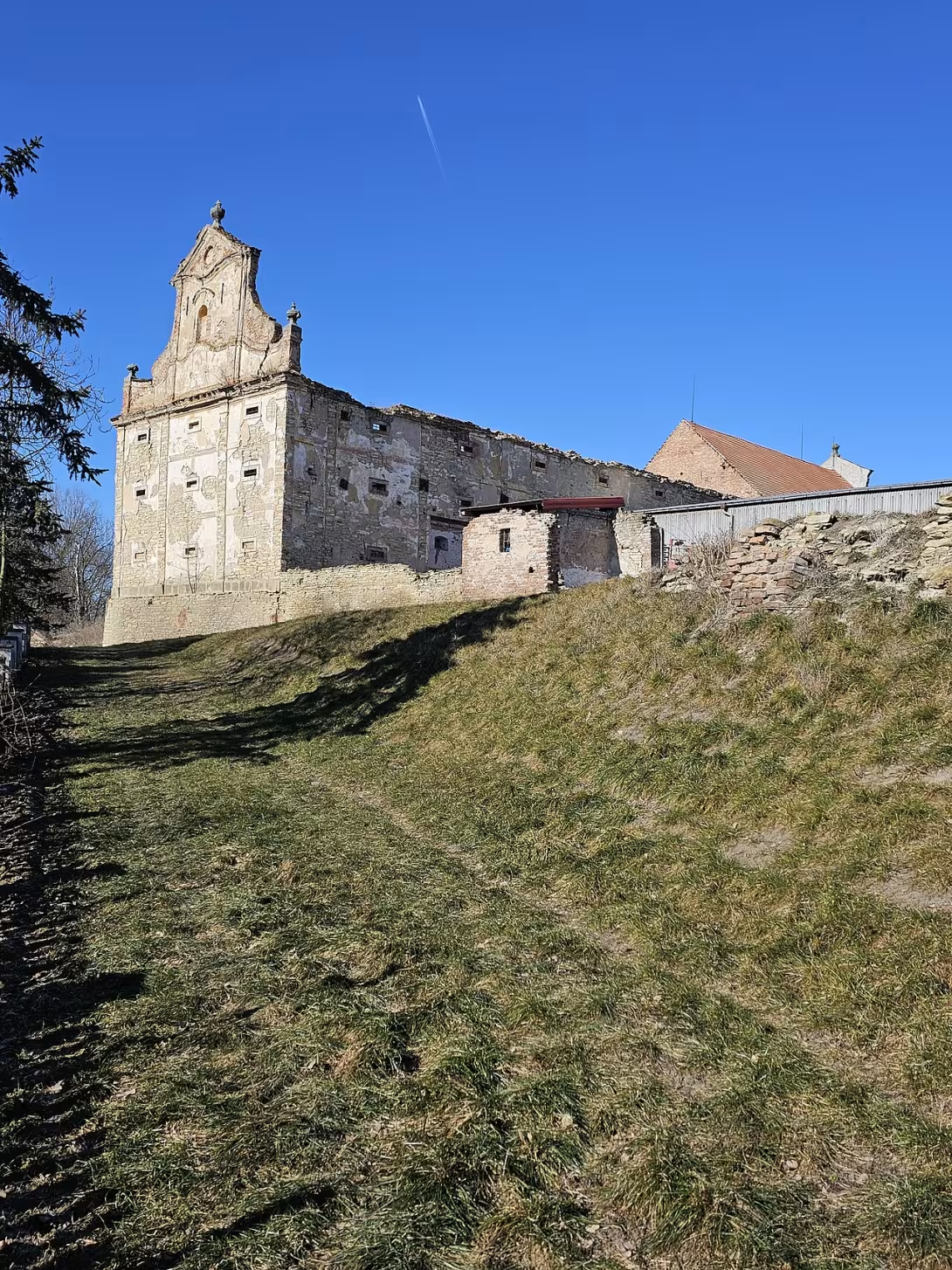

The historical appearance on the left is an AI-generated visualisation and serves as inspiration only.
Historical milestones
- around 1604
- Construction of a former mill near the granary.
- 18th century
- The granary was built as part of the development of agricultural yards in the supranational economy.
- 1964
- The granary was included in the state list of cultural monuments.
- 2000
- A bad condition of the granary, especially damage to the roof and collapse of the roof.
- 2025
- Fixing the roof cover on the north half of the building.
Architectural development
Originally a three-storey building on a stone suspect with baroque shields formed by three fields separated by thrones. The north and south facades are decorated with volutes and stone vases. At present, the roof cover on the north half is repaired, while the south half has collapsed.
Historical events
1964: Registration in the state list of cultural monuments.
Owners
private owner
Points of interest
The granary is a Baroque monument from the 18th century. - It is located in the Supreme Court of Agriculture and was included in the national list of cultural monuments in 1964. - Architecturally, she's remarkable for her baroque shields with stone vases. - The granary served as a storage space and was built on a stone suspicion balancing the terrain above the former mill from 1604. - It is owned by a private person, although it has technical problems such as damage to the roof and the collapse of a part of the roof.
Guide
Show guide text
This text was created by artificial intelligence and has not been editorially reviewed. It may contain inaccuracies.
Welcome to the beautiful Restoks. Right now, at this moment, you're facing one of the most distinctive and impressive buildings in the whole surrounding landscape. In front of your eyes, there is a massive, massive building that immediately captures anyone passing by with its size and unusual shape. It's a granary, a historic place that has been the heart of the local economy for centuries. Do you feel the weight of history that radiates from these walls? This building is not just a simple cluster of stones and mortar, it is a silent witness to many years of hard work, rich crops and transformations that the country has experienced in its long life. Look at her face and try to imagine what she looked like at the time of her greatest bloom when she was full of life and constant movement.
In order to really understand why this building is standing in this very place and why it has such a specific look, we need to go back to the past with you. Although the granary itself, which you now observe so closely, comes from the eighteenth century, the roots of this place go much further. By the year sixteen hundred and four, the former mill, which was in close proximity, was part of a wider economic unit. The granary was then built as a key element in the development of a large overseer's agricultural court. At the time, the buildings were not just simple houses for people, but mostly functional and strategic centers of the entire estate. This yard was like a big machine that powered the entire economy around it, and the granary was its most important storage cell. It was used to store grain, which was the foundation of wealth and survival at that time. Without such a safe and permanent place, the entire economy could not function effectively.
Now pay attention to the architecture itself and what you see right in front of you. If you look closely at the building, you'll notice something very interesting. The granary does not stand directly on the open ground, but is built on massive stone suspect. This construction was absolutely necessary because it had to compensate for the terrain inequalities that are above the former mill. Thanks to this solution, the building has acquired its solid and stable base, which gives it the impression of unwavering. But the most interesting and most beautiful is hidden above, towards the sky. Look up at the top of the walls. See those interesting, decorative shapes? These are baroque shields that are absolutely typical of this style. They are richly decorated with stone vases and elegant volumes. These curves, these decorative shapes that resemble leafy ornaments, add otherwise heavy and massive buildings to unexpected lightness and nobility. The Baroque didn't just want to be useful, the Baroque wanted to be beautiful. Although it was an agricultural building designed to store supplies, its creators sought to have their dignity and to reflect the importance and strength of the owner of this court. These details, which you see now, are living proof of the artistic feeling of the masters at the time.
Although we have not been able to maintain in the historical records the names of the particular architects who designed this construction, even the names of the people who worked here in the eighteenth century, you can easily imagine them. Imagine the hundreds of hands that worked here in the past, the people who wore heavy bags of grain, and the workers who made sure everything was in order. Every stone, every stone vase on the shields tells the story of order, an attempt to control nature and build something lasting. This building was not just an empty vessel, it was a living organism of a vast economy that shaped the life of the whole area.
It should also be mentioned, however, that history is not always about fame and bloom. This monument has been through a very difficult period in recent decades. Although it was recognized as very valuable in the year one thousand nine hundred sixty-four and entered into the state list of cultural monuments, time and lack of care left deep traces on her body. Around 2,000 years, the situation of the building was very serious. Her technical condition was poor, which was manifested mainly by the damage to the roof and by the fact that part of the inner roof had literally collapsed. You might be wondering, looking at this massive structure, whether it can regain its former shine and resist the next time. However, I have very good news for you, which brings hope to this point. Right now, in the year two thousand twenty-five, important repairs are taking place to the roofing, especially on the northern half of the entire building. It is an important step to allow this baroque jewel to stand proudly again and serve as a monument to future generations.
I hope this short journey through the time we have taken together has attracted you and brought you a new perspective on this place. The granary in Řestok is a fascinating proof of the close links between agriculture, architecture and the history of our region. It's a place where usefulness meets beauty. Wait till the repair work is over, and come and see it again when it's in full beauty and good condition. Now relax, feel the atmosphere of this place and continue to walk around. Discover other secrets hidden in this country. Thank you for your attention and I wish you a beautiful and inspiring rest of the day.
Tips for visitors
For the best experiences we recommend a visit during bright days when sunlight best highlights baroque details and stone suspicion. The afternoon hours offer a pleasant light for viewing architecture.
You can reach the monument by car or via public transport. Please check the current connection and traffic options in the search engine or in the traffic application.
Take comfortable shoes with you, because the surrounding area can be uneven. If you want to capture the beauty of the building, we recommend taking the camera. The best shots can be taken from views of massive walls and a stone base.
The former mill from 1604 can be visited in the area. For families with children, the size of the building is interesting, but due to the emergency condition of the building, it is necessary to be more careful when exploring the area and to remain in safe zones.
Frequently asked questions
Can the monument be visited?
This is a residential or farm building, not a museum with opening hours. Please view it from public space and respect the owners' privacy. We have no information about access to the interior. According to the heritage register the structure is in poor condition – do not enter it and take care nearby.
Where is the monument?
Location: Řestoky, Pardubický kraj. The map on this page shows the exact spot.
Why is the monument protected?
It is listed in the Central List of Cultural Monuments of the Czech Republic as a cultural monument (register no. 1000144844).
Businesses nearby
Do you run a restaurant, accommodation, shop, museum, rental, wellness or other visitor service near this monument? Show yourself directly to the people heading to it — this is how they will see you in the app and on the web:
Events nearby

Zdroj akcí: otevřená data měst a obcí ČR (Národní katalog otevřených dat) a kalendář akcí Národního památkového ústavu.
Nearby
Bývalý mlýn z roku 1604.
Accommodation nearby
Themed route
Thematic cruise route from Řestok
1.Sýpka (Řestoky) - Type: Historical buildings - Why is it worth a visit: Zloupka is a representative of architectural works from the past, which reflects the lifestyle of the inhabitants of this site by design and history. It is an ideal place for those interested in history and architecture.
2. Former mill from 1604 - Type: Historical landmark - Why is it worth a visit: This former industrial building is witnessing the technological development and history of local agriculture. It's an interesting place for those who want to understand the old industrial activity of the area.
3. Tanks granaries - Type: Historical courtyard - Why is it worth a visit: The tank offers the opportunity to explore the area around the main monument and understand its historical context. It's a place where you can relax your mind and record the atmosphere of the past.
4. Ambient Forests - Type: Natural space - Why is it worth a visit: Shortly from the main sights there is a pleasant forestry section where you can explore and relax your mind in a quiet nature. It is an ideal place for short walks or relaxation.
5. Space around the former mill - Type: Historical space - Why is it worth a visit: This space offers the opportunity to see the remains of old structures and imagine how the mill was used before. It's an interesting place for those who want to dig deeper into the history of local industry.
This route offers a view of the historical and cultural richness of the village Řestoky through its monuments.
Seasonal recommendations
In the spring, a granary in Restocky surrounds the awakening greenery and the first flowers that create a strong contrast with the crumbling building material. The atmosphere is fresh, although the state of the monument remains critical. We recommend moisture resistant shoes for wet journeys and a visit in the morning when the light is fine.
The summer season brings sharp sun granaries that highlight every crack in the emergency walls. Around the building is dense vegetation and active insects. It is best to arrive very early in the morning to avoid the greatest heat and potential visitor groups. Remember light clothes, hat and plenty of drinking water.
The granary's autumn is melancholy, surrounded by colourful leaves and frequent fog, which underscore its abandonment. The golden evening light gives the ruins a dramatic look. Due to the variable weather, choose layered clothes and don't forget the umbrella because the surrounding terrain can be very slippery.
In the winter granary in Řestok looks like a quiet and freezing witness of the past in the snowy landscape. The absence of leaves on the trees fully reveals her decrepit state. For short days plan your trip in the morning and dress very warm. Watch the ice on the road and be as careful as possible when moving near unstable parts of the construction.
Visualizations and artistic views


The visualisations are generated by artificial intelligence and serve as inspiration.
Photos from the area
Real photos taken near the monument


Zdroj a licence jsou uvedeny u každého snímku.
Tips from visitors
No tips yet. Be the first!
Log in and add your tip.
Sources and literature
Photos: Petr1888 / CC BY-SA 4.0 — Wikimedia Commons. The author and licence also appear when you hover over the image.
Faktickým podkladem tohoto textu byl článek na Wikipedii, jehož autory jsou přispěvatelé Wikipedie. Článek je dostupný pod licencí CC BY-SA 4.0.
Location on the map

Příběhy a pověsti
Legendy, pověsti a příběhy spjaté s touto památkou
Fotografie návštěvníků
Zatím žádné fotografie. Buďte první, kdo přidá fotografii z návštěvy!
Log in a přidejte svou fotografii nebo hodnoťte.
Za ověřenou návštěvu v aplikaci získáte víc bodů — poznáme podle GPS, že jste na místě.
Reviews and comments