



Tachov Castle
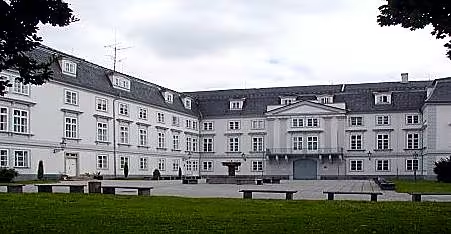
In the place where Tachov Castle stands today, there was already early medieval fortification. Written references to the local castle dates back to the twelfth century - in 1126, a report on the repair of the tach fortifications appears in the documents. The castle itself was to be founded by a monarch in the middle of the thirteenth century on the site of the older settlement. The early medieval fort ended tragically: it succumbed to a massive fire probably in the first half of the 13th century. A new castle was created in his place immediately after the disaster, which soon became part of the royal possession.
Over the centuries, Tachov remained a royal castle, but the monarchs repeatedly stopped it for various noble families as collateral for loans or dedication. The castle gradually passed through the hands of the lord of Gutstejn, Pluho of Rabstejn and later Lobkovice. In the fifteenth century his fates were mistaken for Hussite wars - in 1421 the city occupied the Hussite army Jan Žižka. The castle was defended by Crusaders and local noblemen, but it was occupied by the Hussite crew. Later, he was unsuccessfully besieged by the Crusades during one of their expeditions.
In the sixteenth century, the castle is under stronger control of the Gutstejn family, especially their rich branches. The brothers of Gutštejna led between them military disputes about his ownership, until finally Jindřich of Gutštejna Castle in 1509 conquered a surprising attack. The royal power took over the castle again during the reign of Vladislav II, when other governors managed it. In the following period he belonged among others to Hanuz Pluh of Rabštejn, a prominent figure of his time.
After the 30-year war came a fundamental change - an old, badly damaged medieval castle was rebuilt baroque. First, in order to meet the new requirements of representation, first, to remove military or defence elements that were no longer relevant. But the new era should not have been without problems: in 1770 the castle was hit by a catastrophic fire. It was later adopted by the Windischgrätz, who had it restored from 1787 to 1809 and rebuilt in a classical style, which called it determining its appearance.
The castle area has acquired cultural heritage status and is guarded as such. Since 2014, the castle has been open to the public and offers guided tours. The complex also includes a gallery that enriches the visitor experience. Tachov Castle thus testifies to the long history of the Czech Middle Ages, Hussite fighting, aristocracy and the creation of classical representativeness, which he had made seventeenth and eighteenth years.
Then and now
Drag the slider to compare how the landmark may have looked when it was built with the view today.
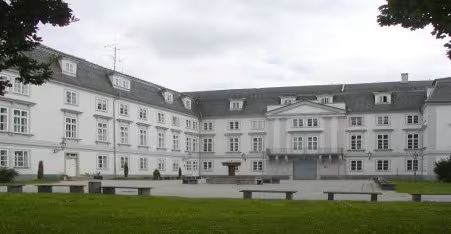

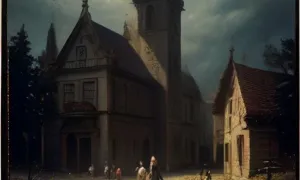
The historical appearance on the left is an AI-generated visualisation and serves as inspiration only.
Historical milestones
- 1770
- The castle burned down.
- 1787-1809
- Restore the castle in a classical style.
Architectural development
Originally it was in the place of the castle of the early medieval castle, which was rebuilt into a Gothic castle. After the 30-year war, the Baroque reconstruction followed and the fire in 1770 was restored in a classical style. The chateau has thus undergone several architectural phases that reflect historical changes in its function and aesthetics.
Historical events
- 1250
- Establishment of the castle
- 1300
- Gentlemen from Tachova have won the castle
Points of interest
- At the site of today's Tachov Castle there was already early medieval fortification with written references since 1126.
- The castle was founded in the middle of the thirteenth century and was subject to fire probably in the first half of it, after which a new castle was built immediately.
- During the Hussite wars in 1421, the city occupied the Hussite army of Jan Žižka and was subsequently unsuccessfully besieged by the Crusader army.
In the sixteenth century, the castle came under the control of the Gutstejn family, especially after Henry of Gutstejn's surprise attack in 1509.
- After the 30-year war, the old medieval castle was rebuilt baroque and later, after the fire of 1770, he restored the Windischgrätz in a classical style.
Guide
This guide is narrated by a synthetic voice generated by artificial intelligence.
Show guide text
This text was created by artificial intelligence and has not been editorially reviewed. It may contain inaccuracies.
Tachov Castle arose in the seventeenth century through the reconstruction of a Gothic castle. That castle stood on the site of an even older fortification, an early medieval stronghold, which is documented in writing as early as the twelfth century. A canon from Vyšehrad recorded that in the year 1126 the fortifications of Tachov Castle were repaired, and at the same time he states that Prince Soběslav the First had the castle of Tachov built in the year 1131. The stronghold was destroyed in a powerful fire, most likely in the first half of the thirteenth century.
Soon after, a new royal castle rose in its place. During the reign of Přemysl Otakar the Second, it was managed by the castellan Albrecht of Žeberek. After the king's death he behaved as the owner, and only in the year 1297 did he give up his unauthorized claims. Tachov remained a royal castle throughout the Middle Ages, though rulers often pawned it. In the year 1310 Jan Lucemburský pawned it to Heinrich of Lipá, and only in the year 1333 did the Margrave Karel redeem it. He later included Tachov in his proposed law code Majestas Carolina among the castles that a ruler must not pawn.
Nevertheless, the pawning continued to alternate. Under Václav the Fourth, the lords of Švamberek held the castle, and in the year 1406 the royal army besieged it because of disputes. In the year 1421 Zikmund pawned Tachov to Heinrich of Metelsko. That same year the city with the castle was unsuccessfully besieged by Jan Žižka. After the battle of Tachov, the Hussites captured the city on the eleventh of August, and three days later the castle defenders also surrendered to them. In the year 1431 the castle then withstood the crusader army.
From the year 1449 Burian the First of Gutštejna held the pawn, and his son Burian the Second the Rich acquired Tachov in the year 1477 into hereditary ownership. His sons quarreled over the domain. In the year 1509 Heinrich of Gutštejna captured the castle by surprise attack, and in January 1510 Ladislav of Šternberka recovered it again for King Vladislav the Second. Ferdinand the First later gave the castle for life to Hanuš Pluh of Rabštejna and his son Kašpar. However, Kašpar joined the estate rebellion against the king and was punished for it. Other holders included the Lobkovices.
After the Thirty Years' War, the old and heavily damaged castle was rebuilt in the Baroque style. In the year 1770 the castle burned down. The Windischgrätzs then restored it in the years 1787 to 1809 in the classical style. The castle complex is protected today as a cultural monument and includes a gallery.
Tips for visitors
Best time to visit Tachov Castle is in the spring or autumn season when the weather is pleasant and you can enjoy beautiful views of the surrounding countryside. In these months, there are also various cultural events that add interest to your visit.
Parking can be found near the castle. We recommend using public transport for easier access, especially during weekends and summer months, when parking is often full. The current connection can be verified in the online search engine.
When visiting the castle, bring clothes suitable for walking stairs and narrow corridors. If you are planning a football game or other activities outside, it is good to have sun or rain protection.
Photography of the castle offers several impressive perspectives. The best light for photos can be found in the morning or in the evening when the light is softer and the shadows are better able to capture the details of architecture. We especially recommend getting off on the castle terrace for panoramic view.
In the vicinity of Tachov Castle you can visit the historic city centre, which offers interesting streets and ancient buildings. For families with children it is also a suitable trip to the surrounding forests or gardens where children can move freely.
Frequently asked questions
Can the monument be visited?
Yes. We verified the opening hours or admission on the official website (26. 9. 2026); you will find them in the visitor information on this page. Please double-check with the operator before you travel.
What are the opening hours and admission?
Details verified on the official website (26. 9. 2026) are listed in the visitor information on this page. Official website: http://www.tachovskyzamek.cz/
Where is the monument?
Location: Rokycanova 1, Tachov, Plzeňský kraj. The map on this page shows the exact spot.
Why is the monument protected?
It is listed in the Central List of Cultural Monuments of the Czech Republic as a cultural monument (register no. 37971/4-1658).
For kids
Imagine going back to the past in the Middle Ages! This place sounds like a true story from the time of King Artur and the knights. The place you now know as Tachov was once inhabited by people who built a castle here on a rocky edge over the river Úpa.
At the time, there were knights and many outlaws. The castle served as their headquarters and defensive fort against enemies. The castle held important meetings and battles, but also weddings and celebrations.
Businesses nearby
Do you run a restaurant, accommodation, shop, museum, rental, wellness or other visitor service near this monument? Show yourself directly to the people heading to it — this is how they will see you in the app and on the web:
Nearby
In the vicinity of the castle there is a nature reservation and other historical monuments.
Accommodation nearby
Themed route
Tachov cruise route
1. Tachov - Castle Tachov (main destination) - Baroque castle with rich history and beautiful architecture. Located in the heart of the city and is an entrance gate to its historic core. 2. Tachov - Church of St. Jacob the Greater - Gothic church from the 14th century with remarkable frescos and tombstones from the 16th century. Located near the castle and is an important cultural monument of the city. 3. Tachov - Museum in Tachov - Museum located in the former townhouse, which presents the history and culture of Tachova and its surroundings. It is located in the city centre and is accessible to the public. 4. Tachov - Park near the castle - quiet park with beautiful trees and flowers, located in the immediate vicinity of the castle. It is an ideal place to relax and relax. 5. Tachov - Tachov Square - historic square with beautiful buildings and monument protected houses. It is the centre of the city and the place where various cultural and social events take place.
Seasonal recommendations
Spring: In spring the Tachov is surrounded by flowering trees and flowers, creating a pleasant atmosphere. The tour of the castle should start before the start of the season to avoid visitors coming later. We recommend the surrounding castle walls and the park, where there is a beautiful view of the city.
Summer: In the main summer season Tachov is visited by many tourists, so it is good to arrive early to avoid large crowds. We recommend stopping in the park and surrounding castle walls, where there is a beautiful view of the city and its surroundings. Summer is also an ideal time to visit the castle.
Autumn: In autumn the Tachov is surrounded by beautiful colors of nature, creating a pleasant atmosphere. We recommend visiting the park and surrounding castle walls, where there is a beautiful view of the city and its surroundings. In autumn it is also ideal time to visit the castle because there are fewer visitors.
Winter: In winter, Tachov is surrounded by snow and fog, creating a romantic atmosphere. We recommend to visit the castle and park where there is a beautiful view of the city and its surroundings. In winter the opening time is shorter, therefore it is good to avoid visiting late in the evening.
Visualizations and artistic views


The visualisations are generated by artificial intelligence and serve as inspiration.
Photos from the area
Real photos taken near the monument


Zdroj a licence jsou uvedeny u každého snímku.
Atmosphere of the place
This atmospheric visualisation of the place and period was generated by artificial intelligence. It is not real footage of the location.
Tips from visitors
No tips yet. Be the first!
Log in and add your tip.
Sources and literature
Photos: Ondrej.konicek at cs.wikipedia / CC BY-SA 3.0 — Wikimedia Commons. The author and licence also appear when you hover over the image.
Faktickým podkladem tohoto textu byl článek na Wikipedii, jehož autory jsou přispěvatelé Wikipedie. Článek je dostupný pod licencí CC BY-SA 4.0.
Location on the map



Příběhy a pověsti
Legendy, pověsti a příběhy spjaté s touto památkou
Fotografie návštěvníků
Zatím žádné fotografie. Buďte první, kdo přidá fotografii z návštěvy!
Log in a přidejte svou fotografii nebo hodnoťte.
Za ověřenou návštěvu v aplikaci získáte víc bodů — poznáme podle GPS, že jste na místě.
Reviews and comments