



Továrna na koberce Ignaz Ginzkey Textile factory
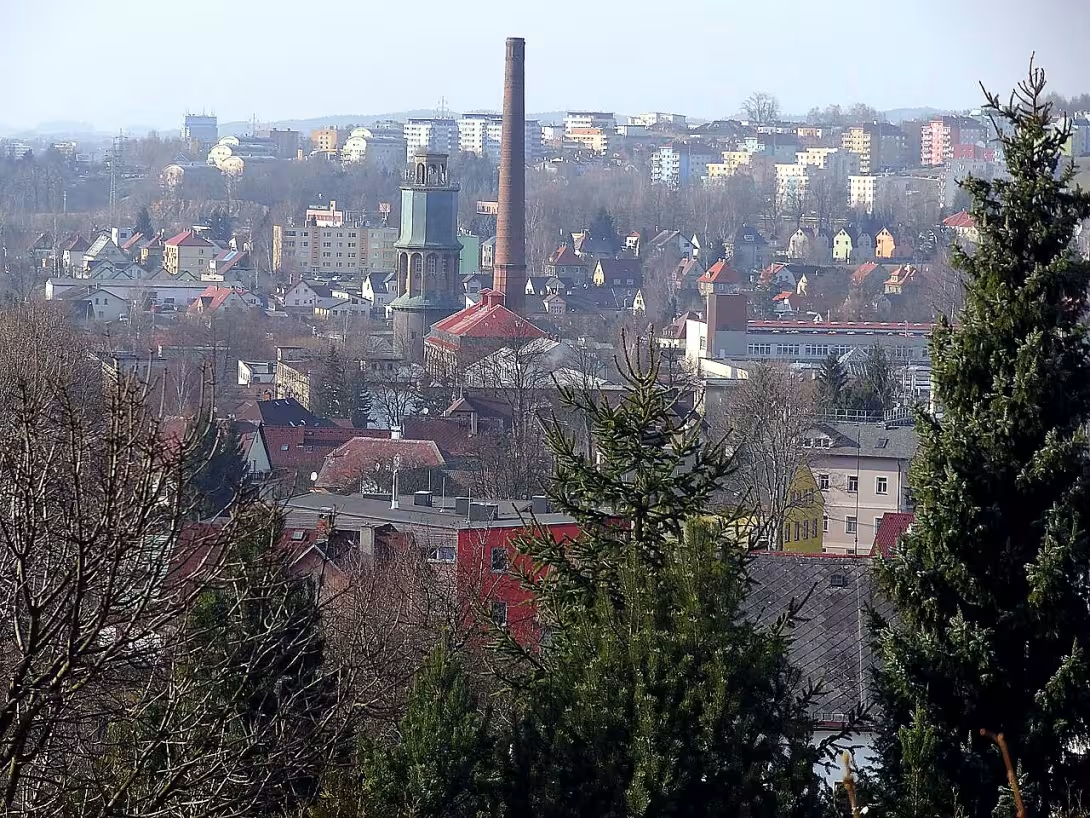
The set of buildings of the Ignaz Ginzkey & Co. carpet factory in Liberec-Vratislavice nad Nisou presents an important industrial monument from the 19th and 20th centuries, which stands out for the unique connection of the coal tower and water tower. The whole area is registered as a cultural monument and there were documented carpets and blankets until 1990.
The original factory complex for carpet and blankets was built in the village Vratislavice nad Nisou Ignaz Ginzkey between 1847 and 1872. The period before the First World War brought about the top industrial development and modernization of technology in the Austrian-Hungarian monarchy. The son of the founder Willy Ginzkey therefore entrusted architect Leopold Bauer with a complete reconstruction of the factory just before the outbreak of World War I. The project included a new energy centre with its own power plant, plant electrification, new production and storage halls, entrance gate and working grounds with shops, school, theatre and sports grounds. All this was presented in 1919 in the book Gesund wohnen und freudig arbeiten. Only a small part of the generous project was implemented. Between 1916 and 1919 a boiler room, power plant and coal and water tower were established. In 1924, the warehouse building arrived and in 1929 Bauer designed a new mill, but it was no longer built.
The architectural most significant element of the complex is the coal and water tower built according to Leopold Bauer's design. The construction has a supporting structure consisting of a reinforced concrete skeleton on the floor plan of a regular duodenum. The tower carries a unique combination of a water tower and a coal tower. On the underground floor, there was a storage tank for more quality coal on the railway train. On the first and second floors there was an engine room for transporting coal and water. The central part contained a coal dust and mour container and above that level was placed with a water tank riveted from steel plates, which was used exclusively for the purpose of factory operations. On top of the tower there is a sightseeing terrace with a small octave gazebo. The boiler room is attached to the tower with a rectangular floor plan which is connected to the tower by a two-arc brick connecting bridge through which the belt conveyor used to lead to coal. A road bridge through the Lusatian Nisa is also part of the protected historical file.
The factory was owned by the Ginzkey family until its nationalization. The site was then managed by state companies and is currently used by private entities and associations. After nationalization, the manufacture of carpets, including a popular product called Koval, continued here until 1990. At the turn of the 1960s and 1970s, heating technology went through a change from coal and coal dust to grease. At that time it was also converted into a mazutu container by the water. In the 1990s, the tower lost its original function and served as a transmitter of telephone operators.
The key milestone in modern history was 2015, when four factory objects were registered as a cultural monument. In the same year, the Association of Volunteers AvantgArt, led by Jitka Jakubíčková, launched an activity to save and make available the coal and water tower, which is now also known as Zahlováčka. Volunteers have cleaned the tower, opened the lower two floors and are hosting exhibitions, concerts, social and entertainment events and symposia.
Today visitors can see this remarkable industrial monument in Liberec-Vratislavice nad Nisou within the surrounding landscape of Podjedí. A tour of the repaired parts of the coal tower and meeting with the AvantgArt program offers a unique view of historical technical developments and efforts to save Czech industrial architecture.
Then and now
Drag the slider to compare how the landmark may have looked when it was built with the view today.
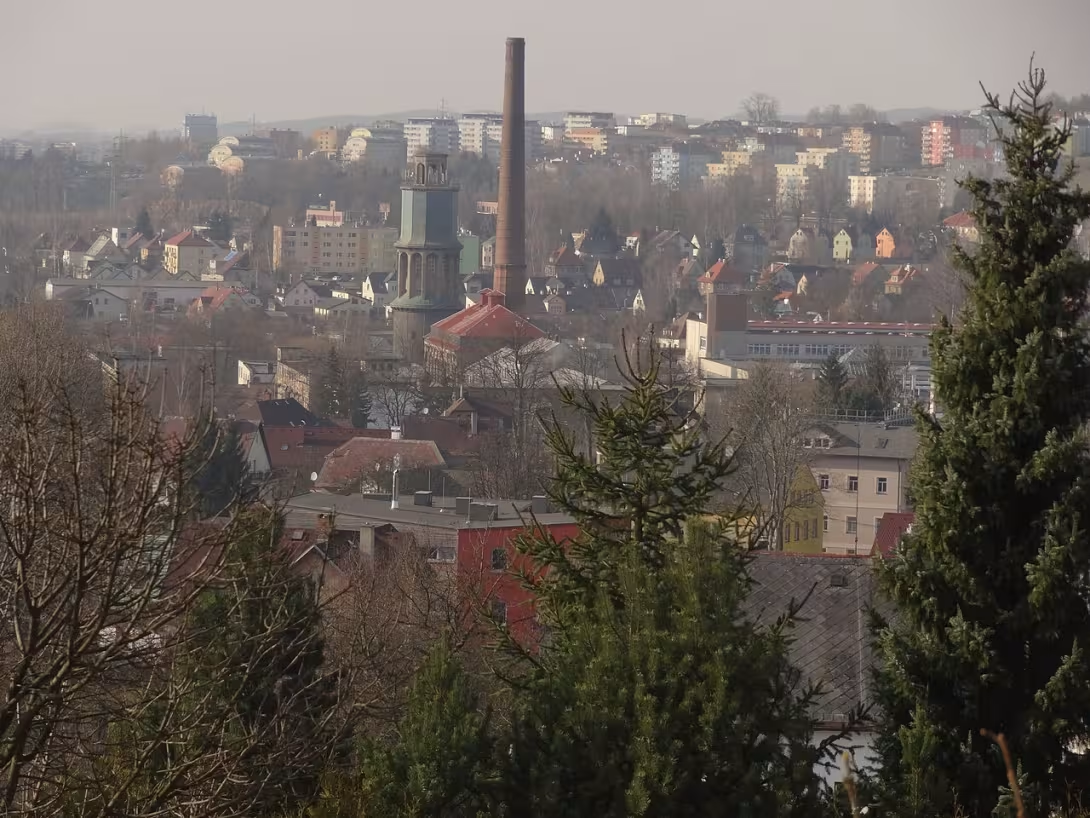

The historical appearance on the left is an AI-generated visualisation and serves as inspiration only.
Historical milestones
- 1847
- Starting construction of the factory by Ignaz Ginzkey.
- 1916
- Construction of boiler room, power plant and coal and water tower.
- 1990
- The end of traditional carpet production in the factory.
- 2015
- Registration of four objects of the complex as a cultural monument and start of activities connected with the rescue tower.
Architectural development
The area underwent the most significant reconstruction in the 1990s according to the design of architect Leopold Bauer. A characteristic element is a unique coal and water tower with a reinforced concrete skeleton on the floor plan of the VVL. At the turn of the sixties and seventies, the heating technology was changed from coal to lubricant, and the water was converted into a lubricant reservoir.
Historical events
From 1847 to 1872 Ignaz Ginzkey built a factory. Between 1916 and 1919 a boiler room, power plant and coal and water tower were built. In 2015 four objects were registered as a cultural monument and AvantgArt started to save and access the tower.
Owners
The Ginzkey family until nationalization, then state enterprises and currently private entities or associations.
Points of interest
- The set of factory constructions stands out by the unique connection of the coal tower and water tower and carpets and blankets were proven to be produced here until the year of the 19th High (nineteenth century). - The son of the founder Willy Ginzkey commissioned before World War I architect Leopold Bauer to reconstruct the factory, from which only a small part was realized. - Architecturally the most significant element of the complex is the coal and water tower having a supporting structure made of a reinforced concrete skeleton on the floor plan of a regular duodenum. - At the turn of the sixties and seventies of the twentieth century, the way of heating from coal to a lubricant was changed, and then the watershed was converted into a lubricant reservoir. - In the year twenty-fifteen (twenty-thousand fifteen) four buildings of the factory were registered as a cultural monument and a group of volunteers started their activities.
Guide
Show guide text
This text was created by artificial intelligence and has not been editorially reviewed. It may contain inaccuracies.
Welcome to Wroclaw over Nisa. Right now, when you're standing here, in front of this impressive group of buildings, you're in a place where history meets a relentless human quest for progress. Feel the atmosphere. Even though the machines have been quiet for a long time, these walls still carry the echo of the work of thousands of people who once spent their days here making beautiful carpets and soft blankets. Look around you at these buildings. Every stone and every line here has its meaning. This set of buildings is not just a group of old halls, but it is a living story about how a small workshop turned into a huge industrial world.
Let's go back deep into the past together to understand how everything started. Imagine a year of a thousand eight hundred forty-seven. At that time, the world had only just begun to change under the influence of new technologies. That's when the first foundation was laid by a man named Ignaz Ginzkey. With great vision and courage he founded a factory that was supposed to specialize in the manufacture of carpets and soft fabrics. It was a bold move at the time, but that's what makes history. This factory became the cornerstone of the local economy and began to grow slowly but surely. Over time, a small enterprise became an important enterprise that linked traditional craft to modern industry.
Now pay attention to what you see around you. If you look at the overall structure of this area, you can feel the strength and extent that this space has expanded over the years. The key moment for today's appearance was the turn of the nineteenth and twentieth centuries. At the time, the small workshop was no longer enough. The need for energy, the need for space and the need for modern production has led to a huge reconstruction. Everything you are now observing is the result of a generous project to ensure that the factory is at the forefront of its field.
Now pay attention to those high and dominant elements that dominate the horizons of this place. If you look up, you'll see a unique combination of structures that you won't see anywhere else. It's a fascinating combination of the coal tower and the water tower. These two high structures together form an inseparable whole, which was the heart of the entire energy centre. These towers weren't just for decoration. The coking tower was used to store the fuel that powered the machines while the water tower provided the necessary water pressure for the whole operation. This technical brilliance was at the time an excellent work and still amazes its form and function.
To understand why these buildings look so strange and so majestic at the same time, we need to look at the man behind their appearance. Before World War I, the founder's son, Willy Ginzkey, decided it was time for total transformation. He didn't just want to fix the old, he wanted to create something new and modern. That's why he entrusted the task to an architect named Leopold Bauer. Bauer was a man who understood how to combine the utility of an industrial object with his aesthetic side. Thanks to his design, the factory became not only a production unit, but also an architectural unit that has its own soul. Now, when you look at these facades and shapes, you see the work of Leopold Bauer. He proved that even a place where you work with coal and water can have its beauty and dignity.
The stories of the people who lived and worked here are closely linked to these walls. We can talk here about Ignaz Ginzkey, who started everything, his son Willy, who brought the modern era, and the architect Bauer, who gave them the form. They're characters that defined the fate of this place. Each of these personalities has added a layer to the overall image that you see before you.
But there is one thing that can surprise you. We often think that old factories die very quickly when the new times come. But this factory was incredibly persistent. Although the world was changing around, although political systems and ways of life were changing, carpet and blanket production continued tirelessly. The traditional production in this area lasted until nineteenth century. Imagine the long way this business has gone from a thousand eight hundred forty seven to the end of the twentieth century. This is a truly extraordinary phenomenon.
Today, however, you will no longer hear the sound of heavy machinery or the noise of steam valves. Instead, there is peace, but it is full of history. In the year two thousand and fifteen something very important happened to protect this place. The four main objects of this complex were officially registered as a cultural monument. This means that their value has been recognised and that action is now being taken to save and restore them. One of these important tasks is, for example, saving that tall tower you saw. It is a struggle to keep this monument for future generations.
Now that you know the story of this place, I suggest you continue your search. Go through these spaces, perceive their dimensions, and try in spirit to introduce those people who once worked here. Follow the details of the buildings that architect Bauer left you. Every corner of this compound has something in it. Maybe you can find answers to the questions you're asking yourself right now, or just enjoy the beauty of the industrial heritage.
Thank you for choosing to explore this story with us. We wish you a pleasant walk in history and hope that this monument will leave an unforgettable impression on you. Goodbye.
Tips for visitors
The best time to visit this historic factory complex is in the morning, when the sunlight ideally radiates old brick walls and architectural details of the former carpet factory. You can use a passenger car or local public transport for transport; Check the current connections and timetables in the respective connection search engine. Take with you fixed shoes suitable for moving in the historic industrial environment, camera and a small snack with drinks. The best shooting sites are located in the immediate vicinity of the main buildings of the former industrial complex, where the beauty of the original building and its surroundings stands out. The town of Liberec, the river Nisa and the surrounding landscape of Podzedědí are within 30 minutes' drive, offering beautiful trips to nature and behind urban architecture. Families with children will appreciate a light walk around the river Nisa and exploring the interesting industrial history of the region.
Frequently asked questions
Can the monument be visited?
The building is in use (offices, a school, shops and the like). The interior is generally accessible only during operating hours and tours are not usually offered; we have not verified the details. You can see the exterior from the street.
Where is the monument?
Location: Vratislavice nad Nisou, Liberecký kraj. The map on this page shows the exact spot.
Why is the monument protected?
It is listed in the Central List of Cultural Monuments of the Czech Republic as a cultural monument (register no. 1425630116).
Businesses nearby
Do you run a restaurant, accommodation, shop, museum, rental, wellness or other visitor service near this monument? Show yourself directly to the people heading to it — this is how they will see you in the app and on the web:
Events nearby


Zdroj akcí: otevřená data měst a obcí ČR (Národní katalog otevřených dat) a kalendář akcí Národního památkového ústavu.
Nearby
Město Liberec, řeka Nisa a okolní krajina Podještědí.
Accommodation nearby
Trips and activities nearby
Guided tours, tickets and activities nearby from GetYourGuide
Affiliate link: if you buy from the partner, we may receive a commission. The price for you does not change.
Search tours and activities →Themed route
Thematic cruise route from Vratislavic nad Nisou
1.Továrna na koberce Ignaz Ginzkey - Type: Historical site - Why is worth a visit: This historic industrial business is one of the oldest in the Czech Republic and offers a view of the heritage of the textile industry. Visit this place to learn about the history of carpet production and enjoy the architectural beauty of the plant.
2. Nisa River - Type: Natural attractions The beauty of the River Nisa and its surrounding countryside will interest you. It is an ideal place for short walks or relaxation at the creek where you can enjoy a quiet environment and natural views.
3. City of Liberec - Type: City attractions - Why is it worth a visit: Around 20 kilometres from Vratislavice is Liberec, known for its history and architecture. It is an ideal place to explore the local centre with its streets, medieval buildings and shopping possibilities.
4. Circuit of Podzedědí - Type: Landscape attraction - Why is it worth a visit: This place offers a beautiful landscape base with mountains and forests that are ideal for various activities in nature. It's a great choice for people who enjoy walking or cycling.
This route offers a combination of historical and natural experiences that allow you to know the rich landscape around Vratislavic nad Nisou.
Seasonal recommendations
Spring awakens the surroundings of an old carpet factory in a new light, when the days are extended and the sun's rays are pleasantly heated by old brick walls. Nature in the vicinity of Vratislavic nad Nisou begins to bloom and awaken from winter sleep, which gives the industrial area melancholy but promising charm. In this period, you will not meet large groups of interested people in history, so you will enjoy the tour in complete peace. Put on fixed shoes in any spring mud and light windbreaker, because the morning cold can stay between the walls until morning. The ideal time for your visit is around noon, when the sun best lights up the outdoor details of the buildings.
Summer brings full daylight to the Vratislavic area, which thanks to the high sun position penetrates deep into the surrounding area and creates sharp shadows on the historical facade. The surrounding green is lush and full of leaves, which partially softens the strict shapes of former industrial production. In the main holiday months, there may be a little more hikers who come here during their trips through the countryside. Don't forget the headgear, the drinking bottle, and the sunglasses, because the shadow at the building is not wasted. The best time for arrival is early in the morning, right after opening, so you can avoid the heat of the day and enjoy the cooler air.
Autumn transforms the carpet factory in an open-air gallery, where brick greenery and falling leaves in shades of yellow and brown mix with industrial architecture. The soft, dim light of the autumn sun and frequent morning fog provide a mysterious atmosphere of old times. The crowds of tourists will be greatly thinner during this period, which will be appreciated by all lovers of calm contemplation over the history of textiles. Take with you a warm sweater, a waterproof jacket and an umbrella because the weather is changing and rainy. The best time for the tour is in the afternoon, when the low sun creates captivating shadows.
Winter covers the old factory in silence and often also in a snow blanket that contrasts with dark bricks and massive construction. The lighting is very short, the sun sets early in the afternoon and the shadow gives the place a gloomy but noble atmosphere. Visitors walk the minimum at this time, so the area belongs only to real winter tourists. It is necessary to have very warm winter clothes, high shoes with anti-slip soles and warm gloves, as instant standing on the spot quickly freezes. Plan the tour for the morning to make maximum use of daylight before dark.
Visualizations and artistic views


The visualisations are generated by artificial intelligence and serve as inspiration.
Photos from the area
Real photos taken near the monument


Zdroj a licence jsou uvedeny u každého snímku.
Tips from visitors
No tips yet. Be the first!
Log in and add your tip.
Sources and literature
Photos: MartinVeselka / CC BY-SA 4.0 — Wikimedia Commons. The author and licence also appear when you hover over the image.
Faktickým podkladem tohoto textu byl článek na Wikipedii, jehož autory jsou přispěvatelé Wikipedie. Článek je dostupný pod licencí CC BY-SA 4.0.
Location on the map
More monuments – Vratislavice nad Nisou
Show all in the municipality
Příběhy a pověsti
Legendy, pověsti a příběhy spjaté s touto památkou
Fotografie návštěvníků
Zatím žádné fotografie. Buďte první, kdo přidá fotografii z návštěvy!
Log in a přidejte svou fotografii nebo hodnoťte.
Za ověřenou návštěvu v aplikaci získáte víc bodů — poznáme podle GPS, že jste na místě.
Reviews and comments