






Usedlost čp. 10 (Drážkov) Homestead
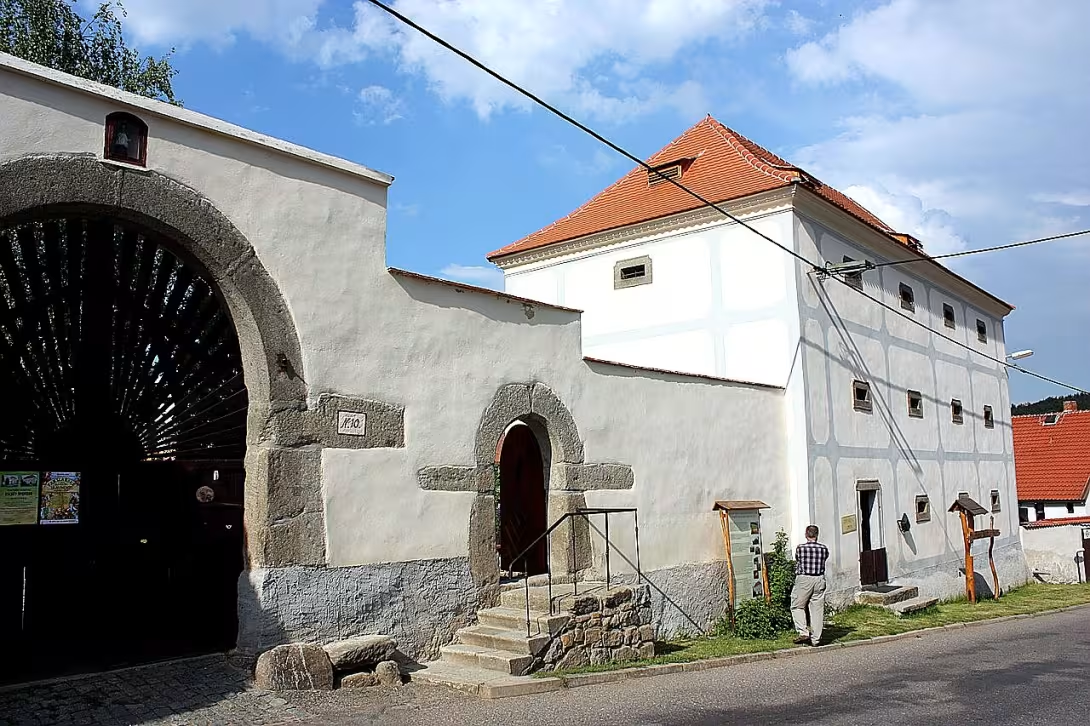
Usedlost čp. 10, known as Váchův špejchar, is a Baroque farmstead located in Drážkov, part of Svatý Jan municipality in Příbram District, Středočeský kraj. It is a protected cultural monument featuring a small agricultural museum and gallery. The site evolved from a medieval fortress into a rural estate.
Drážkov was first mentioned in writing in 1257. Estate owners claim that a medieval fortress existed here around the turn of the 13th and 14th centuries. Records from the National Heritage Institute show gradual development of the farmstead complex between the 15th and 18th centuries.
The estate is laid out on a square plan, enclosed by walls on the northern and eastern sides. Facing the village square to the south, there's a vaulted gate with stone framing and a smaller utility building. The most prominent feature is a massive two-story Baroque granary. The residential building, connected to the stables, sits on the courtyard's northern inner side. Although currently covered with fired tiles, a beam in the attic suggests it had a thatched roof until 1854. Restoration work uncovered Gothic portals from the original medieval fortress beneath the Baroque plaster.
The Vách family has farmed this land since the 17th century, first recorded in the 1654 Berní rula tax register. In 1992, František and Pavel Vách regained ownership of the granary, previously used by an agricultural purchasing and supply plant.
Historical sources suggest that the original medieval fortress may have been destroyed in 1645 during the Thirty Years' War when Swedish troops crossed the Vltava and moved toward Benešovsko, leading to the Battle of Jankov on March 6, 1645. Between 1680 and 1700, the Gothic fortress's remains were rebuilt into the current two-story Baroque granary.
Between 2001 and 2009, the estate underwent extensive reconstruction. This process began with the residential building in 2001, followed by the courtyard and utility systems in 2004. The granary was restored in two stages, completed in 2008 and 2009, funded by the owners, the Ministry of Culture, and Středočeský kraj. These works included archaeological research, restoring the facade and enclosure wall to their 1680 appearance.
The Váchův špejchar museum officially opened on May 15, 2010. In 2011, the owners were awarded first place in the Má vlast v srdci Evropy competition for their care of the monument. The museum is open from May 1 to October 30, Friday through Sunday from 12:00 to 17:00, or by telephone appointment. The site is near a former synagogue now serving as Svatý Jan's municipal office.
This usedlost is an exceptionally valuable historical complex with architectural significance beyond the regional level. Visitors are invited to explore the museum and preserved Baroque elements of the estate.
Historical milestones
- 1257
- First written mention of the village of Drážkov.
- 1654
- First record of the Vách family as owners in the Berní rula tax register.
- 1680
- The original appearance of the facade was established during the Baroque reconstruction.
- 2010
- The Váchův špejchar museum was ceremoniously opened to the public.
Architectural development
The site evolved from a medieval fortress into a rural farmstead built gradually between the 15th and 18th centuries. The granary was reconstructed in the Baroque style, though Gothic portals were discovered beneath its plaster during restoration. Recent renovations restored the facade to its 1680 appearance and replaced the former thatched roof with tiles.
Historical events
In 1680–1700, the remains of the Gothic fortress were rebuilt into a two-story Baroque granary. Between 2001 and 2009, the estate underwent extensive reconstruction phases. The Váchův špejchar museum was officially opened on May 15, 2010.
Owners
The Vách family has been farming the estate since the 17th century; František and Pavel Vách reacquired the granary in 1992.
Points of interest
– The site evolved from a medieval fortress into a rural estate. – Gothic portals from the original medieval fortress were uncovered beneath the Baroque plaster. – A beam in the attic suggests the residential building had a thatched roof until 1854. – The original medieval fortress may have been destroyed in 1645 by Swedish troops during the Thirty Years' War. – In 2011, the owners were awarded first place in the Má vlast v srdci Evropy competition.
Guide
Show guide text
This text was created by artificial intelligence and has not been editorially reviewed. It may contain inaccuracies.
Welcome to the historic site of Usedlost čp. 10 in Drážkov, also known as Váchův špejchar. As you stand here, take a moment to appreciate the serene rural setting that envelops this remarkable farmstead complex. Before you is an impressive two-story Baroque granary with its distinct architectural features and adjacent residential building complete with stables—a testament to the rich history of this place.
Let's delve into its origins and historical context. The story of Usedlost čp. 10 begins in the late 13th or early 14th century when it served as a medieval fortress, marking an era of fortification and defense. By 1257, Drážkov was first mentioned in written records, hinting at its longstanding significance. Fast forward to 1654, and we find the Vách family taking ownership, as documented in the Berní rula tax register. The transformation from fortress to estate continued, and by 1680, during a Baroque reconstruction, the facade took on its current appearance.
As you explore further, notice the architectural details that define this site: the robust structure of the granary with its characteristic Baroque elements, and the residential building's stables that hint at its agricultural past. The site has evolved beautifully from its medieval roots to a cultural monument that now houses an intriguing small agricultural museum.
Key figures in this story are undoubtedly the Vách family, whose legacy is intricately woven into the fabric of this estate. Their influence can be felt through centuries of stewardship and transformation.
Now, let's uncover some fascinating aspects and mysteries of this site. Beneath the Baroque plaster, Gothic portals from the original medieval fortress were discovered—a remarkable find that bridges the gap between two distinct architectural eras. Additionally, a beam in the attic suggests that until 1854, the residential building was adorned with a charming thatched roof.
As you continue your journey through this site, allow yourself to be captivated by its layers of history and transformation. Take time to explore every corner, from the granary's sturdy walls to the subtle traces of medieval craftsmanship beneath the surface.
We invite you to delve deeper into this historical gem, perhaps visit the agricultural museum for more insights or simply take a moment to soak in the peaceful ambiance that surrounds you. Thank you for joining us on this journey through time at Váchův špejchar. We hope your exploration here leaves you with a greater appreciation of its rich heritage and enduring legacy.
Tips for visitors
The best time to visit Usedlost čp. 10 is during the late afternoon. The soft, golden light of the setting sun beautifully highlights the rural architecture and the historical textures of Váchův špejchar, making it the ideal time for photography. Focus your lens on the structural details that hint at the site's medieval origins.
To reach the estate in Drážkov, you can use either a private car or public transport. As specific schedules and parking availability can vary, it is recommended to verify the current connections and parking options via a search engine or local transport maps before your departure.
Since the site is a rural farmstead complex, we recommend wearing comfortable walking shoes and bringing a camera to capture the excellent condition of the buildings. For families with children, the open environment provides a great opportunity to discuss the transition from a medieval fortress to a functional farmstead in an engaging, outdoor setting.
While exploring the area, do not miss the nearby former synagogue. Located just a short distance from the estate, this building currently serves as the municipal office for Svatý Jan and adds further historical depth to your visit to the region.
Businesses nearby
Do you run a restaurant, accommodation, shop, museum, rental, wellness or other visitor service near this monument? Show yourself directly to the people heading to it — this is how they will see you in the app and on the web:
Nearby
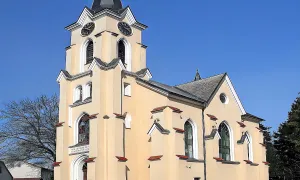
The estate is located near a former synagogue, which currently serves as the municipal office for Svatý Jan.
Accommodation nearby
Themed route
1. Usedlost čp. 10 (Drážkov) (Courtyard) – Type: Estate grounds. Start your visit by exploring the traditional layout and architecture of the estate's outdoor area.
2. Usedlost čp. 10 (Drážkov) (Interior) – Type: Estate. Step inside to discover the historical living quarters and exhibitions detailing the heritage of the site.
3. Former synagogue in Svatý Jan – Type: Municipal office. Conclude the trip at this unique historical building, which now serves as the local administrative center.
Seasonal recommendations
Spring offers a gentle awakening to the rural landscape surrounding the historic homestead in Drážkov. As the weather warms, the surrounding fields begin to show signs of new growth, providing a soft, green backdrop that contrasts beautifully with the aged stone and timber of the property. The light during this season is often diffused, creating a serene atmosphere ideal for contemplative visits. Practically speaking, spring is an excellent time to visit as the crowds are typically smaller than in the peak summer months. Visitors should pack layered clothing, as temperatures can fluctuate significantly between morning and afternoon. Arriving mid-morning allows you to enjoy the fresh air and blooming vegetation without the rush of later visitors.
Summer brings vibrant energy and long daylight hours to the area around the homestead. The intense sunlight highlights the architectural details of the building, casting sharp shadows that emphasize its structural character. The surrounding nature is lush and fully bloomed, offering a vivid and lively setting. However, this is also the busiest time of year, so planning your visit carefully is essential to avoid large groups. To beat the heat and the crowds, it is advisable to arrive early in the morning when the air is cooler and the site is quieter. Wear light, breathable fabrics and comfortable walking shoes, and carry plenty of water, as the sun can be quite strong during the midday hours.
Autumn paints the landscape in warm hues of gold, orange, and red, creating a picturesque and atmospheric setting for exploring the historic site. The cooler temperatures make for a more comfortable walking experience, and the changing foliage provides excellent opportunities for photography. The light in autumn often has a softer, golden quality, especially in the late afternoon, which enhances the rustic charm of the homestead. This season sees a moderate number of visitors, offering a balance between lively atmosphere and tranquility. Dress in warm layers, as the air can become crisp and chilly, particularly in the evenings. Visiting in the late afternoon can be particularly rewarding, as the setting sun casts a warm glow over the property.
Winter presents a stark and quiet beauty, with the landscape often blanketed in snow or bare branches. The homestead stands out prominently against the muted tones of the winter countryside, offering a sense of solitude and historical depth. The cold air can make the architectural details appear sharper and more defined. While the site is less crowded during this time, visitors should be prepared for shorter daylight hours and potentially slippery paths. Warm, waterproof clothing is essential, including sturdy boots suitable for cold and potentially icy conditions. Plan your visit for the middle of the day to maximize the available daylight, and be aware that access to certain outdoor areas may be limited due to weather conditions.
Visualizations and artistic views


The visualisations are generated by artificial intelligence and serve as inspiration.
Photos from the area
Real photos taken near the monument


Zdroj a licence jsou uvedeny u každého snímku.
Tips from visitors
No tips yet. Be the first!
Log in and add your tip.
Sources and literature
Fotografie: Kenyh Cevarom / CC BY-SA 3.0 — Wikimedia Commons. The author and licence also appear when you hover over the image.
Faktickým podkladem tohoto textu byl článek na Wikipedii, jehož autory jsou přispěvatelé Wikipedie. Článek je dostupný pod licencí CC BY-SA 4.0.
Location on the map
Příběhy a pověsti
Legendy, pověsti a příběhy spjaté s touto památkou

Fotografie návštěvníků
Zatím žádné fotografie. Buďte první, kdo přidá fotografii z návštěvy!
Přihlaste se a přidejte svou fotografii nebo hodnoťte.
Za ověřenou návštěvu v aplikaci získáte víc bodů — poznáme podle GPS, že jste na místě.
Reviews and comments