






Usedlost čp. 68 Homestead
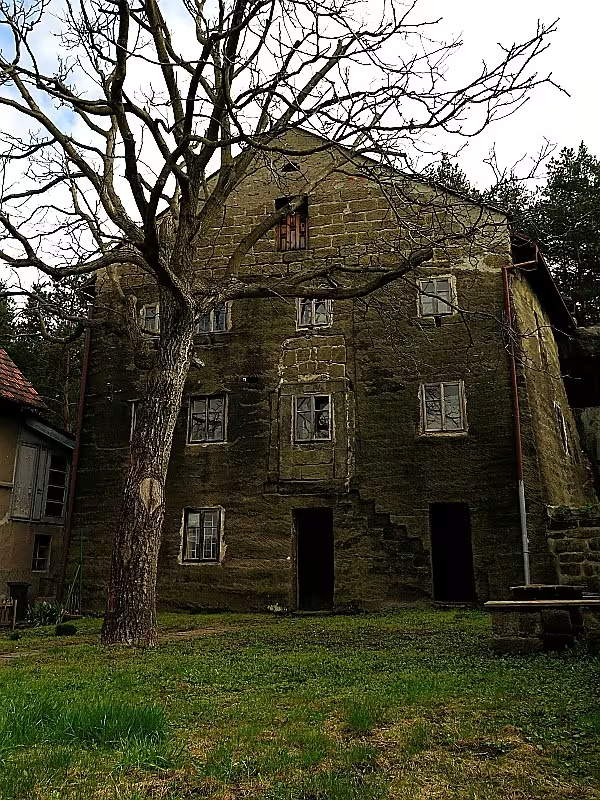
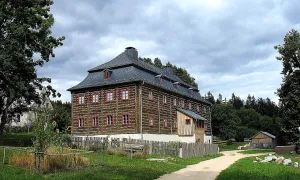
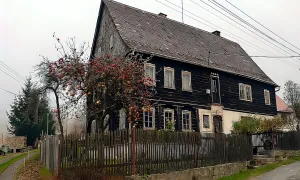
Kamenný dům čp. 68 in Sosnová u České Lípy is a remarkable farmhouse from the first half of the 19th century, notable for its unique construction partially carved into rock. Located on the edge of the village, its classical design exudes an urban impression despite the rural setting. Built by Johann Georg Abert between 1829 and 1830 over an abandoned sandstone quarry, it is a listed cultural monument in the Central List of Immovable Cultural Monuments of the Czech Republic.
The origins of Sosnová date back to at least 1554. The house was constructed by Abert on the site of a former sandstone quarry. During this period, Bohemia—then part of the Austrian Empire—saw significant architectural developments influenced by classical styles and extensive quarrying for building materials.
Architecturally, the building is distinguished by its classical composition. It features natural stone walls and vaulted ceilings crafted from quarry stone, with an original timber staircase leading to the first floor. Between 1843 and 1856, the house underwent significant renovations, transitioning from a log structure to one built with stone and brick. Further expansions in the 1870s incorporated natural caverns formed during the quarrying process into its design.
The Abert family owned the property until their expulsion in 1945. Following World War II, the house served as an internment camp for ethnic Germans. After Sosnová was re-established as a separate municipality in 1990, the house came under local ownership and has since been restored.
Locally, the building is known as the "Alchemist's House" or "Faust's House," reflecting Georg Abert's alchemical activities. Its historical intrigue is enhanced by its natural stone staircase and vaulted ceilings.
Near Kamenný dům čp. 68 is a protected niche chapel from the early 19th century, carved into sandstone. This chapel houses a statue of Saint John Nepomucene and a relief of the Holy Trinity, representing regional Baroque folk art.
Today, Kamenný dům čp. 68 stands as a testament to historical significance and architectural ingenuity. Its preservation allows visitors to explore a unique piece of cultural heritage, offering insights into the past through its distinctive design. The site is well worth visiting for those interested in history, architecture, and the rich cultural tapestry of the Czech Republic.
Historical milestones
- 1554
- Origins of the village Sosnová
- 1829–1830
- Construction of the house by Johann Georg Abert
- 1843–1856
- Renovation from log structure to stone and brick
- 1870s
- Expansions incorporating natural caverns
- 1945
- Expulsion of the Abert family and use as an internment camp
- 1990
- Sosnová re-established as a separate municipality
Architectural development
The farmhouse was initially constructed with a timber staircase and later rebuilt between 1843-1856, replacing the original log structure with stone walls and bricks. The house expanded to incorporate natural caverns from the quarrying process during renovations in the 1870s.
Historical events
Built between 1829-1830 by Johann Georg Abert over an abandoned sandstone quarry.
Served as an internment camp for ethnic Germans post-World War II until 1945.
Owners
The Abert family owned the property until their expulsion in 1945. Afterward, it served as an internment camp for ethnic Germans until 1945. Since Sosnová's re-establishment as a separate municipality in 1990, the house has been under its ownership.
Points of interest
- The farmhouse at Kamenný dům čp. 68 in Sosnová u České Lípy is notable for its unique construction partially carved into rock. – Built by Johann Georg Abert between 1829 and 1830 over an abandoned sandstone quarry, it features natural stone walls and vaulted ceilings crafted from quarry stone. – The building underwent significant renovations between 1843 and 1856, transitioning from a log structure to one built with stone and brick. – Known locally as the "Alchemist's House" or "Faust's House," reflecting Georg Abert's alchemical activities. – Near Kamenný dům čp. 68 is a protected niche chapel from the early 19th century, carved into sandstone, housing a statue of Saint John Nepomucene and a relief of the Holy Trinity.
Guide
Show guide text
This text was created by artificial intelligence and has not been editorially reviewed. It may contain inaccuracies.
Welcome to Kamenný dům čp. 68 in Sosnová u České Lípy, a remarkable testament to architectural ingenuity and historical resilience. As you stand before this extraordinary farmhouse, take a moment to absorb its unique presence—a structure that harmonizes with the natural landscape while exuding an unmistakable urban elegance. Notice how it seamlessly blends into the village's edge, yet commands attention with its classical composition.
Let’s delve into its origins and historical context. The roots of Sosnová trace back to 1554, but Kamenný dům itself was born from the vision of Johann Georg Abert between 1829 and 1830. This remarkable farmhouse emerged over an abandoned sandstone quarry, a testament to human creativity in utilizing what nature had left behind. The original structure underwent significant transformation between 1843 and 1856, evolving from a log building into one crafted with stone and brick—a renovation that would redefine its character.
Now, direct your gaze towards the architectural marvels before you. Observe the natural stone walls, a silent witness to centuries of history, and the vaulted ceilings—each carved meticulously from quarry stone. These elements not only highlight Abert’s innovative spirit but also create an ambiance that is both rustic and refined. The way this structure melds into its rocky surroundings adds another layer to its allure.
Kamenný dům has been home to many stories and significant figures, most notably Georg Abert himself. His legacy is etched into the very fabric of this building. Yet, history took a dramatic turn in 1945 when the Abert family was expelled, and the house served as an internment camp—a stark reminder of the turbulent times that have swept through these lands.
One intriguing aspect of Kamenný dům čp. 68 is its expansion during the 1870s, where natural caverns were ingeniously incorporated into the design. This adaptation not only expanded the living space but also deepened the connection between the structure and its natural environment—a fascinating blend of human habitation and geological wonder.
As you prepare to continue your journey through Sosnová u České Lípy, take a moment to reflect on the layers of history encapsulated in Kamenný dům čp. 68. Its walls tell stories of innovation, adaptation, and resilience—qualities that resonate deeply with the spirit of this region.
Thank you for joining us at this historical gem. We invite you to explore further and discover more about Sosnová’s rich heritage. Until we meet again, may your journey be filled with curiosity and wonder.
Tips for visitors
To best appreciate the classical composition and the unique way the Kamenný dům čp. 68 is partially carved into rock, a visit during daylight hours is ideal. The location is accessible by car or public transport; please verify current connections using a transport search engine.
Visitors should bring comfortable, sturdy footwear, particularly if they intend to explore the surrounding natural rock formations. For photography, the best light to capture the architectural details and the interplay between the building and the stone is during the early morning or late afternoon.
In the immediate vicinity, you can visit a protected niche chapel from the early 19th century. This sandstone structure features a statue of Saint John Nepomucene and a relief of the Holy Trinity.
For families with children, the area offers engaging opportunities for outdoor exploration through the nearby natural rock formations.
Businesses nearby
Do you run a restaurant, accommodation, shop, museum, rental, wellness or other visitor service near this monument? Show yourself directly to the people heading to it — this is how they will see you in the app and on the web:
Nearby
Nearby is a protected niche chapel from the early 19th century, carved into sandstone, featuring a statue of Saint John Nepomucene and a relief of the Holy Trinity. The area also includes natural rock formations.
Accommodation nearby
Themed route
Thematic Tour Itinerary
1. Usedlost čp. 68 (Farmstead) *Type:* Historical Farmstead *Why Visit:* Begin your journey at Usedlost čp. 68, a charming farmstead that offers a glimpse into rural life and architecture from the past. Explore its traditional structures and learn about its historical significance in the region.
2. Protected Niche Chapel *Type:* Historical Chapel *Why Visit:* Just a short walk from Usedlost čp. 68, this early 19th-century chapel is an exquisite example of sandstone craftsmanship. Admire the intricate carvings and the statue of Saint John Nepomucene, as well as the relief depicting the Holy Trinity.
3. Natural Rock Formations *Type:* Natural Landmark *Why Visit:* Nearby are captivating natural rock formations that add a unique touch to the landscape. These geological wonders provide an excellent opportunity for photography and reflection amidst nature's artistry.
This itinerary offers a delightful exploration of historical and natural attractions within close proximity, ensuring a rich cultural experience without straying far from your starting point at Usedlost čp. 68.
Seasonal recommendations
In spring, Usedlost čp. 68 comes alive as the surrounding nature begins to bloom, offering a fresh and revitalizing atmosphere. The soft, gentle sunlight of the season is perfect for observing the architectural details without the harsh glare of the warmer months. Visitors should prepare for unpredictable weather by wearing layers and carrying a light waterproof jacket. It is a peaceful time to visit, as the crowds are typically thin, making mid-morning an ideal time for a quiet stroll through the grounds.
During the summer months, the monument is bathed in bright, intense sunlight, highlighting the lush greenery that surrounds the estate. The atmosphere is vibrant and full of life, making it a popular period for sightseeing. To avoid the midday heat and the largest crowds of the peak season, it is highly recommended to arrive early in the morning. Lightweight, breathable clothing and sun protection are essential for a comfortable experience during these long, sunny days.
Autumn brings a nostalgic and serene mood to Usedlost čp. 68, characterized by golden foliage and often misty, atmospheric mornings. The changing colors of the landscape provide a stunning backdrop, especially when the low-angled sun hits the trees. As the temperature begins to drop, visitors should opt for warm, comfortable clothing and sturdy footwear for walking. Visiting in the late afternoon can yield beautiful, dramatic lighting as the day winds down.
In winter, the site takes on a quiet, almost mystical stillness, especially if frost covers the grounds. The landscape appears more stark and minimalist, offering a unique, contemplative perspective on the historical structure. Because the days are shorter and the weather can be biting, it is crucial to wear heavy, warm clothing. It is also wise to check the specific visiting hours in advance, as they may be more limited during this season, and aim for midday to make the most of the limited daylight.
Visualizations and artistic views


The visualisations are generated by artificial intelligence and serve as inspiration.
Photos from the area
Real photos taken near the monument

Zdroj a licence jsou uvedeny u každého snímku.
Tips from visitors
No tips yet. Be the first!
Log in and add your tip.
Sources and literature
Fotografie: Sovicka169 / CC BY-SA 4.0 — Wikimedia Commons. The author and licence also appear when you hover over the image.
Faktickým podkladem tohoto textu byl článek na Wikipedii, jehož autory jsou přispěvatelé Wikipedie. Článek je dostupný pod licencí CC BY-SA 4.0.
Location on the map
Příběhy a pověsti
Legendy, pověsti a příběhy spjaté s touto památkou
Fotografie návštěvníků
Zatím žádné fotografie. Buďte první, kdo přidá fotografii z návštěvy!
Přihlaste se a přidejte svou fotografii nebo hodnoťte.
Za ověřenou návštěvu v aplikaci získáte víc bodů — poznáme podle GPS, že jste na místě.
Reviews and comments