



usedlost Žitná a vila Mrázovka Homestead
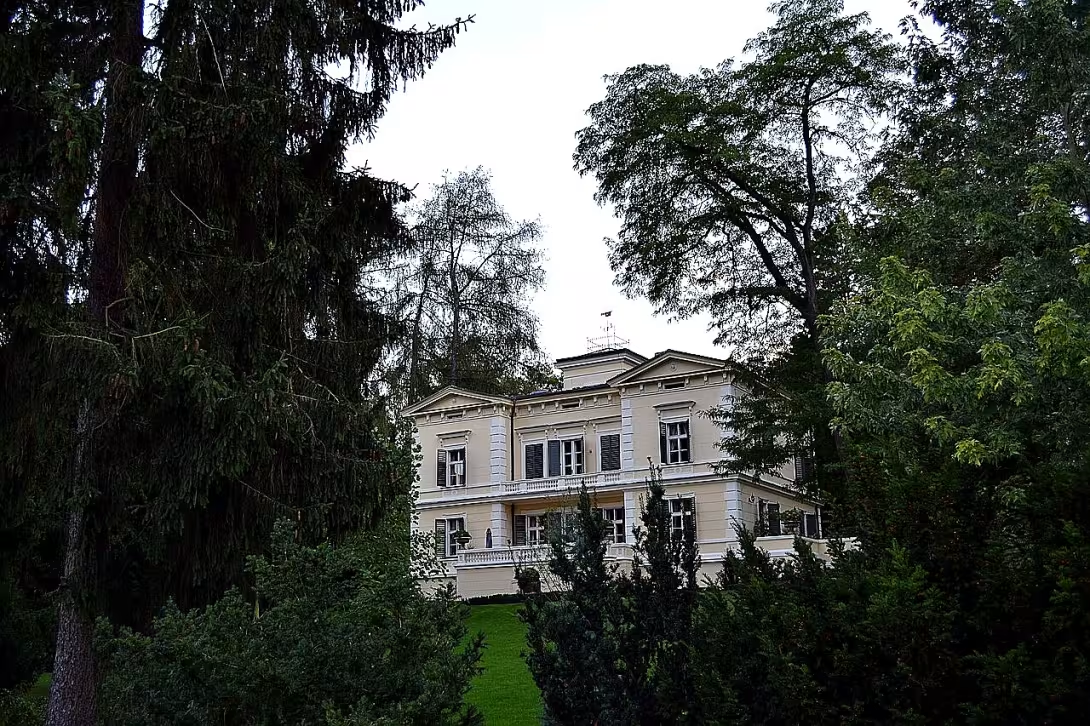
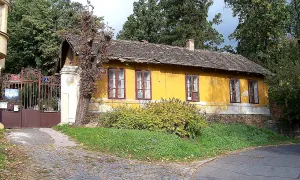
The estate Žitná and the neighbouring villa Zuzanka, also known as Mrázovka, forms a monument protected complex in Prague 6 in Dejvice in Šárecký valley. Originally a Baroque object was created by joining several older vineyards before 1667. Over the centuries, it has undergone numerous building modifications and changes to owners. Remarkable is that a painted beam ceiling has been preserved in it. After the collapse of the original building, its descriptive number had to be transferred to a newly built Neo-Renaissance villa.
Before 1667, the Old Town Town Man Jiří Šmejdíř merged three old vineyards into one whole with a size of 19 strychelles. It also included a grafting plant with an area of 2.5 cm. During the time of the settlement, the Czech countries recovered from the devastating effects of the Thirty Years' War under the influence of reCatholics and the advent of an early baroque. Europe was going through a period of absolutist governments and major scientific discoveries. Later construction and development took place in the nineteenth century at the time of the Czech national revival and industrial revolution.
The original economic and residential estate was gradually supplemented by cellars and presses. Part of the complex was also the Neo-Renaissance Villa, built in the garden at the end of the nineteenth century. Part of the building fund has retained historical elements including valuable painted beam ceiling. The original descriptive number from the decrepit old building was officially transferred to the new villa.
The owner of the estate was Jiří Šmejdíř before 1667. After his death, the widow married an old town townsman named George Žitník. In 1727, a baker and an old-town townsman Augustin Buchta bought the farm. From 1877 to 1885, Žitnou was held by Chief Engineer in Prague František Mráz.
The key events include the connection of the three old vineyards by Jiří Šjedíř before 1667 and the purchase of the estate by the baker Augustine Buchta in 1727. To the inventory at that time was a residential building, press, gardens, fields, soccer fields, two beehives and an economic building with cows. At the end of the eighteenth century, the field had an area of 6 mornings and a garden of 1 morrow. The stable register of 1840 had already registered 9 mornings of land divided into 5 fields, 2 gardens, vineyards, 7 pastures and a journey. In 1846, another owner bought the land and built the estate. In 1872, a new house with a descriptive number 132 grew on a separate part of the garden. Between 1877 and 1885, the engineer František Mráz had a Neo-Renaissance villa built by Zuzanka.
After 2000 the estate underwent a successful reconstruction and was redesigned for living. It is located in the Šárecký valley in close proximity to the nature park of Wild Šárka and other historical settlements and villas.
This monument is a valuable example of the historical development of suburban agriculture and building changes in Prague's Dejvice from Baroque to nineteenth century. The visit to the Šárecký Valley offers an opportunity to recognize this successfully renovated monument and to remember the ancient form of the Prague landscape.
Historical milestones
- 1667
- The connection of the three old vineyards by Jiří Šjedířík into one whole before this year.
- 1727
- Buying the estate by the baker Augustine Buchta.
- 1846
- Buying up other land and building modifications to the estate.
- 1885
- The construction of the Neo-Renaissance Villa Zuzanka in the garden of the estate for the possession of engineer František Mráz.
Architectural development
The original economic and residential estate was gradually supplemented by economic buildings, cellars and presses. In 1846, building modifications took place and in 1872 a new house with its own descriptive number was built on a separate part of the garden. At the end of the nineteenth century, the Neo-Renaissance Villa Zuzanka was added, to which the original number of the descriptive decrepit old building was passed. Part of the building fund retained historical elements including painted beam ceiling.
Historical events
Before 1667, the three old vineyards were merged by the old town town's town-hall Jiří Šjedíří. In 1727, the owner Augustin Buchta bought the estate, where housing, press, gardens and beehives belonged to it. From 1877 to 1885 the property was held by the Chief Engineer František Mráz, who had built the Neo-Renaissance Villa Zuzanka. After 2000 the monument was reconstructed and again civilized for living.
Owners
Jiří Šmejdíř (before 1667), his widow and subsequently Jiří Žitník (since the 17th century), Augustin Buchta (since 1727), František Mráz (from 1877-1885).
Points of interest
- The estate Žitná and the neighbouring villa Zuzanka, also known as Mrázovka, is a protected building in Prague 6 in Dejvice in Šárecký valley. - Originally a baroque object was created by joining several older vineyards before 1667 and is remarkable by the fact that the painted beam ceiling was preserved in it. - The descriptive number of the original decrepit building must have been transferred to a newly built Neo-Renaissance villa. - The owners of the estate belonged before 1667 Jiří Šmejdíř, whose widow married Jiří Žitník, who named the property. - After 2000, the estate was successfully renovated and was redesigned for living.
Guide
Show guide text
This text was created by artificial intelligence and has not been editorially reviewed. It may contain inaccuracies.
Welcome to the historical landmark Žitná and the Mrazovka villa, which you can view right now. You are standing in front of a picturesque area located in Prague 6 in Dejvice, in the middle of the Šárecký valley. Under your feet is a quiet green area surrounded by a beautifully maintained park. The facade of the estate will welcome you with its elegant lines and details that refer to the rich history of this place.
The estate Žitná has roots dating back to the 17th century, when the three older vineyards were joined by Jiří Šjedíří before 1667. This historical object gradually evolved and changed its faces over the years when it was owned by different owners. In 1727, the baker Augustin Buchta bought it, which contributed to further development of the complex. Another key milestone was in 1846, when additional land was purchased and construction works were carried out. Finally in 1885 the engineer František Mráz completed the construction of the Neo-Renaissance Villa Zuzanka, which today serves as a visual conclusion of this monument complex.
Look up at the front of the estate and notice its classic elements, which are present thanks to later modifications. On the garden side you will find the Neo-Renaissance villa of Zuzanku, whose elegant line and stucco decoration will lead you to the recognition of the artistic taste of the 19th century.
The key personalities associated with this monument include not only Jiří Šmejdíř, but also Augustin Buchta and František Mráz. Each of them contributed to making this area an important part of the cultural heritage of Dejvice.
The interesting feature of this place is the preserved painted beam ceiling in the estate Žitná, which shows a rich history and artistic background. This detail is hidden between walls and reminds us of the importance of preserving such primary elements.
Let's move on to further exploring this fascinating place. Look around, notice the details, and imagine the lives of the people who once occupied this estate. Whether you're walking through the park or looking at the architectural elements of the complex, every moment here offers a new opportunity to discover.
Thank you for your visit to Žitná and the villa Mrázovka. I hope this guide inspired you to explore this historic place further. We wish you a pleasant time to discover and enjoy the beauty of Dejvic!
Tips for visitors
The best time to visit the estate Žitná and the villa Mrázovka is spring or autumn when there is quiet weather and nature offers the most beautiful colors. This time also allows you to enjoy sunlight to photograph historic buildings in ideal lighting.
When planning a visit, wear shoes suitable for walking on the lawn and perhaps even an umbrella if the weather is uncertain. Photographers should be prepared for images from different angles, especially in areas around the Šárecký valley and near the Mrazovka villa.
For families with children, the surrounding nature park Wild Sárka is an ideal place for a short walk or picnic. Children can enjoy themselves in the open area and there are other historical settlements nearby that offer interesting information about the past of Dejvice.
Frequently asked questions
Can the monument be visited?
This is a residential or farm building, not a museum with opening hours. Please view it from public space and respect the owners' privacy. We have no information about access to the interior.
Where is the monument?
Location: Dejvice, Hlavní město Praha. The map on this page shows the exact spot.
Why is the monument protected?
It is listed in the Central List of Cultural Monuments of the Czech Republic as a cultural monument (register no. 1000152562).
Businesses nearby
Do you run a restaurant, accommodation, shop, museum, rental, wellness or other visitor service near this monument? Show yourself directly to the people heading to it — this is how they will see you in the app and on the web:
Events nearby

Zdroj akcí: otevřená data měst a obcí ČR (Národní katalog otevřených dat) a kalendář akcí Národního památkového ústavu.
Nearby
Šárecké údolí v Praze 6 v Dejvicích, přírodní park Divoká Šárka a okolní historické usedlosti a vily.
Accommodation nearby
Trips and activities nearby
Guided tours, tickets and activities nearby from GetYourGuide
Affiliate link: if you buy from the partner, we may receive a commission. The price for you does not change.
Search tours and activities →Themed route
Thematic cruise route: Historical estates and natural beauty Dejvice
1. The estate Žitná a vila Mrázovka (homestead) This historical estate is one of the oldest buildings in Prague. It is known for its architectural value and impressive gardens, which are an ideal place to relax and explore. Villa Mrazovka is an example of baroque construction with a rich history.
2. Sárecká valley (natural park) About 10 minutes' walk from the Žitná estate is located the nature park Wild Šarka, where the Šárecká Valley is one of its most distinctive elements. This place offers beautiful waterfalls and forested trails that are ideal for picnic or exploring the natural environment.
3. Svabin estate (the estate) From here you can go to another historic estate, the village of Švabinský, which is famous for its classical architectural style and beautiful garden. It is a place full of history and works of art where you can look at exhibits related to the family of Švabinský.
4. Manor U Waterworks (manor) Subsequently, visit the Vodárny, which is known for its water springs and historical water works. This place offers quiet rooms for relaxation and a view of beautiful green landscapes.
5. The farm U Zvonarka (estate) The concept trip can be closed by the Zvonará settlement, which is known for its historical value and beautiful gardens. It's a place full of calm and nature where you can look at architecturally interesting buildings.
This route offers a combination of historical monuments and natural beauties, which is ideal for those who want to know the rich history and nature of Dejvice.
Seasonal recommendations
Spring: In the spring season, usedlost Žitná a vila Mrázovka presents itself in its most beautiful form when flowering gardens radiate in vivid colours. The sun rays illuminate the architectural elements of the villa and the estate, which is an ideal time for photography. The atmosphere is calm and friendly when the temperature is released at noon. We recommend visiting in the morning or in the evening so that flowers do not go out in vain. Dress up bright and comfortable clothes with short sleeves.
Summer: Summer at the cottage Žitná and in Ize Mrázovka brings long sunny days when the garden is fully blooming. The villa offers shelter from warm summer days with the possibility to relax in the quiet of its elegant interiors. The best time to visit is early morning or late evening to avoid overloading the crowd of tourists. Early arrival may be key to ensuring better view and photography. Prepare for sun day with UV protection and durable clothing.
Autumn: In autumn, usedlost Žitná a vila Mrázovka offers golden and red leaves to decorate its park. The sun is hiding behind the horizon soon, giving the atmosphere a romantic touch. It is advisable to visit late afternoon or evening when the temperature is pleasant and the crowd is less extensive. Put on layered clothes to keep you warm because temperatures are starting to drop.
Winter: Winter visit to Žitná and the Mrazovka villa offers quiet corridors without crowd. Silver light of freezing days decorated with elegant architecture, which is ideal for photography. Hot clothing with leather gloves and protective snails is essential for a comfortable visit in the cold.
Visualizations and artistic views


The visualisations are generated by artificial intelligence and serve as inspiration.
Photos from the area
Real photos taken near the monument


Zdroj a licence jsou uvedeny u každého snímku.
Tips from visitors
No tips yet. Be the first!
Log in and add your tip.
Sources and literature
Photos: Sefjo / CC BY-SA 3.0 — Wikimedia Commons. The author and licence also appear when you hover over the image.
Faktickým podkladem tohoto textu byl článek na Wikipedii, jehož autory jsou přispěvatelé Wikipedie. Článek je dostupný pod licencí CC BY-SA 4.0.
Location on the map


Příběhy a pověsti
Legendy, pověsti a příběhy spjaté s touto památkou

Fotografie návštěvníků
Zatím žádné fotografie. Buďte první, kdo přidá fotografii z návštěvy!
Log in a přidejte svou fotografii nebo hodnoťte.
Za ověřenou návštěvu v aplikaci získáte víc bodů — poznáme podle GPS, že jste na místě.
Reviews and comments