






Venkovská usedlost čp. 175 Homestead
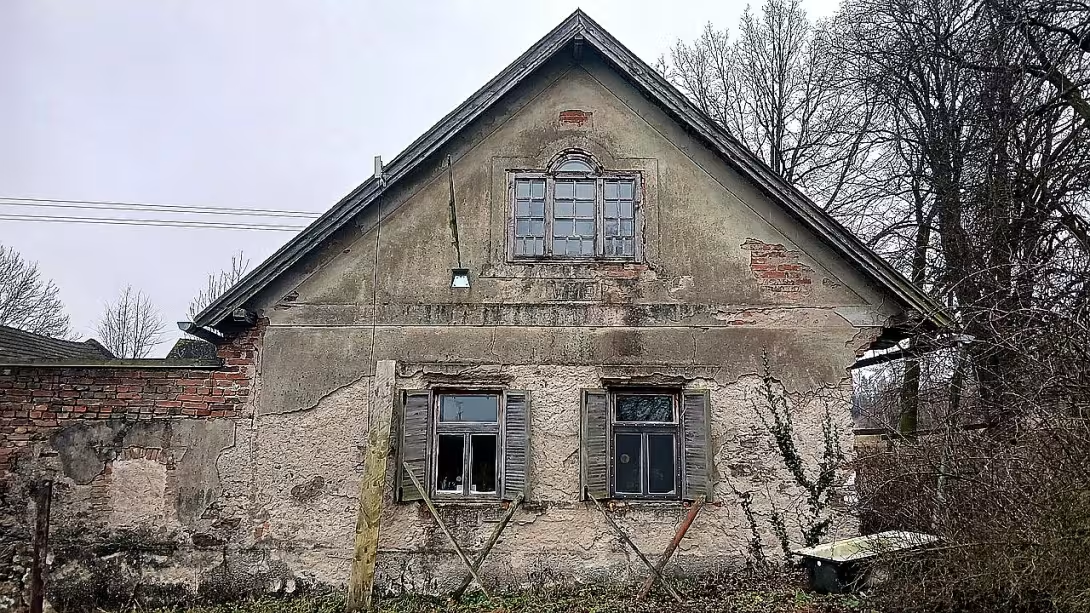
Venkovská usedlost čp. 175 in Šlapanov is a historically significant rural estate located in Havlíčkův Brod district within the Vysočina region. Dating from the turn of the 18th and 19th centuries, it has been recognized as a cultural monument since 2024 due to its architectural value and historical significance. The ensemble comprises several authentic buildings arranged in a U-shape around an enclosed courtyard, with the residential house being the most valuable part.
The estate's origins trace back to the early 19th century when it was documented on maps from 1838 as a masonry building. Initially constructed by German inhabitants, notably the Janko family, who left their mark through initials on the façades, the estate was built on marshy land south of Šlapanov. The name Körber is also associated with adjacent lands in historical records. Over time, additional structures were added: a masonry barn in 1901, a dependency in 1921, and a stable in 1929, creating a closed courtyard that served agricultural purposes.
Architecturally, the estate features various construction elements typical of its era. The oldest part is the residential house with a three-part layout and vaulted chambers, showcasing decorative stucco work. Other structures include a barn with subtle brickwork and timber frames, and a dependency adorned with rare Fraktur inscriptions that document the history of the local German language island. These elements highlight the estate's architectural diversity and historical context.
Ownership of the estate changed dramatically over time. After the expulsion of Germans post-World War II, it became property of the Novotný family. Following the collectivization of agriculture, the estate fell into disuse and was slated for demolition in the 1980s. However, Helena Burešová acquired it and initiated restoration efforts, transforming it into a charming accommodation facility known as Motýlí Chaloupka.
The site is not only architecturally significant but also rich with historical curiosities. The estate's symbolic surroundings include ancient oaks and lindens representing earth, a fire pit for fire, a pond symbolizing water, and the air element captured in views of Šlapanov and its church. These elements add layers to the estate’s narrative, making it an intriguing destination.
Today, Venkovská usedlost čp. 175 is accessible as Motýlí Chaloupka, offering accommodation with additional services while continuing restoration efforts. Visitors can explore this well-preserved rural complex, gaining insights into its historical and architectural significance. The estate stands as a testament to the region's cultural heritage, inviting those interested in history and architecture to experience its unique charm firsthand.
Historical milestones
- 1838
- The residential building is recorded in the stable cadastre maps.
- 1901
- Construction of the masonry barn.
- 1921
- Construction of the dependency.
- 1929
- Construction of the stable.
- 2024
- The estate area is protected as a cultural monument.
Architectural development
The oldest part is the residential house with a three-part layout and vaulted chambers. In the early 20th century, a barn (1901), a dependency (1921), and a stable (1929) were added to create a closed courtyard. The buildings feature various construction elements such as brickwork, timber frames, and decorative stucco.
Historical events
- 1838
- The masonry residential building is documented in maps.
- 1901
- A masonry barn was added to the estate.
- 1921
- A dependency (výmínek) was constructed.
- 1929
- A stable was added to the complex.
Owners
German inhabitants (Janko family) until the expulsion of Germans; the Novotný family after the expulsion; Helena Burešová (current owner/restorer).
Points of interest
- Venkovská usedlost čp. 175 in Šlapanov is a historically significant rural estate recognized as a cultural monument since 2024 due to its architectural value and historical significance. – The estate was initially constructed by German inhabitants, notably the Janko family, who left their mark through initials on the façades. – Architectural features include decorative stucco work in the residential house and rare Fraktur inscriptions documenting the history of a local German language island. – After World War II, ownership changed to the Novotný family, and later Helena Burešová acquired it for restoration, transforming it into Motýlí Chaloupka. – The estate's symbolic surroundings include ancient oaks and lindens representing earth, a fire pit for fire, a pond symbolizing water, and views of Šlapanov capturing the air element.
Guide
Show guide text
This text was created by artificial intelligence and has not been editorially reviewed. It may contain inaccuracies.
Welcome to Šlapanov. As you stand here before this historic site, take a moment to simply breathe in the atmosphere of the surroundings. You are standing in front of the rural estate known as number 175, a place where the layers of history are etched into the very layout of the land. As you look around, your eyes are likely drawn to the way the buildings are arranged. Notice how they form a protective U-shape, wrapping around a central courtyard that is enclosed by a wall. This design is not merely a coincidence of construction; it is a classic expression of a working agricultural estate, designed to create a secure, private heart for the family and their livelihood, shielding the inner workings of the farm from the outside world.
To truly understand the significance of what you see, we must step back in time and look at the origins of this complex. This estate is a significant piece of rural heritage, dating back to the pivotal turn of the 18th and 19th centuries. It represents an era when the landscape of Šlapanov was being shaped by dedicated farming families who built structures meant to last for generations. While the exact architects of these buildings remain unknown to us, their skill and vision are clearly visible in the harmony of the ensemble. We have records that allow us to trace the life of this estate through the years, such as in 1838, when the residential building was officially recorded in the stable cadastre maps. This tells us that even nearly two centuries ago, this was an established and recognized part of the local community.
As you direct your attention to the buildings themselves, I invite you to observe the different roles they played in the life of the estate. The ensemble is a collection of authentic structures, each serving a specific purpose in the cycle of agricultural life. The most precious and architecturally valuable part of the entire complex is the residential house. If you were to look closely at its design, you would see the marks of a home that was intended to be both functional and refined. The house features elegant vaulted chambers and decorative stucco, details that suggest a level of comfort and aesthetic pride. These elements provide a beautiful contrast to the more utilitarian structures that surround it.
Moving your gaze toward the other buildings, you can see the evolution of the estate through the decades. This was not a place that was built all at once, but rather a living, breathing entity that grew alongside its inhabitants. For instance, you can see the results of early 20th-century development in the masonry barn, which was constructed in 1901. As the needs of the farm changed and expanded, so did the architecture. This is evidenced by the construction of the dependency in 1921, and later, the stable in 1929. Each of these additions tells a story of growth, adaptation, and the continued prosperity of the estate as it moved through the changing landscape of the modern era.
Every great estate is defined by the people who called it home, and number 175 is no exception. The history of this place is deeply intertwined with the lives of those who worked this land and managed these buildings. The estate was initially shaped by German-speaking inhabitants, most notably the Janko family, who left a lasting mark on the character of the property. Their influence helped establish the foundation of the complex we see today. Beyond the Janko family, other names are woven into the fabric of this history, such as Kӧrber and Helena Burešová. These individuals were part of the human tapestry that gave this estate its purpose and its soul, turning a collection of stone and mortar into a home and a center of industry.
It is truly remarkable to consider how much history is contained within this single courtyard. One of the most interesting aspects of this estate is how its importance has been reaffirmed in our modern times. While it has stood for centuries, it has reached a new chapter of significance very recently. In 2024, the estate area was officially recognized and protected as a cultural monument. This designation is a testament to its enduring architectural value and its profound historical importance to the region. It ensures that the legacy of the Janko family, the craftsmanship of the unknown builders, and the stories of those like Helena Burešová will be preserved for the many generations yet to come.
As you continue your walk, I encourage you to keep looking for these subtle connections between the past and the present. Notice the way the light hits the walls of the courtyard, or how the layout of the buildings still dictates the flow of movement, just as it did for the farmers of the 1800s. This estate is more than just a collection of old buildings; it is a silent witness to the passage of time and the enduring spirit of rural life.
Thank you for taking this moment to explore the rural estate number 175 with me. Please, continue your journey through Šlapanov and enjoy the many other wonders this area has to offer.
Businesses nearby
Do you run a restaurant, accommodation, shop, museum, rental, wellness or other visitor service near this monument? Show yourself directly to the people heading to it — this is how they will see you in the app and on the web:
Nearby
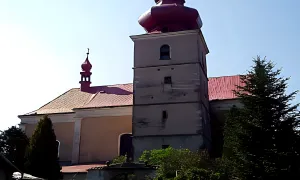
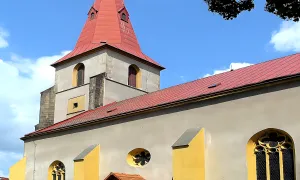
The estate is located on a marshy slope south of Šlapanov, with a view of the village and the Church of St. Peter and Paul. The area includes old oaks and lindens, a pond to the east, and fields to the south.
Accommodation nearby
Themed route
Thematic Tour Itinerary from Venkovská usedlost čp. 175, Šlapanov
1. Venkovská usedlost čp. 175 - Type: Historical Estate - Why Visit: Begin your journey at this charming rural estate located on a marshy slope south of Šlapanov. The estate offers picturesque views of the village and the Church of St. Peter and Paul, making it an ideal starting point for exploring the area's natural beauty and historical significance.
2. Old Oaks and Lindens - Type: Natural Landmark - Why Visit: A short walk from the estate will lead you to a serene grove of ancient oaks and lindens. These majestic trees provide not only shade but also a sense of history, as they have witnessed centuries pass by in this tranquil setting.
3. The Pond - Type: Natural Feature - Why Visit: Located to the east of the estate, this pond is a peaceful spot perfect for relaxation and reflection. Its calm waters mirror the surrounding landscape, offering visitors a moment of tranquility amidst nature's beauty.
4. Fields to the South - Type: Agricultural Landscapes - Why Visit: Explore the expansive fields that stretch southward from the estate. These agricultural landscapes showcase traditional farming practices and provide an opportunity to appreciate the rural charm of Šlapanov, with its open skies and rolling hills.
This itinerary offers a harmonious blend of natural beauty and historical intrigue, allowing visitors to immerse themselves in the serene environment surrounding Venkovská usedlost čp. 175.
Seasonal recommendations
Spring: Visiting Šlapanov's Venkovská usedlost during spring offers a unique experience as the landscape begins to awaken from winter slumber. The site is bathed in soft, natural light that enhances the fresh greenery and blooming flowers surrounding the estate. This gentle illumination creates an inviting atmosphere for exploring historical structures amidst nature's renaissance. Visitors should be prepared for occasional rain showers typical of this season, making waterproof footwear advisable. Spring mornings are ideal for visits due to milder temperatures and fewer crowds, allowing a more intimate encounter with the site as it undergoes reconstruction.
Summer: Summer at Venkovská usedlost in Šlapanov is characterized by vibrant natural beauty and warm sunshine that accentuates the estate's charm. The lush surroundings come alive with activity, offering picturesque settings for photography or leisurely walks. However, summer also brings larger visitor numbers, particularly during peak daylight hours. To avoid crowds, it is recommended to arrive early in the morning or later in the afternoon. Comfortable, breathable clothing and sun protection are essential due to higher temperatures and increased exposure to sunlight.
Autumn: The autumn season at Venkovská usedlost is marked by a stunning display of fall foliage, transforming the estate into a warm tapestry of reds, oranges, and yellows. This period offers a serene atmosphere with cooler temperatures that make exploring more pleasant. As the days grow shorter, lighting conditions change rapidly, creating dramatic contrasts between light and shadow. Visitors should consider bringing layers for warmth as evenings can become quite chilly. Late afternoon visits are ideal to capture the golden hues of the setting sun reflecting off historical structures.
Winter: Winter at Venkovská usedlost provides a stark yet beautiful contrast with its snow-covered landscape that blankets the estate in a serene, almost magical atmosphere. The site's reconstruction work may be less visible due to weather conditions and shorter daylight hours, but this season offers a unique opportunity for quiet reflection amidst nature's hibernation. Visitors should dress warmly in layers, including hats and gloves, as temperatures can drop significantly. Early morning visits are preferable to maximize the limited daylight available, offering a peaceful experience away from the hustle of more popular tourist destinations during the holiday season.
Visualizations and artistic views


The visualisations are generated by artificial intelligence and serve as inspiration.
Photos from the area
Real photos taken near the monument

Zdroj a licence jsou uvedeny u každého snímku.
Tips from visitors
No tips yet. Be the first!
Log in and add your tip.
Sources and literature
Photos: Kubasmyd / CC0 — Wikimedia Commons. The author and licence also appear when you hover over the image.
Faktickým podkladem tohoto textu byl článek na Wikipedii, jehož autory jsou přispěvatelé Wikipedie. Článek je dostupný pod licencí CC BY-SA 4.0.
Location on the map

Příběhy a pověsti
Legendy, pověsti a příběhy spjaté s touto památkou

Fotografie návštěvníků
Zatím žádné fotografie. Buďte první, kdo přidá fotografii z návštěvy!
Přihlaste se a přidejte svou fotografii nebo hodnoťte.
Za ověřenou návštěvu v aplikaci získáte víc bodů — poznáme podle GPS, že jste na místě.
Reviews and comments